




Polysorbate 80 Safety & Hazards
Polysorbate 80 (CAS 9005-65-6) is a nonionic surfactant used across food, pharmaceutical, and personal care applications as an emulsifier and solubilizer. Compared to many chemicals handled in a lab or production setting, it carries a notably low hazard profile. Most current manufacturer safety data sheets classify it as non-hazardous under both the UN Globally Harmonized System and OSHA's Hazard Communication Standard.
That said, low hazard doesn't mean no hazard. Production staff, R&D personnel, and safety officers still need to understand the exposure routes, appropriate first aid response, and proper storage conditions that apply to this compound, particularly when handling it in bulk or concentrated form. Prolonged or repeated contact can cause mild irritation, and standard precautions remain necessary even for a chemical this benign.
Polysorbate 80's regulatory standing reflects its widespread use in FDA-regulated products. It holds GRAS status and meets both FCC and USP-NF monograph requirements, which is part of why it's a staple ingredient in food, drug, and cosmetic formulations.
In this article, we'll explore:
-
Chemical Hazards Overview
-
Exposure Risks & Health Effects
-
First Aid Measures
-
Handling & Storage Precautions
-
Spill & Leak Procedures
-
Regulatory & Compliance Information
-
Technical Documents & References
Chemical Hazards Overview
Polysorbate 80 is not classified as hazardous under the 2012 OSHA Hazard Communication Standard or the UN GHS according to most current manufacturer SDSs, though some SDS versions apply a mild irritation classification as a precaution. The key data points for this chemical are as follows:
-
GHS pictograms: none required under standard classification; some SDS versions apply GHS07 as a precautionary irritation label
-
NFPA rating: Health 0, Flammability 0, Instability 0
-
Primary risks: mild, transient irritation from direct, prolonged, or repeated skin or eye contact
Overall, Polysorbate 80 presents minimal acute or chronic hazard under normal handling conditions, and the precautions that do apply are straightforward.
Exposure Risks & Health Effects
Inhalation Risks
Polysorbate 80 is a non-volatile, viscous liquid with low vapor pressure, so inhalation exposure isn't expected during normal handling. If the product is aerosolized or misted, such as during certain processing or spraying operations, exposure may cause mild respiratory tract irritation. No chronic respiratory effects have been established.
Skin Contact Risks
Testing in both animal models and human subjects has generally found Polysorbate 80 to be non-irritating on brief contact. Prolonged or repeated exposure, however, can lead to mild irritation and, in some cases, degreasing of the skin, along with drying, cracking, or dermatitis. This is more of a concern for workers handling the product regularly without gloves than for occasional contact.
Eye Contact Risks
Direct eye contact may cause mild, transient irritation. Animal testing has generally produced negative or mild irritation results, and no permanent eye damage is expected from typical exposure. Symptoms should resolve without lasting effects once the eye is flushed.
Ingestion Risks
Polysorbate 80 has low acute oral toxicity, with a rat oral LD50 reported above 40,000 mg/kg, a very high threshold that reflects its widespread use as a food and pharmaceutical additive. Ingestion of larger quantities may cause mild gastrointestinal discomfort, but severe toxicity is not expected.
First Aid Procedures
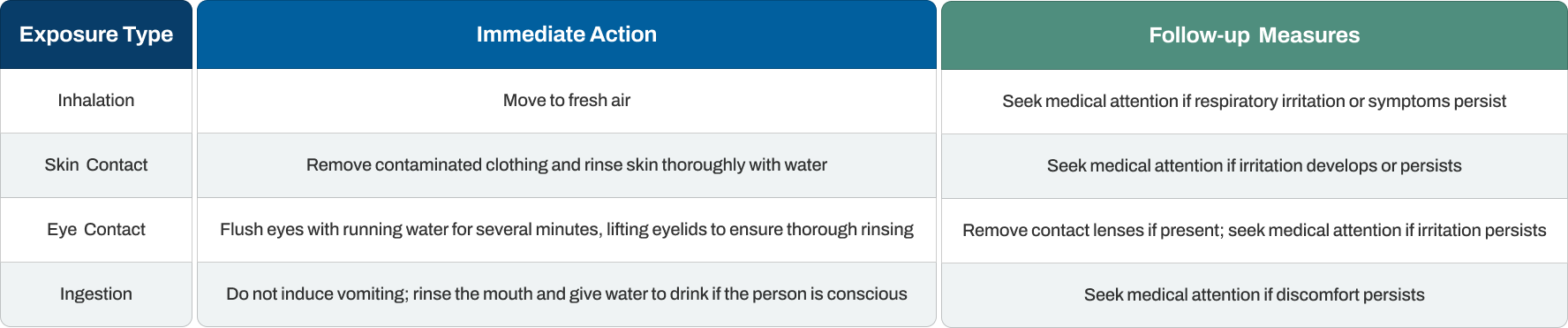
Across all exposure routes, symptoms are expected to be mild and self-limiting under normal handling conditions. Anyone who develops persistent irritation or discomfort after exposure should still seek medical evaluation rather than assume symptoms will resolve on their own.
Handling & Storage Precautions
Handling Polysorbate 80 safely doesn't require specialized equipment, but a few basic precautions keep exposure to a minimum and preserve product quality.
-
PPE: standard gloves and safety glasses are sufficient for routine handling
-
Ventilation: general ventilation is adequate; no special exhaust systems are needed
-
Ignition sources: no special precautions required, given the product's high flash point
Storage conditions matter more for product stability than for safety. Keep containers tightly closed and store between approximately 2°C and 30°C (36°F to 86°F), away from direct light. At lower temperatures within that range, the product may thicken or change viscosity, which is a quality consideration rather than a hazard.
Incompatible substances to keep Polysorbate 80 away from include:
-
Strong oxidizing agents
-
Strong acids
-
Strong alkalis
Spill & Leak Procedures
A Polysorbate 80 spill is a manageable, low-risk cleanup, but it should still be handled with basic PPE and attention to slip hazards given the product's viscosity.
Emergency response steps:
-
Put on standard PPE, including gloves and eye protection
-
Contain the spill promptly to prevent it from becoming a slip hazard
-
Ventilate the area if the spill is large
Containment methods:
-
Absorb the material with sand, vermiculite, or a commercial absorbent
-
Transfer absorbed material into a suitable waste container for disposal
Proper disposal is straightforward as well. Polysorbate 80 is not classified as RCRA hazardous waste, so disposal should follow local, state, and federal waste regulations applicable to the facility. The product is readily biodegradable and suitable for incineration, which simplifies end-of-life handling compared to many other laboratory chemicals.
Regulatory Information & Compliance
OSHA Regulations
OSHA has not established a PEL, STEL, or TWA for Polysorbate 80, and it is not classified as hazardous under OSHA HazCom 2012 (29 CFR 1910.1200). This reflects its low overall toxicity and the absence of significant occupational exposure concerns.
EPA & Environmental Impact
Polysorbate 80 is listed on the TSCA inventory and is not listed under CERCLA or SARA. It is readily biodegradable, and no adverse aquatic toxicity effects are known, making it a low-concern substance from an environmental release standpoint.
FDA/USP/ACS Compliance
Polysorbate 80 holds GRAS status under 21 CFR 172.840 and meets FCC (Food Chemicals Codex) and USP-NF monograph requirements. This compliance profile is central to its use in food, pharmaceutical, and personal care formulations, where grade and purity standards are tightly regulated.
Technical Documents & Resources
-
SDS: Available for the FCC/Food Grade product, covering safety, handling, and first aid information.
-
COA: Available upon request, confirming purity and compliance with FCC/USP-NF grade standards.
Final Note
Polysorbate 80 stands out among laboratory and industrial chemicals for its low overall hazard profile, with minimal acute toxicity, no established occupational exposure limits, and straightforward disposal requirements. The main precautions worth remembering are basic PPE for skin and eye protection and proper storage away from strong oxidizers and extreme temperatures.
Even low-hazard chemicals deserve consistent handling practices, and Polysorbate 80 is no exception. Following the storage, handling, and first aid guidance outlined here helps keep both personnel and product quality protected.
Explore our Resource Library for more information.
Our Customer Care team is also available for more information and documentation, including chemical Safety Data Sheets.
Need Polysorbate 80 You Can Trust?
If you are looking for high-quality polysorbate 80 for your lab, product line, or research facility, be sure to visit our store to explore our trusted selection and request a quote.
As your trusted partner in chemical supply, Lab Alley is always striving to meet the growing demands of our customers. We want you to be able to access all of your chemical needs in one place, along with streamlined online ordering and fast shipping.
Due to popular demand from our valued clientele, Lab Alley's polysorbate 80 is available in a range of purities and packaging options to suit various commercial, laboratory, and personal needs.