







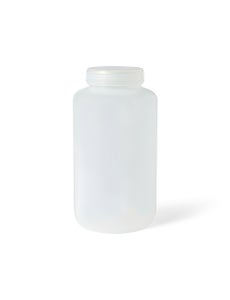
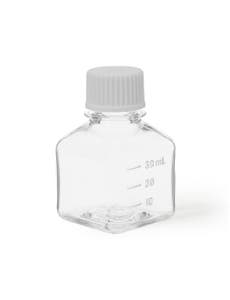

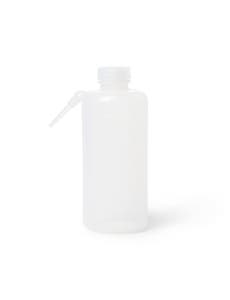
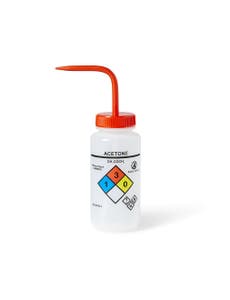


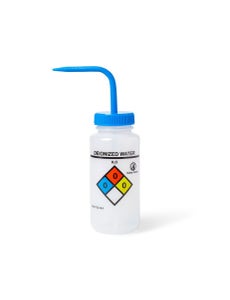
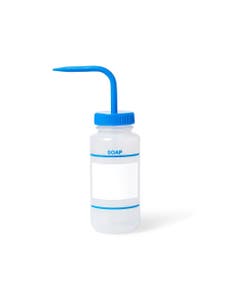
A lab bottle only has to do a few things: hold what you put in it, stay sealed, and not react with the contents. Whether it manages that comes down to the plastic. The bottles on this page come in four materials, and each one earns its spot for a different job.
HDPE (high density polyethylene) is stiff and tough, and it's the plastic Lab Alley lists most often for chemical storage. Our compatibility chart calls for HDPE for chemicals such as hydrochloric, nitric and sulfuric acid, sodium hydroxide and hydrogen peroxide. It isn't made for autoclaving, though, because it softens under that kind of heat.
Polypropylene (PP) is a little more rigid and handles heat better. The PP aspirator bottles on this page are described as autoclavable, and the PP wide mouth reagent bottles are made from USP Class VI resin that complies with FDA 21 CFR rules for food contact. LDPE is the soft, squeezable one, which is why it's used for wash bottles and dropper bottles. PETG is clear and strong, and the sterile media bottles use it for storage that goes into the freezer.
Two numbers on a product page matter more than people expect. Capacity tells you how much the bottle holds, and the cap size tells you which closure fits. A cap listed as 28 to 415, for example, means a 28 mm neck finish with a 415 thread style.