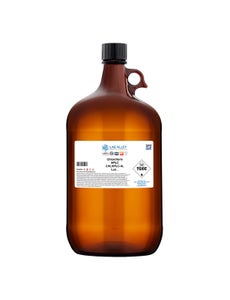






Chloroform Uses & Applications
Chloroform, also called trichloromethane (CHCl3, CAS 67-66-3), is a clear, colorless, dense liquid with a sweet, nonirritating odor and strong solvent properties. It gained widespread attention as a surgical anesthetic during the 19th and early 20th centuries, but that medical use was discontinued decades ago once its toxicity to the liver, kidneys, and central nervous system became clear. Today chloroform's value sits almost entirely in controlled industrial, laboratory, and pharmaceutical settings, not in medicine, food, or household products.
One quick myth to clear up: movies and television often show a chloroform soaked rag instantly knocking someone unconscious. Real medical anesthesia with chloroform required sustained, carefully controlled dosing under direct medical supervision, and even then it carried serious risk, which is exactly why it was abandoned as an anesthetic. Using it to incapacitate someone is both dangerous and a serious crime, not a quick or reliable method the way films portray it.


In this comprehensive guide, we'll explore:
-
Industrial Applications
-
Scientific & Laboratory Uses
-
Medical & Pharmaceutical Uses
-
Food & Beverage Industry Applications
-
Agriculture & Pesticides
-
Consumer & Household Uses
-
Environmental & Water Treatment
Industrial Applications
Chloroform plays a role in several industrial sectors where a powerful solvent or chemical intermediate is required.
-
Manufacturing & Processing, used as a solvent in plastics, textiles, adhesives, and coatings, where it helps achieve uniform application and durability.
-
Chemical Synthesis, serving as an intermediate in producing refrigerants such as HCFC-22, along with certain pharmaceuticals, pesticides, and dyes.
-
Metallurgy & Mining, occasionally used to degrease metals and remove organic residue during ore processing and metal refining.
-
Petroleum & Energy, used as a solvent for hydrocarbon extraction and purification, and in separating organic materials during biofuel processing.
Scientific & Laboratory Uses
In laboratories, chloroform is a routine reagent and solvent thanks to its strong dissolving power and compatibility with a wide range of organic compounds.
-
Analytical Reagent, applied in chromatography and spectroscopy, particularly for sample preparation and separation.
-
Extraction Solvent, widely used to extract lipids, alkaloids, and other organic compounds, and paired with alcohols in molecular biology for nucleic acid purification.
-
Reaction Stabilizer, occasionally used in specialized chemical systems to stabilize reaction conditions when other solvents aren't suitable.
-
Specialized Research, used as a solvent system in pharmaceutical formulation studies and nanotechnology material design work.
Medical & Pharmaceutical Uses
Chloroform is no longer used directly as an anesthetic, but it still shows up in tightly regulated pharmaceutical processes.
-
Excipient & Extraction Medium, used in isolating active ingredients and stabilizing solutions during drug preparation.
-
Historical Disinfectant, a role modern medicine has largely replaced with safer, more effective alternatives.
-
Device Cleaning, occasionally used to remove organic residue from surgical instruments, though this is far less common today.
Food, Household, and Agricultural Use: Mostly Off the Table
Chloroform is not used in food or beverages. Toxicological risk and strict global regulation prohibit it as an additive, preservative, or processing aid, and safety protocols are built to keep it out of food systems entirely. It's excluded from household products for the same reason, you won't find it in cleaning supplies or personal care products, and U.S. regulatory agencies restrict its distribution to professional and industrial buyers. In agriculture, its only real role is indirect, as a chemical intermediate used in synthesizing certain pesticides and agricultural chemicals, not as something applied directly to crops or livestock.
Environmental Considerations
Chloroform behaves more like a monitored pollutant than a treatment agent in environmental contexts. It commonly forms as a byproduct of water chlorination, and regulators track it closely in public water systems because elevated concentrations pose risks to both human health and aquatic life. It's also volatile enough to contribute to air contamination near industrial sites and can affect soil quality if released improperly, which is why handling and disposal are tightly controlled.
Safety & PPE
Chloroform carries real, well documented health risks, and the safety margin is narrower than a lot of common lab solvents. IARC classifies it as a Group 2B carcinogen (possibly carcinogenic to humans), and the EPA's own hazard summary describes it as likely carcinogenic to humans under high exposure conditions that cause tissue damage and cell regeneration. Chronic exposure is linked to liver, kidney, and central nervous system damage, and it's readily absorbed through skin, not just inhaled.
A detail worth knowing if you're setting exposure limits: OSHA's currently enforced Permissible Exposure Limit for chloroform is 50 ppm as a ceiling limit. OSHA proposed tightening that to 2 ppm in 1989, and NIOSH's recommended exposure limit is lower still, but the tighter limit was vacated by a federal court and was never put back into force, so 50 ppm remains the actual enforceable OSHA number today even though most safety programs work to keep exposure well under it. Chloroform's odor threshold, around 85 ppm, sits above that limit too, so you can't rely on smell to warn you of an unsafe concentration, and repeated exposure fatigues your ability to detect the odor at all.
Practical handling points:
-
Work in a fume hood with adequate ventilation; don't rely on odor as a warning sign.
-
Wear chemical resistant gloves and eye protection rated for chlorinated solvents; skin contact matters as much as inhalation here.
-
For shipping, chloroform is classified as UN1888, DOT Hazard Class 6.1 (Toxic), Packing Group III, which drives specific packaging, labeling, and documentation requirements.
-
Pull the current SDS before handling a new grade or concentration; storage and disposal requirements are covered separately if you need the full procedure.
Chloroform Grades We Carry
Not every application needs the same purity, and specifying the wrong one either wastes money or introduces exactly the variability a sensitive analysis can't tolerate.
|
Grade |
Purity |
Typical Use |
|
HPLC Grade |
Ultra high purity |
Chromatography, spectroscopy, sensitive analytical procedures |
|
ACS Reagent Grade |
Meets ACS specifications |
Research, analytical chemistry, laboratory testing |
|
Lab Grade |
Greater than or equal to 99% |
General lab use and educational purposes; contains more impurities than ACS or HPLC grade |
If a method calls for HPLC grade and Lab Grade gets substituted to save money, trace impurities that Lab Grade doesn't screen for can show up as baseline noise or ghost peaks in the resulting chromatogram, a problem that looks like an instrument issue long before anyone thinks to question the solvent. Match the grade to what the method actually requires rather than defaulting to the cheapest option on hand.
Packaging ranges from 500 mL bottles for lab and educational use up to 1 gallon containers, 5 gallon pails, and 55 gallon drums for larger scale operations, all shipped in compliance with DOT hazmat requirements.
Looking to order? Browse Chloroform grades and sizes, or request a custom quote for bulk volumes. SDS and COA are available on request for every grade.
Need Chloroform You Can Trust?
If you are looking for high-quality chloroform for your lab, product line, or research facility, be sure to visit our store to explore our trusted selection and request a quote.
As your trusted partner in chemical supply, Lab Alley is always striving to meet the growing demands of our customers. We want you to be able to access all of your chemical needs in one place, along with streamlined online ordering and fast shipping.
Due to popular demand from our valued clientele, Lab Alley's chloroform is available in a range of purities and packaging options to suit various commercial, laboratory, and personal needs.