





Dimethyl Sulfoxide Overview
Dimethyl sulfoxide, most commonly known as DMSO, is a colorless organosulfur solvent valued for its ability to dissolve both polar and nonpolar compounds within a single system. It is also referred to by its chemical name (CH3)2SO, its abbreviation Me2SO, and in certain pharmaceutical contexts by the trade name Rimso-50. Laboratories and manufacturers rely on it for chemical synthesis, cryopreservation, and formulation work where conventional solvents fall short.
What sets DMSO apart is its aprotic polar structure, which lets it dissolve a broad range of organic and inorganic substances without participating in hydrogen bonding the way water or alcohols do. This versatility has made it a standard reagent in academic and industrial laboratories, as well as a functional ingredient in specialized pharmaceutical and cryobiology applications. Few solvents offer the same combination of dissolving power, miscibility with water, and compatibility with sensitive biological material.
DMSO carries a manageable but real safety profile. It is classified as a combustible liquid and can cause skin and eye irritation, and its unusual capacity to penetrate skin rapidly means it can carry other dissolved substances into the body along with it. Understanding its properties and handling requirements is essential for anyone working with this compound in a laboratory or production setting.
Properties of Dimethyl Sulfoxide
Key Facts
-
Compound Name: Dimethyl Sulfoxide (DMSO)
-
Synonyms/Common Names: Methyl sulfoxide, Me2SO, Sulfinylbismethane, DMSO
-
Chemical Formula: (CH3)2SO / C2H6OS
-
CAS Number: 67-68-5
-
Molar Mass: 78.13 g/mol
-
Appearance: Colorless liquid, odorless to faintly garlic-like odor when impure
Density and Behavior Relative to Water
DMSO has a density of approximately 1.10 g/cm³ at 20°C, making it slightly denser than water. It is fully miscible with water in all proportions, forming a single homogeneous phase rather than separating into layers. This miscibility is central to how DMSO is used as a co-solvent in both laboratory and formulation settings.
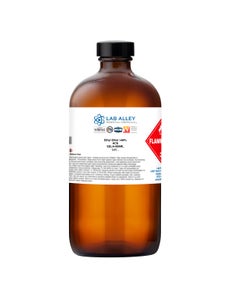
DMSO is a clear, colorless, hygroscopic liquid widely used in laboratory, pharmaceutical, and industrial applications. It functions as a polar solvent and carrier in chemical synthesis, sample preparation, cryopreservation, and formulation processes. U.S. laboratories and manufacturers sourcing DMSO by grade and purity contact Lab Alley at 512-668-9918 for product selection and ordering support.
Boiling Point and Melting Point
DMSO boils at 189°C (372°F) and melts at 19°C (66°F), meaning it solidifies close to typical room temperature. This relatively high melting point can cause DMSO to freeze in unheated storage areas, which is a common practical issue for facilities storing it in bulk. Prolonged heating above 190°C can trigger decomposition, so processes involving elevated temperatures should stay well below this threshold.
Solubility in Water and Organic Solvents
Beyond its complete miscibility with water, DMSO dissolves readily in most organic solvents, including acetone, ethanol, and benzene. It is not soluble in diethyl ether or nonpolar aliphatic hydrocarbons, which limits its use in certain extraction or purification workflows. This broad but not universal solubility profile is why chemists often select DMSO specifically for compounds that resist dissolution in more conventional solvents.
Reactivity and Peroxide Formation
DMSO is classified as a Flammable Liquid Category 4, or combustible liquid, under the Globally Harmonized System, with a flash point of 89°C and an autoignition temperature between 300°C and 302°C. It reacts with strong oxidizers, acid chlorides, alkali metals, and hydrobromic acid, and these combinations should be avoided in storage and handling. Heating DMSO above 150°C can cause exothermic decomposition that releases sulfur oxides and methyl mercaptan, so temperature control is a meaningful safety consideration during processing.
DMSO from Lab Alley is available as a high-purity liquid in grades suited to laboratory, pharmaceutical, and industrial applications. Packaging ranges from small laboratory containers to bulk drums and totes to support research, manufacturing, and commercial supply needs.
Common Uses & Applications
Industrial Applications
DMSO is a component in paint and varnish stripping formulations, where its solvency power helps break down cured coatings without the aggressive characteristics of some chlorinated solvents. It also functions as an industrial cleaning agent for electronics and metal surfaces, particularly where residues resist water-based cleaners.
In polymer and resin processing, DMSO serves as a solvent that helps control viscosity and facilitate uniform mixing. These applications take advantage of its ability to dissolve a wide range of organic residues without leaving behind significant byproducts.
Scientific and Laboratory Uses
As a polar aprotic solvent, DMSO is widely used in organic synthesis and in polymerase chain reaction (PCR) protocols, where it can improve amplification of difficult DNA templates. It is one of the most common cryoprotectants in cell, tissue, and organ preservation, protecting biological material from damage during freezing.
Researchers also rely on it as a carrier solvent for compounds that do not dissolve well in water, particularly in drug screening and in vitro studies. Its combination of solvency and biological compatibility makes it a staple reagent across chemistry and life sciences labs.
Consumer & Household Uses
DMSO appears in topical veterinary and pharmaceutical anti-inflammatory formulations, with Rimso-50 being an FDA-approved product used to treat interstitial cystitis. Outside of this regulated pharmaceutical use, consumer-grade DMSO is not broadly used in typical household products. Its presence in this category is narrow and specific to approved medical formulations rather than general household applications.
Specialized Applications
In pharmaceutical development, DMSO functions as a drug delivery vehicle that enhances skin penetration, allowing certain active ingredients to reach target tissues more effectively. It also plays a defined role in fertility treatment and stem cell banking, where its cryoprotective properties help preserve cellular viability during long-term storage. These specialized uses depend on high-purity grades of DMSO to avoid introducing contaminants into sensitive biological or pharmaceutical processes.

Fight Your Kidney Stone with This Natural Product Hack
Fight kidney stones. Discover how citric acid naturally prevents stone formation.

Is Lactic Acid Bad? A Look at the Health Science
Is lactic acid bad for you? Debunking myths and revealing its vital role in your body & beyond.

Hospitality Without Hitchhikers: Boric Acid’s Role in Bed Bug Prevention
Protect your hospitality business. Boric acid is key to preventing bed bug infestations.
Harnessing Silica Sulfuric Acid to Enhance Concrete Durability
Enhance concrete longevity. Silica sulfuric acid improves strength and chemical resistance.
Safety & Handling
Hazards and Precautions
DMSO is classified as a combustible liquid under GHS category Flam. Liq. 4, carrying the hazard statement H227. Certain formulations also carry H315 and H319, indicating potential for skin and eye irritation on contact. One of its more distinctive hazards is its ability to rapidly penetrate intact skin, which means it can transport other dissolved chemicals into the body along with it. This property makes cross-contamination a genuine concern when DMSO is used near other hazardous substances.
Personal Protective Equipment
Handling DMSO calls for chemical-resistant gloves rated for solvent permeation, since standard nitrile gloves may not provide adequate protection during prolonged contact. Splash-proof chemical safety goggles should be worn to prevent eye exposure, given DMSO's irritation potential.
In poorly ventilated areas or where mist may form, respiratory protection is recommended to limit inhalation exposure. Selecting PPE rated specifically for DMSO permeation, rather than general-purpose solvent gloves, is an important distinction for facilities handling it regularly.
Storage Guidelines
DMSO should be stored in tightly sealed, airtight containers away from heat, sparks, and open flame, consistent with its classification as a combustible liquid. It is highly hygroscopic, meaning it readily absorbs moisture from the air, so containers should remain closed except during active use to preserve purity.
Storage areas should be cool, dry, and well-ventilated, and contact with plastics should be minimized since DMSO can degrade certain polymer materials over time. These conditions help prevent both safety incidents and unwanted changes in the solvent's purity.
Spill and Disposal Procedures
Spills should be absorbed using inert materials such as clay or diatomaceous earth rather than washed away, since DMSO should never be allowed to enter drains or waterways. Collected material should be placed in appropriate closed containers for disposal as combustible or hazardous waste in accordance with local regulations. Facilities should have spill response materials on hand wherever DMSO is stored or used in volume, given its combustibility and environmental handling requirements.

How to Safely Dispose of Sulfuric Acid
Sulfuric acid is one of the most common acidifying reagents and sulfur sources, essential across multiple industries. At the same time, it is also a toxic and highly hazardous chemical reagent, requiring safe handling and disposal by trained personnel.
How To Use Nitric Acid Safely
Nitric acid is a corrosive chemical and harmful to humans. Its contact with skin and eyes can cause serious burns. Affected skin will require flushing with soap and lukewarm water for at least 30 minutes.
Acetone Safety: Proper Storage and Disposal Methods
Acetone is a staple chemical solvent in most laboratories. It is also perhaps one of the most recognizable chemicals to the layperson, best known as the pungent solvent comprising nail polish remover.
How to Use Potassium Iodide Safely and Where to Buy it Online
Potassium Iodide Powder, also known as Potassium Salt of Hydriodic Acid, Iodic Acid Potassium Salt, Potassium Monoiodide, and Knollide, has the chemical formula KI. It appears as a white crystalline powder, odorless, and is soluble in water at ambient conditions.

Medicinal Oils Derived From Plants
You can order food-grade ethanol, extraction-grade ethanol, ACS-grade ethanol, FCC-grade ethanol, USP grade ethanol, HPLC-grade ethanol and kosher ethanol from Lab Alley. Perform ethanol (EtOH) extraction at ultra-low temperatures for the best yields.
Ethanol extraction is a cost-effective way to use ethanol as an industrial solvent to produce high-quality botanical extracts from large volumes of medicinal herbs or plants.
Dimethyl Sulfoxide Grades and Pack Sizes
Lab Alley supplies Dimethyl Sulfoxide in multiple grades to meet the needs of laboratory, analytical, and industrial customers.
Available Grades & Concentrations
-
DMSO 99.5%, ACS Grade, for general laboratory and industrial solvent use
-
DMSO, HPLC Grade, for high-purity analytical and chromatography applications
-
DMSO, Anhydrous, ≤50ppm H2O, Reagent Grade, for moisture-sensitive synthesis and reactions
Pack Sizes & Industrial Availability
-
Laboratory bottles: 500mL for lab-scale use
-
Commercial containers: 4L for standard operations
-
Case quantities: 4 x 4L case for bulk laboratory purchasing
-
Industrial drums: 55 Gallon for high-volume applications
All Lab Alley DMSO containers are UN-approved and DOT-compliant with proper combustible liquid labeling for safe transport and storage. Certificates of Analysis and Safety Data Sheets are available upon request, and the Lab Alley team can help you select the right grade and pack size for your specific application.
FAQs
What is DMSO and how is it produced?
What are the potential side effects of DMSO exposure?
How should DMSO be stored to prevent degradation?
DMSO should be kept in tightly sealed, airtight containers in a cool, dry, well-ventilated space away from heat and ignition sources. Because it is highly hygroscopic, minimizing air exposure is key to preventing moisture absorption, which can compromise purity, particularly for anhydrous grades. Avoiding prolonged contact with plastic containers or fittings also helps preserve product integrity during storage.
Does DMSO have an expiration date?
Why does DMSO cause a garlic-like taste or breath odor after skin contact?
DMSO's rapid skin penetration allows it to enter the bloodstream quickly, where it is metabolized in part into compounds that produce a characteristic garlic-like taste and odor on the breath. This effect is well documented and is often one of the first noticeable signs of skin contact, even in the absence of visible irritation. While generally not dangerous on its own, it serves as a practical indicator that skin exposure has occurred and that protective measures should be reviewed.