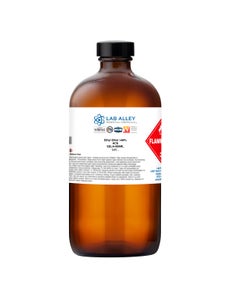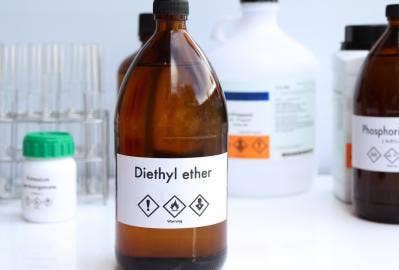






Ethyl Ether Overview
Ethyl ether, more commonly known as diethyl ether, is a highly volatile, extremely flammable solvent widely recognized by its synonyms ether, ethoxyethane, and sulfuric ether. Its chemical formula, (C₂H₅)₂O, reflects a simple structure that gives rise to a low boiling point and broad miscibility with organic solvents, making it one of the most enduring solvents in laboratory and industrial chemistry.
What sets ethyl ether apart is its versatility across extraction, synthesis, and historical medical use. It has served for over a century as a workhorse extraction solvent for waxes, fats, oils, and alkaloids, and remains a key reaction medium for Grignard synthesis in organic chemistry.
That same volatility and reactivity demand careful handling. Ethyl ether is classified as a Class 3 flammable liquid under DOT regulations, forms explosive peroxides on prolonged exposure to air and light, and requires disciplined storage and disposal practices to remain safe for laboratory and industrial use.


Properties of Ethyl Ether
Key Facts
-
Compound Name: Diethyl ether
-
Synonyms/Common Names: Ethyl ether, ether, ethoxyethane, sulfuric ether, anesthetic ether
-
Chemical Formula: (C₂H₅)₂O; Hill formula C₄H₁₀O
-
CAS Number: 60-29-7
-
Molar Mass: 74.12 g/mol
-
Appearance: Colorless liquid with a sweetish, pungent odor
Density and Behavior Relative to Water
Ethyl ether has a density of 0.713 g/cm³ at 25°C, making it noticeably lighter than water. This means any ether that contacts water or an aqueous solution will float on the surface rather than mix in, a behavior worth accounting for during spill response and phase separation in extraction work.
Ethyl ether is a clear, colorless, highly volatile liquid widely used in laboratory, pharmaceutical, and industrial applications. It functions as a solvent and extraction agent in chemical synthesis, sample preparation, and manufacturing processes. U.S. laboratories and manufacturers sourcing ethyl ether by grade and purity contact Lab Alley at 512-668-9918 for product selection and ordering support.
Boiling Point and Melting Point
The compound boils at 34.6°C (94.3°F), just above room temperature, which explains its extreme volatility and the strong vapor buildup that occurs even in loosely sealed containers. It remains liquid down to a melting point of -116.3°C (-177.3°F), giving it a wide working range in cold-chain or low-temperature laboratory applications.
Solubility in Water and Organic Solvents
Ethyl ether is only modestly soluble in water, dissolving at 6.05 g per 100 mL, but it is miscible with ethanol, benzene, chloroform, and most other organic solvents. This dual character allows it to extract organic compounds from aqueous mixtures efficiently, which is central to its role as an extraction solvent.
Reactivity and Peroxide Formation
Ethyl ether is extremely flammable, with a flash point of -45°C, meaning it can ignite at temperatures well below freezing. It also oxidizes slowly on exposure to air and light to form explosive peroxides, and it reacts violently with strong oxidizers, nitric acid, and halogens, all of which must be kept well away from storage and work areas.
Ethyl ether from Lab Alley is available as a high-purity liquid meeting ACS and reagent-grade specifications for laboratory, analytical, and industrial applications. Packaging ranges from small laboratory containers to bulk drums and totes to support research, manufacturing, and commercial supply needs.
Common Uses & Applications
Industrial Applications
In industrial settings, ethyl ether is used as an extraction solvent for waxes, fats, oils, perfumes, alkaloids, and gums, taking advantage of its low boiling point for easy recovery after extraction. It also serves as a reaction medium in Grignard synthesis, where its ability to dissolve both organic substrates and organometallic reagents makes it indispensable. These same properties support its role in various downstream manufacturing processes that require a clean, easily removable solvent.
Scientific and Laboratory Uses
Laboratories rely on ethyl ether as a general-purpose solvent for organic synthesis, particularly in reactions where an inert, non-aqueous environment is required. It is also used in hydroboration reactions and analytical extractions, where its volatility allows for straightforward solvent removal without leaving residue. Its long history in synthetic chemistry has made it a familiar and trusted choice across academic and industrial research settings.
Specialized Applications
Ethyl ether holds a notable place in medical history as one of the earliest inhalation anesthetics, though this use is now obsolete in favor of safer modern agents. It also finds use as a primer additive in engine starting fluids, where its low flash point and rapid vaporization help ignite fuel in cold conditions. These specialized applications reflect the same volatility that makes the compound useful and demanding to handle elsewhere.
Fight Your Kidney Stone with This Natural Product Hack
Fight kidney stones. Discover how citric acid naturally prevents stone formation.

Is Lactic Acid Bad? A Look at the Health Science
Is lactic acid bad for you? Debunking myths and revealing its vital role in your body & beyond.
Hospitality Without Hitchhikers: Boric Acid’s Role in Bed Bug Prevention
Protect your hospitality business. Boric acid is key to preventing bed bug infestations.
Harnessing Silica Sulfuric Acid to Enhance Concrete Durability
Enhance concrete longevity. Silica sulfuric acid improves strength and chemical resistance.
Safety & Handling
Hazards and Precautions
Ethyl ether carries a GHS Danger classification as an extremely flammable liquid and vapor. It is harmful if swallowed and may cause drowsiness or dizziness on inhalation, and it forms explosive peroxides on standing, which introduces a hazard that develops over time even in unopened containers. These combined risks mean that both fire safety and peroxide monitoring must be built into any standard operating procedure involving this chemical.
Personal Protective Equipment
Handling ethyl ether calls for nitrile or butyl rubber gloves and chemical splash goggles to protect against skin and eye contact. Flame-resistant clothing is recommended given the compound's low flash point, and all work should take place in a fume hood with good ventilation to limit vapor buildup. This combination of PPE addresses both the chemical exposure risk and the fire hazard inherent to the solvent.
Storage Guidelines
Ethyl ether should be stored below 15°C in a flammable-rated, explosion-proof cabinet to minimize vapor generation and eliminate ignition sources. Containers should be kept tightly sealed in amber glass, both to block light exposure that accelerates peroxide formation and to prevent evaporative loss. Storage areas must also be kept clear of oxidizers and any source of sparks or open flame.
Spill and Disposal Procedures
Any spill response should begin with eliminating all ignition sources in the area before cleanup starts. The spilled material should be absorbed with an inert, non-combustible material rather than materials that could react with residual peroxides. Before disposal, containers should be checked for peroxide accumulation, and all waste should be handled and disposed of as flammable hazardous waste in accordance with applicable regulations.

How to Safely Dispose of Sulfuric Acid
Sulfuric acid is one of the most common acidifying reagents and sulfur sources, essential across multiple industries. At the same time, it is also a toxic and highly hazardous chemical reagent, requiring safe handling and disposal by trained personnel.
How To Use Nitric Acid Safely
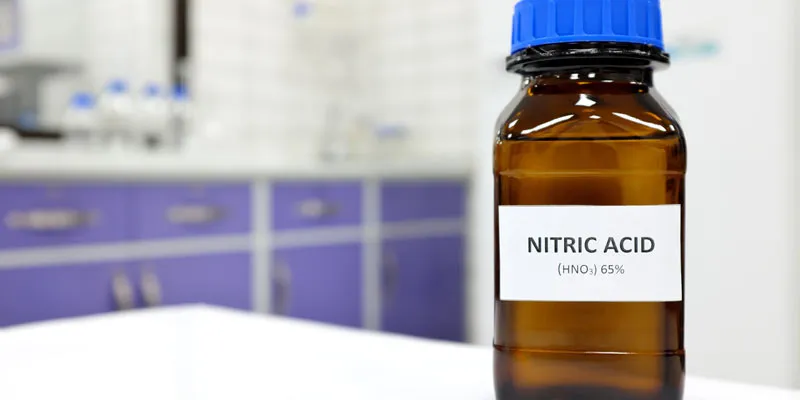
Nitric acid is a corrosive chemical and harmful to humans. Its contact with skin and eyes can cause serious burns. Affected skin will require flushing with soap and lukewarm water for at least 30 minutes.
Acetone Safety: Proper Storage and Disposal Methods
Acetone is a staple chemical solvent in most laboratories. It is also perhaps one of the most recognizable chemicals to the layperson, best known as the pungent solvent comprising nail polish remover.
How to Use Potassium Iodide Safely and Where to Buy it Online
Potassium Iodide Powder, also known as Potassium Salt of Hydriodic Acid, Iodic Acid Potassium Salt, Potassium Monoiodide, and Knollide, has the chemical formula KI. It appears as a white crystalline powder, odorless, and is soluble in water at ambient conditions.
Medicinal Oils Derived From Plants
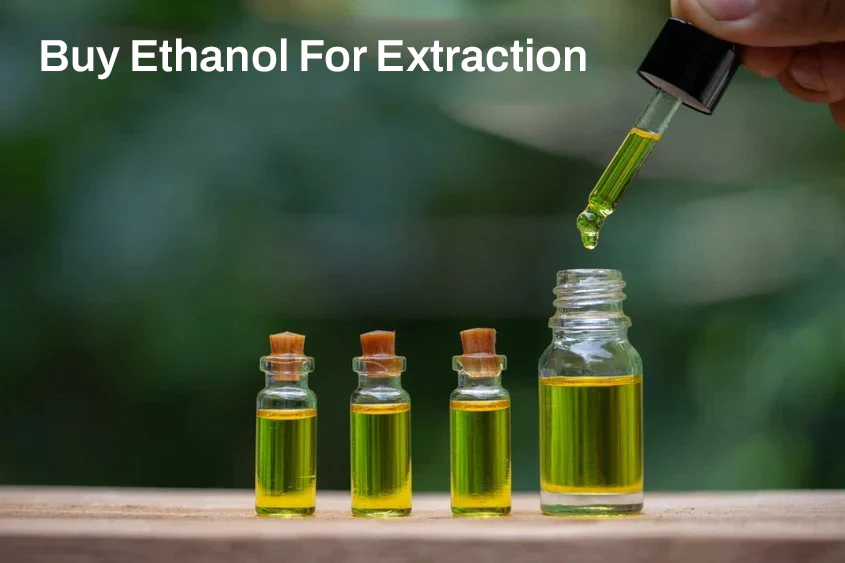
You can order food-grade ethanol, extraction-grade ethanol, ACS-grade ethanol, FCC-grade ethanol, USP grade ethanol, HPLC-grade ethanol and kosher ethanol from Lab Alley. Perform ethanol (EtOH) extraction at ultra-low temperatures for the best yields.
Ethanol extraction is a cost-effective way to use ethanol as an industrial solvent to produce high-quality botanical extracts from large volumes of medicinal herbs or plants.
Ethyl Ether Grades and Pack Sizes
Lab Alley supplies ethyl ether in a grade suited to laboratory and analytical work, along with a full range of container sizes for both bench-scale and bulk operations.
Available Grades & Concentrations
- ACS Grade (≥99%) for general laboratory and analytical use
Pack Sizes & Industrial Availability
-
Laboratory bottles: 500 mL and 1 L for lab-scale use
-
Commercial containers: 4 L and 5-gallon for standard operations
-
Industrial drums: 55-gallon for high-volume applications
-
Case and pallet quantities available for bulk purchasing
All Lab Alley ethyl ether containers are UN-approved and DOT-compliant, shipped with proper Class 3 flammable liquid labeling under UN1155. Contact Lab Alley to confirm current stock, request a Certificate of Analysis or Safety Data Sheet, or discuss bulk pricing for your application.
FAQs
What is ethyl ether and how is it produced?
What are the potential side effects of ethyl ether exposure?
How should ethyl ether be stored to prevent degradation?
Ethyl ether should be stored cool, dark, and tightly sealed, away from both oxidizers and any potential ignition sources. Amber glass containers help limit the light exposure that accelerates peroxide formation. Storage below 15°C in an explosion-proof cabinet further reduces both fire risk and degradation.
Does ethyl ether have an expiration date?
Why does ethyl ether require peroxide testing before use?
Ethyl ether slowly oxidizes in the presence of air and light to form unstable peroxides that are not visible or detectable without testing. These peroxides can become dangerously concentrated during distillation, evaporation, or extended storage, creating an explosion risk when the container is opened, heated, or disturbed. Testing before use is a standard precaution to confirm the material is safe to handle.