





Types of Ethyl Ether
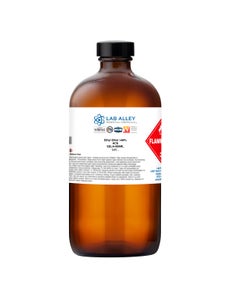
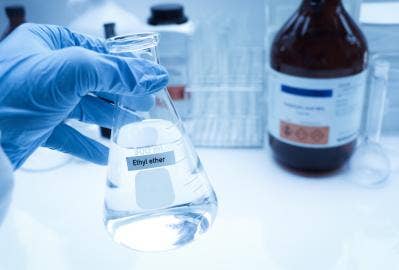
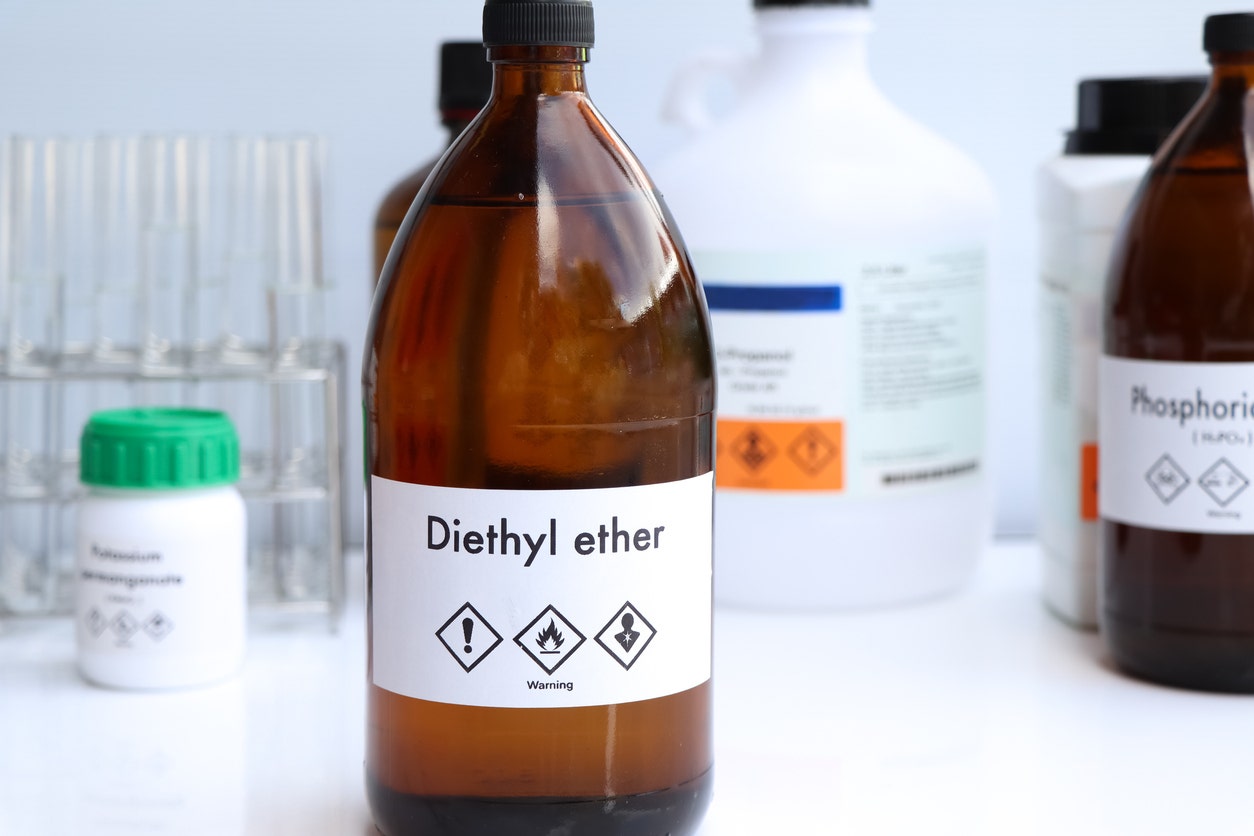
Ethyl ether, more commonly known as diethyl ether, is a highly volatile, colorless liquid with a sweet odor that has served both the pharmaceutical and laboratory worlds for well over a century. Because its applications span everything from historical surgical anesthesia to modern analytical chemistry and industrial solvent use, it is manufactured and sold across several distinct purity tiers, each engineered for a different level of performance and documentation.
Selecting the right grade of ethyl ether comes down to a few core variables: water content, alcohol stabilizer levels, and the compound's tendency to form peroxides during storage. Laboratories working with moisture-sensitive reactions gravitate toward anhydrous or ACS-grade material, while industrial buyers handling bulk solvent applications typically prioritize cost and volume over analytical-level purity.
In this article, we'll explore:
-
Common Grades & Purities
-
Chemical Forms & Variants
-
Applications Based on Type
-
How to Choose the Right Type
Common Grades & Purities
Pharmaceutical Grade (USP/NF)
Pharmaceutical grade ethyl ether was historically supplied at a purity of 96 percent or higher to meet USP monographs governing its use as a general anesthetic. This grade has largely fallen out of active clinical use as safer inhalational anesthetics replaced it decades ago, and today it persists mainly as a legacy or compendial reference point rather than an actively prescribed anesthetic agent.
ACS/Reagent Grade
ACS/reagent grade ethyl ether meets the purity specifications set by the American Chemical Society, typically holding a minimum purity of 99.0 percent. This grade carries strict impurity ceilings on alcohol content, carbonyl compounds, acidity, and peroxide levels, all of which are controlled to protect the integrity of downstream reactions. It is the standard choice for general laboratory work, including synthesis, extraction, and drying applications where consistent, well-characterized purity matters.
HPLC Grade
HPLC grade ethyl ether typically falls in the 99 to 99.9 percent purity range and is often stabilized with a small amount of ethanol to control peroxide formation. This grade is formulated specifically to minimize UV-absorbing impurities, since even trace contaminants can interfere with detection sensitivity in chromatographic analysis. Laboratories running chromatography-dependent workflows rely on this grade to avoid background noise that lower grades might introduce.
Industrial/Technical Grade
Industrial or technical grade ethyl ether carries a broader purity tolerance than the reagent grades above and has historically been marketed under labels like "unrefined" or "technical" grade. This grade is manufactured for bulk solvent applications where analytical-level purity is unnecessary and cost efficiency at volume is the priority. Buyers selecting this grade are typically supporting large-scale industrial processes rather than precision laboratory work.
Chemical Forms & Variants
Ethyl ether is sold in a small number of meaningfully different forms, distinguished primarily by water content and the resulting purity ceiling each form can achieve. Understanding these distinctions helps buyers avoid paying for a purity level their application does not require, or worse, using an underspecified form where moisture sensitivity is a concern.
Hydrated vs. Anhydrous Forms
Standard and USP-type ethyl ether contains trace water along with up to approximately 2 percent alcohol, which functions as a stabilizer against peroxide formation. Anhydrous grade, by contrast, is dried down to a very low water content, typically 0.01 to 0.03 percent, making it the appropriate choice for reactions where residual moisture would compromise results. The difference between these two forms is not cosmetic; it directly determines whether a batch is suitable for water-sensitive synthesis work or general-purpose extraction.
Concentration Variants
Purity across the available ethyl ether variants spans roughly 96 percent, characteristic of older USP and anesthesia-grade specifications, up to 99.9 percent for HPLC and anhydrous-grade material. Higher-purity variants commonly include an inhibitor such as BHT or a small ethanol addition to slow peroxide formation during storage. Buyers should treat the purity percentage and the stabilizer type as a package; a high purity number without adequate peroxide control still carries meaningful storage risk.
Applications Based on Type
Pharmaceutical & Healthcare
USP-grade ethyl ether was historically used as a general anesthetic, a role that today is largely a legacy application rather than an active one in modern clinical practice. Its presence in this space reflects the compound's pharmaceutical history more than current standard-of-care usage.
Laboratory & Analytical
ACS, anhydrous, and HPLC grades are the workhorses of laboratory and analytical applications, supporting extraction procedures, Grignard reagent preparation, recrystallization, and chromatography sample preparation. Each of these tasks depends on a level of purity and moisture control that only the reagent-tier grades reliably deliver, which is why laboratories rarely substitute technical grade material into these workflows.
Industrial & Manufacturing
Technical and industrial grade ethyl ether serves as a solvent for fats, oils, resins, rubber, and nitrocellulose, and it also appears in engine starting fluid formulations. These applications value the compound's solvency and volatility over analytical purity, making the broader tolerances of technical grade both acceptable and cost-effective.
How to Choose the Right Type
Choosing the correct type of ethyl ether starts with matching the grade to the demands of the application, then confirming the form and concentration will actually meet those demands in practice.
Match Grade to Application
Food-contact or drug applications require compendial documentation, whether FCC or USP/NF, while industrial uses can rely on technical grade without that certification burden. Matching the grade to the application at the outset avoids paying for compendial documentation that an industrial process does not need, or worse, using technical-grade material where a regulated application requires certified purity.
Verify Required Certifications
Reagent or anhydrous grade is the appropriate choice for synthesis work and any procedure sensitive to residual moisture, while technical grade is better suited to bulk industrial solvent use where analytical purity is not a requirement. Selecting a grade above what the application demands adds unnecessary cost, while selecting below it risks compromised results.
Select Appropriate Concentration or Form
Reactions that require strictly dry conditions call for the anhydrous form, while standard or stabilized ether remains acceptable for general extraction work where trace water and alcohol content are not a concern. Matching the form to the task avoids both overpaying for unneeded purity and underdelivering on a moisture-sensitive process.
Common Mistakes
Two mistakes account for most quality issues with ethyl ether: using technical-grade material in analytical work where its broader impurity tolerances compromise results, and storing any grade of ether past its peroxide-safe window without testing before use. Both errors are avoidable with basic grade awareness and routine peroxide testing ahead of use.
Key Takeaways
Choosing the right type of ethyl ether depends on matching purity, moisture content, and stabilizer type to the specific demands of the application at hand. Laboratory and analytical work calls for ACS, anhydrous, or HPLC grade material, while industrial and manufacturing applications are well served by technical grade at a lower cost. Regardless of grade, peroxide monitoring and proper storage practices remain essential to safe and effective use.
For grade-specific certificates of analysis or guidance on selecting the right ethyl ether for your application, contact Lab Alley's technical support team.
For more detailed guidance, explore our Resource Library.
Our Customer Care team is also available for more information and documentation, including chemical Safety Data Sheets.
Find Ethyl Ether You Can Trust
If you are looking for high-quality ethyl ether for your lab, product line, or research facility, be sure to visit our store to explore our trusted selection and request a quote.
As your trusted partner in chemical supply, Lab Alley is always striving to meet the growing demands of our customers. We want you to be able to access all of your chemical needs in one place, along with streamlined online ordering and fast shipping.
Due to popular demand from our valued clientele, Lab Alley's ethyl ether is available in a range of purities and packaging options to suit various commercial, laboratory, and personal needs.