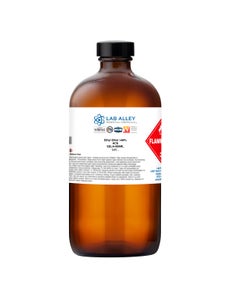






Ethyl Ether Safety & Hazards
Ethyl ether, also known as diethyl ether, is classified as an extremely flammable liquid and vapor under GHS Category 1. This classification places it among the most hazardous common laboratory solvents, requiring strict controls around ignition sources, storage temperature, and container integrity.
Handling ethyl ether safely means understanding both its acute risks, including fire, explosion, and narcotic vapor effects, and its long-term storage hazards, particularly the formation of explosive peroxides. These characteristics make ethyl ether a chemical that demands informed handling by anyone who works with it directly.
This information is relevant to laboratory personnel, production and R&D staff, procurement managers, and safety officers responsible for chemical inventory and compliance.
In this article, we'll explore:
-
Chemical Hazards Overview
-
Exposure Risks & Health Effects
-
First Aid Measures
-
Handling & Storage Precautions
-
Spill & Leak Procedures
-
Fire & Explosion Hazards
-
Regulatory & Compliance Information
-
Technical Documents & References
Chemical Hazards Overview
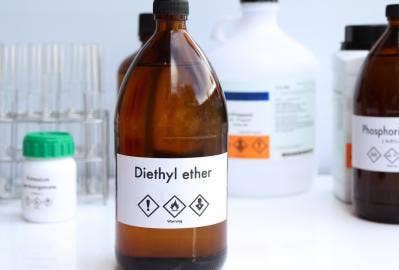
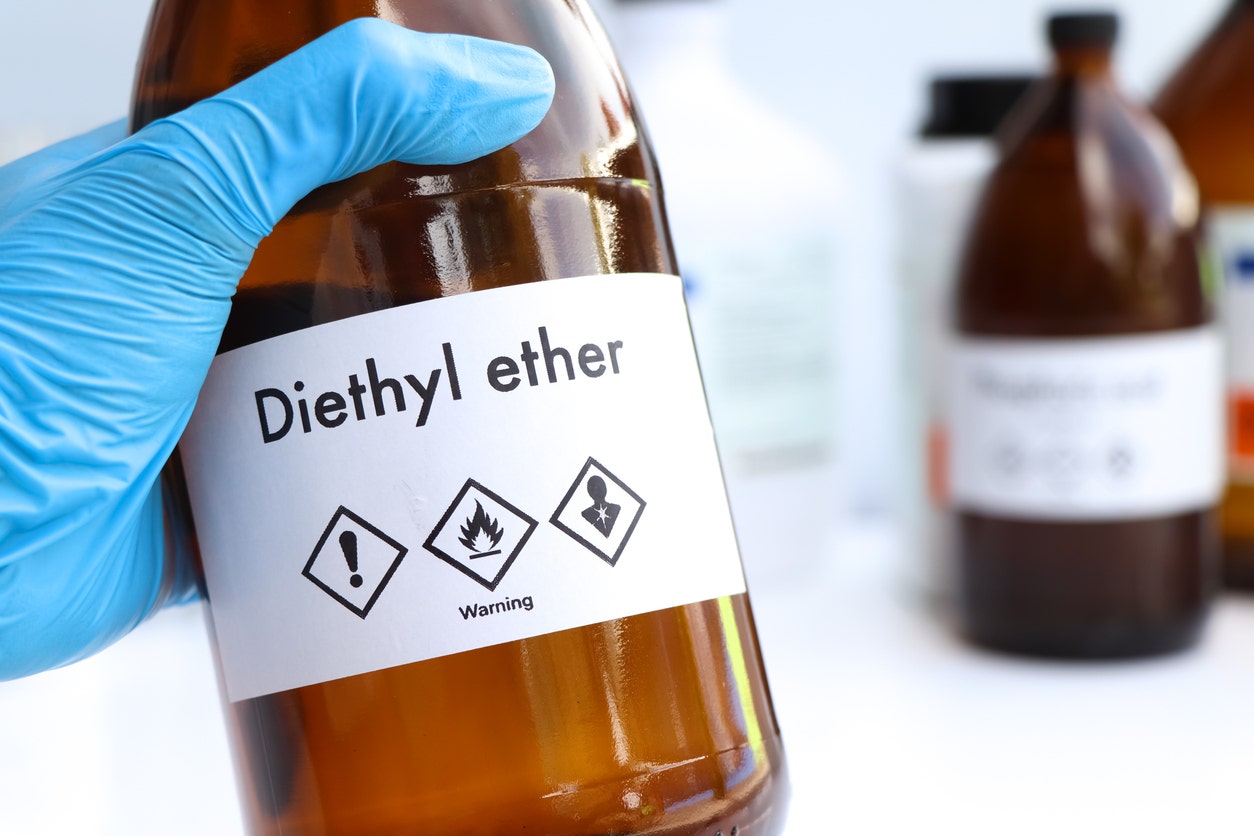
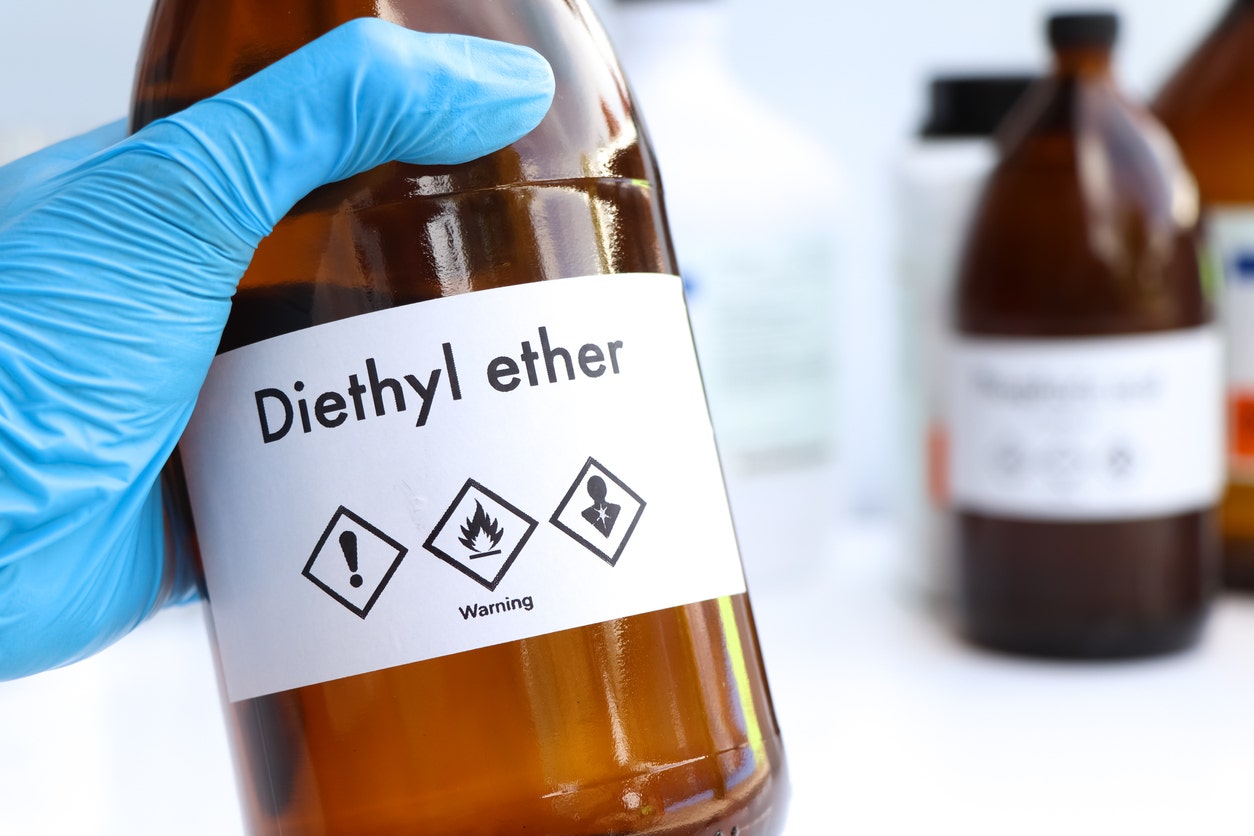
Ethyl ether carries a hazard profile driven primarily by its extreme flammability, with secondary concerns around acute oral toxicity and narcotic effects from vapor inhalation. Under the Globally Harmonized System, it is classified as a Category 1 flammable liquid and vapor, a Category 4 acute oral toxicant, and a Category 3 substance for specific target organ toxicity from single exposure. The GHS label applies two pictograms: the flame symbol (GHS02) and the exclamation mark (GHS07). The NFPA 704 diamond rates ethyl ether at Health 2, Flammability 4, and Reactivity 1, with the flammability rating at the maximum level reflecting its extremely low flash point and wide explosive range.
-
GHS Pictograms: GHS02 (Flame); GHS07 (Exclamation Mark)
-
NFPA 704 Rating: Health 2 / Flammability 4 / Reactivity 1
-
Primary Risks: Inhalation of vapor and skin or eye contact are the main routes of exposure; extreme flammability and peroxide formation represent the dominant physical hazards
Exposure Risks & Health Effects
Inhalation Risks
Ethyl ether has a high vapor pressure of 442 mmHg at 20°C, meaning it evaporates quickly and can build up rapidly in enclosed or poorly ventilated spaces. Inhalation of vapors causes drowsiness, headache, and dizziness at moderate concentrations. At higher concentrations, exposure can progress to loss of consciousness, reflecting the compound's historical use as a general anesthetic. Because ether vapor is heavier than air, it tends to collect near the floor and in low-lying areas, increasing the risk of unnoticed accumulation.
Skin Contact Risks
Direct skin contact with ethyl ether is mildly irritating rather than corrosive. Repeated or prolonged contact removes natural skin oils, leading to dryness and cracking over time. The compound's high volatility limits how much is absorbed through the skin before it evaporates, which reduces the risk of significant systemic absorption from a single brief contact. Even so, contaminated clothing should be treated as a flammability hazard given how readily the liquid ignites.
Eye Contact Risks
Contact with the eyes causes irritation, which may include redness, tearing, and discomfort. This irritation is generally transient and not associated with permanent eye damage under typical exposure scenarios. Prompt flushing reduces the duration and severity of symptoms significantly.
Ingestion Risks
Ethyl ether has relatively low acute oral toxicity, with an LD50 of 1,215 mg/kg in rats. Ingestion can still cause nausea, vomiting, and central nervous system depression, particularly if a significant volume is swallowed. Given its low boiling point, ingested ether can also pose an aspiration hazard if vomiting occurs.
Chronic Effects
There is no evidence linking ethyl ether to carcinogenicity, and it is not listed by IARC, NTP, or ACGIH as a carcinogen. Chronic vapor exposure has been associated with loss of appetite, exhaustion, drowsiness, and other central nervous system effects that typically resolve once exposure stops. These effects underscore the importance of consistent ventilation controls in any workspace where ethyl ether is used regularly.
First Aid Procedures


Across all exposure routes, contaminated clothing should be removed away from ignition sources given ethyl ether's flammability, and anyone assisting an exposed individual should first ensure the area is ventilated, since accumulated vapor can affect the responder's own alertness. Eye contact always warrants immediate professional evaluation regardless of how minor symptoms appear at first, and emergency contacts or poison control information should be posted wherever ethyl ether is stored or used.
Handling & Storage Precautions
Safe use of ethyl ether depends on eliminating ignition sources and maintaining consistent storage conditions that limit peroxide formation. Facilities working with this chemical should build these precautions into standard operating procedures rather than treating them as occasional reminders.
-
PPE: Chemical splash goggles and nitrile or neoprene gloves
-
Ventilation: Local exhaust ventilation is required during use
-
Ignition control: Eliminate open flames, sparks, static discharge, and hot surfaces near the work area
Storage conditions matter just as much as handling practices. Ethyl ether should be kept below 30°C, away from light, heat, and any ignition source, in amber glass or approved metal safety containers within a dedicated flammables cabinet.
Certain substance classes should never be stored or handled near ethyl ether:
-
Strong oxidizers
-
Halogens
-
Sulfur and sulfur compounds
-
Nitric acid
-
Peroxides
Spill & Leak Procedures
Responding to an ethyl ether spill requires immediate action to control ignition risk before addressing containment. Because of the compound's low flash point, even small spills warrant a cautious, methodical response.
Emergency response steps include:
-
Evacuate the area and eliminate all ignition sources immediately
-
Ventilate the space thoroughly
-
Wear flame-resistant PPE and self-contained breathing apparatus for larger spills
Containment should rely on inert, non-combustible absorbent materials such as sand or vermiculite, applied using non-sparking tools. Explosion-proof ventilation equipment should be used throughout cleanup. Collected material is classified as RCRA hazardous waste under code U117 due to ignitability, and it must never be discharged into sewers or drains. Disposal should proceed through a licensed hazardous waste handler in accordance with applicable regulations.
Fire & Explosion Hazards
Ethyl ether's flash point of -45°C (-49°F), determined by closed cup method, makes it one of the most flammable solvents in common laboratory use. Its autoignition temperature of 160°C (320°F) is comparatively low, and its flammable range spans from 1.9% to 36.0% by volume in air, a wide window that increases the likelihood of ignition across a range of vapor concentrations.
Appropriate extinguishing media include:
-
Dry chemical
-
Carbon dioxide
-
Alcohol-resistant foam
Water should not be used as a primary extinguishing agent, as it is ineffective against ethyl ether fires and may spread burning liquid. Firefighters and emergency responders should wear full protective clothing along with positive-pressure self-contained breathing apparatus. Because ether vapor is heavier than air, it can travel considerable distances to reach an ignition source and flash back toward the original spill or container, and involved containers may rupture or explode under fire conditions.
Regulatory Information & Compliance
OSHA Regulations
OSHA sets a permissible exposure limit of 400 ppm as an 8-hour time-weighted average, equivalent to 1,200 mg/m³, under 29 CFR 1910.1000, Table Z-1. The immediately dangerous to life or health concentration is 1,900 ppm.
EPA & Environmental Impact
Ethyl ether is listed under RCRA as hazardous waste code U117. It is readily biodegradable and is expected to volatilize rapidly from both water and soil surfaces, limiting long-term environmental persistence.
DOT Transportation Regulations
For transportation purposes, ethyl ether is classified as UN1155, Hazard Class 3 (Flammable Liquid), Packing Group I, under the proper shipping name "Diethyl ether." Packing Group I reflects its status among the highest-risk materials within its hazard class.
FDA/USP/ACS Compliance
Ethyl ether is available in grades meeting USP/NF and ACS reagent specifications, supporting its use in applications where documented purity standards are required.
Technical Documents & Resources
- Safety Data Sheets are available for all grades and concentrations of ethyl ether and detail safe handling, PPE, first aid, and spill response procedures.
-
Certificates of Analysis are available upon request and verify purity and compliance with applicable USP/NF or ACS grade standards.
Final Note
Ethyl ether's extreme flammability, combined with its tendency to form explosive peroxides during storage, makes it one of the more demanding chemicals to manage safely in a laboratory or production setting. Proper ventilation, ignition control, and storage discipline are not optional precautions but core requirements for working with this solvent.
Facilities that maintain consistent handling procedures, monitor storage duration, and follow documented first aid and spill response protocols significantly reduce the risks associated with this chemical. Reviewing current SDS documentation before use ensures that handling practices stay aligned with the latest safety guidance.
Explore our Resource Library for more information.
Our Customer Care team is also available for more information and documentation, including chemical Safety Data Sheets.
Need Ethyl Ether You Can Trust?
If you are looking for high-quality ethyl ether for your lab, product line, or research facility, be sure to visit our store to explore our trusted selection and request a quote.
As your trusted partner in chemical supply, Lab Alley is always striving to meet the growing demands of our customers. We want you to be able to access all of your chemical needs in one place, along with streamlined online ordering and fast shipping.
Due to popular demand from our valued clientele, Lab Alley's ethyl ether is available in a range of purities and packaging options to suit various commercial, laboratory, and personal needs.