





Ethyl Ether Uses & Applications
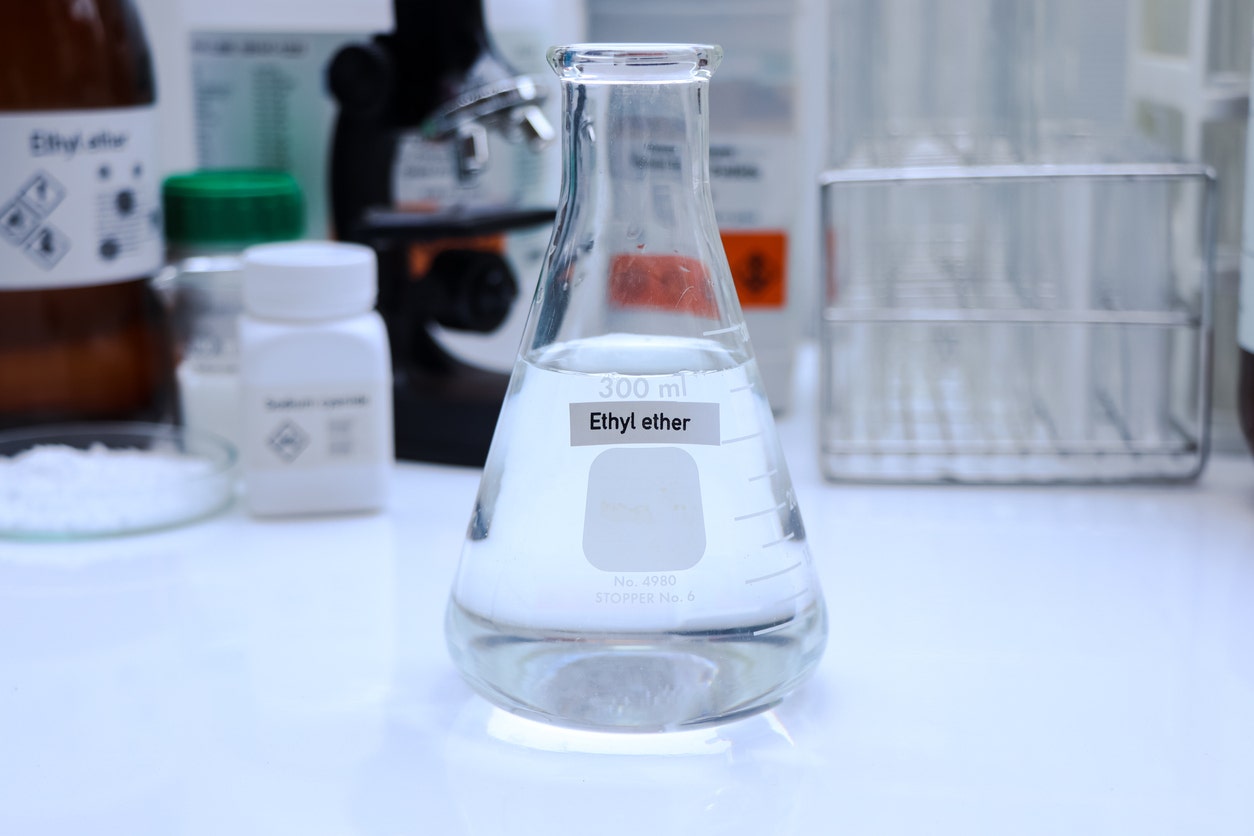
Ethyl ether, also known as diethyl ether, is a colorless, highly volatile, and flammable liquid identified by the formula (C2H5)2O. Its low boiling point and rapid evaporation rate make it one of the more distinctive solvents in regular industrial and laboratory use, and its characteristic sweet odor is often the first indication of its presence in a workspace. These physical properties, combined with strong solvency for both nonpolar and polar organic compounds, are what drive the chemical's range of applications across manufacturing, research, and historical medical settings.
Ethyl ether is available in ACS grade, a purity standard suited to laboratory research, chemical synthesis, and industrial processing where consistent quality matters. Industries that rely on it most heavily include chemical manufacturing, pharmaceutical raw material processing, academic and industrial research, and specialty product formulation such as perfumery. Its regulatory status as a DEA-listed chemical also shapes how it moves through commercial supply chains, a factor that procurement teams should understand alongside its technical applications.
In this article, we'll explore:
-
Industrial Applications
-
Scientific & Laboratory Uses
-
Historical & Legacy Medical Applications
-
Explosives & Nitrocellulose Manufacturing
-
Regulatory Status & Purchasing Considerations
-
Ethyl Ether Grades and Pack Sizes
Industrial Applications
Ethyl ether serves as a processing aid across several manufacturing sectors, valued for its ability to dissolve and extract organic materials without leaving significant residue behind. Its role tends to be upstream in production, supporting the preparation and purification of materials rather than appearing in finished consumer goods.
Manufacturing & Processing
Ethyl ether functions as a processing solvent in the production of rubber, plastics, paints, and coatings, where it helps dissolve raw materials into workable forms during formulation. It also serves as an extractant for fats, waxes, oils, resins, and dyes, pulling these compounds out of raw source materials with minimal chemical alteration. Manufacturers favor it in these roles because it evaporates cleanly after use, reducing the risk of solvent residue affecting the final product.
Chemical Synthesis
In chemical synthesis, ethyl ether acts as an aprotic solvent during the production of cellulose acetate, ethyl cellulose, and ethyl esters, compounds that later become key ingredients in adhesives and coatings. Its low reactivity allows sensitive synthesis reactions to proceed without unwanted side reactions from the solvent itself. This makes it a dependable choice when a stable, low-boiling reaction medium is required for intermediate chemical production.
Petroleum & Energy
One of ethyl ether's most recognized industrial roles is as a component of starting fluids used to aid cold-weather ignition in diesel and gasoline engines. Its low autoignition temperature allows engines to turn over more readily in conditions where fuel alone would struggle to ignite. Ethyl ether has also historically been used as an alcohol denaturant, added to ethanol to render it unsuitable for beverage consumption while preserving its usefulness for industrial purposes.
Alkaloid & Botanical Extraction
Ethyl ether is used to extract alkaloids and other active compounds from plant material, a process that supports pharmaceutical and botanical raw material processing further upstream in the supply chain. Its solvency profile allows it to pull target compounds from plant matter while leaving behind much of the surrounding cellulose and inert material. This makes it useful in early-stage extraction work where isolating a specific compound class matters more than achieving final pharmaceutical purity.
Perfumery Extraction
In fragrance production, ethyl ether is used to extract aromatic compounds from raw botanical and animal-derived materials, isolating the scent-bearing molecules from bulkier plant or source matter. Perfumers and fragrance manufacturers rely on this extraction step to produce concentrated aromatic materials that later become part of finished fragrance formulations. The solvent's volatility works in its favor here, since it can be removed from the extract without leaving behind an odor of its own.
Scientific & Laboratory Uses
Laboratories across academic, industrial, and quality control settings rely on ethyl ether for its predictable behavior as a solvent and reaction medium. Its combination of low polarity, low boiling point, and chemical stability under normal handling conditions makes it a familiar fixture on lab benches.
Analytical Reagent
Ethyl ether serves as the extraction solvent in standardized fat and oil content determination methods, including Soxhlet ether extraction procedures used in food, feed, and material testing. These methods rely on the solvent's ability to selectively dissolve fats and oils from a sample matrix while leaving other components largely untouched. Laboratories performing compositional analysis on agricultural or food products often depend on this method to generate consistent, comparable results.
Solvent in Laboratory Processes
Beyond analytical testing, ethyl ether is widely used for extraction, recrystallization, and as a general reaction medium in organic chemistry. Its low polarity makes it effective at dissolving nonpolar organic compounds, while its low boiling point allows chemists to remove it easily once a reaction or purification step is complete. This combination of properties has made it a standard choice in workflows where clean, efficient solvent removal is important to the next step in a process.
Specialized Research Applications
Ethyl ether is the preferred aprotic solvent for Grignard reagent formation and other organometallic and organolithium reactions, where its inert behavior toward reactive intermediates is essential. It also appears as a mobile phase component in certain chromatography applications, helping separate compounds based on polarity differences. In entomological research, ethyl ether is used as an anesthetizing agent for insect specimen collection, allowing researchers to handle and prepare specimens without the physical damage that other methods might cause.
Historical & Legacy Medical Applications
Ethyl ether occupies a notable place in medical history, though its clinical role today looks very different from what it once was. Understanding this history provides useful context for why the chemical is still associated with medicine even though its modern applications have narrowed considerably.
First Widely Used General Anesthetic
Ethyl ether was the first widely used general anesthetic, introduced into surgical practice in the 19th century in a development that transformed the field. Before its introduction, surgery was performed without reliable pain control, and ether's ability to induce a controlled loss of consciousness made a previously unthinkable range of procedures possible. Its adoption is often cited as a turning point in the history of modern medicine, marking the beginning of anesthesiology as a distinct medical discipline.
Modern Status
Today, ethyl ether has been largely replaced in clinical practice by nonflammable, safer anesthetic agents that carry a lower risk profile in operating room environments. Its high flammability and tendency to irritate the respiratory system made it a less practical choice once alternatives became available. It retains a limited presence in veterinary settings and educational or historical demonstrations, where its role is more illustrative than clinical.
Explosives & Nitrocellulose Manufacturing
Ethyl ether also has a specialized industrial application tied to its solvency for cellulose derivatives, an area distinct from its more common laboratory and manufacturing roles.
Collodion & Smokeless Powder Production
Ethyl ether is used in combination with ethanol to dissolve nitrocellulose, producing collodion, a viscous solution that has served both industrial and historical medical purposes. This ether-alcohol mixture has been used in the manufacturing of smokeless powder, where dissolving and reforming nitrocellulose is a necessary step in production. Collodion produced this way has also seen use in certain historical medical dressings, where the solution would dry to form a flexible protective film over a wound.
Regulatory Status & Purchasing Considerations
Because of its chemical properties, ethyl ether's availability is shaped by regulatory oversight in addition to its technical applications. Buyers sourcing this chemical for legitimate industrial, laboratory, or educational purposes should be aware of the compliance framework surrounding its distribution.
DEA List II Chemical
Ethyl ether is regulated under the Controlled Substances Act as a List II chemical due to its potential use as a precursor in the illicit manufacture of controlled substances. This classification subjects its distribution to recordkeeping and reporting requirements intended to prevent diversion for unlawful purposes. For legitimate industrial, laboratory, and educational buyers, this regulatory status generally does not affect access, though it may involve standard compliance documentation as part of the purchasing process.
Ethyl Ether Grades and Pack Sizes
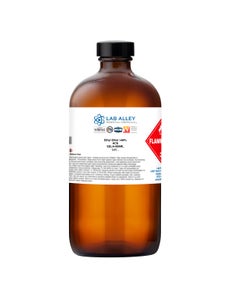
Lab Alley supplies Ethyl Ether in a single, consistently reliable grade suited to the range of applications covered in this article. Every order ships with access to a Certificate of Analysis (COA) and Safety Data Sheet (SDS), giving customers the documentation needed for quality verification and regulatory compliance.
Available Grades & Formulations
-
ACS Grade (≥99%) for laboratory, analytical, and general industrial use
Pack Sizes & Industrial Availability
-
Laboratory bottles: 500 mL and 1 L for lab-scale use
-
Commercial containers: 4 L for standard operations
-
Industrial drums: 5 gallon and 55 gallon for high-volume applications
-
Case and pallet quantities available for bulk purchasing
-
All containers are UN-approved and DOT-compliant with proper Flammable Liquid, Class 3 hazard labeling
Whether you need a single laboratory bottle or a bulk drum for industrial processing, Lab Alley can accommodate the order. Contact Lab Alley directly for bulk pricing, custom quantities, or additional documentation needs.
Final Note
Ethyl ether's value lies in the same properties that have defined its use for well over a century: strong solvency, a low boiling point, and predictable chemical behavior under controlled handling. From its foundational role in surgical anesthesia to its continued presence in Grignard chemistry, fat content analysis, and specialty extraction work, few solvents span such a wide range of industrial and scientific history. Its regulatory status as a DEA List II chemical adds a layer of oversight to its distribution, but does not diminish its practical importance across the industries that depend on it.
Lab Alley provides ACS grade Ethyl Ether in pack sizes ranging from laboratory bottles to industrial drums, supporting customers whether their needs are limited to bench-scale research or extend to high-volume production. With COAs and SDSs available for every order, customers can source the chemical with confidence in both its quality and their compliance documentation.
For more detailed guidance, explore our Resource Library.
Our Customer Care team is also available for more information and documentation, including chemical Safety Data Sheets.
Need Ethyl Ether You Can Trust?
If you are looking for high-quality ethyl ether for your lab, product line, or research facility, be sure to visit our store to explore our trusted selection and request a quote.
As your trusted partner in chemical supply, Lab Alley is always striving to meet the growing demands of our customers. We want you to be able to access all of your chemical needs in one place, along with streamlined online ordering and fast shipping.
Due to popular demand from our valued clientele, Lab Alley's ethyl ether is available in a range of purities and packaging options to suit various commercial, laboratory, and personal needs.