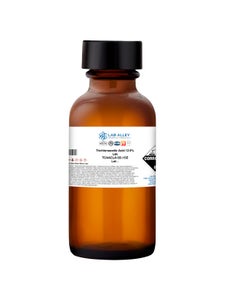






Trichloroacetic Acid Safety & Hazards
Trichloroacetic acid (TCA) is a corrosive crystalline solid classified under GHS as a Category 1A skin corrosive and Category 1 serious eye hazard, with suspected carcinogenicity placing it in IARC Group 2B. The compound poses no flammability risk under normal conditions, but its corrosive and deliquescent properties demand careful handling at every stage, from receiving through disposal.
Exposure through any route, inhalation, skin contact, eye contact, or ingestion, can cause severe tissue damage, and the chemical's reactivity with oxidizers, bases, and metals adds further risk during storage and transport. Laboratory personnel, safety officers, and procurement managers working with this material need a clear understanding of its hazard profile before it enters a facility.
TCA falls under established OSHA exposure limits and DOT shipping classifications as a Class 8 corrosive, placing it within a well-defined regulatory framework that governs its handling, labeling, and transport.


In this article, we'll explore:
-
Chemical Hazards Overview
-
Exposure Risks & Health Effects
-
First Aid Measures
-
Handling & Storage Precautions
-
Spill & Leak Procedures
-
Regulatory & Compliance Information
-
Technical Documents & References
Chemical Hazards Overview
Trichloroacetic acid carries a hazard profile centered on corrosivity rather than flammability or reactivity, making skin and eye protection the primary handling concern. The chemical is classified as Skin Corrosion Category 1A (H314) and Serious Eye Damage Category 1 (H318), meaning contact causes severe, often irreversible damage. It also carries a Category 2 carcinogenicity classification (H351) and Specific Target Organ Toxicity, Single Exposure, Category 3 (H335), reflecting respiratory irritation potential.
-
GHS Pictograms: GHS05 (Corrosion), GHS08 (Health Hazard), GHS09 (Environmental Hazard)
-
NFPA Rating: Health 3, Flammability 0, Reactivity 0
-
Primary Risks: Inhalation of dust or vapor, skin contact, eye contact, and ingestion all carry the potential for severe corrosive injury
Exposure Risks & Health Effects
Inhalation Risks
Inhaling TCA dust or mist irritates and corrodes the respiratory tract's mucous membranes. Exposure typically presents as a headache following inhalation of dust or mist and, at higher concentrations, can progress to pulmonary edema.
Skin Contact Risks
As a Category 1A corrosive, TCA causes severe burns on contact with skin. The severity of injury depends on the concentration of the material and the duration of contact before it is removed and the area is flushed. Even brief contact with concentrated crystals or solutions can produce deep tissue damage.
Eye Contact Risks
Eye contact is classified as a Category 1 serious eye damage hazard, and permanent injury is likely without immediate and thorough irrigation. The corrosive action on ocular tissue progresses quickly, which makes the speed of the first-aid response a direct factor in the extent of lasting damage.
Ingestion Risks
The oral LD50 in rats is 3,320 mg/kg, indicating meaningful acute toxicity. Swallowing TCA causes severe swelling and tissue damage along the digestive tract, with a risk of gastrointestinal perforation.
Chronic Effects
TCA is classified by IARC as Group 2B, possibly carcinogenic to humans, and carries an ACGIH A3 designation as a confirmed animal carcinogen with unknown relevance to humans. These classifications warrant minimizing repeated or prolonged exposure, even at low concentrations, independent of the acute corrosive hazards described above.
First Aid Procedures
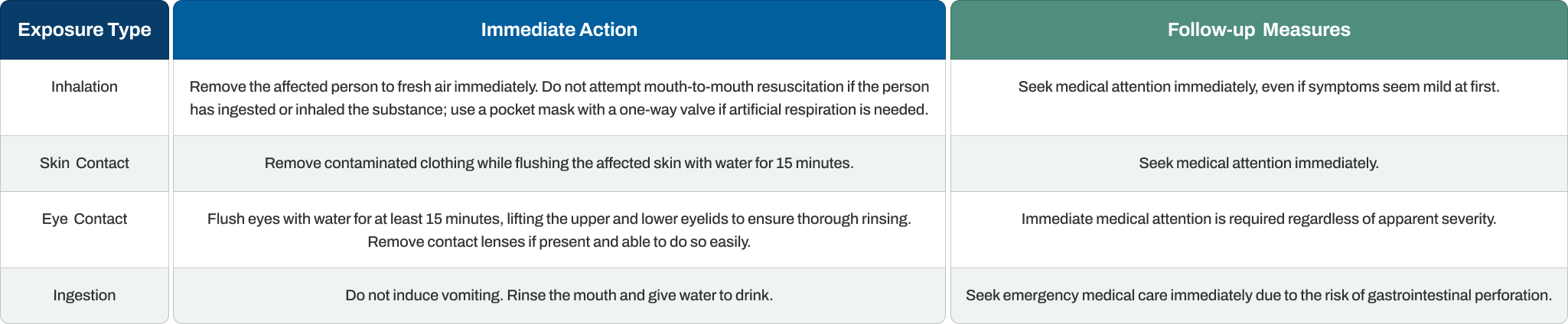
Treatment delays increase the risk of permanent injury across all four exposure routes, so first aid should begin without waiting for symptoms to worsen. Contact a poison control center or physician immediately in every case.
Handling & Storage Precautions
Handling trichloroacetic acid safely starts with preventing direct contact and limiting dust generation during transfer or weighing.
-
Safe Handling Procedures: Wear protective gloves, protective clothing, and eye or face protection at all times when handling this material. Work in a well-ventilated area or under a fume hood, and take steps to avoid generating dust during transfer.
-
Storage Conditions: Store in a tightly closed container in a cool, dry, well-ventilated location. TCA is deliquescent, so protecting it from moisture is essential to prevent degradation and container failure. Store locked up and separated from incompatible materials.
-
Incompatible Substances: Keep away from strong oxidizing agents, including chlorates, nitrates, peroxides, permanganates, and halogens, as well as strong bases and metals, all of which can react with TCA.
Spill & Leak Procedures
A TCA spill requires prompt containment and the same level of personal protection used during routine handling, scaled up for the size of the release.
-
Emergency Response Steps: Evacuate non-essential personnel from the area. Responders should wear full PPE, including respiratory protection for larger spills, and ventilate the space before beginning cleanup.
-
Containment Methods: Sweep solid material into covered, water-filled containers for collection. If the spill has generated dust, moisten the material first to limit airborne exposure during cleanup.
Proper disposal requires cautiously neutralizing the collected material with an alkaline substance before it leaves the facility. Dispose of the neutralized waste as hazardous waste in accordance with applicable federal and state regulations, rather than through standard waste streams.
Regulatory & Compliance Information
OSHA Regulations
OSHA's vacated permissible exposure limit for TCA is a TWA of 1 ppm (7 mg/m³), while the current ACGIH threshold limit value is a TWA of 0.5 ppm. The substance falls under the Hazard Communication Standard at 29 CFR 1910.1200, with exposure limits referenced in 29 CFR 1910.1000, Table Z-1.
EPA & Environmental Impact
TCA is classified as very toxic to aquatic life with long-lasting effects (Aquatic Chronic 1, H410), which carries implications for wastewater handling and environmental release. Its IARC Group 2B carcinogenicity classification is also relevant to environmental and occupational exposure assessments.
DOT Transportation Regulations
Solid TCA ships under UN1839, Hazard Class 8, Packing Group II, with the proper shipping name "Trichloroacetic acid, solid." Solution forms of the product ship under a separate UN number, UN2564, reflecting the different handling considerations for liquid versus solid forms.
FDA/USP/ACS Compliance
TCA is available in ACS reagent grade, meeting the purity and quality benchmarks set by the American Chemical Society for laboratory use.
Technical Documents & Resources
-
SDSs are available for all grades and concentrations of this product and include detailed safety, handling, and first aid information.
-
COAs are available upon request and verify purity and compliance with applicable grade standards.
Final Note
Trichloroacetic acid's hazard profile is defined by its corrosivity rather than flammability, which puts the emphasis on skin, eye, and respiratory protection throughout handling, storage, and spill response. Its Category 2 carcinogenicity classification and reactivity with oxidizers, bases, and metals add further considerations that shape safe storage and disposal practices.
Following the OSHA, DOT, and EPA requirements outlined above, alongside consistent PPE use, helps keep personnel safe when working with this material. Lab Alley provides SDS and COA documentation for every grade and concentration to support safe handling in your facility.
Explore our Resource Library for more information.
Our Customer Care team is also available for more information and documentation, including chemical Safety Data Sheets.
Need Trichloroacetic Acid You Can Trust?
If you are looking for high-quality trichloroacetic acid for your lab, product line, or research facility, be sure to visit our store to explore our trusted selection and request a quote.
As your trusted partner in chemical supply, Lab Alley is always striving to meet the growing demands of our customers. We want you to be able to access all of your chemical needs in one place, along with streamlined online ordering and fast shipping.
Due to popular demand from our valued clientele, Lab Alley's trichloroacetic acid is available in a range of purities and packaging options to suit various commercial, laboratory, and personal needs.