





Xylenes Uses and Applications
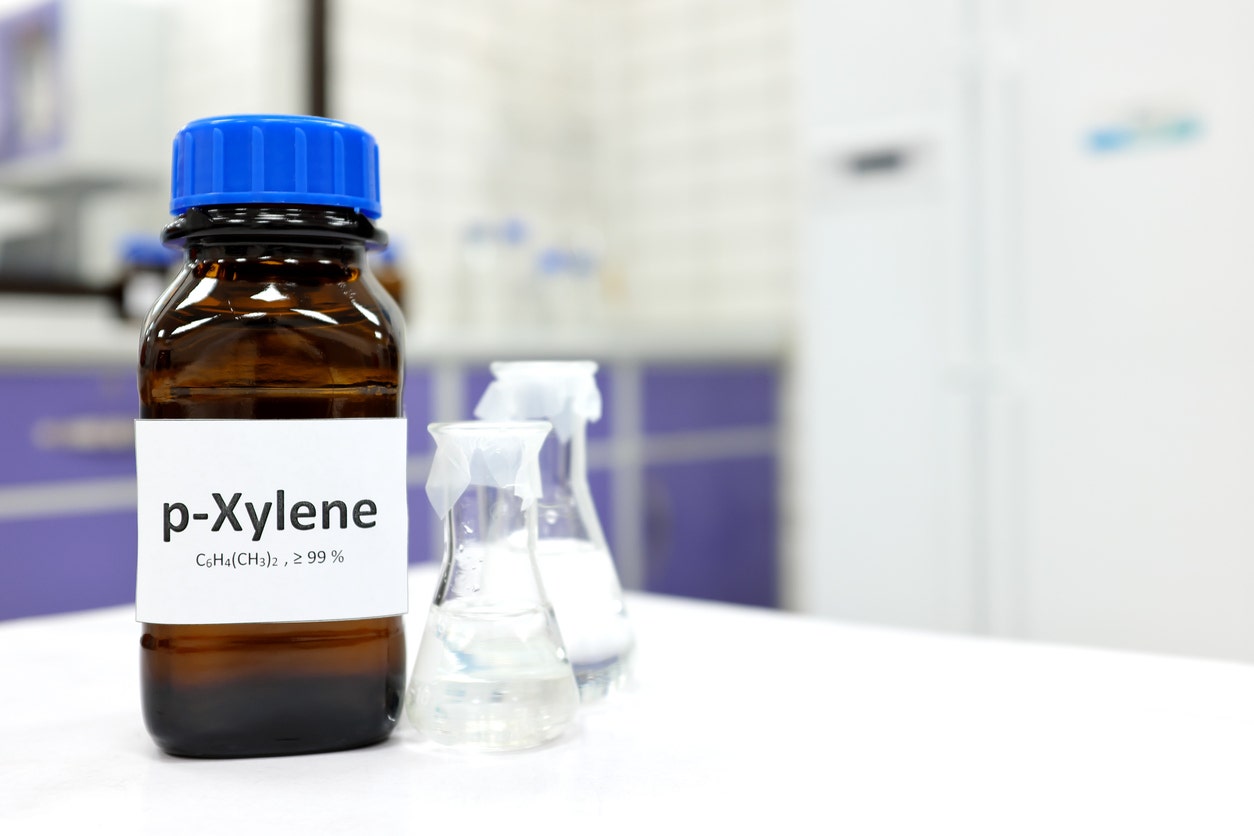
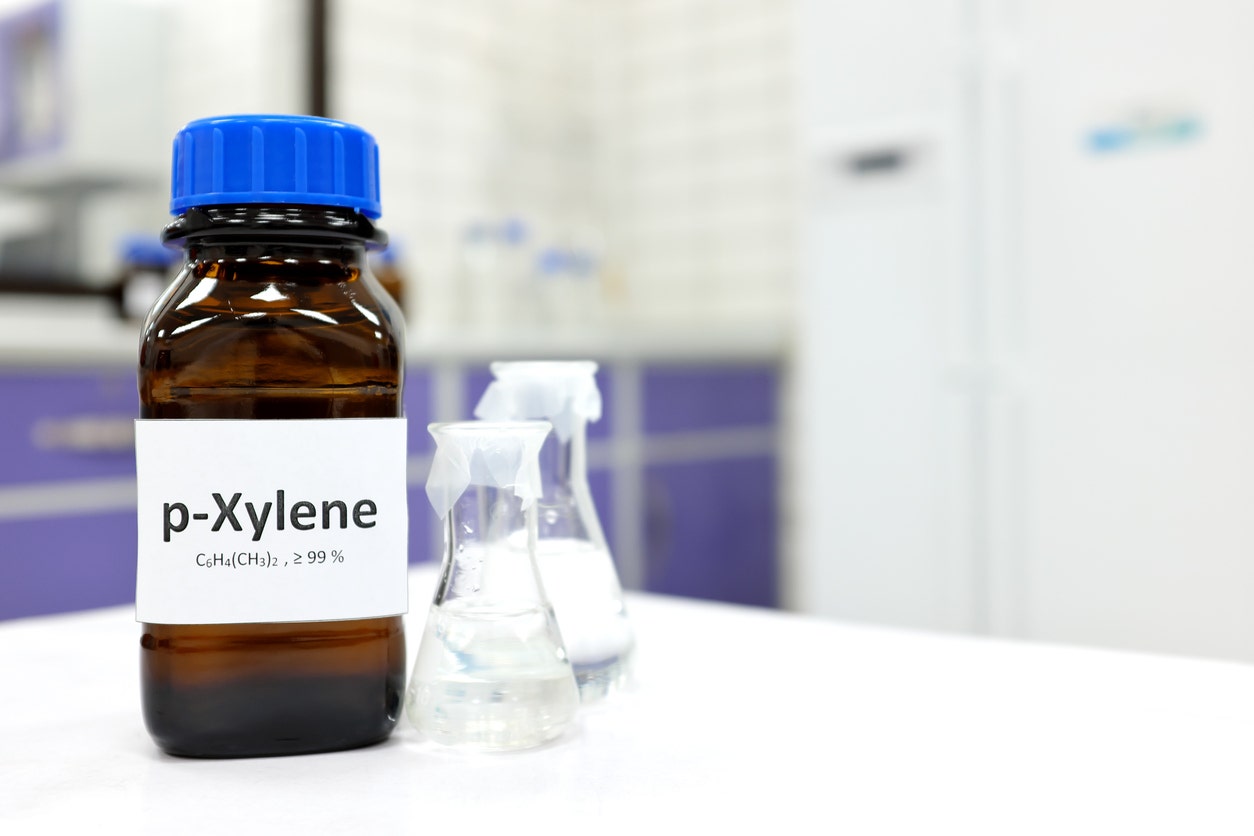
Xylenes, also known as xylol or dimethylbenzene, belong to a family of aromatic hydrocarbons made up of three structural isomers: ortho-xylene, meta-xylene, and para-xylene. Supplied as a clear, colorless liquid with a distinct sweet aromatic odor, xylenes are highly flammable and carry a chemical formula of C8H10 across all three isomer forms. Each isomer shares the same molecular weight but differs in the position of its two methyl groups on the benzene ring, a structural distinction that shapes how each is used industrially.
The compound's strong solvency for resins, oils, and organic compounds, paired with high volatility and reactive aromatic chemistry, makes xylenes valuable both as a solvent and as a feedstock for downstream chemical synthesis. This dual identity, solvent on one hand and chemical building block on the other, is what allows xylenes to serve such a wide span of industries. Xylenes ship in ACS, technical, histological, and electronic/cleanroom grades, each formulated for a specific purity threshold and end use, and they support sectors as varied as petrochemical manufacturing, coatings, clinical diagnostics, electronics, and laboratory research.
Because xylenes are flammable liquids with recognized occupational exposure limits, facilities that store or use them at scale typically manage them under standard industrial hygiene and flammable liquid handling protocols. This safety profile does not limit their utility, but it does inform how they move through supply chains, from drum storage to point-of-use dispensing.
In this article, we'll explore:
-
Industrial Applications
-
Scientific & Laboratory Uses
-
Histology & Diagnostic Laboratory Use
-
Electronics & Semiconductor Manufacturing
-
Xylenes Grades and Pack Sizes
Industrial Applications
Manufacturing & Processing
Xylenes function as a workhorse solvent across coatings and printing operations. In paint, coating, varnish, and adhesive formulations, xylenes dissolve resins and binders efficiently, giving manufacturers control over viscosity, drying time, and film formation in both industrial and decorative finishes. This solvency extends into the printing industry, where xylenes serve as a key component in flexographic and gravure ink systems used for packaging graphics and commercial print runs.
The compound's evaporation rate and compatibility with a range of resin chemistries make it useful for maintaining consistent ink flow and adhesion on high-speed presses. Facilities running continuous coating or printing lines often standardize on xylenes because the same solvent supports multiple formulation types without requiring separate solvent inventories.
Chemical Synthesis
Among the three isomers, para-xylene carries the largest commercial footprint because it serves as the primary feedstock for terephthalic acid and purified terephthalic acid, along with dimethyl terephthalate. These intermediates feed directly into polyester and PET production, industries that consume a substantial share of global para-xylene supply.
Ortho-xylene follows a separate synthesis path, functioning as the feedstock for phthalic anhydride, a compound used in plasticizers and resin production. Meta-xylene, less dominant commercially than its counterparts, serves as an intermediate in manufacturing plasticizers, azo dyes, and wood preservatives.
Because the boiling points of the three isomers sit within a narrow range of each other, separating them at the production stage requires specialized crystallization or adsorption processes rather than standard fractional distillation, which is part of why isomer-specific grades carry different pricing and availability.
Petroleum & Energy
Rubber processing uses xylenes primarily as a solvent to dissolve depolymerized or reclaimed rubber. In vulcanization and devulcanization work, rubber is first broken down through heat or chemical treatment into a more workable form, then dissolved in an aromatic solvent such as xylene before further processing with sulfur or vulcanization accelerators.
This solvent role also appears in rubber reclamation, where scrap or vulcanized rubber crumb is dispersed in xylene or similar aromatic solvents to support recovery processes. The compound's ability to dissolve rubber polymers without excessive reactivity toward the vulcanizing agents makes it a practical choice in these applications.
Rubber Manufacturing
Xylenes occur naturally within crude petroleum and are present in gasoline as part of the broader aromatic hydrocarbon fraction. Refineries and blending facilities use xylenes in motor fuel formulations, where their aromatic structure contributes to octane rating.
This role places xylenes alongside benzene and toluene as part of the BTX aromatics group that refineries manage both as fuel components and as feedstocks routed toward petrochemical synthesis. The dual demand, fuel blending on one side and chemical intermediate production on the other, means xylene output from a refinery or aromatics complex is often allocated between these two paths depending on market conditions.
Industrial Cleaning & Degreasing
Manufacturing facilities rely on xylenes to strip oil, grease, and polymer residues from equipment and machinery during routine maintenance. Automotive assembly and painting operations use xylenes for parts cleaning ahead of coating steps, since any residual oil or grease on a metal surface can interfere with paint adhesion.
Tool and machinery cleaning in paint lines and production equipment benefits from the same solvency properties that make xylenes effective in coating formulations. This cleaning function often overlaps with a facility's existing xylene supply for coatings or printing operations, allowing a single solvent stock to serve multiple purposes on a production floor.
Scientific & Laboratory Uses
Analytical Reagent
Laboratories use xylenes as a solvent carrier in various extraction and analytical chemistry procedures, where the compound's nonpolar character allows it to dissolve organic analytes that would otherwise resist aqueous-based methods. Its consistent purity in ACS grade formulations supports reproducible results across testing protocols that call for a stable aromatic solvent. Analysts working with organic residues or resin-based samples often select xylenes specifically because its solvency profile matches the compounds under study.
Solvent in Laboratory Processes
Beyond analytical work, xylenes serve general laboratory functions such as cleaning glassware and dissolving organic residues left behind after synthesis or extraction procedures. The compound also appears in cooling applications, where it can be combined with dry ice to create a low-temperature bath for reaction vessels that require controlled cooling below room temperature. This versatility as a general-purpose lab solvent means xylenes frequently sit alongside more specialized reagents on a laboratory's shelf, ready for routine cleanup or process support tasks that do not require a dedicated solvent.
Specialized Research Applications
Microscopy work depends on xylenes for a very specific task: removing synthetic immersion oil from microscope lenses and optical equipment after use. Immersion oil, used to achieve high-resolution imaging under oil-immersion objectives, leaves a residue that xylene dissolves cleanly without damaging lens coatings when applied correctly.
Art conservation professionals also draw on xylenes for solubility testing and cleaning applications, using the solvent to evaluate how varnishes, coatings, or adhesives respond to organic solvents before undertaking restoration work. Both applications rely on the same underlying solvency that makes xylenes useful across the broader laboratory setting, applied here to more specialized, precision-driven tasks.
Histology & Diagnostic Laboratory Use
Tissue Clearing Agent
Xylenes rank among the most widely used clearing agents in histology, a step in tissue processing that follows dehydration. After tissue samples pass through a graded series of alcohol baths to remove water content, xylene replaces the alcohol and renders the tissue transparent, a state that prepares it for infiltration with paraffin wax.
This clearing step bridges dehydration and embedding, and its consistency directly affects how well the tissue accepts paraffin in the next stage. Pathology labs depend on this predictable clearing behavior to maintain tissue integrity through the embedding process, which is why histological grade xylene is formulated specifically for this application.
Slide Preparation
Once tissue is embedded and sectioned, xylene returns to the workflow to dissolve paraffin from the tissue sections before mounting and staining. This deparaffinization step clears the wax that protected the tissue during sectioning, allowing stains to penetrate the tissue evenly during subsequent diagnostic staining protocols.
Xylene also plays a role in the final mounting stage, where it helps clear slides immediately before a mounting medium and coverslip are applied. Because diagnostic accuracy in anatomic pathology depends on consistent slide preparation, laboratories treat this xylene-dependent step as a standardized part of their workflow rather than a variable one.
Electronics & Semiconductor Manufacturing
Wafer & Component Cleaning
Semiconductor fabrication facilities use high-purity xylene grades for wafer cleaning and photoresist removal during chip production. The compound's solvency for organic residues makes it effective at stripping photoresist layers and polymer buildup from silicon wafer surfaces between processing steps. Because semiconductor manufacturing tolerates almost no particulate or ionic contamination, facilities specify electronic- or cleanroom-grade xylene for these applications, a purity tier well above what general industrial cleaning requires.
Photolithography Processing
Within the photolithography sequence itself, xylene functions as a solvent in photoresist formulations and as a carrier for hexamethyldisilazane (HMDS), an adhesion promoter applied to wafers before photoresist coating. This solvent role supports the precise, thin-film application that photolithography depends on to transfer circuit patterns onto a wafer.
As chip geometries have grown smaller, manufacturers have increasingly scrutinized every material in the photolithography chain for purity and consistency, and xylene's continued use in some photoresist and HMDS carrier formulations reflects its reliable performance in this exacting environment.
Xylenes Grades and Pack Sizes
Lab Alley supplies xylenes in four grades, each formulated for a distinct level of purity and application. Every order ships with a Certificate of Analysis (COA) and Safety Data Sheet (SDS), giving customers the documentation needed for quality control, regulatory compliance, and safe handling.
Available Grades & Formulations
-
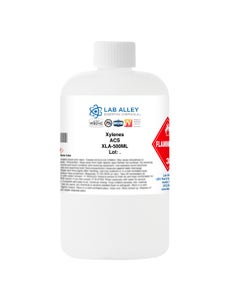
Xylenes ACS Grade (XLA): formulated for solvent, thinner, and cleaning agent use where reagent-grade purity is required
-
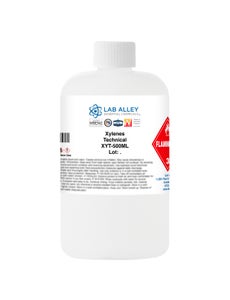
Xylene Technical Grade (XYT): suited to general industrial and manufacturing applications
-
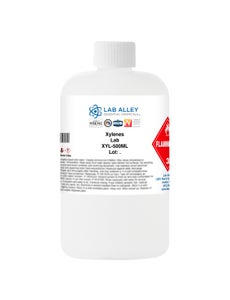
Xylenes Histological Lab Grade (XYL): developed specifically for tissue clearing and histology and pathology laboratory workflows
-
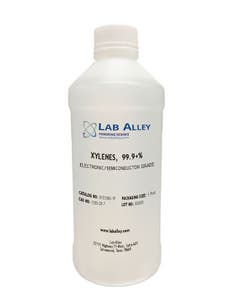
Xylene 99.9+% Electronic/Cleanroom Grade (T1001): synthesized for semiconductor and electronics manufacturing applications requiring ultra-high purity
Pack Sizes & Industrial Availability
-
ACS Grade: available in 500 mL, 1 L, 1 gal, 4 L, 5 gal, and 55 gal, plus case quantities
-
Histological Lab Grade: available in 500 mL, 1 L, 1 gal, 4 L, 5 gal, 55 gal, and 270 gal, plus case quantities
-
Electronic/Cleanroom Grade: available in 1 qt, 1 gal, 5 gal, and 55 gal, plus case quantities
-
Technical Grade: available sizes pending confirmation
-
All containers are UN-approved and DOT-compliant with proper Class 3 flammable liquid labeling
Contact Lab Alley for current pricing, lead times, or bulk quotes on any xylene grade.
Final Note
Xylenes occupy a distinct position among industrial solvents: few chemicals move as easily between fuel blending, chemical synthesis, coatings manufacturing, clinical histology, and semiconductor cleanrooms. That range comes down to the same underlying properties in every context, strong solvency for organic compounds and a reactive aromatic structure that supports further chemical transformation.
For buyers across manufacturing, laboratory, and diagnostic settings, matching the right xylene grade to the application, whether that means technical grade for general industrial cleaning or electronic grade for wafer processing, ensures both performance and compliance. Lab Alley's grade lineup is built around that principle, giving customers a purity tier suited to virtually any xylene application they need to support.
For more detailed guidance, explore our Resource Library.
Our Customer Care team is also available for more information and documentation, including chemical Safety Data Sheets.
Need Xylenes You Can Trust?
If you are looking for high-quality xylenes for your lab, product line, or research facility, be sure to visit our store to explore our trusted selection and request a quote.
As your trusted partner in chemical supply, Lab Alley is always striving to meet the growing demands of our customers. We want you to be able to access all of your chemical needs in one place, along with streamlined online ordering and fast shipping.
Due to popular demand from our valued clientele, Lab Alley's xylenes are available in a range of purities and packaging options to suit various commercial, laboratory, and personal needs.