• On Budget, On Time, Every Time : Essential Chemicals for a Better World• WOMAN-OWNED SMALL BUSINESS (WOSB)• OVER 256K+ HAPPY CUSTOMERS• TRUSTED BY NASA, TESLA, SPACEX, BOEING & MORE• HIGH PURITY, NATURAL AND ESSENTIAL CHEMICALS• SERVING 16 INDUSTRIES• PROUDLY PARTNERED WITH ECODRIVE• COA & SDS AVAILABLE ONLINE• QUALITY LAB SUPPLIES & EQUIPMENT• CERTIFIED QUALITY: ISO 9001, KOSHER, ORGANIC & MORE• GSA CONTRACT HOLDER | GOVERNMENT APPROVED• FAST NATIONWIDE DELIVERY• On Budget, On Time, Every Time : Essential Chemicals for a Better World• WOMAN-OWNED SMALL BUSINESS (WOSB)• TRUSTED BY NASA, TESLA, SPACEX, BOEING & MORE• OVER 256K+ HAPPY CUSTOMERS• HIGH PURITY, NATURAL AND ESSENTIAL CHEMICALS• SERVING 16 INDUSTRIES• PROUDLY PARTNERED WITH ECODRIVE• COA & SDS AVAILABLE• QUALITY LAB SUPPLIES & EQUIPMENT• CERTIFIED QUALITY: ISO 9001, KOSHER, ORGANIC & MORE• GSA CONTRACT HOLDER | GOVERNMENT APPROVED• FAST NATIONWIDE DELIVERY

We are now ISO 9001 Certified

Get 5% OFF on your first order |  Use Code: WELCOME5

Black Friday: Save 15% Sitewide with code BLACKFRIDAY26

Buy Sodium Hydroxide Online | ACS, FCC, Lab | Lab Alley

Sodium Hydroxide

Pellets, beads and solutions in ACS, FCC, reagent and lab grades. Pick your grade and size, then order in minutes.

You need sodium hydroxide, and you'd rather not wait on a quote to get it. Here you can pick a form, choose a grade, check the size and order online. Prices are posted. Stock is real. Safety data sheets sit on the product pages, and listings like the FCC beads include a certificate of analysis you can open before you buy. No salesperson in the middle. No chasing paperwork after the box shows up. If you've ever lost a morning to a supplier who wouldn't name a price, you'll see the difference the first time you check out. That's the whole idea here. You see what's in stock, what it costs and what documents come with it, and you decide on your own schedule.

Sodium hydroxide is NaOH, better known as caustic soda or lye. It's a strong base, and the right product depends on the job. Soap makers look for 98% beads. Food processors need FCC grade. Analysts reach for an ACS pellet or a standardized solution like 1N or certified 0.5N. Plant operators running pH control or cleaning lines usually want 50% solution by the gallon or the drum. This collection covers all of it, from 0.01N lab solutions up to 55 gallon drums. Solid pellets and beads run from 1 lb bottles to 25 kg and 50 lb sizes, and solutions start at 500 mL. Browse by grade or concentration, compare sizes and place your order in minutes. Not sure which grade fits? The grade section below explains each one in plain terms, so you can match a product to your spec before you add it to the cart. Many listings offer several sizes, so you can start small for a trial run and move to larger containers once you know what works. If you need totes, pallets or custom packaging, Bulk & Custom Chemicals is one click away.

256,000+ customers served
99.5% of orders ship in 1–2 business days
98.9% inventory accuracy
SDS + COA available online, every product
The Crucial Chemical In The Food Industry
Set Descending Direction
Page
per page

About Sodium Hydroxide

Sodium Hydroxide has the formula NaOH, and is usually found either in a solid form consisting of opaque, white pellets, beads or flakes, or in aqueous solution. It is an ionic solid at room temperature, and is a highly soluble base (an alkali) which produces solutions with high pHs. As such it is commonly used as an acid reducer in many applications.

Sodium Hydroxide

Also known as caustic soda, it is a corrosive substance with a hygroscopic nature. Solid Sodium Hydroxide produces a lot of heat when made into an aqueous solution water or when neutralized with an acid.

Sodium Hydroxide has a myriad of uses. It is a central ingredient for soap making, and skin and hair care products. It has been used in acne treatments, and in wine making, and as a cleaner. It is a common laboratory reagent used in the production of a wide range of chemicals such as pain relivers and anti-coagulants. It is also used in the paper and textile industries.

It is crucial chemical in the food industry where it is commonly known as lye. Sodium Hydroxide solutions are used in the peeling of fruits and vegetables, and bagels and pretzels acquire that distinctive, shiny, brown appearance as a result of being baked after their introduction to a solution of Sodium Hydroxide.

Common Uses of Sodium Hydroxide

  • Peeling of fruit and vegetables
  • Cleaning
  • Soap & Cosmetic manufacture
  • Lab reagent
  • Production of bagels and pretzels

Industries

About Sodium Hydroxide

Sodium hydroxide has the formula NaOH, a molecular weight of 40.00 g/mol and CAS number 1310-73-2. At room temperature it's a white, opaque solid sold as pellets, beads or flakes. It dissolves freely in water and gives off a lot of heat while it does, so add the solid to water slowly and never the other way around. A 1M solution sits near pH 14.

The solid is hygroscopic. Left open, it pulls moisture out of the air and also absorbs carbon dioxide, which slowly turns the surface into sodium carbonate. Keep containers tightly closed. It's corrosive to skin, eyes and some metals, including aluminum, zinc and tin. Sodium hydroxide ships as a DOT Class 8 corrosive, and each product page lists its shipping details. Read the SDS before you open anything.


COMMON APPLICATIONS

Soap makers use sodium hydroxide to turn fats and oils into bar soap. Food processors use it, as lye, to peel fruits and vegetables and to give pretzels and bagels their dark, glossy crust. Cleaning crews rely on it in degreasers and drain products. Labs use it to titrate acids, adjust pH and prepare buffers and reagents. Manufacturers use it to neutralize acidic waste streams and as a feedstock for other chemicals. You'll also find it in paper, textile and wine making operations.

Match the product to the work. Titrations call for a standardized N solution. Large cleaning or pH jobs call for 50% solution, since you handle fewer containers. Food and soap jobs call for a solid with a purity figure you can document.


GRADES EXPLAINED

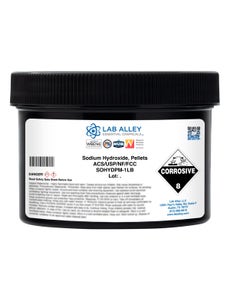
A grade tells you how pure the sodium hydroxide is and which standard it meets. ACS grade meets American Chemical Society specifications for analytical work. USP/NF and FCC grades meet pharmacopeia and Food Chemicals Codex standards for pharmaceutical and food use. Our pellets (SOHYDPM) are listed as ACS, USP/NF and FCC/Food Grade all at once, which keeps ordering simple if several teams share one supplier.

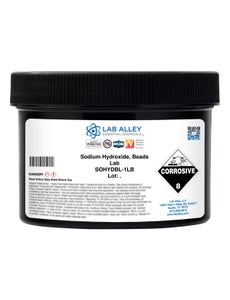
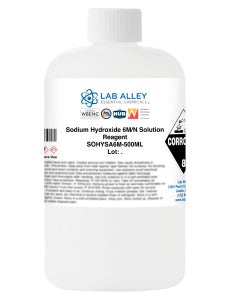
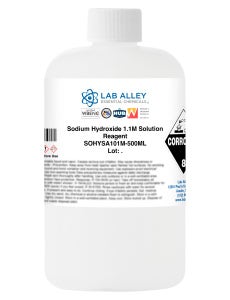
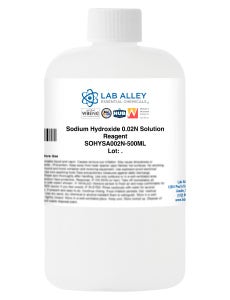
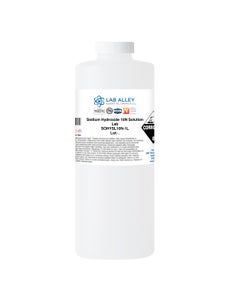
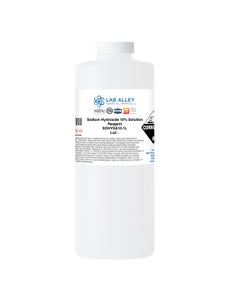
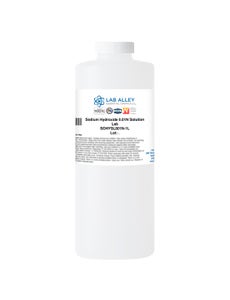
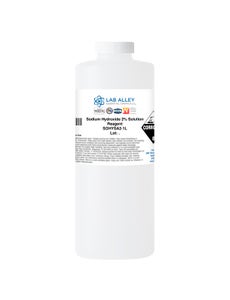
Reagent grade covers prepared solutions such as 6M/N, 1.1M and 0.02N for everyday lab work. Certified grade solutions, 0.01N and 0.5N, are made for standardized titrations. Lab and technical grade suit teaching, general lab use, cleaning and process work where no compendial standard is required. The FCC beads state an assay of not less than 97.0% NaOH, and the soap grade beads are 98%.

Before you choose, ask what paperwork you'll need to show. If an auditor will want a specification, go with ACS, USP or FCC. If nobody will, lab or technical grade usually costs less.


TYPES & GRADES AT A GLANCE

Meets American Chemical Society specifications, for analytical work and titrations.
One pellet product that meets all four standards.
For food processing like peeling and curing. The Kosher and Halal certified beads sit in this group.
Prepared solutions such as 6M/N, 1.1M and 0.02N for everyday lab work.
Standardized 0.01N and 0.5N solutions for titrations.
For routine lab work, teaching and general use.
For bar soap makers who want a documented purity figure.
Lab/Technical and ACS/Reagent options for cleaning, pH control and process work.

WHY BUY FROM LAB ALLEY

256,000+ customers already order their Sodium Hydroxide chemicals from Lab Alley. 99.5% of orders ship within 1 to 2 business days, and 98.9% inventory accuracy means the grade and size you see in stock is the grade and size that ships. SDS and COA documents are available for every Sodium Hydroxide chemical product, and select products carry Kosher or Halal certification, so check each product page for which applies.

Related: Browse the full Bases & Hydroxides collection.

Frequently Asked Questions

What's the difference between ACS, FCC, reagent and lab grade sodium hydroxide?
Each grade follows a different standard. ACS grade meets American Chemical Society specifications for analytical work. FCC grade meets the Food Chemicals Codex for food use. Reagent grade suits everyday lab tasks, and lab grade covers routine, teaching and general use. Our pellets (SOHYDPM) are listed as ACS, USP/NF and FCC/Food Grade together, so one product can cover several needs. Pick the grade your paperwork or process calls for.
What do 1N, 50% and 98% mean on a sodium hydroxide label?
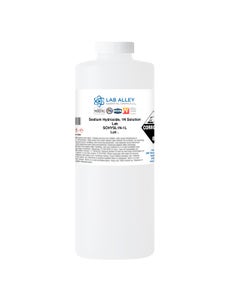
They describe strength in different ways. For sodium hydroxide, 1N equals 1M, which is 40 grams of NaOH per liter of solution, or about 4% by weight. A figure like 50% tells you how much of a solution is sodium hydroxide. A figure like 98% describes the purity of the solid. Use N for titrations, percent for cleaning and process work, and purity for soap and food.
Do I need a permit to buy sodium hydroxide?
You won't need a TTB permit, because that applies to alcohol such as specially denatured alcohol, not to sodium hydroxide. It is a corrosive hazmat product, though, and it ships under DOT Class 8 rules. Your state, employer or insurer may have its own handling requirements. If you're unsure about yours, email customer care before you order and the team can help.
Which sodium hydroxide products are Kosher or Halal certified?
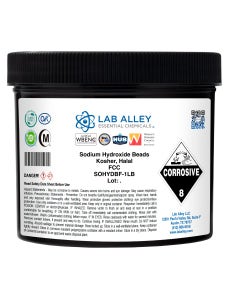
Sodium Hydroxide, Beads, FCC Grade, Kosher, Halal (SOHYDBF) carries both certifications, with an assay of not less than 97.0% NaOH. The other listings on this page don't state Kosher or Halal certification, so don't assume it carries over. Look for the Kosher and Halal badges on the product page before you order, and see our Certifications page for details.
Can sodium hydroxide be shipped to a home address?
Sodium hydroxide is a DOT Class 8 corrosive, so delivery details matter. Some chemicals at Lab Alley ship only to businesses, schools and laboratories, and the product page and checkout will tell you if yours is one of them. If you're ordering for a home project like soap making, contact customer care first so nothing gets pulled from your cart.
Which grade of sodium hydroxide should I use for soap, food or titration?
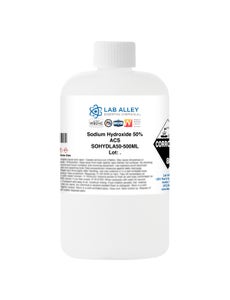
For soap making, 98% soap grade beads fit the job. For anything that touches food, such as peeling or curing, choose FCC grade, and take the Kosher and Halal beads if you need those certifications. For titrations, use a standardized N solution, and certified grade for your most exacting work. For cleaning or pH control, 50% lab or technical grade solution is the practical pick.
How is sodium hydroxide different from potassium hydroxide?
Both are strong bases and they behave alike in many reactions. Sodium hydroxide is the more common choice for bar soap, cleaning and pH work. Potassium hydroxide, also called caustic potash, is used for softer liquid soaps and in some specialty and alcoholic titrants. If you're still deciding between them, our potassium hydroxide page lists what's in stock.
Can I buy sodium hydroxide in drums or totes?
Yes. Sodium hydroxide 50% solution is listed in 5 gallon and 55 gallon sizes, and solid beads come in sizes up to 25 kg and 50 lb. If you need totes, pallets or custom packaging, head to Bulk & Custom Chemicals or request a quote and the team can price it for you.
How should I store sodium hydroxide?
Keep it in its original, tightly closed container in a dry, ventilated spot. Metal containers can react with it and release flammable hydrogen gas. Store it away from strong acids, ammonia and organic materials. Manufacturers often cite about three years of shelf life under good storage. Our sodium hydroxide storage guide covers the details.

Guides & Resources

How to Dispose of Sodium Hydroxide
How to Dispose of Sodium Hydroxide Household chemicals like sodium hydroxide can often be flushed down the drain with plenty of water at home. Howe...
Read article →
Storage and Shelf Life: Sodium Hydroxide
Storage and Shelf Life: Sodium Hydroxide As the most practical and widely used of the strong acids, sodium hydroxide is a staple in almost every ch...
Read article →
Chemical Grades
Explore the various chemical grades and their applications in different industries. Understand the significance of purity standards, including ACS, USP, Lab Grade and more.
Read article →

Industries That Use Sodium Hydroxide

Food & Beverage
Explore FCC and USP grade chemicals for food and beverage including citric acid, sodium benzoate, peracetic acid, emulsifiers and food safe sanitizers.
Learn more →
Personal Care & Cosmetics
Explore high-purity chemicals for personal care and cosmetics including USP glycerin, SDA alcohols, witch hazel, emulsifiers and NF grade humectants.
Learn more →
Manufacturing & Industrial
Explore chemicals for manufacturing and industrial use including ACS grade solvents, acids, alkalis, glycols and water treatment chemicals available in bulk sizes.
Learn more →
R&D/Laboratory
Explore ACS, HPLC and LC/MS grade chemicals for R&D and laboratory use including solvents, acids, bases, buffers and standardized solutions for research and QC.
Learn more →
Environmental & Waste Treatment
Explore chemicals for environmental and waste treatment including coagulants, neutralizers, sodium hydroxide, sulfuric acid, oxidizers and activated carbon.
Learn more →