


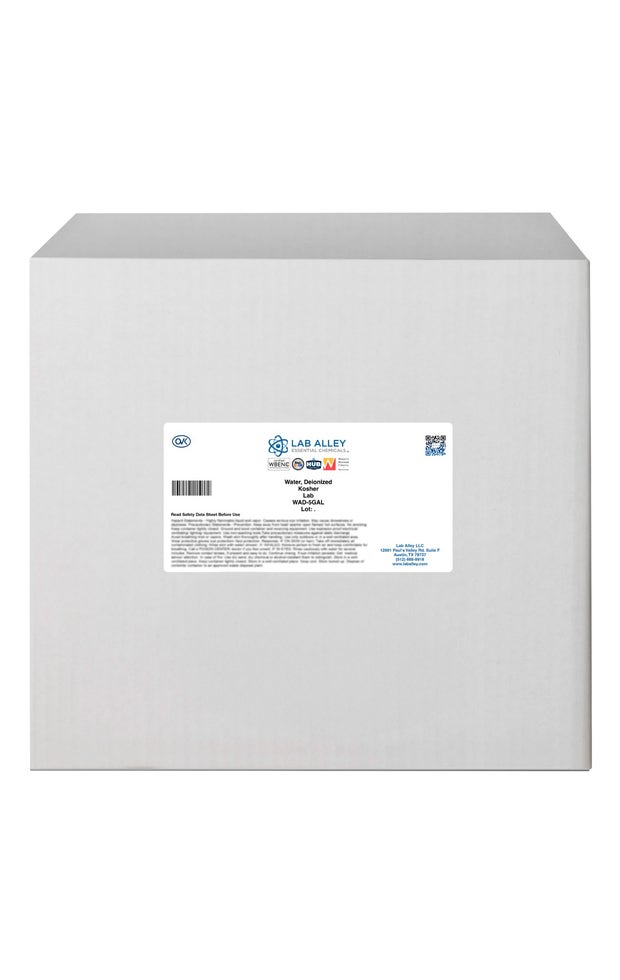


Deionized or DI water is free from dissolved minerals such as mineral salts, including iron, calcium, and sulfate. It is also termed ASTM D 1193 Type IV water and differs from distilled water in terms of purification methods and composition. It is safe for human use but is unfit for drinking purposes because of the absence of essential nutrients required by the human body. Our premium quality Deionized Water is highly recommended for educational and research labs to obtain consistent and repetitive results. Due to the presence of impurities, it is not recommended for use in foods, drugs, and medicines.
Assuming the source water was tap or spring water, distilled water is pure enough for nearly all lab applications. It is used for:
- a solvent to prepare a solution
- analytical blank
- calibration standard
- cleaning glassware
- equipment sterilization
- making high purity water
The purity of deionized water depends on the source water. Deionized water is used when a soft solvent is needed. It is used for:
- cooling applications where it's important to avoid depositing minerals
- microbiology autoclaves
- many chemistry experiments involving ionic compounds
- washing glassware, especially the final rinse
- solvent preparation
- analytical blanks
- calibration standards
- in batteries
As you can see, in some situations either distilled or deionized water is fine to use. Because it is corrosive, deionized water is not used in situations involving long-term contact with metals.
Deionized Water Lab Grade, Kosher (CAS 7732-18-5) is a liquid water product that’s free from dissolved mineral salts, including iron, calcium and sulfate. That sets it apart from distilled water, which is made with a different purification method. It’s sold as Lab Grade and carries a Kosher certification. You’ll find the Kosher Certification, Safety Data Sheet, Technical Data Sheet and Certificates of Analysis under Product Manuals, so you can review the paperwork before you order. One thing to know up front: this water hasn’t been analyzed for microbes. If you need a total plate count, Water USP is the product to look at. Because purity depends on the source water, it suits work where you simply need a soft solvent without dissolved minerals.
You can use this water as a solvent to prepare solutions, for analytical blanks and calibration standards, or for the final rinse on glassware. It also shows up in cooling setups where mineral deposits are a concern, in microbiology autoclaves and in batteries. The trouble starts when your water adds ions you didn’t plan for, or when you can’t find the paperwork to back up your results. Lab Alley keeps the Safety Data Sheet, Technical Data Sheet and Certificates of Analysis online, and offers sizes from 1 L up to 275 gal, plus cases. Here’s the plan. Choose your size, set up Autoship if you reorder often, or send a request through the quote form for larger volumes. On budget, on time, every time.
-
Solvent for preparing solutions
-
Analytical blanks
-
Calibration standards
-
Final rinse for glassware
-
Cooling applications that avoid mineral deposits
-
Microbiology autoclaves
-
Chemistry experiments involving ionic compounds
-
Batteries
-
Q: What is Deionized Water Lab Grade, Kosher used for?
A: You can use it as a solvent to prepare solutions, for analytical blanks and calibration standards, and for the final rinse on glassware. It’s also used in cooling applications where mineral deposits matter, in microbiology autoclaves and in batteries.Q: What does Lab Grade mean, and is it suitable for preparing solutions?
A: Lab Grade is the grade shown for this product, and it’s aimed at lab work such as preparing solutions, blanks and calibration standards. It isn’t recommended for use in foods, drugs or medicines.Q: What sizes are available, and does it ship as hazmat?
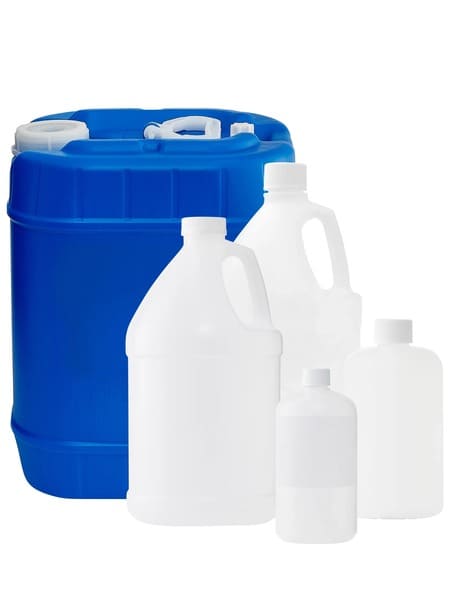
A: Sizes are 1 L, 1 gal, 4 L, 5 gal, 55 gal and 275 gal, plus cases of 4 x 1 L, 4 x 1 gal and 4 x 4 L. The Safety and Shipping tab doesn’t list a DOT hazmat line for this product. To confirm how your order will ship, call 512-668-9918 or check the SDS.Q: How do I get the SDS and Certificate of Analysis?
A: Both are on this product page. Open Product Manuals for the Safety Data Sheet, Technical Data Sheet and Kosher Certification, then switch to Certificates of Analysis for the lot reports.Q: How should it be stored?
A: Lab Alley’s How to Store Water post covers storage basics. For this product, follow the guidance in the Safety Data Sheet.Q: Is this water Kosher certified?
A: Yes. The page shows a Certified Kosher badge and lists a Kosher Certification document under Product Manuals.Q: How is deionized water different from distilled water?
A: Deionized water is free from dissolved mineral salts such as iron, calcium and sulfate, and it’s made with a different purification method than distilled water. Its purity depends on the source water.Q: Has this water been tested for microbes?
A: No. This deionized water hasn’t been analyzed for microbes. If you need total plate count analysis, Water USP is the option to consider.
Product Information
| CAS | 7732-18-5 |
|---|---|
| Synonyms | Aqua, Deionized Water, Dihydrogen Oxide, Dihydrogen Monoxide, Purified water |
| Assay | 100.00% |
| PubChem ID | 962 |
| Grade | Lab Grade |
| Color | Colorless |
| Physical form | Liquid |
| Appearance | Colorless Liquid |
| Odor | Odorless |
| pH | 5 - 8 at 25°C |
| Melting point | 32 °F (0 °C) |
| Boiling Point | 212 °F (100 °C) |
| Vapor pressure | 16 mm Hg at 20°C (68.0°F) |
| Specific gravity | 1 |
| Density | 1 |
| Solubility | Fully Miscible in Water |
| Molecular formula | H2O |
| Molecular weight | 18.02 |
| Autoship Available | Yes |
| Chloride (Cl) | Max 50 ug/L |
| KosherID | WMF-FKTS |
| Pillar | Essential |
| Sodium (Na) | Max 50 ug/L |
| Viscosity | 0.7 cSt (40°C) |
| Water | 1 |