




Types of Water
Water is the simplest and most universally used chemical in any laboratory or manufacturing setting, yet it is rarely interchangeable across applications. Every grade of water shares the identical H2O molecule; what separates one grade from another is not composition but the level of residual contamination left behind after purification, whether that is dissolved ions, trace organics, particulates, or microorganisms. Because different processes tolerate different levels of these residuals, water is manufactured and sold in a range of grades rather than as a single standardized product.
Selecting the correct grade directly affects both performance and regulatory standing. A grade suited for general rinsing will introduce unacceptable background noise in an analytical instrument. In contrast, a grade validated for laboratory use may still fall short of the endotoxin controls required for injectable pharmaceutical products. Choosing correctly comes down to matching required resistivity or conductivity, total organic carbon limits, and, where relevant, endotoxin limits or compendial standards such as USP, ASTM, or SEMI to the specific demands of the application.
In this article, we'll explore:
-
Common Grades & Purities
-
Certifications & Standards
-
Applications Based on Type
-
How to Choose the Right Type
Common Grades & Purities
Pharmaceutical Grade (USP)
Water meeting the USP Purified Water monograph is held to defined limits on conductivity and total organic carbon, making it suitable for pharmaceutical compounding and manufacturing. Water for Injection (WFI) builds on this standard by adding a bacterial endotoxin limit of 0.25 EU/mL, a requirement specific to products administered parenterally.
ACS/Reagent Grade
ACS and reagent grade water correspond to the ASTM Type I through Type III reagent water classifications, which define purity by conductivity, organic content, and particulate limits rather than a single fixed specification. This grade covers general analytical chemistry work, including titrations and reagent preparation, where high purity is needed, but the extreme sensitivity of chromatography or mass spectrometry is not.
HPLC Grade
HPLC-grade water corresponds to ASTM Type I ultrapure water, with total organic carbon held below 50 ppb and conductivity below 0.056 µS/cm. LC/MS grade water is a further-refined version of this same purity tier, produced with lower UV absorbance to reduce background interference in mass spectrometry applications.
Industrial/Technical Grade
Industrial and technical grade water is typically deionized (DI) water corresponding to ASTM Type IV, produced by passing water through ion exchange resin to strip out dissolved minerals and ions. This grade is intended for general laboratory use, equipment rinsing, and cooling applications, and it is not suitable for drinking, food, or drug use.
Electronic Grade
Electronic grade water is ultrapure water produced to a resistivity of 18.2 MΩ·cm with total organic carbon held below 1 ppb, meeting the SEMI F63 and ASTM D5127 standards used in semiconductor manufacturing. This is the highest purity tier of water produced commercially, reflecting the extreme sensitivity of wafer processing to even trace ionic or particulate contamination.
Certifications & Standards
Kosher
Select deionized and lab-grade water products carry kosher certification, confirming the water was produced and handled in compliance with kosher dietary preparation standards. This certification matters primarily to laboratories or facilities with kosher compliance requirements built into their sourcing policies.
Applications Based on Type
Food & Beverage
Purified or distilled water serves as process and dilution water in food and beverage production. Its low mineral content prevents interference with taste, formulation consistency, and shelf stability.
Pharmaceutical & Healthcare
USP Purified Water and WFI are used throughout compounding, equipment cleaning, and injectable drug manufacturing. The endotoxin and microbial limits attached to these grades are not optional; they are a compliance requirement for any product that contacts the body directly.
Cosmetics & Personal Care
Deionized or purified water typically serves as the primary base ingredient in cosmetic and personal care formulations. Keeping mineral content low protects product stability and prevents interference with preservative systems.
Laboratory & Analytical
HPLC and LC/MS grade water are the standard choice for mobile phases, sample preparation, and mass spectrometry work. Their low TOC and conductivity specifications protect both the accuracy of results and the operating life of analytical columns and instrumentation.
Industrial & Manufacturing
Deionized or reverse osmosis water is standard for rinsing, boiler feed, and cooling applications across industrial operations. Removing dissolved minerals prevents scale buildup and deposit formation that would otherwise degrade equipment over time.
Electronics
Ultrapure water is required for semiconductor wafer rinsing and etching, where even a single ionic particle can produce a circuit defect at sub-7nm scale. No lower grade of water is an acceptable substitute in this application.
How to Choose the Right Type
Choosing the right type of water starts with defining what the application actually requires, since overpaying for purity that serves no functional purpose is one of the most common and avoidable procurement mistakes.
Match Grade to Application
Higher purity grades carry a higher cost, so the goal is to match resistivity and TOC specifications to the actual requirements of the instrument or process rather than defaulting to the highest grade available. Using electronic grade water for a task that only requires deionized water adds unnecessary expense without improving outcomes.
Verify Required Certifications
Before placing an order, confirm whether kosher or any other certification is required for the intended use. This is a straightforward check that avoids compliance gaps that are far more difficult to resolve after material has already been received and used.
Select Appropriate Purity Level and Container Form
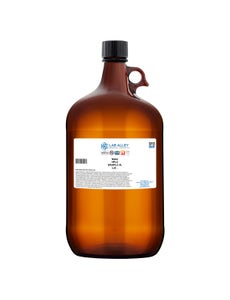
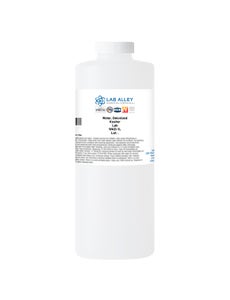
Confirm the resistivity or conductivity specification needed for the application, then select a pack size ranging from a bottle to a drum based on consumption volume and available storage space. Ordering the wrong container size for actual usage rates leads to either frequent reordering or water sitting past its practical shelf life.
Common Mistakes
A frequent error is using HPLC-grade water for LC/MS applications, which raises the instrument baseline and shortens the interval between required maintenance. Another common mistake is treating deionized water and distilled water as interchangeable, when the two differ in purification method and in the residual contaminant profile each leaves behind.
Key Takeaways
Choosing the right type of water comes down to matching purity specifications, not marketing language, to the actual demands of the application. Pharmaceutical, analytical, industrial, and electronics use cases each carry distinct tolerance thresholds for ionic, organic, particulate, and microbial contamination, and no single grade serves all of them equally well.
Before ordering, confirm the resistivity or conductivity, TOC, and any endotoxin or certification requirements specific to the intended use, and select a container size that matches actual consumption. Getting this right the first time avoids both wasted cost from over-specifying purity and compliance risk from under-specifying it.
For more detailed guidance, explore our Resource Library.
Our Customer Care team is also available for more information and documentation, including chemical Safety Data Sheets.
Find Water You Can Trust
If you are looking for high-quality water for your lab, product line, or research facility, be sure to visit our store to explore our trusted selection and request a quote.
As your trusted partner in chemical supply, Lab Alley is always striving to meet the growing demands of our customers. We want you to be able to access all of your chemical needs in one place, along with streamlined online ordering and fast shipping.
Due to popular demand from our valued clientele, Lab Alley's water is available in a range of purities and packaging options to suit various commercial, laboratory, and personal needs.