





How to Store Water
Water sold for laboratory and industrial use is not a single product. Lab Alley offers it across several purity grades, including Lab Grade, Deionized, USP Grade, HPLC Grade, and LC/MS Grade, each manufactured and tested to a different purity standard. While water itself is chemically stable and presents no inherent hazard, its purity is not fixed once it leaves the manufacturing process.
Storage conditions determine whether that purity holds. Atmospheric carbon dioxide, container material, light exposure, and microbial contamination can all degrade water quality over time, and the higher the purity grade, the more sensitive it is to these factors. A container of HPLC- or LC/MS-grade water that has absorbed CO2 or picked up trace organics from its packaging is no longer suitable for the ultra-sensitive applications for which it was purchased, even though it remains chemically pure water.
Proper storage protects the integrity of the specific grade purchased rather than protecting personnel or facilities from a chemical hazard. That distinction shapes every recommendation in this article, from container selection to labeling practices.


In this article, we'll explore:
-
Recommended Storage Conditions
-
Container & Packaging Requirements
-
Segregation & Compatibility
-
Safe Handling in Storage Areas
-
Regulatory Compliance & Labeling
-
Special Considerations
Recommended Storage Conditions
Temperature
Water should be stored at controlled room temperature, generally between 15 and 25°C. Freeze-thaw cycling should be avoided, as repeated freezing can crack rigid plastic containers and stress seals and closures, creating a pathway for contamination even if the water itself is unaffected by freezing.
Humidity Control
Water is not moisture-sensitive as many chemicals are, so ambient humidity is not a storage concern on its own. The priority instead is keeping containers tightly sealed, since an open or poorly sealed container invites contamination and gradual evaporation rather than humidity uptake.
Light Exposure
Extended exposure to sunlight can promote algae and microbial growth, particularly in lower-purity grades such as Lab Grade or Deionized water that are not manufactured to a sterility standard. Opaque or amber containers are preferred for long-term storage, especially in facilities where containers may sit in direct light for extended periods.
Ventilation
Water does not off-gas, generate vapors, or accumulate pressure in storage, so no specific ventilation requirement applies. Storage areas can follow standard general lab ventilation practices without any water-specific accommodation.
Storage Duration
Unopened, properly sealed containers of water remain stable indefinitely under normal conditions. Once opened, however, ultrapure grades such as HPLC and LC/MS water begin to lose their specified resistivity and organic-carbon purity as they are exposed to air, so these grades should be used within the timeframe noted on the Certificate of Analysis or SDS rather than treated as shelf-stable indefinitely after opening.
Container & Packaging Requirements
Compatible Materials
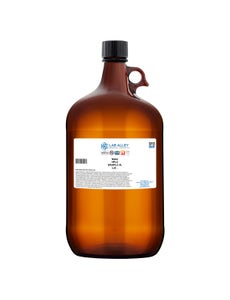
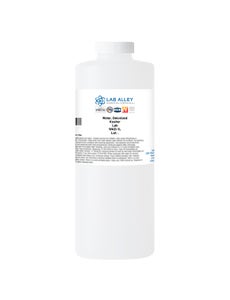
High-density polyethylene (HDPE) and polypropylene are the preferred container materials for ultrapure grades, since these plastics are chemically inert and do not introduce trace contaminants. Borosilicate glass is acceptable for USP Grade and Lab Grade water, but for ultra-high-purity applications, glass can leach trace silicates into the water over extended storage, which is enough to affect sensitive analytical results.
Sealing Requirements
Containers require tight, non-venting closures to limit atmospheric CO2 absorption, which lowers the pH of the water and can measurably affect conductivity in applications where conductivity is a critical specification. A compromised seal is one of the most common causes of purity degradation in storage, even when the container itself looks undamaged.
Labeling Requirements
Labels should identify the specific grade (Lab, USP, HPLC, or LC/MS), include the lot number, and track the date the container was opened. GHS hazard pictograms are not required on water labeling, since water is not classified as a hazardous substance, but grade and lot tracking remain essential for quality control and traceability.
Bulk Storage
Water is available from Lab Alley in container sizes ranging up to industrial drums for facilities with higher-volume needs. Bulk storage tanks should be constructed from inert materials such as HDPE or stainless steel to prevent metal ion leaching into the stored water, which is particularly important for facilities storing higher-purity grades in bulk.
Segregation & Compatibility
Incompatible Substances
Water itself is not reactive under normal storage conditions, but it should be kept apart from water-reactive materials elsewhere in a facility's chemical inventory. These include:
-
Alkali metals, such as sodium and potassium
-
Calcium hydride
-
Concentrated sulfuric acid or oleum
-
Acid chlorides
-
Isocyanates
Storing water near any of these materials creates a reaction risk if a container failure or spill brings them into contact.
Storage Grouping
Water does not require a dedicated chemical compatibility cabinet or special storage classification on its own. The only grouping consideration is physical separation from water-reactive chemical storage areas elsewhere in the facility.
Safe Handling in Storage Areas
PPE Requirements
No specialized personal protective equipment is required for handling water in storage. Standard lab attire, including closed-toe shoes and safety glasses, is sufficient and consistent with general laboratory practice for non-hazardous materials.
Transfer & Dispensing
Clean, dedicated transfer equipment should be used when moving water between containers, particularly for ultrapure grades where cross-contamination from shared equipment can compromise purity specifications. Grounding and bonding procedures, required for flammable liquid transfer, are not necessary for water.
Spill Containment
Water spills can be managed with standard absorbent materials or routine mopping. No neutralizing agent is needed, since water does not pose a chemical hazard requiring a specialized containment response.
Emergency Equipment
Dedicated emergency equipment is not required specifically for water storage. Standard facility eyewash stations and safety showers, maintained as part of general lab layout requirements, remain accessible as they would for any storage area.
Regulatory Compliance & Labeling
OSHA Regulations
Water is not classified as a hazardous chemical under the OSHA Hazard Communication Standard (29 CFR 1910.1200). General workplace housekeeping standards apply to its storage rather than any hazard-specific OSHA provision.
GHS Requirements
Water is not classified as hazardous under the Globally Harmonized System, so no hazard pictograms or signal words are required on container labeling. Labeling instead focuses on grade identification and lot tracking rather than hazard communication.
Industry-Specific Compliance
USP Grade water must meet United States Pharmacopeia purity monographs, making it suitable for pharmaceutical and food-related applications where regulatory compliance is required. HPLC and LC/MS grades follow ASTM Type I specifications for organic carbon content and conductivity, which govern their suitability for analytical instrumentation rather than a regulatory food or drug standard.
SDS Requirements
A Safety Data Sheet is available on request for informational and shipping documentation purposes, consistent with standard Lab Alley practice. The SDS serves a documentation function rather than reflecting a specific hazard classification.
Special Considerations
Purity Degradation in Ultrapure Grades
HPLC and LC/MS grade water can lose resistivity and pick up trace organic carbon once a container is opened, whether from off-gassing of the container material or absorption of atmospheric CO2. These grades should be used within the recommended window after opening rather than stored open-ended, since the purity specifications that justify their cost degrade well before the water becomes visibly or functionally unusable for general purposes.
Microbial Growth Risk
Lower-purity grades such as Lab Grade and Deionized water are not manufactured or tested to a sterility standard and can support microbial growth if stored improperly, particularly with light exposure or extended time after opening. USP Grade water, by contrast, is manufactured and tested for microbiological quality, making it the appropriate choice for applications where microbial control matters.
Key Takeaways
Water is chemically stable and presents no storage hazard in the traditional sense, but the purity that justifies its grade and price point is not permanent once packaged. Container material, seal integrity, light exposure, and time after opening all determine whether a given batch still meets the specification it was purchased.
Facilities storing multiple water grades should treat each according to its intended use: general housekeeping practices are sufficient for Lab Grade and Deionized water, while HPLC, LC/MS, and USP grades warrant closer attention to container selection and opened-container timelines to protect the results they're meant to support.
For more detailed guidance, explore our Resource Library.
Our Customer Care team is also available for more information and documentation, including chemical Safety Data Sheets.
Need Water You Can Trust?
If you are looking for high-quality water for your lab, product line, or research facility, be sure to visit our store to explore our trusted selection and request a quote.
As your trusted partner in chemical supply, Lab Alley is always striving to meet the growing demands of our customers. We want you to have all your chemical needs in one place, with streamlined online ordering and fast shipping.
Due to popular demand from our valued clientele, Lab Alley's water is available in a range of purities and packaging options to suit various commercial, laboratory, and personal needs.