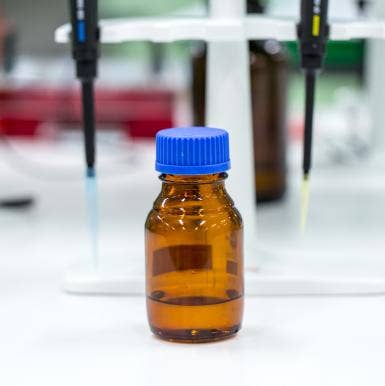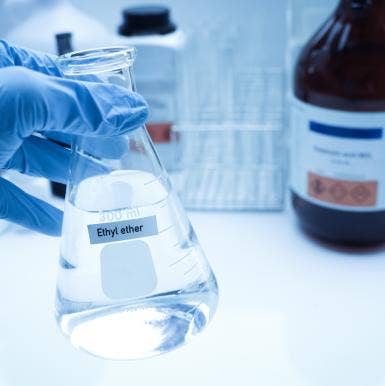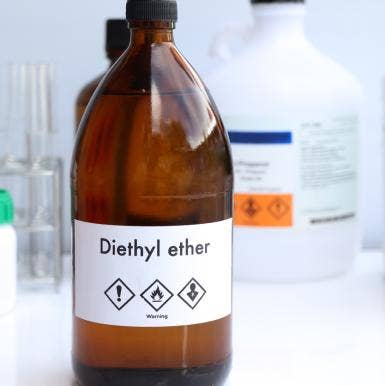





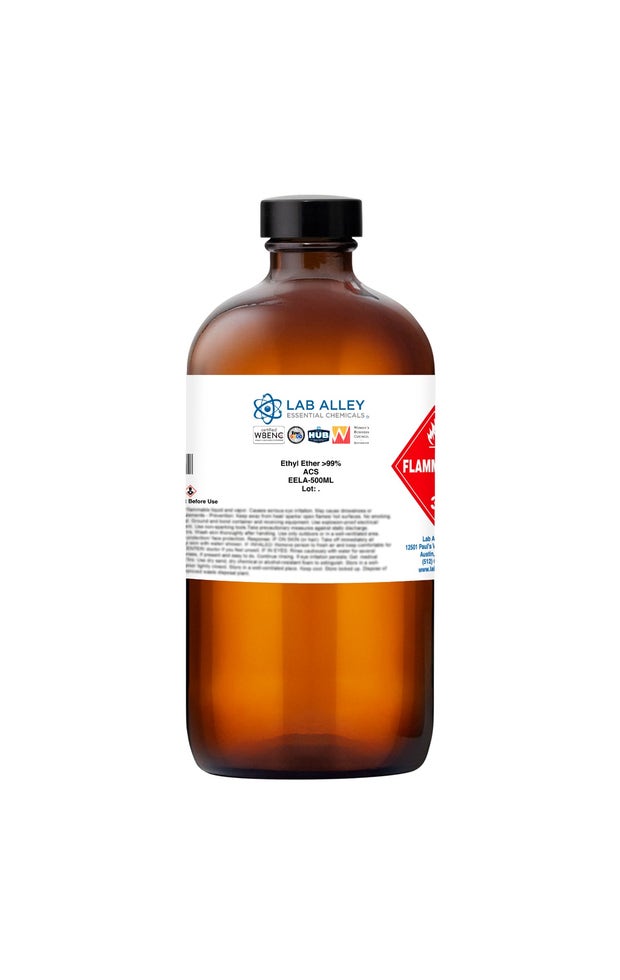


Ethyl Ether, also termed as Diethyl Ether, is the simplest compound of the Ether family. It appears as a colorless liquid with a sweet taste at room temperature. It has high volatility and flammability at normal conditions and is used as fuel in some engines. The American Chemical Society (ACS) certifies any chemical if it meets or exceeds its purity and quality standards.
Ethyl Ether is a good solvent for fats, oils, dyes, resins, rubber, smokeless perfumes, and nitrocellulose. Ethyl Ether is also used in the manufacture of photographic films and pharmaceuticals, and as a reaction and extraction medium in the chemical industry.
Ethyl Ether ≥99% ACS Grade, also known as Diethyl Ether, is the simplest compound in the ether family. It’s a colorless liquid with high volatility and flammability under normal conditions. This listing carries CAS 60-29-7, an assay of Min 99.0% and ACS Grade, and it’s supplied as a liquid. You can find the paperwork right on the page. Product Manuals includes the Safety Data Sheet, Technical Data Sheet, Allergen Statement, BPA Statement, Non-GMO Statement, Non-Irradiation Statement, PFAS/PFOS Free Statement, Statement of Source, TSE/BSE Declaration and Manufacturing Process Flow Chart. Certificates of Analysis sit in their own tab, listed by lot number.
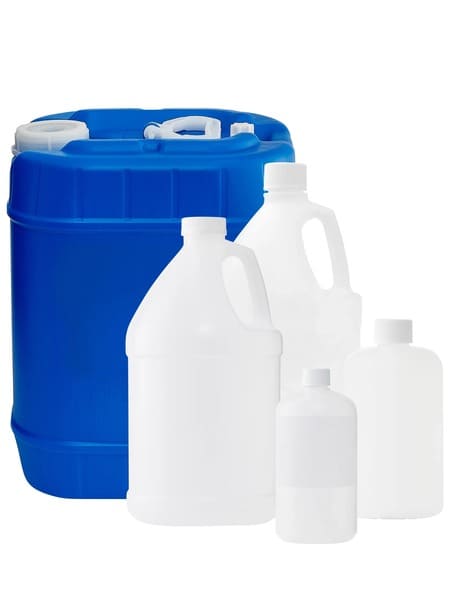
Most people buy ethyl ether as a solvent. It works on fats, oils, dyes, resins, rubber and nitrocellulose, and it serves as a reaction and extraction medium in the chemical industry. It also plays a part in making photographic films and pharmaceuticals. The common headache is a supplier that can’t ship the size you need or can’t back the grade with paperwork. That’s where we come in. You’ll find sizes from 500 ml to 55 gallon, plus case packs, with hazmat handling taken care of and documents listed on this page. Choose your size and add it to your cart, or request a quote if you need something different. On budget, on time, every time. Request your quote here.
-
Solvent for fats, oils and dyes
-
Solvent for resins, rubber, nitrocellulose
-
Reaction and extraction medium
-
Chemical synthesis solvent
-
Making photographic films
-
Making pharmaceuticals
-
Paint thinner and adhesive ingredient
-
Fuel additive
-
Q: What is Ethyl Ether ≥99% ACS Grade used for?
A: Mostly as a solvent for fats, oils, dyes, resins, rubber and nitrocellulose. It’s also used as a reaction and extraction medium and in making photographic films and pharmaceuticals.Q: What does ACS Grade mean, and is it suitable for solvent and extraction work?
A: This product is listed as ACS Grade with an assay of Min 99.0%. Since ethyl ether is used as a solvent and extraction medium, check the Technical Data Sheet and the lot Certificate of Analysis to confirm it fits your method.Q: What sizes are available, and does it ship as hazmat?
A: You can choose 500 ml, 1 L, 4 L, 5 gallon or 55 gallon, plus cases of 6 x 500 ml, 4 x 1 L or 4 x 4 L. The page notes that a hazmat fee applies. Check the Safety Data Sheet for transport details.Q: How do I get the SDS and Certificate of Analysis?
A: Open the Product Manuals section on this page for the Safety Data Sheet and Technical Data Sheet. Certificates of Analysis are in their own tab, listed by lot number. If you can’t find what you need, contact us and we’ll help.Q: How should Ethyl Ether be stored?
A: Start with the Safety Data Sheet on this page, since ethyl ether has high volatility and flammability. Our guide, How to Store Ethyl Ether, covers it in more detail.Q: Is Ethyl Ether the same as Diethyl Ether?
A: Yes. Diethyl Ether is another name for Ethyl Ether, and this product is listed under CAS 60-29-7.Q: Who can order this product?
A: The page says it ships only to schools, universities, laboratories or companies. If an individual places an order, the item is removed and the rest of the order ships.
Product Information
| CAS | 60-29-7 |
|---|---|
| Synonyms | Diethyl Ether, Ether, Ethoxyethane, Diethyl oxide, Ethyl oxide, Aether, Pronarcol, Anesthetic ether |
| Assay | Min 99.0% |
| PubChem ID | 3283 |
| Grade | ACS Grade |
| Color | 10 max |
| Physical form | Liquid |
| Appearance | Colorless Liquid |
| Odor | Sweet, ether-like |
| Melting point | -176.8 °F (-116 °C) |
| Boiling Point | 95 °F (35 °C) |
| Vapor pressure | 587 mbar @ 20 °C |
| Density | 0.71 at 20 °C (68 °F) |
| Solubility | Fully Miscible in Water |
| Auto-ignition temperature | 160 °C / 320 °F |
| Molecular formula | C4H10O |
| Molecular weight | 74.12 |
| Autoship Available | No |
| Carbonyl Compounds | Max 0.001% as Formaldehyde |
| Ethanol | To Pass Test |
| Flash Point | -45.0 °C (-49.0 °F) |
| Pillar | High Purity |
| Residue after evaporation | 10 ppm max |
| Titrabale acid | 0.0002 meq/g max |
| Vapor density | 2.56 |
| Viscosity | 0.2448 cP at 20 °C |
| Water | 0.03% max |