





Dichloromethane (Methylene Chloride) Uses & Applications
Dichloromethane (methylene chloride, CH₂Cl₂) is a volatile, colorless chlorinated solvent produced by the chlorination of methane. With a boiling point of just 39.6°C, moderate polarity, and the ability to dissolve a wide range of organic compounds, it occupies a role in chemistry and manufacturing that few other solvents can match. It is non-flammable under normal conditions, miscible with most organic solvents, and immiscible with water, a combination of properties that makes it particularly effective for extraction, purification, and polymer processing.
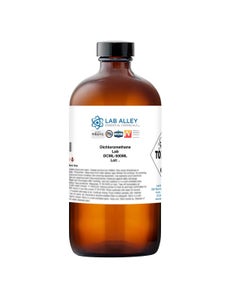
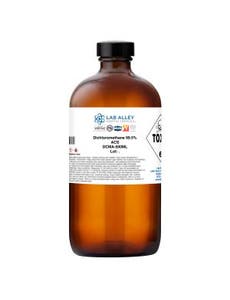
Lab Alley supplies dichloromethane in three grades: Lab Grade, ACS Reagent Grade (99.5%), and HPLC Grade (99%). These grades serve a professional audience that includes pharmaceutical chemists, polymer fabricators, analytical laboratories, and R&D teams working across chemical synthesis, chromatography, and materials manufacturing.
Regulatory context is relevant to any discussion of this chemical's applications. In April 2024, the EPA issued a final rule under the Toxic Substances Control Act prohibiting all consumer uses and most industrial and commercial uses of dichloromethane. Certain uses have been explicitly retained, including laboratory use, polycarbonate and plastics manufacturing, solvent welding, and use as a processing aid in closed systems. All continuing industrial and commercial uses are subject to strict exposure limits, air monitoring, and documented worker protection programs.
In this article:
-
Industrial Applications
-
Scientific & Laboratory Uses
-
Medical & Pharmaceutical Uses
-
Food & Beverage Industry
-
Agriculture & Pesticides
-
Paint Stripping & Coating Removal
-
Polymer & Plastics Manufacturing
-
Dichloromethane Grades and Pack Sizes
Industrial Applications
Manufacturing & Processing
Dichloromethane has served as an auxiliary blowing agent in the production of flexible polyurethane slabstock foam for decades. In this application, its low boiling point causes rapid volatilization during the exothermic polyol-isocyanate reaction, generating additional gas volume that lowers foam density and controls cell structure.
Beyond the blowing effect, it also functions as a heat sink: as it vaporizes, it absorbs energy from the reaction, preventing the core temperature from rising to levels that would cause discoloration or thermal degradation. This dual role, density reduction and thermal regulation, made it the auxiliary blowing agent of choice in flexible foam manufacturing after the phase-out of chlorofluorocarbons, and it continues to see use in this application where permitted.
Chemical Synthesis
As a reaction solvent, dichloromethane supports a broad range of synthetic organic transformations, including alkylations, acylations, condensations, and nucleophilic substitution reactions. Its ability to dissolve structurally diverse reactants while remaining chemically inert under most reaction conditions makes it a dependable medium in process chemistry.
It is also used as a solvent in the production of certain chemical intermediates, including precursors to refrigerants and other halogenated compounds. Because it evaporates cleanly and completely under mild conditions, downstream solvent removal adds minimal complexity to a given process.
Scientific & Laboratory Uses
Analytical Reagent
Dichloromethane is a standard extraction solvent in analytical chemistry, particularly for isolating nonpolar and moderately polar analytes from aqueous matrices. Its immiscibility with water enables clean liquid-liquid partitioning; target compounds preferentially migrate into the organic layer while polar interferences remain in the aqueous phase.
This makes it widely used in pesticide residue analysis, environmental sample preparation, and qualitative organic analysis. Regulatory methods from agencies such as the EPA and FDA frequently specify dichloromethane for extraction steps in water, soil, and food matrices where organochlorine or organophosphate compounds are the analytes of interest.
Solvent in Laboratory Processes
Normal-phase column chromatography and flash chromatography both rely heavily on dichloromethane as a mobile-phase component. Blends of dichloromethane and methanol are among the most common solvent systems used for purifying active pharmaceutical ingredients and complex organic synthesis products on silica gel, offering tunable polarity across a wide range of selectivity.
The solvent's high density, low viscosity, and rapid evaporation support fast column throughput and straightforward downstream concentration of purified fractions. HPLC-grade dichloromethane, with its tightly controlled UV absorbance and low particulate content, is the appropriate choice for these workflows.
Specialized Research Applications
Deuterated dichloromethane (CD₂Cl₂) fills a specific and important niche in NMR spectroscopy. Certain compounds that are poorly soluble in CDCl₃ at room temperature dissolve readily in CD₂Cl₂ at low temperatures, making it the solvent of choice for low-temperature NMR studies of reactive intermediates, conformational dynamics, and organometallic species.
Standard dichloromethane also appears as a reaction medium in exploratory synthetic chemistry, particularly for reactions that require a polar aprotic-like environment at low temperature. Its relatively inert character in most chemical contexts, combined with ready availability in high purity, supports its continued use across a wide range of academic and industrial research settings.
Medical & Pharmaceutical Uses
Pharmaceutical Extraction & Purification
Dichloromethane has a well-established role in pharmaceutical manufacturing as a solvent for extracting active pharmaceutical ingredients from natural source materials, including plant-derived steroids, antibiotics, and vitamins. Its selectivity for nonpolar and moderately polar compounds allows it to isolate target molecules from complex biological matrices while leaving behind polar impurities.
In API synthesis, it serves as a reaction solvent and recrystallization medium, where its volatility is a practical advantage: residual solvent is removed efficiently under reduced pressure or mild heating, keeping post-processing demands manageable. Column chromatography using dichloromethane-methanol blends remains a standard purification approach at both laboratory and pilot scale in pharmaceutical development.
Food & Beverage Industry
Beverage Processing
Dichloromethane was historically used to decaffeinate unroasted coffee beans and tea through a solvent extraction process in which the chemical selectively extracted caffeine while leaving flavor compounds largely intact. It was also used to produce hop extracts for beer, where its solvent properties allowed the efficient recovery of iso-alpha acids and other bittering compounds from hop material.
These applications have been substantially curtailed: supercritical carbon dioxide extraction has largely replaced dichloromethane in commercial decaffeination, and regulatory restrictions on solvent residues in food products have significantly narrowed the conditions under which its food-contact use is permissible. Any current or prospective use in food processing should be verified against applicable FDA regulations and current EPA restrictions before proceeding.
Agriculture & Pesticides
Pesticide Residue Analysis
Dichloromethane is a standard solvent in laboratory methods for extracting pesticide residues from food, soil, and water samples. Its selectivity for organochlorine and organophosphate compounds in liquid-liquid and solid-liquid extraction steps makes it well suited to multi-residue analytical workflows.
Standard methods published by the EPA, FDA, and international bodies specify dichloromethane as the extraction solvent in several validated procedures. Following extraction, the analytes are typically concentrated and subjected to gas chromatography or liquid chromatography with mass spectrometric detection. Analytical-grade or ACS-grade dichloromethane is appropriate for this work, where low-level impurities could interfere with detection at trace concentrations.
Paint Stripping & Coating Removal
Industrial Paint Stripping
Dichloromethane's effectiveness as a paint stripper comes from its ability to penetrate and disrupt the cross-linked polymer networks that give paints, varnishes, and adhesives their structural integrity. On contact, it swells and softens the coating, breaking the adhesion between the film and the substrate without damaging the underlying metal, concrete, or wood.
This made it the active ingredient in many industrial paint removal products across the automotive, aerospace, and construction industries, where fast, complete removal of coatings from complex geometries and large surface areas was a practical requirement.
Regulatory Status
The EPA's regulatory actions on dichloromethane in paint stripping have unfolded in two stages. Consumer use of paint and coating removers was prohibited in 2019 following findings of acute toxicity risk, including fatalities associated with bathtub refinishing and residential stripping operations.
The 2024 TSCA final rule extended these restrictions to most remaining industrial and commercial paint-stripping applications, with phase-out timelines of one to two years from the rule's effective date. Continued use in any paint-stripping application now requires full compliance with the EPA's Workplace Chemical Protection Program requirements, including exposure monitoring, strict action levels, and documented worker training and notification.
Polymer & Plastics Manufacturing
Polycarbonate & Cellulose Acetate Production
Dichloromethane serves as the primary solvent in the interfacial polymerization process used to manufacture polycarbonate resin. In this process, bisphenol A dissolved in an aqueous alkaline phase reacts with phosgene dissolved in the dichloromethane organic phase at the liquid-liquid interface, building high-molecular-weight polymer chains.
The solvent plays an essential structural role: it must dissolve the growing polymer while remaining immiscible with water, and the interfacial tension between the two phases governs where and how polymerization proceeds. Cellulose acetate production also relies on dichloromethane as a processing solvent, where it dissolves the acetylated polymer for casting or fiber-spinning operations. Both of these applications are explicitly retained under the 2024 EPA final rule.
Solvent Welding
In solvent welding, dichloromethane bonds thermoplastic parts by temporarily dissolving a thin layer at each mating surface. When the two softened surfaces are pressed together and the solvent evaporates, the intermingled polymer chains consolidate into a unified structure with strength comparable to the parent material.
Its low viscosity allows it to wick into tight joints by capillary action, producing clean, optically clear bonds on acrylic, polycarbonate, PVC, and ABS. This technique is used in laboratory equipment fabrication, optical assemblies, specialty enclosures, and certain plastic component manufacturing contexts where adhesive bonds would be mechanically or optically inferior. Solvent welding is an explicitly permitted use under the current EPA framework.
Plastic Film Base Manufacturing
Dichloromethane functions as a casting solvent in the production of photographic and specialty film bases. It dissolves the polymer, typically cellulose acetate or a related material, into a homogeneous solution that is cast onto a moving belt or drum and allowed to dry as the solvent evaporates.
The uniformity of the resulting film, including thickness, optical clarity, and mechanical properties, depends directly on the consistency of the solvent system used. Dichloromethane's clean evaporation profile and high solvency for these polymers have made it the practical choice for this application in precision film manufacturing.
Dichloromethane Grades and Pack Sizes
Lab Alley supplies dichloromethane in three grades to match the purity requirements of different workflows.
Available Grades & Formulations
-
Lab Grade (≥99.5% purity) for industrial processes, degreasing, solvent welding, resin and polymer processing, and commercial laboratory use
-
ACS Reagent Grade (99.5%, certified by the American Chemical Society) for analytical chemistry, research, and biochemical laboratory applications requiring verified purity
-
HPLC Grade (99%) for chromatography, high-purity extractions, and analytical workflows where low UV-absorbing impurities are required
Pack Sizes & Industrial Availability
-
500 mL, 1 L, 2.5 L, and 4 L for bench-scale and research use
-
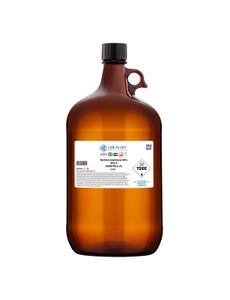
1-gallon jugs for standard laboratory and process operations
-
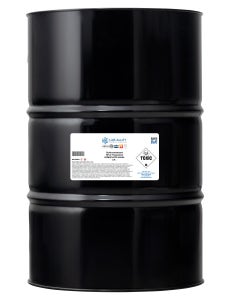
5-gallon pails and 55-gallon drums for production-scale use
-
Case and pallet quantities available for bulk purchasing
All containers are UN-approved and DOT-compliant with proper Class 6.1 hazardous material labeling. Lab Alley provides Certificates of Analysis (COAs) and Safety Data Sheets (SDSs) with its dichloromethane products. Contact Lab Alley for volume pricing, custom quotes, or procurement support.
Final Note
Dichloromethane occupies a distinct position in the solvent landscape: no single chemical property explains its usefulness, but the combination of low boiling point, moderate polarity, high solvency, water immiscibility, and non-flammability makes it difficult to replace in the applications where it performs best. It functions as a reaction medium in pharmaceutical synthesis, a precision extraction solvent in analytical chemistry, a structural element in polycarbonate manufacturing, and a bonding agent in thermoplastic fabrication, serving each of these roles in ways that alternative solvents address only partially.
The regulatory landscape around dichloromethane has shifted substantially, and procurement decisions must account for the 2024 EPA framework when planning current or future use. For the applications that remain permitted, it's essential to work with a supplier that provides grade-specific documentation, accurate hazard labeling, and compliance-ready support.
For more detailed guidance, explore our Resource Library.
Our Customer Care team is also available for more information and documentation, including chemical Safety Data Sheets.
Need Dichloromethane You Can Trust?
If you are looking for high-quality dichloromethane for your lab, product line, or research facility, be sure to visit our store to explore our trusted selection and request a quote.
As your trusted partner in chemical supply, Lab Alley is always striving to meet the growing demands of our customers. We want you to be able to access all of your chemical needs in one place, along with streamlined online ordering and fast shipping.
Due to popular demand from our valued clientele, Lab Alley's dichloromethane is available in a range of purities and packaging options to suit various commercial, laboratory, and personal needs.