





n-Hexane Uses & Applications
n-Hexane (hexane, C₆H₁₄) represents a straight-chain aliphatic hydrocarbon solvent derived from petroleum refining, earning recognition as one of the most effective non-polar solvents available for commercial applications. This six-carbon alkane has become fundamental to industries requiring efficient extraction of oils, fats, and non-polar compounds from natural materials.
The compound's molecular structure as a linear hydrocarbon chain creates the non-polar characteristics that make it exceptionally useful for specific applications. Unlike polar solvents that dissolve water-soluble materials, n-hexane selectively dissolves oils, fats, greases, and other hydrophobic substances. This selectivity proves invaluable when separating oil-based materials from aqueous or solid matrices.
Key physical properties drive n-hexane's widespread use. The low boiling point of 69°C enables easy recovery through distillation, reducing operating costs in industrial processes. High volatility means the solvent evaporates quickly after use, important for applications requiring residue-free results. Rapid evaporation characteristics support fast production cycles in manufacturing operations. Excellent solvency for oils and non-polar compounds delivers the extraction efficiency that commercial operations demand.
Available in various grades including technical grade, pure grade, HPLC grade, and food-grade extraction solvent, n-hexane serves applications from commercial vegetable oil production to precision analytical chemistry. Edible oil processors extract cooking oils from soybeans and other oilseeds. Pharmaceutical manufacturers isolate plant-based active ingredients. Laboratory analysts prepare samples for chromatographic analysis. Industrial facilities clean and degrease metal components.
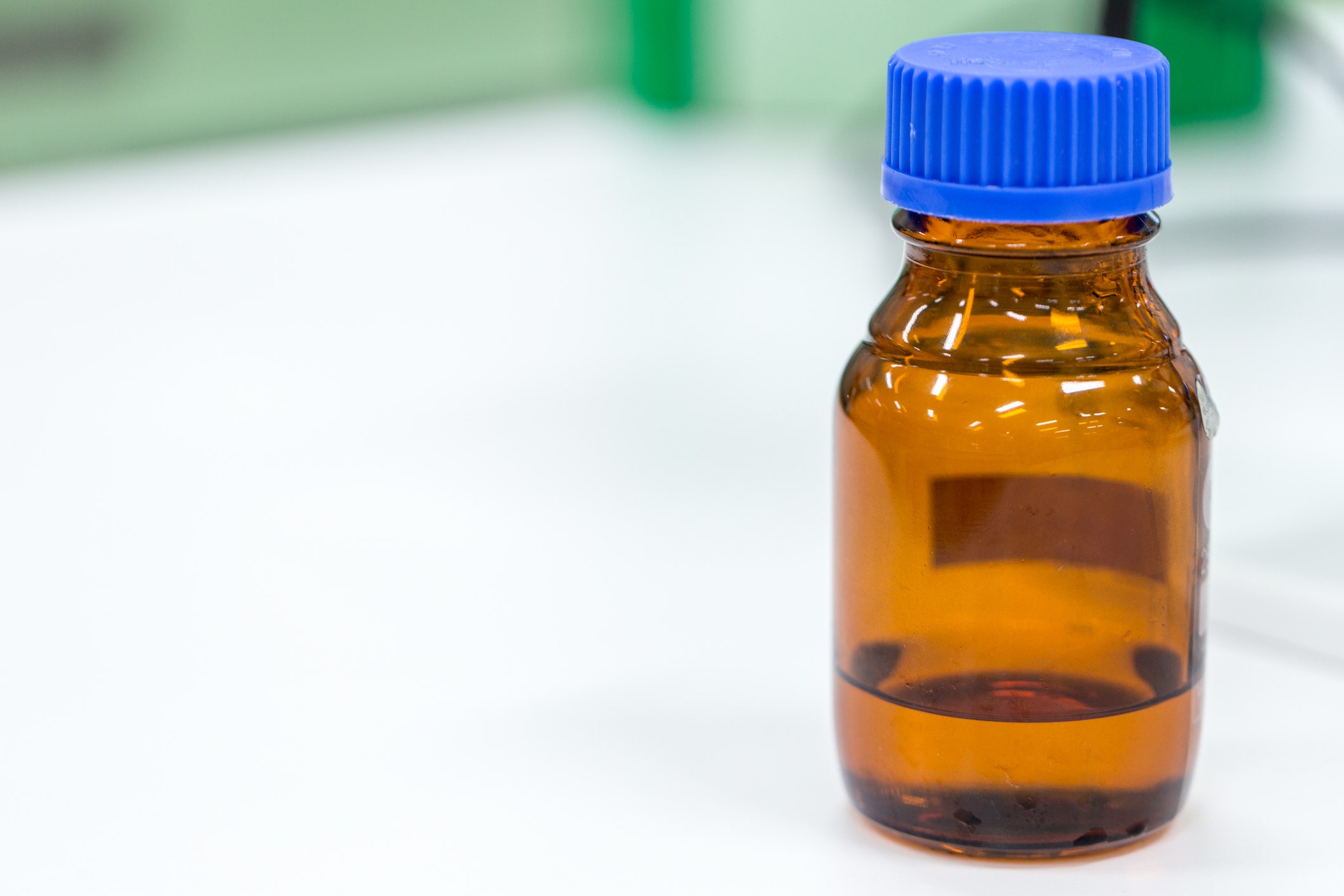
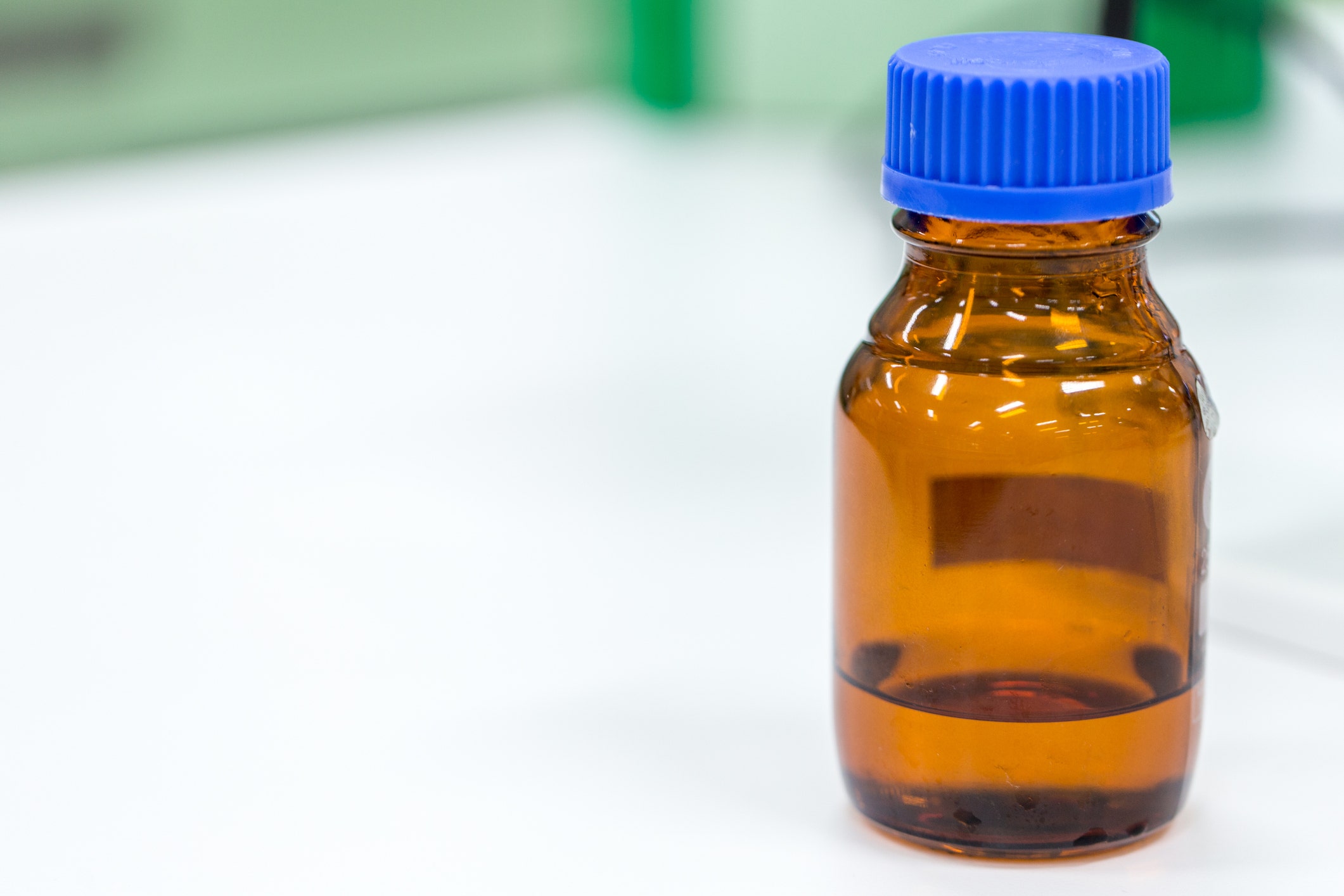
This guide explores how n-hexane serves critical applications across:
-
Industrial Applications
-
Scientific & Laboratory Uses
-
Food & Oil Processing
-
Pharmaceutical Manufacturing
-
Textile & Leather Industries
-
Paint, Coatings & Inks
-
Electronics & Precision Manufacturing
-
Specialty Chemical Production
-
Environmental & Analytical Testing
Industrial Applications
Manufacturing sectors harness n-hexane's non-polar solvent properties for extraction, polymerization, adhesive formulation, cleaning, and chemical synthesis operations. The compound's ability to dissolve oils and non-polar materials while evaporating cleanly supports diverse industrial processes.
Vegetable Oil Extraction
Primary extraction operations recover oils from soybeans, canola, corn, cottonseed, and other oilseeds in commercial edible oil production. Crushed oilseeds contact hexane in large-scale extraction equipment, dissolving oil from the seed material. Subsequent distillation separates hexane from extracted oil, with the recovered solvent recycled back into the extraction process.
This extraction method achieves higher oil recovery than mechanical pressing alone, maximizing yield from valuable oilseed crops. Edible oil production worldwide relies heavily on hexane extraction to meet demand for cooking oils and food ingredients.
Polymer & Rubber Production
Polymerization medium applications and reaction solvent uses in producing polyethylene, polypropylene, and synthetic rubber utilize hexane's chemical inertness and appropriate physical properties. Certain polymerization reactions proceed optimally in hydrocarbon solvents like hexane that don't interfere with catalyst systems or growing polymer chains.
Rubber manufacturing operations employ hexane in solution polymerization processes that create synthetic elastomers with specific performance characteristics. The solvent choice influences polymer properties and production efficiency.
Adhesives & Sealants
Solvent applications in pressure-sensitive adhesives, contact adhesives, and sealant formulations serve packaging, footwear, and construction industries. Hexane dissolves adhesive polymers and resins, creating workable solutions that spread easily during application.
After adhesive application, hexane evaporation leaves behind the tacky polymer film that provides adhesion. Fast solvent evaporation supports rapid production in adhesive manufacturing and application operations.
Industrial Cleaning
Degreasing operations for metal parts, precision cleaning of industrial equipment, and removal of oil-based contaminants leverage hexane's powerful dissolving action on greases and oils. Manufacturing facilities clean machined parts to remove cutting oils and metalworking fluids before assembly or coating.
The solvent's rapid evaporation eliminates extended drying times, keeping production moving efficiently. Parts emerge clean and dry, ready for subsequent processing steps.
Chemical Synthesis
Reaction medium and extraction solvent applications in organic synthesis, chemical manufacturing, and specialty chemical production utilize hexane when non-polar reaction conditions are needed. Synthetic chemists select solvents based on required polarity, boiling point, and compatibility with reagents and products.
Chemical manufacturers appreciate hexane's stability, predictable behavior, and ease of removal through distillation. These characteristics simplify process development and scale-up activities.
Scientific & Laboratory Uses
Research and analytical laboratories consume n-hexane for chromatography, extractions, sample preparation, and synthetic chemistry work. High-purity grades ensure reliable results in demanding analytical applications.
Chromatography
Mobile phase and extraction solvent applications in gas chromatography (GC), liquid chromatography (LC), and thin-layer chromatography (TLC) require solvents with minimal impurities and consistent properties. Hexane's non-polar nature makes it essential for separating non-polar analytes and establishing appropriate elution conditions.
Analytical chemists developing separation methods adjust mobile phase polarity by blending hexane with more polar solvents. This polarity control enables optimization of chromatographic separations.
Laboratory Extractions
Non-polar extraction applications for lipids, oils, fats, and hydrophobic compounds in analytical testing and research rely on hexane's selective solvency. When analyzing biological samples, environmental materials, or food products for oil or fat content, hexane effectively extracts these components while leaving polar materials behind.
Research protocols specify hexane extraction for determining total lipid content, analyzing fatty acid composition, and isolating non-polar compounds for further study.
Sample Preparation
Solvent uses for dissolving non-polar analytes, diluting samples, and preparing standards in environmental and food analysis prepare materials for instrumental analysis. Clean samples dissolved in appropriate solvents are essential for accurate analytical results.
Quality control laboratories maintain supplies of high-purity hexane specifically for sample preparation that must meet strict analytical requirements.
Research Reagent
Chemical reagent applications in organic chemistry research, synthesis procedures, and academic laboratory work utilize hexane as both solvent and reagent. University research groups and industrial R&D laboratories stock hexane in various grades matching different experimental needs.
Food & Oil Processing
Food sector applications focus primarily on edible oil extraction and processing, where food-grade hexane serves as a processing aid that must be removed to acceptable residual levels in finished products.
Edible Oil Extraction
Food-grade extraction operations produce cooking oils, salad oils, and edible fats from plant sources. Oilseed processing facilities operate continuous extraction systems where ground seeds contact hexane, dissolving oil efficiently. The oil-hexane mixture undergoes distillation to separate components, with rigorous controls ensuring residual hexane in finished oil meets regulatory limits.
This extraction technology enables the economical production of the vegetable oils consumers use daily for cooking and food preparation.
Specialty Oil Production
Extraction operations for rice bran oil, grape seed oil, and other premium edible oils employ hexane to maximize yield from valuable raw materials. These specialty oils often command premium prices, making efficient extraction economically important.
Processors must balance extraction efficiency against the cost of removing hexane to very low residual levels that consumers expect in premium products.
Oil Refining Process
Solvent applications in degumming, dewaxing, and refining crude vegetable oils prepare extracted oils for food use. Crude oils contain impurities, waxes, and other materials that hexane helps remove during refining steps.
Refined oils emerge clear, stable, and suitable for food applications ranging from cooking to salad dressings to food manufacturing ingredients.
Spice & Flavor Extraction
Extraction applications for essential oils, oleoresins, and flavor compounds from spices and botanicals create concentrated flavoring ingredients. Spice processors extract flavor compounds from materials like black pepper, paprika, and ginger using hexane, then remove the solvent completely to yield pure flavor extracts.
These extracts provide intense, consistent flavoring for food products while avoiding the variability inherent in whole spices.
Pharmaceutical Manufacturing
Pharmaceutical applications utilize n-hexane's extraction capabilities and solvent properties while maintaining strict quality standards and residue controls appropriate for medical products.
Active Ingredient Extraction
Extraction operations for plant-based pharmaceuticals, natural products, and botanical active ingredients isolate therapeutic compounds from botanical sources. Traditional medicines and modern pharmaceuticals both derive from plants, requiring effective extraction methods to obtain active ingredients economically.
Hexane extraction followed by purification steps yields pharmaceutical-grade active ingredients meeting regulatory purity requirements.
Pharmaceutical Processing
Solvent applications in crystallization, purification, and isolation of pharmaceutical compounds facilitate the preparation of pure drug substances. Manufacturing pure pharmaceuticals requires solvents that can be removed completely, leaving no harmful residues.
Process chemists select hexane when its nonpolar characteristics benefit crystallization or separation of pharmaceutical intermediates and final products.
Excipient Manufacturing
Production solvent applications for pharmaceutical excipients and inactive ingredient processing create the non-drug components of medications. While active ingredients provide therapeutic effects, excipients enable proper drug formulation and delivery.
Some excipient manufacturing processes employ hexane during synthesis or purification, with subsequent removal ensuring excipient purity.
Cleaning Agent
Cleaning and degreasing pharmaceutical manufacturing equipment between production runs prevents cross-contamination and maintains product quality. Equipment surfaces must be completely clean before producing different drug products in the same facility.
Hexane's degreasing power, combined with clean evaporation, makes it suitable for cleaning certain pharmaceutical manufacturing equipment.
Textile & Leather Industries
Textile and leather processing operations use n-hexane for removing oils, waxes, and other materials from fibers and hides. These traditional industries continue relying on effective degreasing solvents.
Textile Processing
Solvent applications for removing sizing agents, oils, and waxes from textile fibers and fabrics prepare materials for dyeing and finishing. Raw textile fibers often contain natural oils or processing lubricants that must be removed before further treatment.
Textile mills use hexane extraction to clean fibers, ensuring even dye uptake and proper finishing chemical application.
Fabric Finishing
Component applications in fabric treatment formulations and textile finishing processes contribute to the final characteristics consumers expect. Finished fabrics must meet specific standards for appearance, feel, and performance.
Leather Degreasing
Degreasing operations in leather processing and tanning remove natural fats from animal hides. Raw hides contain fats that interfere with tanning chemicals, requiring removal before successful leather production.
Leather processors use hexane to extract fats efficiently, preparing hides for tanning and finishing operations that create usable leather products.
Fiber Production
Solvent applications in synthetic fiber production and textile manufacturing processes support the creation of man-made textile fibers. Some synthetic fiber manufacturing involves solvent-based processes where hexane may serve specific functions.
Paint, Coatings & Inks
Coating formulation applications utilize n-hexane's solvency and evaporation characteristics to achieve desired application properties and film formation.
Paint Formulations
Solvent applications in oil-based paints, lacquers, and industrial coating systems dissolve film-forming resins and adjust viscosity for application. Paint formulators balance multiple solvents to control drying speed, flow characteristics, and final film properties.
Hexane contributes to the solvent blend in certain coating formulations, particularly where fast evaporation is beneficial.
Printing Inks
Component applications in flexographic, gravure, and specialty printing ink formulations deliver the flow properties needed for different printing technologies. Each printing method demands specific ink characteristics that solvent selection influences.
Printing operations require inks that transfer properly to substrates while drying quickly to avoid smearing or offsetting.
Thinners & Diluents
Paint thinner and viscosity reducer applications for coatings and varnishes allow users to adjust consistency for specific application methods. Brush, roller, and spray applications each require different viscosities for optimal results.
Surface Coatings
Solvent applications in automotive coatings, wood finishes, and protective coating formulations create the durable, attractive surfaces these products provide. High-performance coatings require carefully formulated solvent systems that evaporate in controlled sequences.
Electronics & Precision Manufacturing
High-technology manufacturing employs ultra-pure n-hexane for cleaning sensitive electronic components and precision equipment where residue-free results are mandatory.
Electronics Manufacturing
Precision cleaning applications for printed circuit boards, semiconductor components, and electronic assemblies remove contamination that could cause device failures. Electronic components must be absolutely clean to function reliably.
Ultra-pure hexane dissolves manufacturing residues without leaving ionic contaminants or residues that compromise electronic performance.
Defluxing Agent
Removal operations for flux residues from electronic components after soldering eliminate materials that could cause corrosion or electrical problems. Soldering flux assists the soldering process but must be completely removed afterward.
Electronics manufacturers specify high-purity hexane for defluxing operations requiring residue-free cleaning.
Precision Cleaning
Ultra-pure cleaning applications for optical components, precision instruments, and sensitive equipment demand solvents leaving absolutely no residue. Optical surfaces must be perfectly clean to maintain performance specifications.
Component Degreasing
Degreasing operations for electronic parts and components requiring residue-free cleaning prepare materials for assembly into electronic devices. Manufacturing oils and handling residues must be completely removed.
Specialty Chemical Production
Specialized chemical manufacturing operations employ n-hexane for catalyst preparation, fine chemical synthesis, lubricant production, and solvent recovery applications.
Catalyst Preparation
Solvent applications in preparing Ziegler-Natta catalysts and other polymerization catalysts utilize hexane's inert characteristics and appropriate physical properties. These sophisticated catalysts enable the production of polymers with specific molecular structures.
Catalyst preparation requires solvents that won't interfere with sensitive catalyst components while facilitating proper mixing and precipitation.
Fine Chemical Synthesis
Reaction medium applications in producing fine chemicals, intermediates, and specialty compounds support the synthesis of high-value chemical products. Fine chemical manufacturing creates products used in relatively small quantities but commanding premium prices.
Grease & Lubricant Production
Solvent applications in manufacturing greases, cutting fluids, and specialty lubricants facilitate the processing of these important industrial products. Grease production involves dispersing thickeners and additives in base oils, processes where hexane sometimes plays a role.
Solvent Recovery
Recovery and recycling from industrial processes through distillation enables reuse and reduces operating costs. Large-scale hexane users, particularly in vegetable oil extraction, maintain sophisticated distillation systems that recover over 99% of hexane for reuse.
This recovery not only reduces costs but also minimizes environmental releases and supports sustainable manufacturing practices.
Environmental & Analytical Testing
Environmental monitoring and analytical chemistry applications specify n-hexane for extracting organic compounds from environmental samples and determining contamination levels.
Environmental Sample Extraction
Extraction operations for determining oil, grease, and hydrocarbon content in water and soil samples provide critical environmental monitoring data. Regulatory compliance and contamination assessment require accurate measurement of petroleum hydrocarbons and other non-polar pollutants.
Environmental laboratories extract samples with hexane, then measure the extracted material to quantify contamination levels.
EPA Methods
Specified solvent applications in EPA analytical methods for environmental testing and compliance monitoring ensure standardized, reproducible results. Regulatory methods prescribe specific procedures, including solvent choice, to enable comparison of results across different laboratories.
Contaminant Analysis
Extraction operations for organic pollutants, pesticides, and environmental contaminants from environmental matrices isolate target analytes for measurement. Understanding environmental contamination requires methods that efficiently extract pollutants from complex sample matrices.
Quality Control Testing
Solvent applications in testing protocols for food safety, environmental compliance, and product quality support quality assurance programs. Testing laboratories following established methods ensure products meet specifications and regulatory requirements.
n-Hexane Grade Specifications
Understanding n-hexane purity grades helps users select the optimal specification for their application. Grade selection balances purity requirements against cost considerations.
HPLC/Chromatography Grade
Ultra-high purity n-hexane with ≥99% purity, low UV absorbance, and minimal impurities serves high-performance liquid chromatography, gas chromatography, and other analytical applications requiring the highest purity and consistency. Trace impurities that wouldn't matter in industrial applications can interfere with sensitive analytical measurements.
ACS Reagent Grade
Meets American Chemical Society specifications for laboratory reagent use. High purity suitable for analytical chemistry, research applications, and laboratory procedures requiring certified quality standards ensures reproducible experimental results.
Food/Extraction Grade
Meets food-grade specifications for use in edible oil extraction and food processing applications. Used as a processing aid in food production where residual hexane is removed to meet applicable residue limits, this grade undergoes testing confirming suitability for food contact.
Technical/Industrial Grade
Commercial-grade n-hexane with typically 95-99% purity serves industrial applications including degreasing, adhesive formulations, and general solvent use where the highest purity is not required. Cost advantages make this grade economical for high-volume industrial applications.
Pure Grade
High-purity n-hexane suitable for synthesis, extraction, and general laboratory use represents intermediate quality between technical and reagent grades. This grade serves many laboratory applications not requiring certified reagent quality.
n-Hexane Grades and Pack Sizes
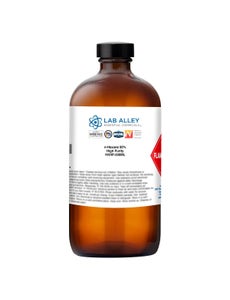
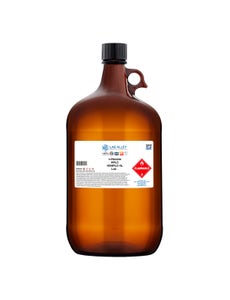
If you are searching for a reliable source of premium-quality n-hexane, Lab Alley supplies superior hexane products across industrial, analytical, food processing, and research applications. Every batch receives thorough testing to confirm purity and satisfy strict quality standards.
Available Grades & Formulations
Lab Alley provides n-hexane in multiple purity specifications:
Grade Specifications:
-
HPLC/Chromatography Grade: Ultra-high purity (≥99%) with low UV absorbance for analytical applications requiring maximum purity and minimal interference
-
ACS Reagent Grade: Meets American Chemical Society specifications for laboratory reagent use with certified quality standards
-
Food/Extraction Grade: Meets food-grade specifications for edible oil extraction and food processing with appropriate residue limits
-
Pure Grade: High-purity hexane for synthesis, extraction, and general laboratory applications
-
Technical/Industrial Grade: Commercial-grade (typically 95-99% purity) for industrial degreasing, adhesives, and general solvent applications
Available specifications include low-residue formulations, UV-grade for spectroscopy, and specialized grades for specific extraction and analytical applications.
Pack Sizes & Industrial Availability
Lab Alley offers n-hexane in various container sizes:
-
Laboratory bottles (500mL, 1L, 4L, 5L) for research and analytical applications
-
Commercial containers (5 gallon pails, 55 gallon drums) for moderate to high-volume operations
-
Bulk industrial quantities (275 gallon totes, tanker trucks, railcar shipments) for large-scale manufacturing
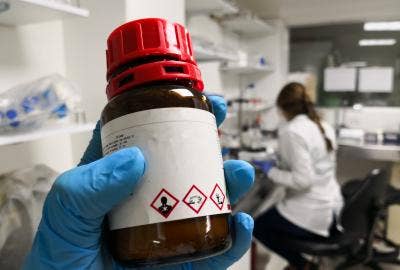
All products are packaged in UN-approved containers with proper hazmat labeling, safety caps, and DOT-compliant packaging for safe handling and transportation.
Quality & Compliance
Lab Alley's n-hexane products feature:
-
ACS reagent grade certificates available for laboratory and analytical applications
-
Food-grade specifications for extraction solvent use with residue limits per applicable regulations
-
Certificate of Analysis (COA) including purity assay, boiling range, evaporation residue, water content, and trace metal analysis
-
HPLC-grade specifications with UV absorbance data and chromatographic purity profiles
Safety & Regulatory Information
Critical safety considerations for n-hexane handling:
Flammability Classification: Class 3 flammable liquid (UN1208)
Exposure Limits:
-
NIOSH Recommended Exposure Limit (REL): 50 ppm (10-hour TWA)
-
ACGIH Threshold Limit Value (TLV): 50 ppm (8-hour TWA)
-
OSHA Permissible Exposure Limit (PEL): 500 ppm (8-hour TWA) - note that NIOSH recommends the lower 50 ppm limit
Required Safety Measures:
-
Proper ventilation and explosion-proof equipment for handling
-
Storage in cool, well-ventilated areas away from heat, sparks, and ignition sources
-
Personal protective equipment (PPE): safety glasses, gloves, and respiratory protection when needed
Food Industry Use: Used as a processing aid with residue limits enforced (e.g., 60 ppm maximum in defatted cottonseed products per 21 CFR 172.894)
Important Safety Note: n-Hexane is a highly flammable liquid and requires careful handling with appropriate safety measures. Use only in well-ventilated areas with proper fire prevention equipment. Follow NIOSH and ACGIH recommended exposure guidelines and workplace safety protocols. For food processing applications, ensure residual hexane levels comply with applicable regulatory limits. Always use an appropriate grade for the intended application and maintain strict quality control procedures.
Final Note
n-Hexane's exceptional effectiveness as a non-polar extraction and cleaning solvent establishes it as an indispensable compound across edible oil production, pharmaceutical manufacturing, analytical chemistry, industrial cleaning, and specialized chemical processes.
From extracting cooking oils that feed millions to enabling precision analytical measurements, from cleaning electronic components to supporting polymer production, this hydrocarbon solvent delivers the selective solvency and clean evaporation that diverse industries require.
For businesses requiring high-quality n-hexane, Lab Alley's expertise in grade specifications, safety compliance, and regulatory requirements ensures a reliable supply while maintaining the purity and handling standards essential for safe, effective applications.
For more detailed guidance, explore our Resource Library.
Our Customer Care team is also available for more information and documentation, including chemical Safety Data Sheets.
Need n-Hexane You Can Trust?
If you are looking for high-quality n-Hexane for your lab, product line, or research facility, be sure to visit our store to explore our trusted selection and request a quote.
As your trusted partner in chemical supply, Lab Alley is always striving to meet the growing demands of our customers. We want you to be able to access all of your chemical needs in one place, along with streamlined online ordering and fast shipping.
Due to popular demand from our valued clientele, Lab Alley's n-Hexane is available in a range of purities and packaging options to suit various commercial, laboratory, and personal needs.