





Types of Acetonitrile
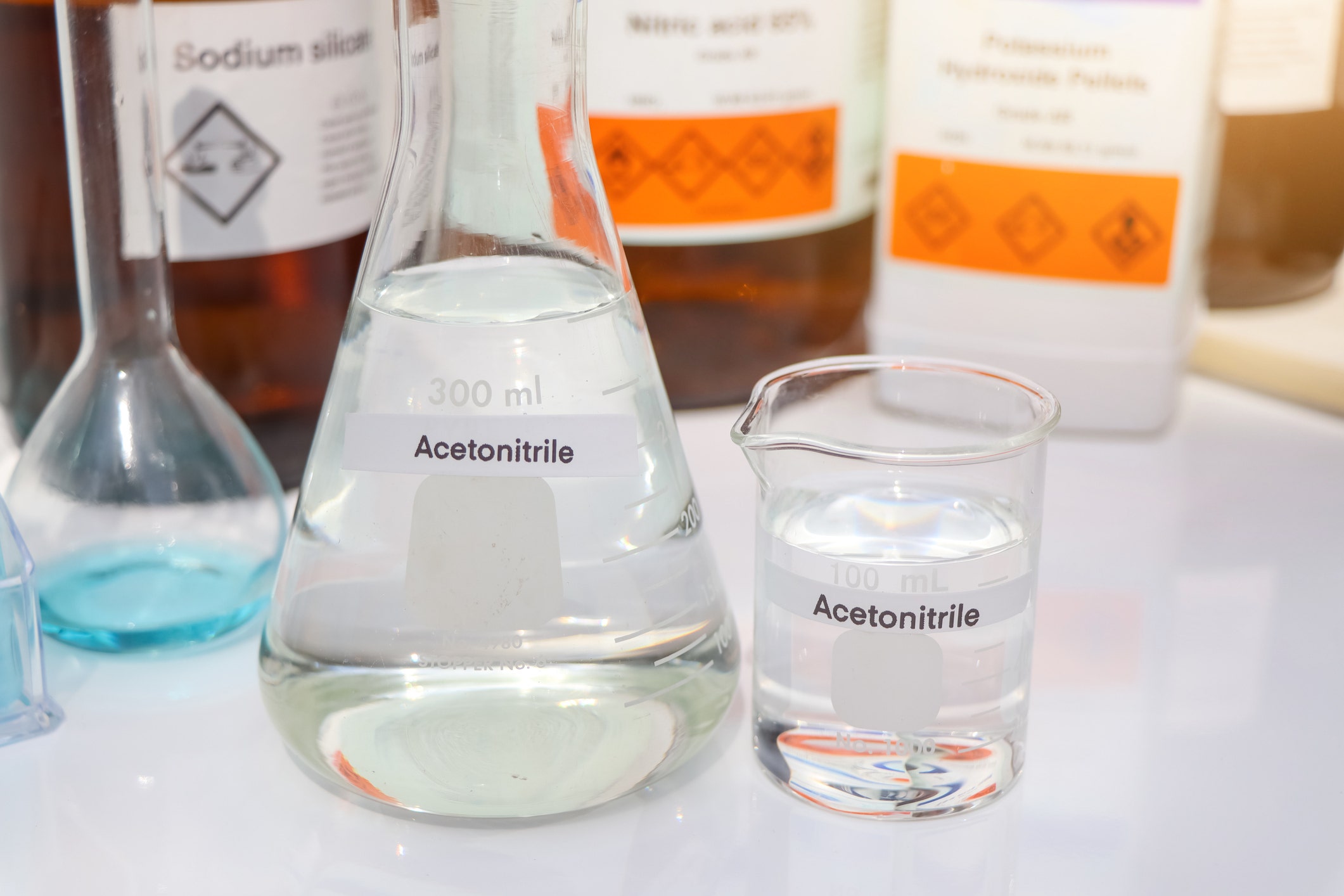
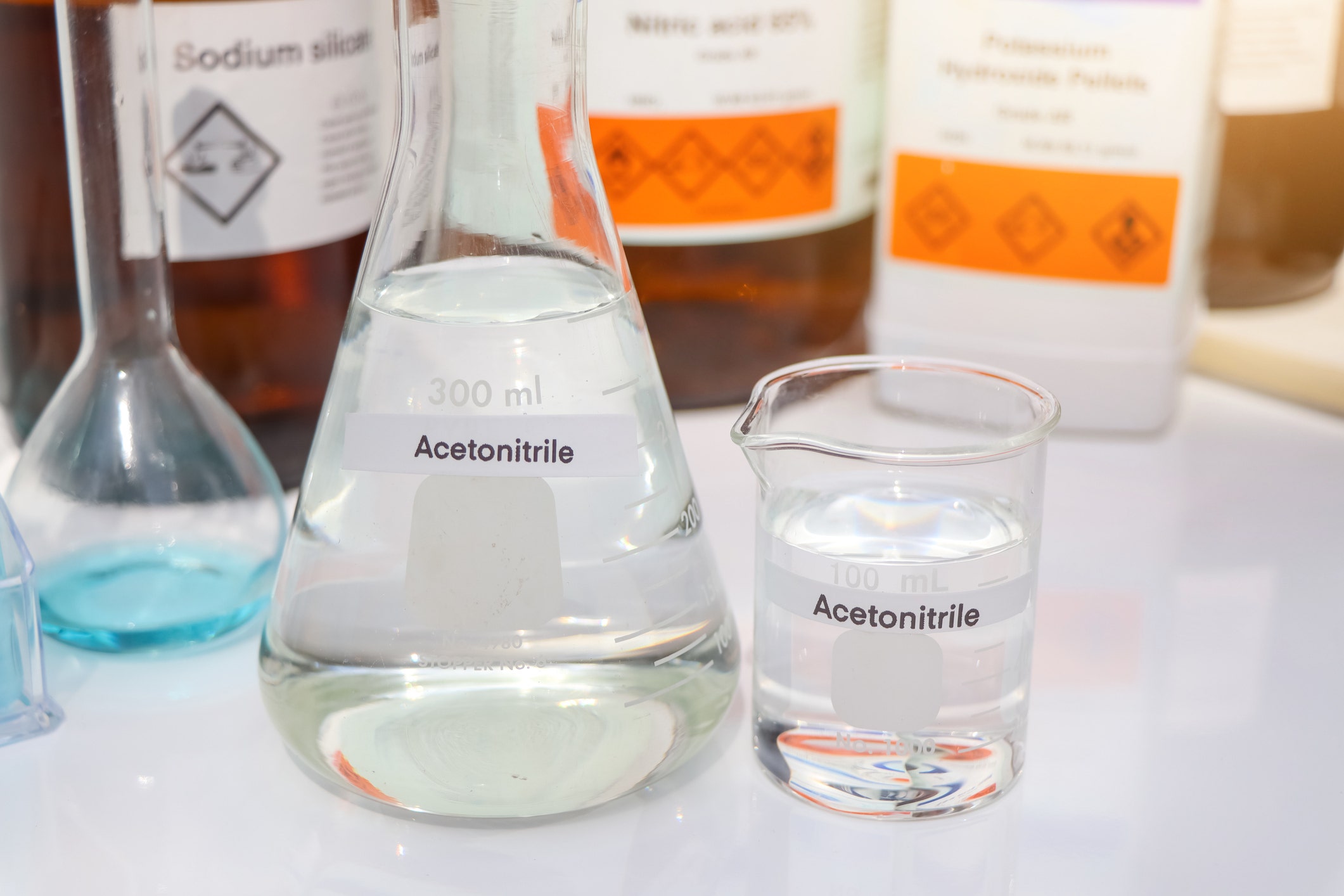
Acetonitrile is a polar aprotic solvent produced primarily as a byproduct of acrylonitrile manufacturing, valued in laboratories and industrial settings for its low viscosity, moderate polarity, and clarity under UV-visible light. Because the same base chemical is purified to different levels of UV transparency, water content, and residue limits, buyers encounter distinct grade names such as ACS Reagent, HPLC, and LC/MS rather than a single generic product.
Grade selection directly affects analytical performance and method compliance. Higher-purity grades reduce UV interference and baseline noise in chromatographic instruments, while lower grades suffice for general synthesis work; the right choice depends on end use, whether that's organic synthesis, HPLC mobile phase preparation, or mass spectrometry, along with the required UV cutoff and acceptable water content.
In this article, we'll explore:
-
Common Grades & Purities
-
Chemical Forms & Variants
-
Applications Based on Type
-
How to Choose the Right Type
Common Grades & Purities
ACS/Reagent Grade
ACS Reagent Grade acetonitrile meets purity specifications published by the American Chemical Society, with a minimum assay of 99.5% and defined limits on water content, titrable acid, titrable base, and residue after evaporation. This grade is suitable for general chemical synthesis, drying, purification, and routine laboratory work where reproducible results matter but analytical-grade UV performance is not required.
HPLC Grade
HPLC-grade acetonitrile is produced to a minimum assay of 99.9%, with UV absorbance held below 1.00 AU at 190 nm and tightening further at longer wavelengths to prevent baseline drift during gradient elution. This tighter UV control, combined with low particulate and residue limits, makes it the standard choice for HPLC mobile phase preparation, gas chromatography, and other analytical chromatography methods where trace UV-absorbing contaminants would distort peak resolution.
LC/MS Grade
LC/MS Grade represents the highest purity tier, formulated to minimize background ion interference and reduce halogenated residue levels that would otherwise elevate detector noise. It is reserved specifically for liquid chromatography-mass spectrometry workflows, including trace-level pesticide and residue analysis, where even the low-level contaminants tolerated in HPLC grade can compromise sensitivity.
Chemical Forms & Variants
Concentration Variants
Commercial acetonitrile grades range from a minimum assay of 99.5% at the ACS Reagent tier to 99.9% or higher for HPLC and LC/MS grades. As assay percentage increases, water content, titrable acidity, and UV absorbance all decrease correspondingly, which is why higher-purity grades carry tighter specifications and a corresponding price premium over general reagent-grade material.
Applications Based on Type
Laboratory & Analytical
HPLC and LC/MS grades are the appropriate choice for chromatography mobile phases and mass spectrometry work. Their controlled UV absorbance and minimal ion background prevent the baseline drift and detector noise that lower grades would introduce into sensitive analytical methods.
Industrial & Manufacturing
ACS Reagent grade serves as a general-purpose polar aprotic solvent in organic synthesis, drying, and purification processes. It is also used in extraction applications, including liquid-liquid and solid-phase extraction, where analytical-grade UV specifications offer no practical benefit over standard reagent purity.
How to Choose the Right Type
Selecting the correct acetonitrile grade comes down to matching purity and UV specifications to the sensitivity of the instrument or process involved, rather than defaulting to the highest grade available.
Match Grade to Application
HPLC grade belongs in chromatography mobile phases, LC/MS grade in mass spectrometry workflows, and ACS Reagent grade in general synthesis or non-analytical lab settings. Using a grade below what an instrument requires risks compromised baseline stability, while using one above what's needed adds unnecessary cost without improving outcomes.
Verify Required Certifications
Confirm ACS certification whenever a method or protocol specifies reagent-grade purity as a baseline requirement. For chromatography work, verify that the certificate of analysis lists UV absorbance values across the relevant wavelength range, since gradient elution methods are especially sensitive to absorbance creeping upward at higher wavelengths.
Select Appropriate Concentration or Form
Match the assay percentage and UV absorbance profile to the sensitivity of the instrument in use. Routine synthesis work rarely benefits from HPLC or LC/MS grade, so reserving those tiers for analytical applications keeps procurement costs proportional to actual need.
Common Mistakes
A frequent error is substituting ACS Reagent grade into HPLC systems, which introduces baseline noise and peak distortion from higher UV absorbance and looser impurity tolerances than the method can accommodate. The reverse mistake, overspending on LC/MS grade for applications that don't require mass spectrometry-level purity, is equally common and adds cost without improving outcomes.
Key Takeaways
Acetonitrile is commercially available in ACS Reagent, HPLC, and LC/MS grades, each defined by increasingly strict purity thresholds and UV absorbance limits rather than by structural or compositional differences. Because acetonitrile exists as a single compound with no meaningful variation in form, grade is the primary factor separating one product from another, making accurate grade selection the key decision for both cost control and analytical performance.
Matching the grade to the sensitivity of the intended application, whether general synthesis, HPLC, or mass spectrometry, remains the most reliable way to avoid both compromised results and unnecessary spending.
For more detailed guidance, explore our Resource Library.
Our Customer Care team is also available for more information and documentation, including chemical Safety Data Sheets.
Find Acetonitrile You Can Trust
If you are looking for high-quality acetonitrile for your lab, product line, or research facility, be sure to visit our store to explore our trusted selection and request a quote.
As your trusted partner in chemical supply, Lab Alley is always striving to meet the growing demands of our customers. We want you to be able to access all of your chemical needs in one place, along with streamlined online ordering and fast shipping.
Due to popular demand from our valued clientele, Lab Alley's acetonitrile is available in a range of purities and packaging options to suit various commercial, laboratory, and personal needs.