





Acetonitrile Overview
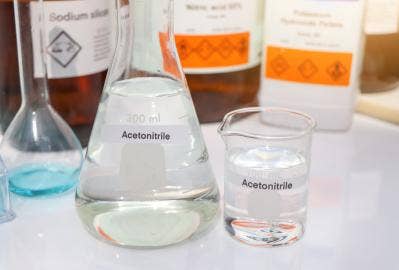
Acetonitrile is a colorless, volatile organic solvent recognized across laboratories and industry as the primary mobile-phase component in HPLC and LC/MS analysis. Known by several names, including methyl cyanide, cyanomethane, and the shorthand ACN, this simple nitrile has become one of the most widely used solvents in analytical chemistry.
What sets acetonitrile apart is its combination of low viscosity, wide UV transparency, and the ability to dissolve both polar and nonpolar compounds. That versatility makes it valuable well beyond the analytical lab, extending into oligonucleotide synthesis, industrial extraction, and specialty battery chemistry.
Acetonitrile carries a flammable liquid classification and requires standard solvent-handling precautions, but it remains widely available and well characterized. Its consistent supply chain and broad grade selection make it a dependable choice for laboratories and manufacturers with varying purity requirements.
Properties of Acetonitrile
Key Facts
-
Compound Name: Acetonitrile
-
Synonyms/Common Names: Methyl cyanide, cyanomethane, ethyl nitrile, ethanenitrile (IUPAC), methane carbonitrile, ACN
-
Chemical Formula: CH₃CN (C₂H₃N)
-
CAS Number: 75-05-8
-
Molar Mass: 41.05 g/mol
-
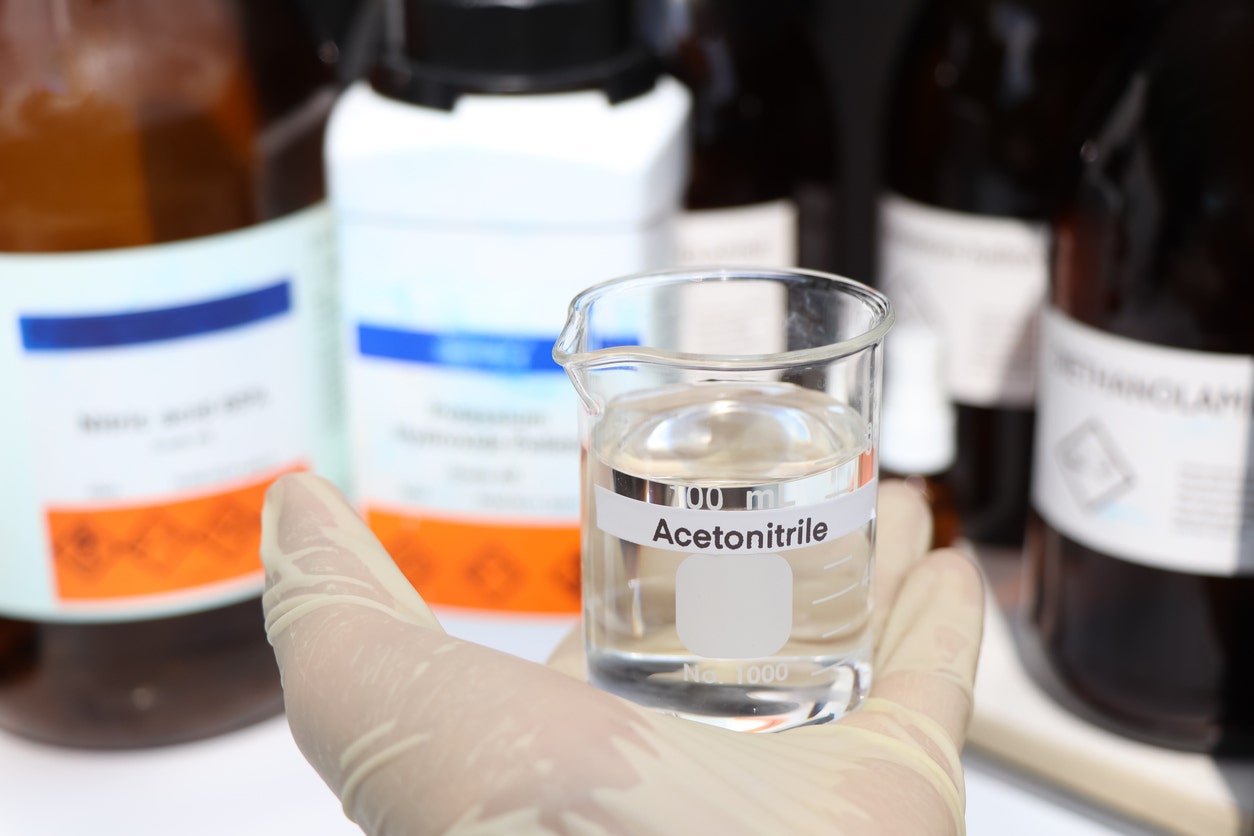
Appearance: Clear, colorless liquid with a mild, sweet, ether-like odor
Density and Behavior Relative to Water
Acetonitrile has a density of 0.786 g/mL at 25°C, making it noticeably lighter than water. This difference matters during spill containment and phase separation, since acetonitrile will layer above water rather than sink beneath it. Its low density also contributes to its relatively fast evaporation rate compared to heavier solvents.
Acetonitrile is a clear, colorless, highly volatile solvent widely used in laboratory, pharmaceutical, and industrial applications. It functions as a polar aprotic solvent in chromatography, chemical synthesis, extraction, and analytical testing due to its high purity and excellent solvency. U.S. laboratories and manufacturers sourcing acetonitrile by grade and purity should contact Lab Alley at 512-668-9918 for product selection and ordering support.
Boiling Point and Melting Point
Acetonitrile boils at 81 to 82°C (178 to 180°F) and freezes at negative 45°C (negative 49°F). This wide liquid range gives it a convenient working window for both room-temperature applications and low-temperature reactions. The moderate boiling point also supports its use in distillation-based purification and recovery processes.
Solubility and Miscibility
Acetonitrile is fully miscible with water in all proportions, a property central to its role in HPLC mobile phases. It also mixes readily with most polar organic solvents, including methanol, ether, and chloroform. It is insoluble in most saturated hydrocarbons, which limits its compatibility with certain nonpolar extraction systems.
Reactivity and Incompatibilities
Acetonitrile is classified as a GHS Flammable Liquid Category 2 (H225), reflecting its highly flammable liquid and vapor. It can react violently with strong oxidizers and strong acids, so segregation from these materials is essential during storage and handling. Under normal conditions, away from ignition sources and incompatible chemicals, it remains chemically stable.
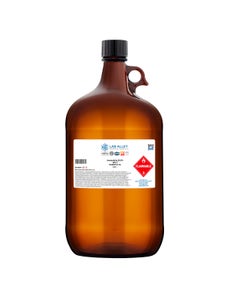
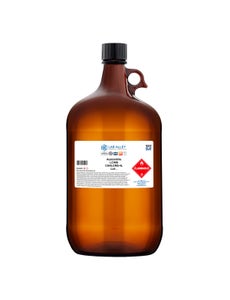
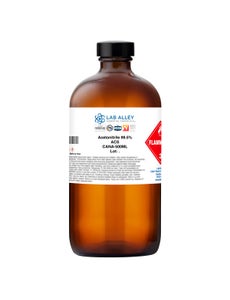
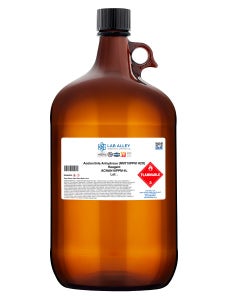
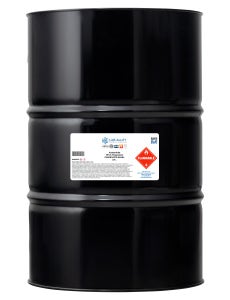
Acetonitrile from Lab Alley is available as a high-purity, clear, colorless liquid meeting ACS, HPLC, LC/MS, and reagent-grade specifications for laboratory and industrial applications. Packaging ranges from small laboratory containers to bulk drums and totes to support research, manufacturing, and commercial supply needs.
Common Uses & Applications
Industrial Applications
Acetonitrile serves as a polar aprotic solvent in refinery operations, particularly in the purification of butadiene from mixed hydrocarbon streams. It is also used as a solvent in pharmaceutical manufacturing, where its purity and volatility support efficient downstream processing.
Photographic film production has historically relied on acetonitrile for similar solvent properties. Its combination of chemical inertness and clean evaporation makes it well suited to processes where solvent residue must be minimized.
Scientific and Laboratory Uses
Acetonitrile is the dominant solvent used in oligonucleotide and DNA synthesis, where its compatibility with automated synthesizers and low reactivity are essential. It serves as the standard mobile-phase solvent in HPLC, prized for its low UV cutoff and low viscosity, which improve chromatographic resolution and reduce backpressure.
In electrochemistry, it is a popular solvent for cyclic voltammetry because it dissolves a wide range of ionic and nonpolar compounds without interfering with electrochemical measurements. These properties collectively make it a staple across analytical and research laboratories.
Specialized Applications
Acetonitrile plays a role in battery chemistry due to its relatively high dielectric constant and its capacity to dissolve electrolyte salts effectively. This makes it useful in certain battery formulations and related electrochemical research.
It also functions as a common two-carbon building block in organic synthesis, contributing to the production of pesticides and fragrance compounds. Its reactivity profile allows chemists to introduce nitrile functionality efficiently into target molecules.
Fight Your Kidney Stone with This Natural Product Hack
Fight kidney stones. Discover how citric acid naturally prevents stone formation.

Is Lactic Acid Bad? A Look at the Health Science
Is lactic acid bad for you? Debunking myths and revealing its vital role in your body & beyond.
Hospitality Without Hitchhikers: Boric Acid’s Role in Bed Bug Prevention
Protect your hospitality business. Boric acid is key to preventing bed bug infestations.
Harnessing Silica Sulfuric Acid to Enhance Concrete Durability
Enhance concrete longevity. Silica sulfuric acid improves strength and chemical resistance.
Safety & Handling
Hazards and Precautions
Acetonitrile is classified under GHS as a Flammable Liquid Category 2 (H225) and carries Acute Toxicity Category 4 ratings for oral, dermal, and inhalation exposure, along with Eye Irritation Category 2. A key safety consideration is that acetonitrile metabolizes into hydrogen cyanide in the body, meaning overexposure risk increases substantially at higher concentrations or with prolonged contact. Because of this metabolic pathway, symptoms of overexposure may not appear immediately, which requires vigilance during and after handling incidents.
Personal Protective Equipment
Nitrile or rubber gloves provide appropriate skin protection when handling acetonitrile, and flame-retardant antistatic clothing should be worn to reduce ignition risk. Chemical safety glasses or goggles with a face shield are recommended whenever splashing is possible. In settings where airborne exposure may exceed 13 ppm, a NIOSH-approved respirator fitted with an organic vapor cartridge should be used to protect against inhalation.
Storage Guidelines
Acetonitrile should be stored in a cool, dry, well-ventilated area, kept away from ignition sources, oxidizers, and strong acids. Containers must remain tightly sealed to limit vapor release and prevent moisture ingress, which can affect purity in sensitive applications. Segregating acetonitrile from incompatible materials during storage reduces the risk of unwanted reactions.
Spill and Disposal Procedures
In the event of a spill, the area should be contained and ventilated promptly, with all ignition sources removed from the vicinity. Acetonitrile waste must be disposed of according to applicable federal and state regulations, as it is classified as both flammable and toxic waste. Proper labeling and segregation during disposal help ensure compliance with hazardous waste handling requirements.

How to Safely Dispose of Sulfuric Acid
Sulfuric acid is one of the most common acidifying reagents and sulfur sources, essential across multiple industries. At the same time, it is also a toxic and highly hazardous chemical reagent, requiring safe handling and disposal by trained personnel.
How To Use Nitric Acid Safely
Nitric acid is a corrosive chemical and harmful to humans. Its contact with skin and eyes can cause serious burns. Affected skin will require flushing with soap and lukewarm water for at least 30 minutes.

Acetone Safety: Proper Storage and Disposal Methods
Acetone is a staple chemical solvent in most laboratories. It is also perhaps one of the most recognizable chemicals to the layperson, best known as the pungent solvent comprising nail polish remover.
How to Use Potassium Iodide Safely and Where to Buy it Online
Potassium Iodide Powder, also known as Potassium Salt of Hydriodic Acid, Iodic Acid Potassium Salt, Potassium Monoiodide, and Knollide, has the chemical formula KI. It appears as a white crystalline powder, odorless, and is soluble in water at ambient conditions.
Medicinal Oils Derived From Plants
You can order food-grade ethanol, extraction-grade ethanol, ACS-grade ethanol, FCC-grade ethanol, USP grade ethanol, HPLC-grade ethanol and kosher ethanol from Lab Alley. Perform ethanol (EtOH) extraction at ultra-low temperatures for the best yields.
Ethanol extraction is a cost-effective way to use ethanol as an industrial solvent to produce high-quality botanical extracts from large volumes of medicinal herbs or plants.
Acetonitrile Grades and Pack Sizes
Lab Alley supplies acetonitrile in a range of grades and pack sizes to meet laboratory, commercial, and industrial needs.
Available Grades & Concentrations
-
ACS Reagent Grade (99.5%) for general laboratory and industrial use
-
HPLC Grade (99.9%) for chromatographic mobile-phase applications
-
LC/MS Grade for mass spectrometry-coupled analysis
-
Preparative HPLC Grade for large-scale/preparative chromatography
-
Anhydrous Reagent Grade (≤10 ppm H₂O) for moisture-sensitive applications
Pack Sizes & Bulk Availability
-
Laboratory bottles: 500 mL to 4 L for lab-scale use
-
Commercial containers: 5-gallon and 20 L for standard operations
-
Industrial drums: 55-gallon for high-volume applications
-
4 x 4L case quantities and pallet quantities available for bulk purchasing
All Lab Alley containers are UN-approved and DOT-compliant (UN1648, Class 3 Flammable Liquid) with proper hazard labeling. Certificates of Analysis and Safety Data Sheets are available for every grade. Contact Lab Alley to confirm current stock and place an order for the grade and pack size that fits your application.
FAQs
What is acetonitrile and how is it produced?
What are the potential side effects of acetonitrile exposure?
How should acetonitrile be stored to prevent degradation?
Acetonitrile should be kept in a tightly sealed container in a cool, dry, well-ventilated location away from heat and ignition sources. Limiting exposure to moisture and air helps preserve purity, particularly for grades intended for sensitive analytical applications. Proper segregation from incompatible chemicals during storage further protects product integrity.
Does acetonitrile have an expiration date?
Why does acetonitrile grade matter for HPLC versus general lab use?
Higher-purity grades, such as HPLC or LC/MS grade, minimize UV background interference and trace contaminants that can distort chromatographic results. General laboratory grades are suitable for extraction or synthesis work where this level of purity is unnecessary. Choosing the appropriate grade helps balance performance requirements with cost.