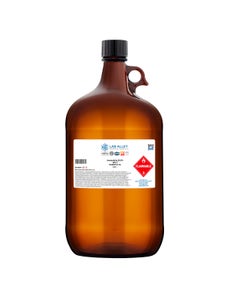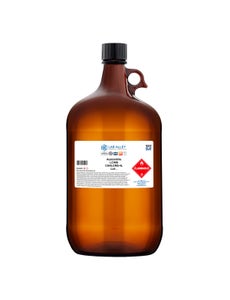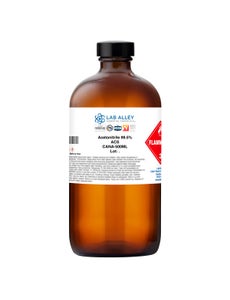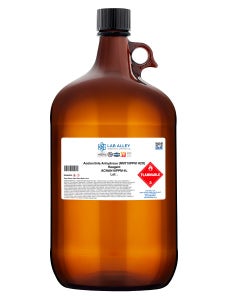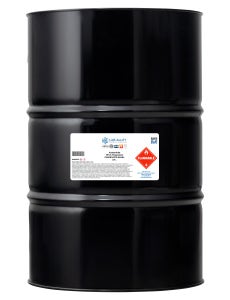






Acetonitrile Safety & Hazards
Acetonitrile (CH₃CN, CAS 75-05-8) is a highly flammable liquid solvent classified as Flammable Liquid Category 2 and Acute Toxicity Category 4 for oral, dermal, and inhalation exposure. It also carries a Serious Eye Damage/Irritation Category 2 classification, making it a chemical that demands careful handling in any laboratory or production environment.
The primary risks associated with acetonitrile span inhalation, skin contact, eye contact, and ingestion. Because the body metabolizes acetonitrile into cyanide at high exposure levels, symptoms of overexposure can be delayed for several hours, which makes early recognition and a fast response especially important. Laboratory personnel, safety officers, and anyone involved in transport or storage should be familiar with its flammability profile and regulatory classification as hazardous waste before working with it.


In this article, we'll explore:
-
Chemical Hazards Overview
-
Exposure Risks & Health Effects
-
First Aid Measures
-
Handling & Storage Precautions
-
Spill & Leak Procedures
-
Fire & Explosion Hazards
-
Regulatory & Compliance Information
-
Technical Documents & References
Chemical Hazards Overview
Acetonitrile's hazard profile combines flammability with acute toxicity, requiring precautions on both fronts whenever the chemical is handled or stored.
Hazard Classification
- Flammable Liquid Category 2
- Acute Toxicity Category 4 (oral, dermal, inhalation)
- Serious Eye Damage/Irritation Category 2
GHS Hazard Pictograms
-
GHS02 (Flame): highly flammable liquid and vapor
-
GHS07 (Exclamation Mark): harmful if swallowed, inhaled, or absorbed through skin; causes eye irritation
NFPA Hazard Rating
-
Health: 2 / Flammability: 3 / Reactivity: 0
Primary Risks
Inhalation, skin contact, eye contact, and ingestion are all relevant exposure routes. Vapors are heavier than air and can travel along surfaces to reach a distant ignition source, which is a key consideration in facility layout and ventilation design.
Exposure Risks & Health Effects
Inhalation Risks
Acetonitrile has a vapor pressure of 73 mmHg at 68°F, meaning it evaporates readily at room temperature and can accumulate in poorly ventilated spaces. Inhaling the vapor irritates the respiratory tract and, at higher concentrations, triggers the metabolic conversion to cyanide inside the body. This conversion is what makes acetonitrile exposure particularly dangerous: symptoms such as headache, dizziness, and weakness may not appear immediately, delaying the recognition that a serious exposure has occurred.
Skin Contact Risks
Acetonitrile is absorbed through intact skin, which is why it carries a skin notation in occupational exposure guidelines. Direct contact causes irritation, and repeated or prolonged exposure can defat the skin, leading to dryness and dermatitis over time. Because absorption contributes to overall systemic dose, skin contact should be treated as seriously as inhalation exposure in any risk assessment.
Eye Contact Risks
Contact with the eyes causes serious irritation, with redness and pain as the most common immediate symptoms. Available data does not confirm a risk of permanent eye damage from typical exposure, but the irritation potential is significant enough that eye protection is considered mandatory during handling.
Ingestion Risks
Acetonitrile is harmful if swallowed. Oral LD50 values in mammalian studies range from 140 to 6,762 mg/kg depending on species, with a mouse study reporting an LD50 of 617 mg/kg. Ingestion produces tissue anoxia as cyanide metabolites interfere with cellular oxygen use, along with weakness, confusion, and the potential for coma in more severe cases.
Chronic Effects
Acetonitrile is not classified as a carcinogen by ACGIH, IARC, NTP, or under California Proposition 65. Repeated exposure has been associated with effects on the central nervous system, liver, and kidneys, which is why long-term handling protocols should limit cumulative exposure even when single incidents appear minor.
First Aid Procedures
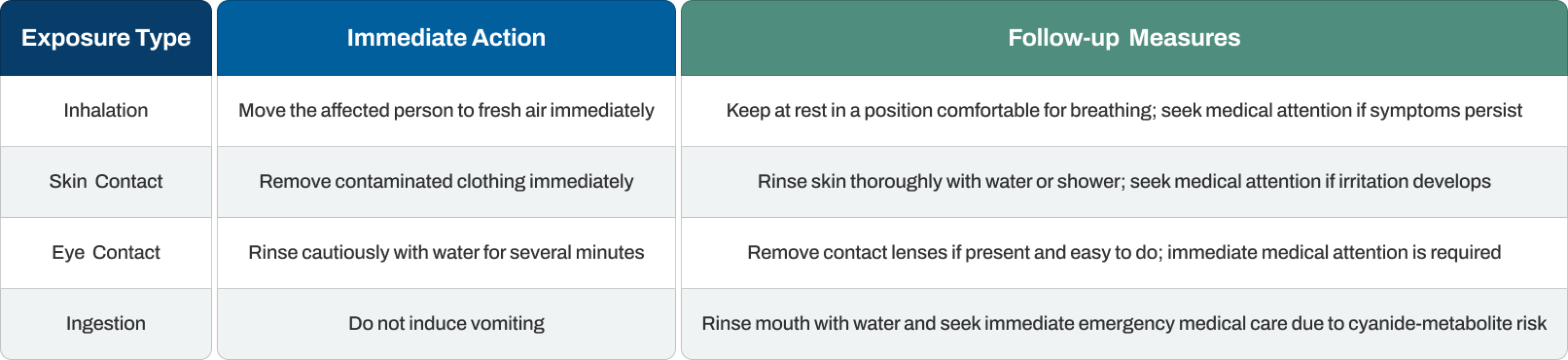
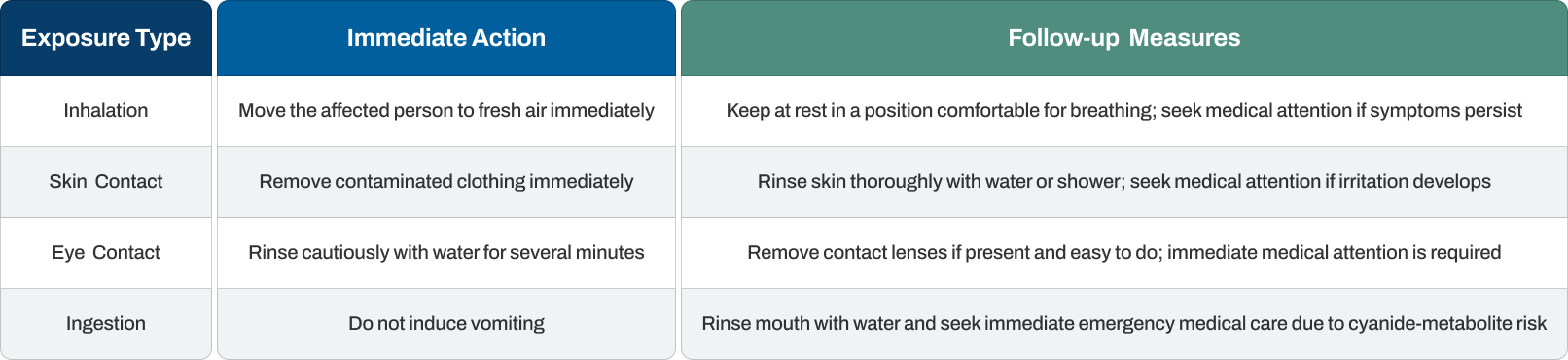
Given the delayed onset of cyanide-related symptoms, anyone exposed to acetonitrile through inhalation or ingestion should be monitored closely even if they initially appear unaffected. Responders should avoid direct contact with contaminated clothing or vomit to prevent secondary exposure, and emergency personnel should be informed that cyanide metabolism is a factor in treatment.
Handling & Storage Precautions
Safe handling of acetonitrile depends on controlling both ignition sources and vapor concentration in the work area.
Safe Handling Procedures
Work under a chemical fume hood or with explosion-proof ventilation; wear chemical-resistant gloves and eye/face protection; eliminate ignition sources and ground or bond equipment during transfer operations.
Storage Conditions
Store in a cool, dry, well-ventilated area away from direct sunlight; keep containers tightly closed when not in use; keep separated from incompatible materials and any potential ignition sources.
Incompatible Substances
Incompatible substances should be stored well away from acetonitrile to avoid dangerous reactions:
-
Strong oxidizing agents
-
Strong acids, including sulfuric, nitric, and chlorosulfonic acid
-
Strong reducing agents
-
Bases
-
Nitrating reagents, perchlorates, and sulfur trioxide
Spill & Leak Procedures
Responding to an acetonitrile spill starts with controlling ignition risk before addressing containment.
Emergency response steps include:
-
Eliminate all ignition sources in the surrounding area
-
Evacuate non-essential personnel from the affected space
-
Wear appropriate PPE, including self-contained breathing apparatus if vapor concentration is high
Containment should rely on non-combustible absorbent materials such as sand, earth, or vermiculite; sawdust and other combustible absorbents should be avoided given the chemical's flammability. Adequate ventilation during cleanup helps limit vapor buildup in the area.
Proper disposal follows RCRA hazardous waste requirements, as acetonitrile is listed under waste code U003. Neutralization prior to disposal is not required. Disposal should proceed according to applicable federal, state, and local regulations through a licensed waste handler.
Fire & Explosion Hazards
Flammability
Acetonitrile's flash point of 6°C (42°F) places it well within the range of everyday ambient temperatures, meaning vapor can ignite under common storage and handling conditions if precautions are not followed. Its autoignition temperature is 524°C (975°F), and its flammable limits range from 4.4% to 16% (LEL/UEL), indicating a relatively wide window in which vapor-air mixtures can ignite.
Extinguishing Media
Appropriate extinguishing media include:
-
Dry chemical
-
Carbon dioxide
-
Alcohol-resistant foam
-
Water spray or fog
A solid or straight water stream should not be used, as it can scatter the burning liquid and spread the fire rather than extinguish it.
Firefighting Precautions
Firefighters responding to an acetonitrile fire should wear self-contained breathing apparatus along with full protective gear, since combustion generates hydrogen cyanide, nitrogen oxides, and carbon monoxide. Vapors can travel along the ground to a distant ignition source and flash back toward the original spill or leak, so perimeter control matters as much as direct suppression.
Regulatory Information & Compliance
OSHA Regulations
OSHA's Permissible Exposure Limit under 29 CFR 1910.1000, Table Z-1, is 40 ppm (70 mg/m³) as an 8-hour time-weighted average. ACGIH has established a lower Threshold Limit Value of 20 ppm TWA, with a skin notation reflecting the chemical's capacity for dermal absorption.
EPA & Environmental Impact
Acetonitrile is listed under RCRA as U003 hazardous waste and is reportable under SARA Section 313 for the Toxic Release Inventory. It is miscible with water, and its environmental persistence is expected to be low relative to less soluble solvents.
DOT Transportation Regulations
For transport, acetonitrile is classified as UN1648, a Class 3 Flammable Liquid, Packing Group II.
FDA/USP/ACS Compliance
ACS Reagent Grade and HPLC Grade acetonitrile are available meeting their respective purity standards. These grades are not intended or certified for food or drug-contact applications.
Technical Documents & Resources
-
SDSs are available for all grades and concentrations Lab Alley carries, covering hazard identification, safe handling, and first aid guidance.
-
COAs are available upon request, verifying purity and compliance with applicable grade standards, including ACS Reagent and HPLC.
Final Note
Acetonitrile's combination of flammability and acute toxicity means that safe handling depends on controlling both ignition sources and exposure routes at every stage, from storage through disposal. Proper ventilation, the right PPE, and awareness of its delayed cyanide-related symptoms are what separate routine handling from a serious incident.
Facilities that follow the regulatory limits and disposal requirements outlined here, and that train personnel to recognize the signs of overexposure can work with acetonitrile safely and in compliance with applicable standards.
Explore our Resource Library for more information.
Our Customer Care team is also available for more information and documentation, including chemical Safety Data Sheets.
Need Acetonitrile You Can Trust?
If you are looking for high-quality acetonitrile for your lab, product line, or research facility, be sure to visit our store to explore our trusted selection and request a quote.
As your trusted partner in chemical supply, Lab Alley is always striving to meet the growing demands of our customers. We want you to be able to access all of your chemical needs in one place, along with streamlined online ordering and fast shipping.
Due to popular demand from our valued clientele, Lab Alley's acetonitrile is available in a range of purities and packaging options to suit various commercial, laboratory, and personal needs.