





Shelf Life & Expiration of Acetonitrile
Acetonitrile is a chemically stable nitrile solvent, and its neat form resists breakdown far longer than many laboratory reagents. The documented hydrolysis half-life at 25°C and neutral pH exceeds 150,000 years, meaning intrinsic decomposition is not the primary concern for a properly sealed product.
In practice, shelf life is governed less by chemical breakdown and more by contamination. Moisture ingress, container integrity, and evaporation losses are the factors most likely to compromise purity, particularly for applications like HPLC and spectroscopy that depend on tight specifications for water content and UV absorbance.
Acetonitrile is also a Class IB flammable liquid with a flash point near 2°C. The conditions that protect its purity, cool temperatures, tight seals, and protection from light largely overlap with the conditions required to store it safely.


This article covers:
-
How Long Does Acetonitrile Last?
-
Signs That Acetonitrile Has Expired
-
What to Do If Acetonitrile Has Expired
-
Proper Storage Extends Shelf Life
How Long Does Acetonitrile Last?
Chemical Stability
Neat acetonitrile is highly stable under normal storage conditions. With a hydrolysis half-life exceeding 150,000 years at 25°C and neutral pH, the compound does not meaningfully self-degrade in a sealed container. The practical risk comes from moisture pickup rather than any intrinsic reaction pathway; once water enters the container, it can slowly drive the formation of byproducts like acetamide or ammonium acetate.
Purity & Packaging
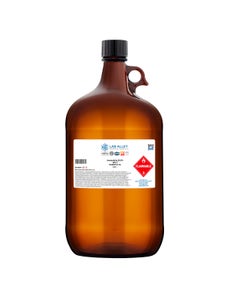
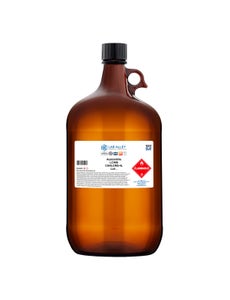
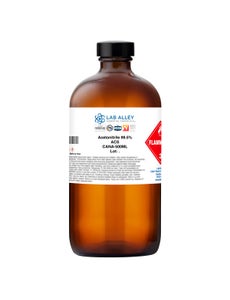
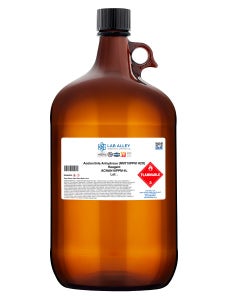
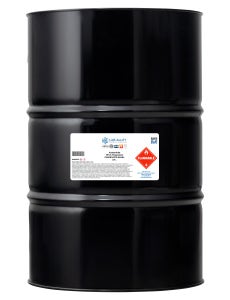
Reagent, ACS, and HPLC grades typically carry a manufacturer shelf life of 24 to 36 months when unopened. Packaging plays a direct role in preserving that window: amber glass and sealed metal containers with tight closures limit both moisture ingress and light exposure, two of the main variables that shorten usable life. Lower grades in less protective packaging may see faster quality drift once opened.
Storage Conditions
Acetonitrile should be stored below 73°F (23°C) in a cool, dry, well-ventilated area, away from direct sunlight. Sunlight exposure can contribute to gradual physical degradation over time, and consistent temperature control also reduces the fire risk associated with its low flash point.


Signs That Acetonitrile Has Expired or Degraded
-
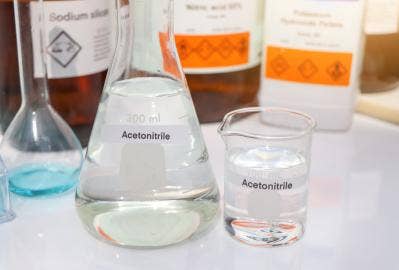
Color Change: Fresh acetonitrile is clear and colorless. Any yellowing or haze signals contamination or the presence of breakdown byproducts and warrants discarding the product or testing it before use.
-
Precipitation or Crystallization: Solids are not expected given acetonitrile's low freezing point of roughly -45°C. If particulates or solids appear, this usually points to moisture-driven byproduct formation, such as ammonium acetate, rather than the solvent itself freezing or separating.
-
Concentration Changes: Moisture absorption raises water content above specification. This matters most for HPLC and spectroscopic grades, where UV cutoff and gradient performance depend on tight purity limits.
-
Reduced Effectiveness: In chromatography, degraded acetonitrile can raise baseline noise, shift retention times, and reduce gradient reproducibility. In synthesis applications, absorbed moisture can interfere with reactions that require anhydrous conditions.
What to Do If Acetonitrile Is Expired
Check Manufacturer Guidelines
Compare the printed expiration date against the Certificate of Analysis before assuming the product is unusable. Some suppliers distinguish between a use-by date and a retest date, and a retest may confirm the product still meets specification even after the printed date has passed.
Follow Proper Disposal Procedures
Acetonitrile is a RCRA U-listed hazardous waste (U003) when discarded unused, and it also meets the D001 ignitability characteristic due to its low flash point. It should be routed through a licensed hazardous waste handler and never poured down the drain, regardless of how long it has been in storage.
Replace with Fresh Stock
For HPLC, LC-MS, and other purity-sensitive applications, fresh acetonitrile protects against baseline drift, contamination, and inconsistent results that degraded solvent can introduce. Continuing to use compromised solvent in these applications risks unreliable data and repeated reruns.
Proper Storage Extends Shelf Life
-
Container Requirements: Use tightly sealed containers made of amber glass or compatible metal, such as stainless steel or lined drums. Avoid materials incompatible with acetonitrile, including certain plastics and rubber seals not rated for solvent exposure.
-
Temperature Control: Keep storage temperatures below 73°F (23°C). Heat accelerates evaporation and increases fire risk given the low flash point of roughly 2°C (35.6°F).
-
Light & Heat Protection: Store away from direct sunlight and heat sources, since prolonged light exposure can contribute to gradual degradation.
-
Humidity Control: Limit exposure to atmospheric moisture, since water ingress is the primary driver of purity loss and byproduct formation like acetamide or ammonium acetate.
-
Evaporation Prevention: Keep containers tightly sealed between uses. Acetonitrile is volatile, and repeated opening accelerates both evaporation and moisture uptake.
-
Fire Safety: As a Class IB flammable liquid, store acetonitrile in ventilated, fire-rated cabinets away from ignition sources, oxidizers, acids, bases, and nitrating agents.
Conclusion
Acetonitrile's stability profile favors long-term storage: its chemical structure resists breakdown for practical purposes, and most quality loss traces back to moisture contamination, container failure, or evaporation rather than intrinsic decomposition. Proper packaging and temperature control do double duty here, preserving purity for sensitive applications while also managing the fire risk tied to its low flash point.
Checking the printed expiration or retest date, watching for color change or particulates, and disposing of expired product through proper hazardous waste channels are the key steps to managing acetonitrile responsibly across its usable life.
For more detailed guidance, explore our Resource Library for comprehensive storage and handling information.
Our Customer Care team is also available for more information and documentation, including chemical Safety Data Sheets.
Need Acetonitrile You Can Trust?
If you are looking for high-quality acetonitrile for your lab, product line, or research facility, be sure to visit our store to explore our trusted selection and request a quote.
As your trusted partner in chemical supply, Lab Alley is always striving to meet the growing demands of our customers. We want you to be able to access all of your chemical needs in one place, along with streamlined online ordering and fast shipping.
Due to popular demand from our valued clientele, Lab Alley's acetonitrile is available in a range of purities and packaging options to suit various commercial, laboratory, and personal needs.