

• On Budget, On Time, Every Time : Essential Chemicals for a Better World• WOMAN-OWNED SMALL BUSINESS (WOSB)• OVER 256K+ HAPPY CUSTOMERS• TRUSTED BY NASA, TESLA, SPACEX, BOEING & MORE• HIGH PURITY, NATURAL AND ESSENTIAL CHEMICALS• SERVING 16 INDUSTRIES• PROUDLY PARTNERED WITH ECODRIVE• COA & SDS AVAILABLE ONLINE• QUALITY LAB SUPPLIES & EQUIPMENT• CERTIFIED QUALITY: ISO 9001, KOSHER, ORGANIC & MORE• GSA CONTRACT HOLDER | GOVERNMENT APPROVED• FAST NATIONWIDE DELIVERY• On Budget, On Time, Every Time : Essential Chemicals for a Better World• WOMAN-OWNED SMALL BUSINESS (WOSB)• TRUSTED BY NASA, TESLA, SPACEX, BOEING & MORE• OVER 256K+ HAPPY CUSTOMERS• HIGH PURITY, NATURAL AND ESSENTIAL CHEMICALS• SERVING 16 INDUSTRIES• PROUDLY PARTNERED WITH ECODRIVE• COA & SDS AVAILABLE• QUALITY LAB SUPPLIES & EQUIPMENT• CERTIFIED QUALITY: ISO 9001, KOSHER, ORGANIC & MORE• GSA CONTRACT HOLDER | GOVERNMENT APPROVED• FAST NATIONWIDE DELIVERY

We are now ISO 9001 Certified

Get 5% OFF on your first order |  Use Code: WELCOME5

Metal Powders & Granules | Lab, Reagent & ACS | Lab Alley

Metal Powders & Granules

Aluminum, zinc, iron and more in powder and granular form, with the mesh size, grade and price on every product page.

Need metal powders and granules and don't want to wait on a quote? Order them here, with the mesh size, grade and price right in front of you. If you've ever chased a supplier for a spec sheet just to learn whether a zinc dust was fine enough, you'll like having the numbers on the page. This category holds 53 products. You'll find metal powders like aluminum, zinc, nickel, iron, cobalt and molybdenum, granular metals like zinc, tin, chromium and bismuth, and fine black powders of platinum and palladium. A few powdered and granular compounds sit alongside them, such as silicon carbide, Drierite and sodium bisulfite.

Not sure where to start? Start with how fine the material needs to be. A powder like the 325 mesh zinc reacts faster and spreads evenly, while granules are easier to weigh and pour. Then match the grade to the job. Lab Grade covers general lab and industrial work, and Reagent and ACS grades are there when your method names tighter limits. Sizes run from 100 mg vials up to 50 kg, and most single products start around $50. Some of these are hazmat, so read the SDS before you order. Every product page lists sizes, pricing and documents, and Customer Care can answer questions about a specific item.

256,000+ customers served
99.5% of orders ship in 1–2 business days
98.9% inventory accuracy
SDS + COA available online, every product
Set Descending Direction
Page
per page

About Metal Powders & Granules

A metal powder or granule is the same element you'd get as a bar or sheet, just broken into small pieces. The pieces are sorted by mesh, which counts the openings per inch in the screen they pass through. A bigger mesh number means a finer material. The aluminum powder here is 200 mesh, roughly 74 microns. The zinc powder is 325 mesh, about 44 microns or finer. The zinc granules run coarser, at 10 and 20 mesh.

Fine particles have far more surface area than a solid piece, and that changes how they behave. They react faster, disperse faster and burn more easily. Aluminum powder builds a thin oxide skin in air that protects the metal underneath. Zinc is practically insoluble in water and melts at about 419.5 °C. Several powders here are flammable or react with water. Aluminum powder ships under DOT class 4.3, which covers materials that are dangerous when wet. Read the SDS before you open a container.

Not everything in this category is a metal. You'll also find powdered and granular compounds such as silicon carbide, graphite, boron nitride, Drierite, activated alumina and sodium bisulfite, plus a few food and cosmetic ingredients like sodium hyaluronate.


COMMON APPLICATIONS

Zinc dust is a workhorse reducing agent. It also precipitates metals such as copper, cadmium, gold and silver out of solution so they can be recovered. Zinc goes into coatings that protect steel from corrosion, dry cell batteries, dyes and pigments, and wood preservatives. Aluminum powder shows up in reagent work, metallurgy, epoxy resins, electronics manufacturing and the solar industry. Platinum and palladium black powders are used as catalysts.

Silicon carbide in 220, 225 and 400 mesh is a grit for grinding, polishing and lapping. Drierite dries gases and solvents in lab setups, and soda lime absorbs carbon dioxide. Sodium borohydride and sodium bisulfite work as reducing agents. Sodium hyaluronate granules go into cosmetic, food and lab formulations. If your use isn't listed here, ask Customer Care before you buy.


GRADES EXPLAINED

Grade tells you which standard a product was made or tested against. It doesn't always tell you the purity, so check the assay on the product page. Here's how the grades on this page break down.

Lab Grade. Relatively high purity, but the exact amount and type of impurities isn't certified. It's the largest group here, with 15 products, and it suits general lab work, teaching and industrial jobs. It isn't meant for food, drug or medical use. Lab Grade doesn't automatically mean lower purity, though. The Lab Grade zinc powder at 325 mesh lists 99.9% zinc on its spec sheet.

Reagent Grade. Ten products carry it, including zinc powder, bismuth granules, lead granules and sodium borohydride at 98%. Reagent Grade is made for analytical and research work where results need to repeat from batch to batch. Limits vary by product, so read the assay before you choose.

ACS Grade. Two zinc products, the 10 mesh and 20 mesh granules, meet American Chemical Society specifications. The 20 mesh zinc lists an assay of 99.8% minimum, with iron and lead each limited to 0.01%, and it passes the suitability test for arsenic determination. Pick ACS when your method or your auditor names it.

Food, FCC and Cosmetic Grade. Four products are made as ingredients. Sodium hyaluronate comes in Food Grade (Kosher) and Cosmetic Grade. Baking powder and sodium saccharin powder are FCC Grade, which means they're made to Food Chemicals Codex specifications.

Purity by percentage. A few products are sold by purity number instead of grade name. Germanium metal powder is 99.999%, molybdenum metal powder is 99.9% and boron nitride is 99%. Selenium in Lab Grade is 98%.


TYPES & GRADES AT A GLANCE

General lab work, teaching and industrial jobs that don't need certified impurity limits.
Analytical and research methods that need higher purity and repeatable results.
Methods that name ACS limits, such as the 10 mesh and 20 mesh zinc granules.
Baking powder and sodium saccharin powder made to Food Chemicals Codex specifications.
Sodium Hyaluronate, Granular, Cosmetic Grade for formulators.
Products grouped under Lab Alley's High Purity pillar.

WHY BUY FROM LAB ALLEY

256,000+ customers already order their metal powders and granules from Lab Alley. 99.5% of orders ship within 1 to 2 business days, and 98.9% inventory accuracy means the grade you see in stock is the grade that ships. SDS and COA are available online or on request for these products, and select products carry Kosher certification. Check each product page for which applies. Lab Alley is ISO 9001 certified.

Kosher certification applies to one product here, Sodium Hyaluronate, Granular, Food Grade, Kosher. None of the metal powders or granules carry Halal, USDA Organic or RSPO certification. ISO 9001 is a company certification, not a product claim. COAs are posted on some product pages, such as Aluminum Metal Powder, and sent on request for the rest.

Related: Browse the full Metals & Elements collection, or see Shot & Mossy, Foils & Sheets, Wire & Rod and Bulk Stock.

Frequently Asked Questions

What's the difference between a metal powder and metal granules?
It comes down to particle size. Powders are fine, like aluminum at 200 mesh or zinc at 325 mesh. Granules are coarser, like zinc at 10 or 20 mesh and aluminum at 8 mesh. Fine powder has more surface area, so it reacts faster and mixes in more evenly. Granules are easier to weigh and pour, and they react more slowly. Pick the form your method or formula calls for.
What does 325 mesh mean?
Mesh describes the screen the particles pass through, counted as openings per inch. A 325 mesh powder passes a screen with 325 openings per inch, so the particles are about 44 microns or smaller. A 20 mesh granule is much coarser, close to 0.84 millimeters. The bigger the mesh number, the finer the material. Check the mesh in the product name, because it changes how the metal behaves.
How do I read a purity number like 99.9% or 99.999%?
The number is the share of the material that is the named element, by weight. At 99.9%, impurities make up about 0.1%. At 99.999% that drops to about 0.001%. You'll see the higher figures on items like Germanium Metal Powder at 99.999% and Molybdenum Metal Powder at 99.9%. Higher purity costs more, so match the number to what your work actually needs.
Do I need a permit or license to buy metal powders?
No permit is listed on these product pages, and nothing here works like the TTB permit that large specially denatured alcohol orders need. Some powders are flammable, water reactive or oxidizing, though, so your employer, school or local fire code may have its own rules for buying and storing them. Check with your safety or compliance team before you order, and read the SDS on the product page.
Which of these products are Kosher, Halal or organic certified?
Only one product here lists Kosher certification, Sodium Hyaluronate, Granular, Food Grade, Kosher. None of the metal powders or granules carry Kosher, Halal, USDA Organic or RSPO certification. Lab Alley itself is ISO 9001 certified, but that covers the company's quality system and isn't a product claim. If you need a certificate for an audit, ask Customer Care.
Can metal powders ship to a home address?
Plan on a business, school or laboratory address. Lab Alley blocks residential delivery on certain chemicals and removes those items from the order at checkout. Some metal powders also ship as hazmat, which adds handling rules. If a home address is your only option, call Customer Care before you order so you don't hit a surprise at checkout.
Which grade should I choose for lab work, coatings or food and cosmetic use?
For general lab work and most industrial jobs, Lab Grade does the job and costs less. Choose Reagent or ACS Grade when your method names a limit, like the 20 mesh ACS zinc with an assay of 99.8% minimum. For formulas that touch skin or food, use the Cosmetic, Food or FCC items, such as sodium hyaluronate and sodium saccharin. Compare the assay on the product page, because a grade name alone doesn't tell you the purity.
How is a metal powder different from shot, foil or wire?
They're the same elements in different shapes. Powder and granules give you the most surface area, so they react fastest and blend easily. Shot and mossy pieces suit melting, alloying and slower reactions. Foils, sheets, wire and rod suit electrodes and cutting to size. If your metal isn't listed here as a powder, check Shot & Mossy, Foils & Sheets and Wire & Rod.
Can I buy metal powders in bulk?
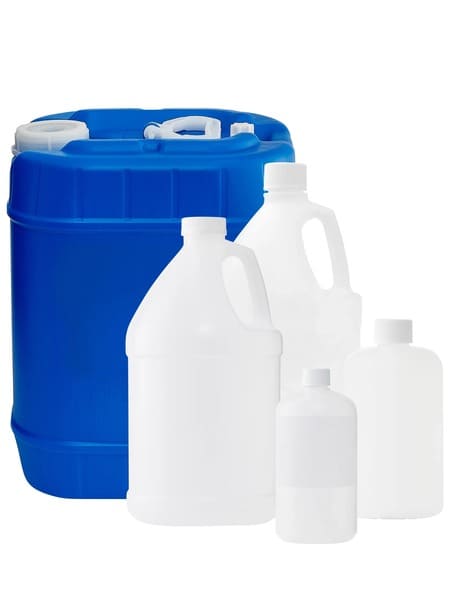
On a number of items, yes. Sizes on this page run from small lab packs up to 12.5 kg, 25 kg and 50 kg, and a few items come in 50 lb containers. If you need more than the largest listed size, or a custom pack, request a quote through Bulk & Custom Chemicals. Some of these ship as hazmat, so give your receiving team a heads up.
How should I store and handle reactive metal powders?
Read the SDS first, since the rules differ by metal. As a general guide, keep containers tightly closed in a cool, dry place away from water, acids and oxidizers, and keep ignition sources out of the room. Avoid stirring up dust clouds. Our chemical storage compatibility chart shows what can sit next to what on a shelf. If you aren't sure, ask Customer Care before you open the container.

Industries That Use Metal Powders & Granules

R&D/Laboratory
Explore ACS, HPLC and LC/MS grade chemicals for R&D and laboratory use including solvents, acids, bases, buffers and standardized solutions for research and QC.
Learn more →
Manufacturing & Industrial
Explore chemicals for manufacturing and industrial use including ACS grade solvents, acids, alkalis, glycols and water treatment chemicals available in bulk sizes.
Learn more →
Environmental & Waste Treatment
Explore chemicals for environmental and waste treatment including coagulants, neutralizers, sodium hydroxide, sulfuric acid, oxidizers and activated carbon.
Learn more →
Personal Care & Cosmetics
Explore high-purity chemicals for personal care and cosmetics including USP glycerin, SDA alcohols, witch hazel, emulsifiers and NF grade humectants.
Learn more →
Food & Beverage
Explore FCC and USP grade chemicals for food and beverage including citric acid, sodium benzoate, peracetic acid, emulsifiers and food safe sanitizers.
Learn more →