


• On Budget, On Time, Every Time : Essential Chemicals for a Better World• WOMAN-OWNED SMALL BUSINESS (WOSB)• OVER 256K+ HAPPY CUSTOMERS• TRUSTED BY NASA, TESLA, SPACEX, BOEING & MORE• HIGH PURITY, NATURAL AND ESSENTIAL CHEMICALS• SERVING 16 INDUSTRIES• PROUDLY PARTNERED WITH ECODRIVE• COA & SDS AVAILABLE ONLINE• QUALITY LAB SUPPLIES & EQUIPMENT• CERTIFIED QUALITY: ISO 9001, KOSHER, ORGANIC & MORE• GSA CONTRACT HOLDER | GOVERNMENT APPROVED• FAST NATIONWIDE DELIVERY• On Budget, On Time, Every Time : Essential Chemicals for a Better World• WOMAN-OWNED SMALL BUSINESS (WOSB)• TRUSTED BY NASA, TESLA, SPACEX, BOEING & MORE• OVER 256K+ HAPPY CUSTOMERS• HIGH PURITY, NATURAL AND ESSENTIAL CHEMICALS• SERVING 16 INDUSTRIES• PROUDLY PARTNERED WITH ECODRIVE• COA & SDS AVAILABLE• QUALITY LAB SUPPLIES & EQUIPMENT• CERTIFIED QUALITY: ISO 9001, KOSHER, ORGANIC & MORE• GSA CONTRACT HOLDER | GOVERNMENT APPROVED• FAST NATIONWIDE DELIVERY

We are now ISO 9001 Certified

Get 5% OFF on your first order |  Use Code: WELCOME5

Buy Chloroform Online, Lab, ACS and HPLC Grade | Lab Alley

Chloroform

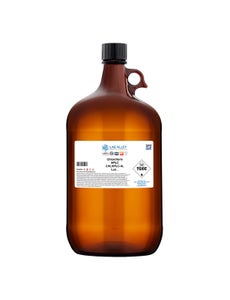
Lab, ACS Reagent and HPLC grade chloroform for labs and businesses, stocked from 500 mL bottles to 55 gallon drums and ready to ship.

Order the right grade of chloroform in minutes, with the paperwork already waiting on the page. If you've ever waited days on a quote for a solvent you needed this week, or chased a supplier for a safety data sheet the night before an audit, you know how that goes. Here, Lab Grade, ACS Reagent Grade and HPLC Grade chloroform (also called trichloromethane) are listed with sizes, pricing and documents you can open before you buy. Pick your grade, pick your size, and check out. No sales call required, and no guessing whether the bottle that ships matches the one you chose. Every product page shows its Safety Data Sheet and Technical Data Sheet, and Autoship is there if you reorder on a schedule.

Chloroform is a dense, colorless solvent that pulls fats, oils, resins and alkaloids out of other material, which is why it shows up in extractions, bench work, pesticide analysis and chromatography. Sizes run from 500 mL bottles up to 55 gallon drums, and every grade is stabilized with ethanol to keep it from breaking down. The grade you need depends on your method, so the sections below explain what separates Lab, ACS Reagent and HPLC Grade before you spend a dollar. One thing to know up front. Chloroform is a hazardous material, so it ships only to businesses, schools, universities and laboratories, and individuals can't order it. That's better to learn now than at checkout. Buying for a bigger run or a custom pack? The Bulk & Custom Chemicals team can quote you.

256,000+ customers served
99.5% of orders ship in 1–2 business days
98.9% inventory accuracy
SDS + COA available online, every product
Also Known As Trichloromethane. ACS Reagent Grade, Lab and HPLC Grade Solvent
Set Descending Direction
per page

About Chloroform

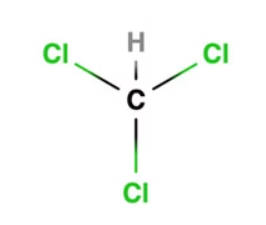
Chloroform (IUPAC name, trichloromethane) has the formula CHCl3, and it is a clear, colorless, strong-smelling, and dense liquid. It is a widely used industrial solvent, and has anesthetic and sedative properties, although its specific use as such in medicine has long been discontinued since it is toxic to the liver and kidneys in humans.

Some chloroform occurs naturally from fungi and seaweed. It is used as a reagent in the production of several important chemicals such as PTFE (Teflon) and historically (since the use of many of these compounds are now strictly regulated) chlorinated and fluorinated refrigerants. Chloroform can be released into the environment as a by-product of the chlorination of water, and of bleaching in the paper and pulp industry.

Chloroform is used as an extraction solvent for fats, oils, greases, rubber, waxes, gutta-percha, resins, lacquers, floor polishes, artificial silk manufacture, gums and adhesives. It is utilized as an industrial solvent in the extraction and purification of some antibiotics, alkaloids, vitamins and flavors.

Common uses of Chloroform

  • Eextraction solvent
  • As a solvent in NMR Spectroscopy
  • As a precursor to the production of Teflon (PTFE)
  • Historically as a precursor to the production of chlorofluorocarbon refrigerants
  • Historically as an anesthetic

Industries

  • Chemical Industry
  • Pesticide Industry
  • Rubber Industry

About Chloroform

Chloroform, or trichloromethane, has the formula CHCl3. It's a clear, colorless liquid with a sweet smell, and it's heavy. At about 1.49 g/cm³ it's roughly one and a half times denser than water, so in a separatory funnel the chloroform layer sinks to the bottom. It boils at 61 °C and has a vapor pressure of 160 mmHg at 20 °C, so it evaporates quickly, and its vapor is about four times heavier than air. Water barely dissolves it, but it mixes freely with alcohol, ether and most other organic solvents.

Two properties matter once the bottle arrives. Chloroform isn't flammable, but light and air slowly break it down into phosgene and hydrochloric acid, both toxic. That's why Lab Alley's chloroform is stabilized with ethanol, and why you should keep it tightly closed, away from light, strong bases, alkali metals and oxidizers. It's also toxic by inhalation, swallowing and skin contact. Work in a fume hood and read the SDS before the bottle comes out.


COMMON APPLICATIONS

Most buyers use chloroform as a laboratory solvent. It pulls fats, oils, waxes, resins and alkaloids out of plant and other material, and it's a familiar choice for liquid to liquid extractions where you need to separate organic compounds from water. Labs also use it for pesticide analysis and gas chromatography work. It appears in spectroscopy studies too, though NMR measurements themselves use the deuterated form, so confirm your method before you order.

Outside the lab, chloroform is a starting material in making PTFE, the plastic sold as Teflon, and some manufacturers use it to extract and purify antibiotics, vitamins and flavors. Its old job as an anesthetic ended long ago because it damages the liver and kidneys.


GRADES EXPLAINED

Grade tells you which standard a product was tested against. Here's how the three chloroform grades break down. All three are stabilized with ethanol, so if your method can't tolerate ethanol, ask technical support before you order.

Lab Grade. Chloroform ≥99% Lab Grade has some unknown impurities, so it isn't meant for food, drug or medical use. It's pure enough for general lab work, teaching, pesticide analysis and gas chromatography, and it's the lower cost pick for extractions.

ACS Reagent Grade. Chloroform ≥99% ACS Reagent Grade meets American Chemical Society reagent specifications. Its tested limits include water at 0.03% max, residue after evaporation at 0.001% max and lead at 0.05 ppm max. Choose it when your method names ACS grade, or when research results have to repeat from batch to batch.

HPLC Grade. Chloroform, HPLC Grade carries limits on UV absorbance, at 0.05 AU max at 260 nm, 0.02 AU max at 270 nm and 0.01 AU max from 300 to 400 nm, plus water at 0.02% max. Those limits keep the solvent from adding noise or ghost peaks to a chromatogram. It's sold in 4 L bottles and 4 x 4 L cases.


TYPES & GRADES AT A GLANCE

For general lab work, teaching, pesticide analysis and gas chromatography.
For analytical and research methods that call for ACS.
For chromatography where UV absorbance matters.
A filtered view of this page for the one size all three grades share.
A filtered view of this page for production sized containers.
A filtered view of this page for full drum orders.

WHY BUY FROM LAB ALLEY

256,000+ customers already order their Chloroform from Lab Alley. 99.5% of orders ship within 1 to 2 business days, and 98.9% inventory accuracy means the grade and size you see in stock is the grade and size that ships. SDS and TDS are available online for every Chloroform product, and Certificates of Analysis are posted on the Lab Grade and ACS Reagent Grade pages. Lab Alley is ISO 9001 certified, but none of the Chloroform products carry Kosher, Halal or USDA Organic certification.

Related: Browse the full Solvents collection, which also includes Dichloromethane and Dichloroethane.

Frequently Asked Questions

What's the difference between Lab, ACS Reagent and HPLC grade chloroform?
All three are stabilized with ethanol, so the difference is testing and purpose. Lab Grade has some unknown impurities and suits general bench work, teaching, pesticide analysis and gas chromatography. ACS Reagent Grade meets American Chemical Society reagent specifications for analytical and research methods. HPLC Grade adds limits on UV absorbance and water so it won't add noise to a chromatogram. Pick the grade your method names, or the lowest one that still protects your results.
What does ≥99% mean on these chloroform products?
The ≥99% in the Lab Grade and ACS Reagent Grade names is the minimum purity. Purity alone doesn't tell you everything, though. The product specs also set limits for water, residue after evaporation, lead and the ethanol stabilizer, which runs 0.5% to 1.0%. For the exact results on the lot you receive, open its Certificate of Analysis from the product page, or check the Technical Data Sheet.
Do I need a permit to buy chloroform?
None of the three chloroform product pages ask for a permit or an eligibility form. The EPA form some buyers see at checkout belongs to dichloromethane, and the TTB permit applies to specially denatured alcohol, so neither comes into play here. What does apply is the address rule, since chloroform ships only to businesses, schools, universities and laboratories. Your own state, local or workplace rules may add requirements, so check with your compliance team.
Are any chloroform products Kosher, Halal or USDA Organic?
No. Lab Alley carries Kosher and Halal certification on select products in other solvent families, such as ethanol, but none of the chloroform products are certified for Kosher, Halal or USDA Organic. Lab Alley itself is ISO 9001 certified as a company. If you need documents for an audit, the Safety Data Sheet and Technical Data Sheet are on every chloroform page, and Certificates of Analysis are on the Lab Grade and ACS Reagent Grade pages.
Can chloroform be shipped to a home address?
No. Chloroform ships only to schools, universities, laboratories and companies. If an individual places an order, the chloroform is removed from it and the rest of the order ships without needing your confirmation. It also travels as a hazardous material, classed as UN1888, 6.1, packing group III, and 55 gallon drums go by LTL freight, so contact customer service for freight rates before you order.
Which grade should I use for extraction, analysis or chromatography?
For extractions and general bench work, Lab Grade usually does the job at the lowest cost. If your method or auditor names ACS, use ACS Reagent Grade. For chromatography, choose HPLC Grade, because a lower grade can add UV absorbing impurities that show up as noise. Lab Grade isn't meant for food, drug or medical use, so check your method before you order.
How is chloroform different from dichloromethane?
Both are chlorinated solvents, but they behave differently. Chloroform is denser, at about 1.49 g/cm³, and boils at 61 °C. Dichloromethane boils near 40 °C, so it evaporates faster and is easier to strip off after a reaction. Chloroform also needs an ethanol stabilizer to resist breakdown into phosgene. Dichloromethane adds an EPA eligibility form at Lab Alley checkout, which chloroform doesn't have. Match the solvent to your method before you swap.
Can I buy chloroform in drums or larger sizes?
Yes, within limits. Lab Grade and ACS Reagent Grade both come in 55 gallon drums, and ACS Reagent Grade also comes in 20 L containers. HPLC Grade is sold only as 4 L bottles and 4 x 4 L cases. Drums ship by LTL freight, so ask customer service for rates. If you need a different pack size, custom packaging or recurring volume, request a quote from the Bulk & Custom Chemicals team.
How should I store chloroform?
Keep it in its original, tightly closed container, away from light and heat. Amber glass in a cool, well ventilated place works well, ideally between 15 and 25 degrees Celsius. Store it apart from strong bases, alkali metals, oxidizers and acetone. Light and air slowly break chloroform down into toxic phosgene, so don't leave bottles open or in sunlight. Our storage guide has the full details, and your SDS has the final word.

Guides & Resources

Chloroform Overview
Discover the key properties and uses of chloroform. Understand how this organic solvent supports food, cosmetic, and pharmaceutical production with safe handling practices.
Read article →
Types of Chloroform
What are the different types of chloroform? Learn the differences between food, cosmetic, and pharmaceutical grades, plus their key applications.
Read article →
How to Store Chloroform
Learn how to safely store chloroform. Discover best practices for storage, handling, and labeling to maintain quality, prevent contamination, and ensure compliance.
Read article →
Chloroform Safety & Hazards
Learn chloroform's safety guidelines, hazards, and handling practices. Understand exposure risks, protective equipment, storage, first aid, and compliance standards for safe use.
Read article →
Chloroform Shelf Life & Expiration
Learn the shelf life and expiration signs of chloroform. Understand storage conditions, moisture sensitivity, and how to extend stability for food, pharma, and industrial uses.
Read article →

Industries That Use Chloroform

Agriculture
Explore high-purity chemicals for agriculture including phosphoric acid, hydrogen peroxide, citric acid, nutrient salts and pH adjusters in ACS and USP grades.
Learn more →
Manufacturing & Industrial
Explore chemicals for manufacturing and industrial use including ACS grade solvents, acids, alkalis, glycols and water treatment chemicals available in bulk sizes.
Learn more →
Education
Explore chemicals for K–12 and university labs including dilute acids, bases, ACS solvents, biology reagents and indicators for classroom and research use.
Learn more →
R&D/Laboratory
Explore ACS, HPLC and LC/MS grade chemicals for R&D and laboratory use including solvents, acids, bases, buffers and standardized solutions for research and QC.
Learn more →