






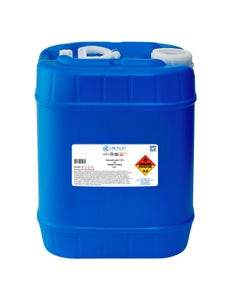
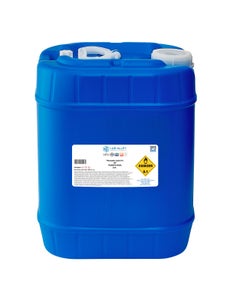
CH3COOH. It's the sour part of vinegar, although a bottle of vinegar is mostly water with just 4 to 8% acid in it. Glacial acetic acid is basically the water taken out: 99% or better. The name comes from the way it freezes into icy looking crystals at about 16.6 °C (62 °F). Yes, a drum can go solid in a chilly warehouse. Chemically it's a weak acid, pKa about 4.76. Don't let that fool you, though. At glacial strength it burns skin, and it will catch fire, since its flash point sits around 39 °C.
COMMON APPLICATIONS
Pickling and food acidity, vinegar making, buffers and pH control, a modifier in HPLC and LC/MS mobile phases, fixatives in histology, DNA protocols, making acetate esters and vinyl acetate, textile dyeing, photo developing, plus plain old descaling and cleaning.
GRADES EXPLAINED
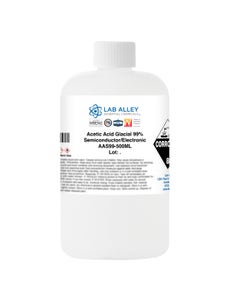
If it's going into food or a drink, use FCC Food Grade. Drugs, supplements and personal care: USP/NF. Analytical and research methods: ACS. For synthesis, cleaning and classroom labs, Lab Grade saves money. Electronics work gets Semiconductor Grade, which keeps metals very low.
TYPES & GRADES AT A GLANCE
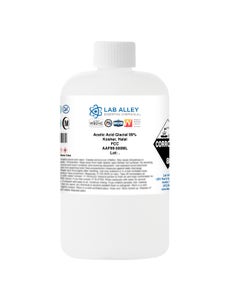
Glacial 99% for food and beverage plants. It's the only acetic acid on this page with Kosher and Halal certification.
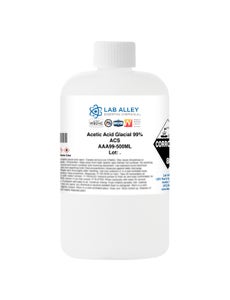
Glacial 99%, tested to ACS limits. Good for HPLC, analysis and research.
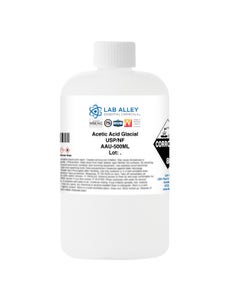
Meets pharmacopeia standards, so it works in drugs, supplements and personal care products.
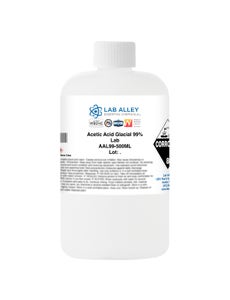
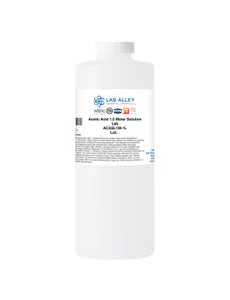
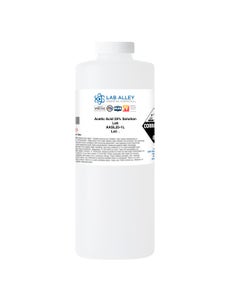
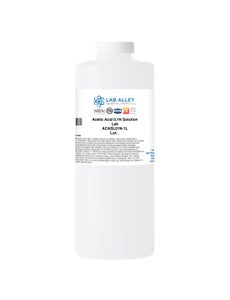
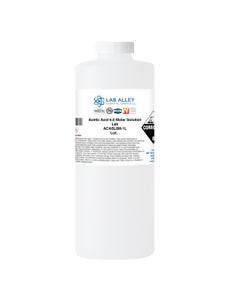
Glacial 99%, 50%, 25%, 10% and 4% solutions, and 0.1N to 6M standards. The budget pick for general lab and plant use.
WHY BUY FROM LAB ALLEY
256,000+ customers already order their acids from Lab Alley. 99.5% of orders ship within 1 to 2 business days, and 98.9% inventory accuracy means the grade and strength you see in stock is the grade and strength that ships. SDS and COA are available online for every acetic acid product, and our Acetic Acid Glacial 99% FCC/Food Grade carries Kosher and Halal certification; check each product page for which applies.
Related: See the Citric Acid and Formic Acid collections, or browse all Acids.