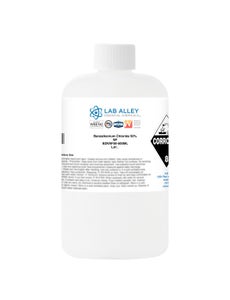






Benzalkonium Chloride Overview
Benzalkonium chloride, also known as ADBAC, BZK, or BKC, is a quaternary ammonium compound used across industrial and laboratory settings as a biocide, cationic surfactant, and phase transfer agent. It is most commonly supplied as a 50% aqueous solution and is recognized under several names, including alkyldimethylbenzylammonium chloride and Zephiran chloride, depending on the industry and application.
What makes benzalkonium chloride valuable is its versatility. As a mixture of alkyl chain homologs rather than a single compound, it functions effectively as a disinfectant, a surfactant in formulation work, and a catalyst that shuttles reactants between aqueous and organic phases during synthesis. This range of function is why it shows up in disinfectant manufacturing, textile processing, water treatment, and pharmaceutical preservation alike.
The compound carries a well-documented safety profile that requires attention at handling and storage stages. Concentrated solutions are corrosive to skin and eyes, and the product ships under DOT Class 8 hazard labeling. Despite this, it remains stable under normal storage conditions and has a long track record of use across regulated industries when handled according to established guidelines.
Properties of Benzalkonium Chloride
Key Facts
-
Compound Name: Benzalkonium Chloride
-
Synonyms/Common Names: ADBAC, Alkyldimethylbenzylammonium Chloride, Alkylbenzyldimethylammonium Chloride, BZK, BKC, BAC, BAK, Zephiran Chloride
-
Chemical Formula: Variable mixture; general structure [C6H5CH2N(CH3)2R]Cl, where R = C8H17 to C18H33
-
CAS Number: 8001-54-5 (primary); 63449-41-2 (alternate, alkyl-specific mixture)
-
Molar Mass: Variable, depending on the distribution of alkyl chain lengths in the mixture
-
Appearance: Colorless to pale yellow liquid (50% aqueous solution) with a mild aromatic odor
Density and Behavior Relative to Water
Benzalkonium chloride's 50% aqueous solution has a density of 0.978 to 0.988 g/cm³ at 20°C, placing it slightly below the density of water. This means the solution will float rather than sink when layered with water, a detail relevant to spill containment and mixing procedures.
Benzalkonium chloride (BAC) is a colorless to pale yellow quaternary ammonium compound with a mild aromatic odor, used in industrial, laboratory, pharmaceutical, and sanitation applications. It functions as a biocide in disinfectant formulations, a cationic surfactant in cleaning and personal care products, and a phase transfer agent in organic synthesis. U.S. laboratories and manufacturers sourcing benzalkonium chloride by grade and pack size contact Lab Alley at 512-668-9918 for product selection and ordering support.
Thermal Behavior and Decomposition
As a mixture of alkyl chain homologs, benzalkonium chloride does not exhibit a single defined melting or boiling point. Instead of distilling cleanly, the compound decomposes when subjected to high heat, which is a key consideration for any process involving elevated temperatures.
Solubility Across Common Solvents
The compound is miscible with water in all proportions and dissolves readily in ethanol and acetone. It is only slightly soluble in benzene and is practically insoluble in ether, which narrows the range of extraction or formulation solvents compatible with it.
pH Characteristics in Aqueous Solution
A 10 g/L aqueous solution of benzalkonium chloride measures pH 5 to 8 at 20°C, placing it in the mildly acidic to neutral range. This pH stability supports its use in formulations where compatibility with skin and mucous membranes matters.
Reactivity, Flammability, and Stability
Benzalkonium chloride is incompatible with anionic surfactants, strong oxidizers, and strong acids or bases, and it can form precipitates when mixed with anionic compounds. The 50% solution has a flash point of 160 to 170°C, meaning it is not readily flammable under normal handling conditions, and it remains stable when stored properly.
Benzalkonium chloride from Lab Alley is available as a 50% aqueous solution in NF grade, suited to pharmaceutical, laboratory, and industrial applications. Packaging ranges from 500mL laboratory bottles to 270-gallon containers to support research, manufacturing, and commercial supply needs.
Common Uses & Applications
Industrial Applications
Benzalkonium chloride is a core ingredient in the manufacturing of disinfectants and sanitizers, where its cationic surfactant properties drive antimicrobial performance. It also serves as a phase transfer catalyst in chemical synthesis, helping move reactants between immiscible phases during industrial reactions. Textile manufacturers use it for antistatic treatment, and water treatment operations rely on it as a biocide and algaecide to control microbial growth in industrial systems.
Scientific and Laboratory Uses
In laboratory settings, benzalkonium chloride functions as a phase-transfer catalyst for organic synthesis reactions requiring the movement of ionic reactants into organic solvents. It also serves as a reagent in analytical extraction procedures. Laboratories additionally use it for general surface disinfection, taking advantage of its established antimicrobial activity in controlled settings.
Consumer & Household Uses
Benzalkonium chloride appears as an active ingredient in disinfecting wipes and household cleaning products, where its surfactant and antimicrobial properties combine to lift and neutralize contaminants on hard surfaces. This dual functionality makes it a common choice in formulations targeting both cleaning power and disinfection in a single product.
Specialized Applications
In pharmaceutical formulations, benzalkonium chloride functions as a preservative that protects multi-use products from microbial contamination. Cosmetics manufacturers use it similarly, applying it as both a surfactant and a preservative in personal care formulations. In agricultural and institutional settings, it serves as a biocide for sanitation programs where broad-spectrum antimicrobial activity is required.
Safety & Handling
Hazards and Precautions
Benzalkonium chloride carries a GHS classification that includes Skin Corrosion Category 1B, Eye Damage Category 1, Acute Toxicity Category 4 for oral and dermal exposure, and Aquatic Toxicity Category 1/Chronic 1. Hazard severity scales directly with concentration, and concentrated solutions are corrosive to skin and eyes on contact. Dilution reduces but does not eliminate irritation risk, so handlers should treat all concentrations with appropriate caution regardless of intended dilution downstream.
Personal Protective Equipment
Handling benzalkonium chloride requires chemical-resistant gloves made of nitrile or neoprene to prevent skin contact. Chemical splash goggles or a face shield protect against eye exposure, particularly during transfer or dilution steps. Protective clothing should cover exposed skin, and respiratory protection becomes necessary if the handling process generates mist or aerosol.
Storage Guidelines
Benzalkonium chloride should be stored in a cool, dry, well-ventilated area inside tightly closed, corrosion-resistant containers. Storage areas must keep the product away from strong oxidizers, acids, bases, and anionic surfactants, all of which can trigger unwanted reactions or reduce product stability. Direct sunlight and heat sources should also be avoided to preserve the integrity of the solution over time.
Spill and Disposal Procedures
In the event of a spill, personnel should contain the material immediately and avoid direct skin or eye contact during cleanup. Inert absorbent material can be used to collect the spilled product for proper disposal. Disposal must follow local, state, and federal hazardous waste regulations, and the product should never be discharged to drains or waterways given its documented aquatic toxicity.
Benzalkonium Chloride Grades and Pack Sizes
Lab Alley supplies benzalkonium chloride in a formulation built for the demands of industrial, laboratory, and formulation work.
Available Grades & Concentrations
- Benzalkonium Chloride 50% Solution, NF Grade for use as a biocide, cationic surfactant, and phase transfer agent
Pack Sizes & Industrial Availability
-
Laboratory bottles: 500ML and 1L for lab-scale use
-
Commercial containers: 1GAL, 4L, 5GAL, and 20L for standard operations
-
Industrial drums: 55GAL and 270GAL for high-volume applications
-
Case and pallet quantities available for bulk purchasing
All containers are UN-approved and DOT-compliant, shipped with proper Class 8 Corrosive labeling to meet HAZMAT transport requirements. Contact Lab Alley directly to discuss volume pricing, custom packaging, or documentation needs for your application.
FAQs
What is Benzalkonium Chloride and how is it produced?
What are the potential side effects of Benzalkonium Chloride exposure?
How should Benzalkonium Chloride be stored to prevent degradation?
Benzalkonium chloride should be stored in a cool, dry, well-ventilated area in tightly closed, corrosion-resistant containers. Keeping it away from oxidizers, strong acids or bases, and anionic surfactants prevents unwanted reactions that could compromise the product. Protection from direct sunlight and heat further supports long-term stability.
Does Benzalkonium Chloride have an expiration date?
Is Benzalkonium Chloride flammable?
No, the 50% aqueous solution is not readily flammable. It has a flash point of 160 to 170°C, which is high enough that standard handling and storage conditions pose minimal fire risk.