





Benzalkonium Chloride Safety & Hazards
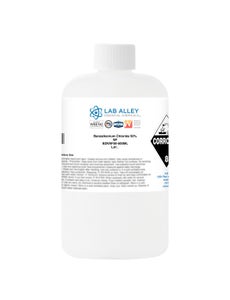
Benzalkonium chloride (BAC) is a cationic surfactant and quaternary ammonium compound used across disinfection, sanitation, and pharmaceutical preservation applications. Lab Alley supplies it as a 50% aqueous solution, NF grade, and the product carries a corrosive hazard classification: it causes severe skin burns and eye damage, is harmful if swallowed, and may cause respiratory irritation on exposure.
Anyone handling this chemical, whether in a production environment, a laboratory, or during transport and storage, needs to understand its corrosivity, the correct PPE and containment measures, and the regulatory framework that governs its shipment and disposal. The sections below walk through each of these areas based on the current Lab Alley Safety Data Sheet.


In this article, we'll explore:
-
Chemical Hazards Overview
-
Exposure Risks & Health Effects
-
First Aid Measures
-
Handling & Storage Precautions
-
Spill & Leak Procedures
-
Fire & Explosion Hazards
-
Regulatory & Compliance Information
-
Technical Documents & References
Chemical Hazards Overview
Benzalkonium Chloride 50% Solution, NF Grade, is classified as a corrosive substance with additional acute toxicity and respiratory hazard designations under the GHS system. Its corrosivity profile places it at the most severe end of the skin and eye damage categories, meaning exposure is treated as a chemical burn rather than simple irritation. The product's oral toxicity and respiratory irritation potential add further layers that require deliberate handling controls. Together, these classifications drive the PPE, storage, and emergency response requirements covered throughout this article.
Hazard Classification
-
Acute Oral Toxicity: Category 4
-
Skin Corrosion/Irritation: Category 1B
-
Serious Eye Damage/Eye Irritation: Category 1
-
Specific Target Organ Toxicity, single exposure (respiratory system): Category 3
GHS Hazard Pictograms
-
GHS05: Corrosion
-
GHS07: Exclamation mark
-
GHS09: Environmental hazard
NFPA Hazard Rating
-
Health: 3
-
Flammability: 1
-
Instability: 0
Primary Risks
-
Skin and eye contact: severe burns and permanent damage risk
-
Ingestion: harmful, with tissue swelling and perforation risk
-
Inhalation: respiratory irritation
Exposure Risks & Health Effects
Inhalation Risks
Inhalation of mist or vapor from this product may cause respiratory irritation, and the respiratory system is specifically identified as the target organ for single-exposure toxicity. Symptoms can include irritation of the nose, throat, and airways. Anyone exposed and experiencing breathing difficulty should be moved to fresh air immediately. The Safety Data Sheet does not report chronic inhalation effects specific to this product.
Skin Contact Risks
Skin contact carries a Category 1B corrosion classification, the more severe of the two skin corrosion sub-categories under GHS. This means contact with the concentrated solution causes severe burns rather than mild irritation. The severity is concentration-dependent, and any contact should be treated as a chemical burn requiring immediate decontamination.
Eye Contact Risks
Eye contact is classified as Category 1, the most severe serious eye damage designation. Exposure can cause significant, potentially permanent damage to ocular tissue. Because of this severity, immediate medical attention is required for any eye exposure, not just prolonged or heavy contact.
Ingestion Risks
Ingestion is classified as harmful, with an oral LD50 of greater than 300 to 2000 mg/kg in rats for the active ingredient. Swallowing the product causes severe swelling and damage to delicate tissue, with a risk of perforation in the gastrointestinal tract. This risk profile is why vomiting should never be induced after ingestion.
Chronic Effects
Benzalkonium chloride is not listed as a carcinogen by IARC, NTP, ACGIH, or OSHA, and it tested negative for mutagenicity in the Ames test. No reproductive toxicity data is available for this product. Long-term toxicological properties beyond these data points have not been fully characterized.
First Aid Procedures
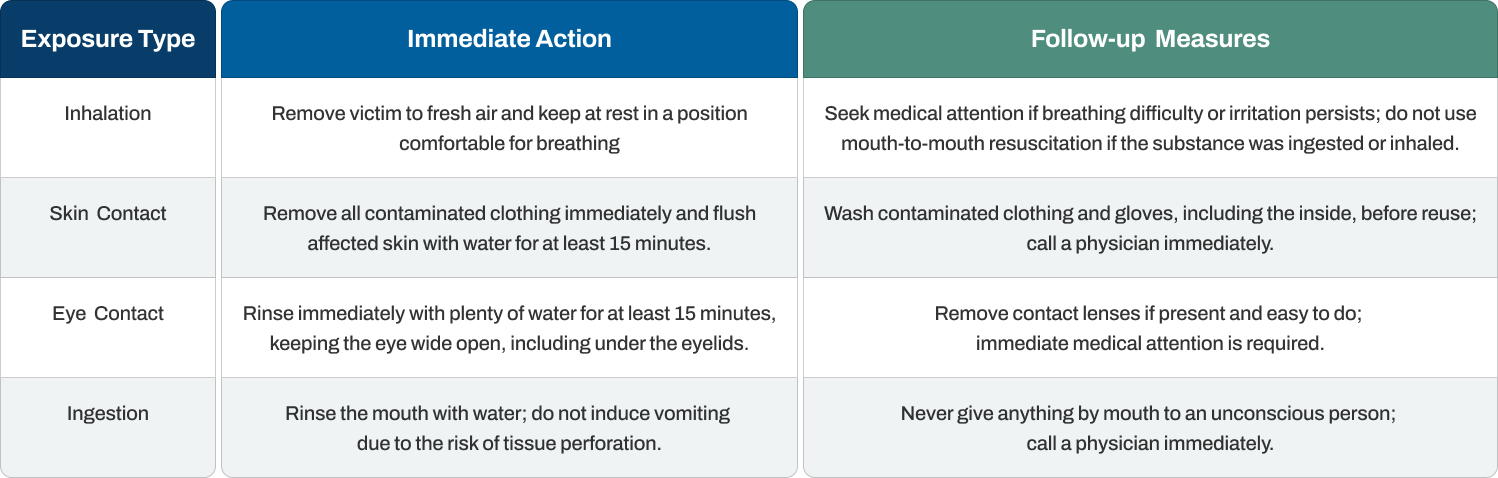
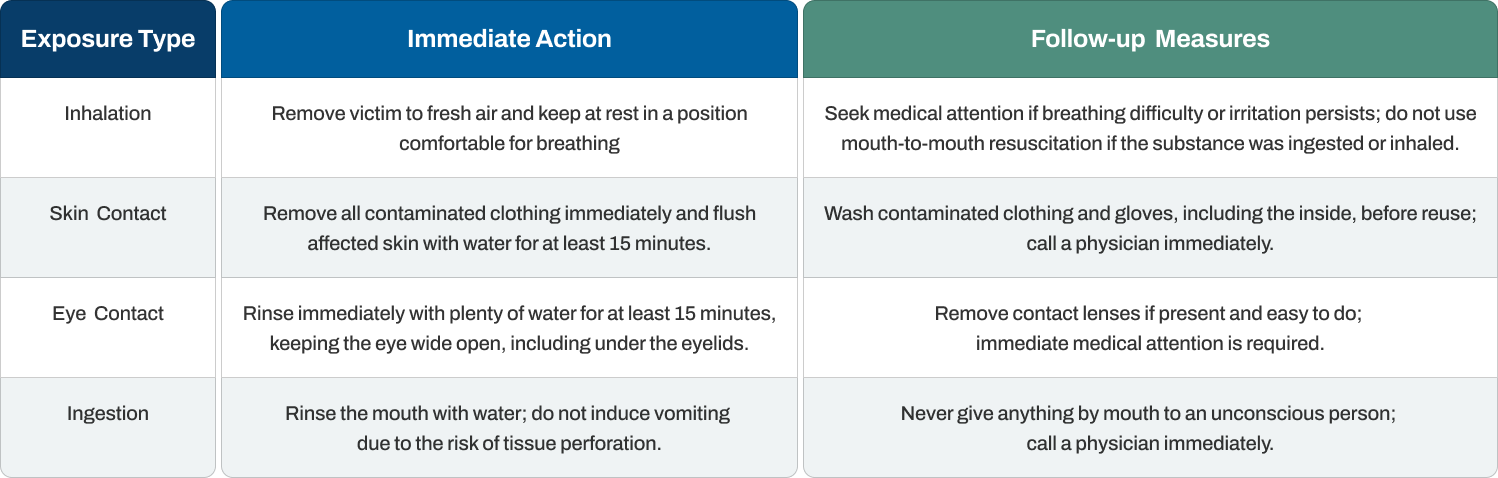
Across all exposure routes, immediate medical attention is warranted given the corrosive classification of this product. Contact a poison control center or physician right away and bring the Safety Data Sheet to the treating physician. Treatment in all cases should be symptomatic, guided by the specific exposure and its severity.
Handling & Storage Precautions
Benzalkonium chloride's corrosive classification means handling procedures need to prevent any direct contact with skin, eyes, or clothing.
Safe Handling Procedures
Work with this product only under a chemical fume hood, and wear face and eye protection along with protective gloves and clothing throughout handling. Avoid breathing mist, vapor, or spray, and never ingest the product. If accidental swallowing occurs, seek immediate medical assistance.
-
PPE: protective gloves, protective clothing, face and eye protection
Storage Conditions
-
Store in a dry, cool, well-ventilated location
-
Designate a corrosives storage area
-
Keep containers tightly closed at all times
Incompatible Substances
-
Strong oxidizing agents
-
Strong acids
-
Strong bases
-
Metals
Spill & Leak Procedures
A spill of benzalkonium chloride solution calls for immediate personal protection and containment before cleanup begins.
Emergency Response Steps
-
Evacuate personnel to safe areas
-
Ensure adequate ventilation
-
Keep people upwind of and away from the spill or leak
-
Use required personal protective equipment throughout the response
Containment Methods
-
Soak up the spill with inert absorbent material
-
Place absorbed material in suitable, closed containers for disposal
Proper Disposal
Proper disposal requires preventing the product from entering drains, sewers, or groundwater systems, and local authorities should be notified if a spill cannot be contained. Chemical waste generators are responsible for determining whether the discarded material qualifies as hazardous waste under applicable local, state, and federal regulations before disposal.
Fire & Explosion Hazards
Flammability
This product carries an NFPA Flammability rating of 1, meaning it is combustible under most ambient conditions but does not readily ignite. The autoignition temperature is 370°C (698°F). A specific flash point value is not clearly established in the current Safety Data Sheet.
Extinguishing Media
-
Carbon dioxide (CO2)
-
Dry chemical
-
Dry sand
-
Alcohol-resistant foam
No extinguishing media are identified as unsuitable for this product.
Firefighting Precautions
Firefighters responding to an incident involving this product should wear self-contained breathing apparatus, pressure-demand type, approved by MSHA/NIOSH or equivalent, along with full protective gear. Thermal decomposition of the product can release irritating gases and vapors, so responders should avoid inhalation exposure during firefighting operations.
Regulatory Information & Compliance
OSHA Regulations
No occupational exposure limits, including PEL, TWA, or STEL values, have been established for this product by OSHA or other region-specific regulatory bodies.
EPA & Environmental Impact
Benzalkonium chloride is classified as very toxic to aquatic organisms, with the potential for long-lasting effects on aquatic environments. The product is not listed under CERCLA, and it is not subject to SARA 302, 311/312, or 313 reporting requirements, nor TSCA Section 12(b) export notification. It is also not listed under California Proposition 65 or the state Right-to-Know lists reviewed in the current SDS.
DOT Transportation Regulations
This product is regulated for transport under UN1760, with the proper shipping name Corrosive Liquid, N.O.S. It is assigned to Hazard Class 8 and Packing Group II.
FDA/USP/ACS Compliance
This product is manufactured to NF grade, meeting National Formulary standards for purity and quality.
Technical Documents & Resources
-
SDS: available for all grades and concentrations of benzalkonium chloride, covering safety precautions, handling requirements, and first aid procedures
-
COA: available upon request, verifying purity and compliance with applicable grade standards, including NF grade requirements
Final Note
Benzalkonium chloride's corrosive classification, spanning skin, eye, and ingestion hazards, means every stage of handling this product, from storage through spill response, requires deliberate PPE use and containment planning. Its combustibility rating and aquatic toxicity add further layers that procurement and safety teams need to account for in facility planning and disposal decisions.
Facilities working with this product should keep the current SDS on hand and ensure personnel are trained on the specific first aid and containment procedures outlined above before handling begins.
Explore our Resource Library for more information.
Our Customer Care team is also available for more information and documentation, including chemical Safety Data Sheets.
Need Benzalkonium Chloride You Can Trust?
If you are looking for high-quality benzalkonium chloride for your lab, product line, or research facility, be sure to visit our store to explore our trusted selection and request a quote.
As your trusted partner in chemical supply, Lab Alley is always striving to meet the growing demands of our customers. We want you to be able to access all of your chemical needs in one place, along with streamlined online ordering and fast shipping.
Due to popular demand from our valued clientele, Lab Alley's benzalkonium chloride is available in a range of purities and packaging options to suit various commercial, laboratory, and personal needs.