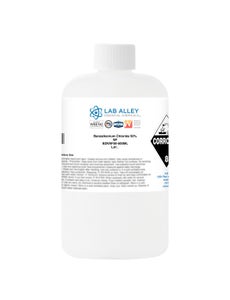






How to Store Benzalkonium Chloride
Benzalkonium chloride is a corrosive quaternary ammonium compound that causes severe skin and eye damage, so proper storage protects both personnel and product stability. Poor storage practices can compromise antimicrobial efficacy or create serious handling hazards during transfer, which makes storage a safety and quality concern.
The chemical is available as a hygroscopic solid or as aqueous solutions ranging from dilute to concentrated (50-80%). Storage conditions must therefore account for moisture sensitivity, freezing risk, and compatibility with other chemicals on site. The form on hand determines which of these concerns matters most.


In this article, we'll review:
-
Recommended Storage Conditions
-
Container & Packaging Requirements
-
Segregation & Compatibility
-
Safe Handling in Storage Areas
-
Regulatory Compliance & Labeling
-
Environmental & Safety Considerations
-
Special Considerations
Recommended Storage Conditions
Temperature
Store benzalkonium chloride between 15 and 30°C. Aqueous solutions must be kept from freezing, and concentrated solutions should stay below 40°C. Storage areas should hold within this window year-round, since both cold and heat exposure fall outside the conditions the product is intended to be kept in. Areas prone to temperature swings, such as unheated spaces or locations near heat sources, deserve particular attention.
Humidity Control
The solid or powder form of benzalkonium chloride is hygroscopic, meaning it takes up moisture from its surroundings. Keep containers tightly sealed and store them in a dry area so the material is not exposed to ambient humidity between uses. Moisture control matters most for the solid form, which is the one that reacts to humidity in the air.
Light Exposure
No significant photosensitivity is documented for benzalkonium chloride. Standard opaque or closed containers are sufficient, so no specialized light-blocking storage is required beyond keeping the product in its closed container. Storage planning can focus on temperature, moisture, and segregation instead.
Ventilation
Store benzalkonium chloride in a well-ventilated area. When handling the powder form, avoid letting dust accumulate in the storage space, as settled or airborne dust adds to the exposure hazard in an area where personnel work. Routine housekeeping in the storage area supports this precaution.
Storage Duration
Benzalkonium chloride is stable under the recommended storage conditions. Stored product should be checked periodically for cloudiness, precipitate, or a change in odor, each of which signals degradation and a need to evaluate whether the material remains suitable for use. Because stability depends on the conditions above, any lapse in temperature or moisture control is a reason to inspect the product sooner.
Container & Packaging Requirements
Compatible Materials
HDPE, polypropylene, and glass containers are suitable for benzalkonium chloride. For concentrates, the original container material is recommended, which also keeps the product in the packaging it was supplied and labeled in. Transferring concentrates to other container types adds handling steps and should be avoided where possible.
Sealing Requirements
Keep containers tightly closed at all times and reseal them immediately after use. A consistent closing routine limits moisture uptake in the solid form and reduces the chance of spills or contact exposure around open containers. Containers left open, even briefly, undermine the humidity and ventilation controls described above.
Labeling Requirements
Labels should carry GHS pictograms for corrosion, exclamation mark, and environment, along with the signal word "Danger." Each container should also show the concentration or grade and the hazard statements as they appear on the product label, so anyone in the storage area can identify the contents and their hazards at a glance. Concentration matters in particular because the product ranges from dilute to concentrated solutions.
Bulk Storage
Benzalkonium chloride is typically supplied in drums or totes rather than fixed tanks. If larger volumes are stored, keep them vented and away from incompatible materials, since a bulk container concentrates both the corrosive hazard and the consequences of a mixing error.
Segregation & Compatibility
Incompatible Substances
Benzalkonium chloride must be stored separately from the following:
-
Strong oxidizing agents
-
Strong acids
-
Strong alkalis
-
Anionic surfactants (soaps and detergents)
Storage Grouping
Store benzalkonium chloride in a corrosives-designated area. Keep it separate from oxidizers and from acid and base storage, so that a leak or container failure cannot bring it into contact with an incompatible material. Placing it with other corrosives does not remove the need to check each neighboring chemical against the incompatibilities listed above.
Flammability & Reactivity Precautions
Flammability precautions are not applicable, as NFPA 704 rates benzalkonium chloride non-flammable (0). Reactivity concerns come from the incompatible substances listed above, which is why segregation, rather than ignition source control, governs how this chemical is arranged in storage.
Safe Handling in Storage Areas
PPE Requirements
Wear chemical-resistant gloves tested to EN 374, splash goggles or a face shield, and protective clothing. This combination addresses the severe skin and eye damage the chemical can cause on contact. PPE should be in place before containers are opened or moved.
Transfer & Dispensing
Handle and open containers carefully to avoid dust formation with solid or splashing with liquid forms. Use adequate ventilation during transfers, when the likelihood of exposure is highest. Slow, deliberate handling reduces the risk of both dust release and splashes.
Spill Containment
Absorb spills with inert, non-combustible material such as sand, earth, or diatomaceous earth. During cleanup of solid material, avoid generating dust. The same PPE used for routine handling applies during cleanup.
Emergency Equipment
An eyewash station and safety shower are required in storage and handling areas. Given the severity of skin and eye damage associated with this chemical, both should be accessible without delay from wherever the product is kept or dispensed.
Regulatory Compliance & Labeling
OSHA Regulations
The general Hazard Communication Standard (29 CFR 1910.1200) applies to benzalkonium chloride. No chemical-specific permissible exposure limit has been established, so compliance rests on the general hazard communication requirements rather than a numeric exposure limit.
GHS Requirements
Benzalkonium chloride carries the pictograms GHS05 (corrosion), GHS07 (exclamation mark), and GHS09 (environment). Its hazard statements are H302+H312, H314, and H400/H410, which should appear on container labels consistent with the labeling requirements above.
NFPA & DOT
NFPA 704 rates benzalkonium chloride 3-0-0, covering health (3), flammability (0), and instability (0). DOT classifies it as a corrosive material in Class 8, using UN1760 for liquid and UN1759 for solid.
Industry-Specific Compliance
FDA and GMP requirements apply when the material is pharmaceutical or antiseptic grade. Facilities handling these grades should maintain storage practices that meet those standards in addition to the general requirements here.
SDS Requirements
A current SDS must be accessible at the point of storage and use. Personnel working in the storage area should be able to reach it without leaving the work location, and the SDS on file should be kept current as product documentation is updated.
Environmental & Safety Considerations
Secondary Containment
Secondary containment is recommended for bulk or multi-container storage. It prevents a spill from one container from migrating through the storage area or reaching drains, which is especially relevant where several containers are kept together.
Wastewater & Environmental Impact
Do not allow benzalkonium chloride to enter drains. Quaternary ammonium compounds are biodegradable, but they are toxic to aquatic organisms at the point of release, so storage areas should be set up to keep leaks and spills out of the wastewater system.
Special Considerations
Grade-Dependent Handling
The solid form is hygroscopic and dust-sensitive, while aqueous solutions are freeze-sensitive, so each grade calls for different precautions. Confirm the grade on hand before applying the temperature and humidity guidance in this article. Facilities that stock more than one form should apply the relevant precautions to each separately.
Conclusion
Storing benzalkonium chloride safely comes down to controlling temperature and moisture, using compatible and properly labeled containers, and keeping the chemical away from oxidizers, strong acids, strong alkalis, and anionic surfactants. Corrosives-designated storage, appropriate PPE, accessible emergency equipment, and a current SDS protect the people working around it.
Confirming the grade before storing and keeping the chemical out of drains ensures that both the product and the surrounding environment stay protected.
For more detailed guidance, explore our Resource Library.
Our Customer Care team is also available for more information and documentation, including chemical Safety Data Sheets.
Need Benzalkonium Chloride You Can Trust?
If you are looking for high-quality benzalkonium chloride for your lab, product line, or research facility, be sure to visit our store to explore our trusted selection and request a quote.
As your trusted partner in chemical supply, Lab Alley is always striving to meet the growing demands of our customers. We want you to have all your chemical needs in one place, with streamlined online ordering and fast shipping.
Due to popular demand from our valued clientele, Lab Alley's benzalkonium chloride is available in a range of purities and packaging options to suit various commercial, laboratory, and personal needs.