



Types of Benzalkonium Chloride
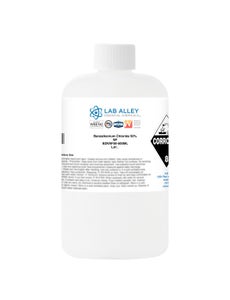
Benzalkonium chloride (BAC), CAS 8001-54-5, is a mixture of alkylbenzyldimethylammonium chlorides rather than a single, uniform compound. It is typically supplied as a viscous aqueous liquid concentrate, with the ratio of alkyl chain lengths, commonly C12 and C14 homologues, varying by manufacturer and grade. Because BAC serves such different roles across pharmaceuticals, industrial disinfection, and laboratory analysis, it is produced and marketed in several distinct grades rather than a single universal specification.
The grade selected directly affects what the material can legally and safely be used for. Pharmaceutical-grade BAC must meet USP/NF or Ph. Eur. monograph requirements, while technical-grade material follows a broader specification suited to industrial and agricultural disinfection. Buyers should base grade selection on the intended application, the compendial compliance required for that application, and the concentration needed for the final formulation, since these three factors together determine whether a given lot is fit for purpose.
In this article, we'll explore:
-
Common Grades & Purities
-
Certifications & Standards
-
Chemical Forms & Variants
-
Applications Based on Type
-
How to Choose the Right Type
Common Grades & Purities
Pharmaceutical Grade (USP/NF, BP/DAB)
Pharmaceutical-grade BAC complies with USP/NF and Ph.Eur. monographs, with alkyl homologue content specified, commonly requiring at least 70% C12/C14 content under USP standards. It is supplied as a concentrate, typically at 50%, 80%, or 95% active ingredient, and is used as both an active pharmaceutical ingredient and an excipient or preservative in drug formulations.
ACS/Reagent Grade
Reagent-grade BAC is a high-purity material referencing CAS 8001-54-5, produced for use as a USP or analytical reference standard. This grade supports compendial assay and identity testing rather than bulk formulation work.
Technical/Industrial Grade
Technical-grade BAC follows a broader specification range than pharmaceutical grade and is formulated for disinfectant, algaecide, and surfactant applications. It serves industrial, agricultural, and institutional settings where compendial purity is not required.
Certifications & Standards
Kosher & Halal
Some manufacturers offer Kosher and Halal certification for pharmaceutical-grade BAC. Certification is supplier-specific, so buyers should verify the certificate directly with the manufacturer before citing it for a particular product or lot.
REACH / RoHS Compliance
BAC is relevant under REACH as a regulated substance for industrial and consumer use in the EU, and suppliers selling into that market should be able to provide REACH registration status. RoHS compliance does not apply, since BAC is not an electronics material.
Applications Based on Type
BAC is not typically encountered in meaningfully different physical states; its commercial form is almost entirely defined by concentration rather than solid versus liquid variation.
Liquid Concentrate Forms
BAC is typically supplied as a viscous aqueous liquid concentrate rather than a solid. Handling and dilution requirements differ by concentrate strength, with higher-percentage concentrates requiring more careful metering during dilution to reach a usable end concentration.
Concentration Variants
Common bulk concentrates are sold at 50%, 80%, and 95% active ingredient. The NF solution standard covers labeled strengths both at or above 1% and below 1%, and end-use products are diluted further, often to fractions of a percent, for antiseptic, preservative, or disinfectant applications.
Applications Based on Type
Food & Beverage
Technical or industrial-grade BAC solutions are used as food-processing equipment sanitizers under FDA 21 CFR 178.1010. BAC is not used as a food ingredient itself, only as a surface sanitizer that contacts food-processing equipment before adequate draining.
Pharmaceutical & Healthcare
Pharmaceutical-grade BAC meeting USP/NF or Ph. Eur. standards is used as an active ingredient and preservative in ophthalmic, nasal, and topical formulations. This grade is selected because compendial compliance is required for drug products.
Cosmetics & Personal Care
Pharmaceutical or cosmetic-grade BAC is used at low concentrations as a preservative and antimicrobial in personal care formulations. Lower use concentrations here reflect the need to control microbial contamination without irritating skin or mucous membranes.
Laboratory & Analytical
ACS/reagent-grade or USP reference standard BAC supports compendial identity and assay testing. This grade is chosen for its documented purity and traceability rather than for antimicrobial performance.
Industrial & Manufacturing
Technical/industrial-grade BAC is used in surface disinfectants, algaecides, and general manufacturing sanitation. Broader specification tolerances are acceptable here since these applications do not require pharmacopeial compliance.
Agriculture
Technical-grade BAC is used to sanitize agricultural tools, equipment, and water systems, and as an algaecide in ponds and water storage. Its broad-spectrum antimicrobial activity at low concentrations makes it suited to this kind of surface and water treatment.
How to Choose the Right Type
Selecting the correct type of BAC starts with matching the grade to the application, then confirming certifications and settling on the right concentration for the job.
Match Grade to Application
Use pharmaceutical grade for drug or preservative applications, technical grade for industrial or agricultural disinfection, and reagent grade for laboratory analysis. Mismatching grade to application risks both regulatory noncompliance and formulation failure.
Verify Required Certifications
Confirm compendial compliance, USP/NF or Ph.Eur., for any pharmaceutical or personal care use, and check REACH status where the product will be sold or used in the EU. These checks should be done against the specific lot, not assumed from the general product line.
Select Appropriate Concentration or Form
Choose a concentrate strength, typically 50%, 80%, or 95%, based on the intended dilution ratio and end-use application. Working backward from the target use concentration helps avoid over- or under-diluting during formulation.
Common Mistakes
A frequent error is using technical-grade material in pharmaceutical or personal care formulations, where it does not meet the required compendial specification. Another is assuming BAC carries a broad food-ingredient GRAS status; in reality, FDA has only issued a narrow, use-specific GRAS notice for a particular produce wash application, and this does not extend to general food-grade use.
Key Takeaways
Choosing the right type of benzalkonium chloride comes down to matching grade to application, verifying the certifications and compendial compliance the end use requires, and selecting a concentration that fits the intended dilution. Pharmaceutical-grade material belongs in drug and personal care formulations, technical grade in industrial and agricultural disinfection, and reagent grade in laboratory analysis, and conflating these categories is the most common and costly sourcing mistake.
For more detailed guidance, explore our Resource Library.
Our Customer Care team is also available for more information and documentation, including chemical Safety Data Sheets.
Find Benzalkonium Chloride You Can Trust
If you are looking for high-quality benzalkonium chloride for your lab, product line, or research facility, be sure to visit our store to explore our trusted selection and request a quote.
As your trusted partner in chemical supply, Lab Alley is always striving to meet the growing demands of our customers. We want you to be able to access all of your chemical needs in one place, along with streamlined online ordering and fast shipping.
Due to popular demand from our valued clientele, Lab Alley's benzalkonium chloride is available in a range of purities and packaging options to suit various commercial, laboratory, and personal needs.