





How to Safely Dispose of Benzalkonium Chloride
Benzalkonium chloride is a corrosive quaternary ammonium compound classified as very toxic to aquatic life with long-lasting effects, which makes disposal method selection critical to avoiding environmental harm. Improper disposal, particularly discharge to drains or waterways, can produce toxic effects in aquatic organisms even at low concentrations, so generators need a clear, compliant pathway before waste leaves the facility.
Because benzalkonium chloride is not a federally listed hazardous waste, generators must evaluate it against RCRA hazardous waste characteristics and consult applicable local and state regulations before selecting a disposal method. The corrosivity and aquatic toxicity of the product mean that even facilities generating small volumes should treat disposal as a regulated activity rather than routine waste handling.
This guide outlines compliant disposal methods for laboratory, industrial, and institutional settings handling benzalkonium chloride.


In this article, we'll cover:
-
Why Proper Disposal Matters
-
How to Dispose of Benzalkonium Chloride
-
Aquatic Toxicity and Environmental Hazard
-
Special Considerations
Why Proper Disposal Matters
Environmental Protection
Benzalkonium chloride is very toxic to aquatic organisms, with fish LC50 values reported as low as 0.223 mg/L, meaning meaningful harm can occur at concentrations far below what many generators might assume is safe for discharge. The product's safety data sheet explicitly prohibits flushing the chemical into surface water, sanitary sewers, or storm drains under any circumstance. This restriction applies regardless of the volume being disposed of, since even diluted residues can carry sufficient toxicity to affect downstream ecosystems.
Health & Safety
Benzalkonium chloride causes severe skin burns and eye damage across all exposure routes. Ingestion carries a risk of severe tissue damage, and thermal decomposition of the compound releases irritating gases. Anyone handling disposal activities should treat waste streams containing this chemical with the same caution applied to the concentrated product itself.
Legal Compliance
Benzalkonium chloride is not listed as a P or U hazardous waste under RCRA, nor is it listed under CERCLA, so generators bear responsibility for determining whether their specific waste stream meets a hazardous waste characteristic. This determination affects everything from storage requirements to disposal facility selection. When waste is shipped offsite for disposal, DOT Class 8 corrosive liquid regulations under UN1760 govern the shipment, requiring appropriate classification, labeling, and documentation.
How to Dispose of Benzalkonium Chloride
Check Regulations
Before selecting a disposal method, the generator must determine the waste's hazardous classification under 40 CFR 261. Since benzalkonium chloride is not federally listed, this determination relies on characteristic testing, most notably for corrosivity and toxicity, along with applicable state and local requirements. Skipping this step can result in a waste stream being handled incorrectly from the outset, so it should precede any disposal decision.
Use Designated Waste Disposal Methods
Disposal pathways for benzalkonium chloride differ depending on the waste characteristic determination and the setting generating the waste. The following pathways cover the most common scenarios.
Non-Hazardous Disposal
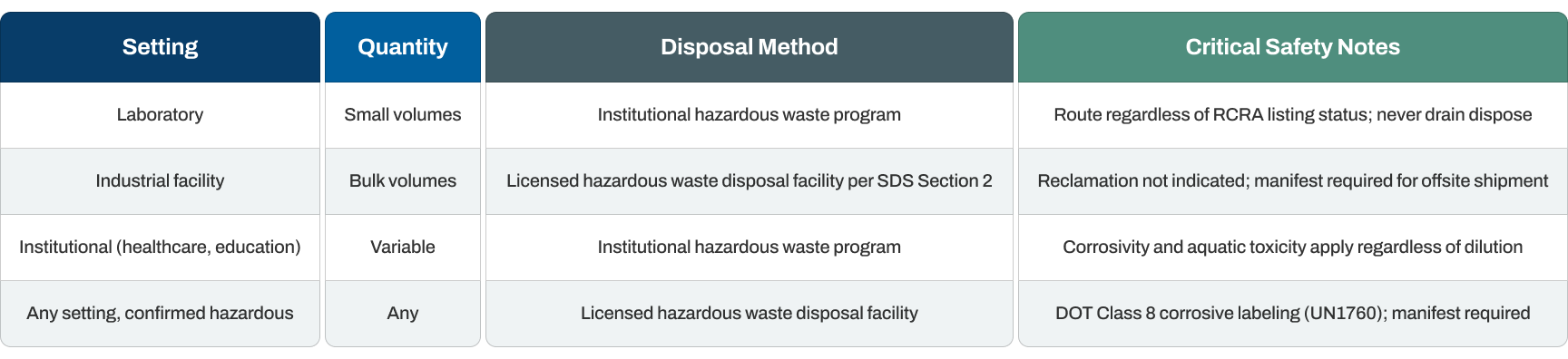
Drain or sewer disposal is not permitted for benzalkonium chloride under any circumstance specified in the product's safety data sheet, regardless of how dilute the solution is. This holds even where local sewer authorities might otherwise accept low-concentration waste streams, because the compound's toxicity to aquatic life applies at very low concentrations.
Hazardous Waste Disposal
If characteristic testing confirms hazardous waste status, the material must be routed to a licensed hazardous waste disposal facility. Containers must be labeled with the DOT Class 8 corrosive marking, and a manifest is required to document the waste from generation through final disposal.
Industrial Quantities
Bulk quantities of benzalkonium chloride waste should be sent to a licensed disposal facility, following the approved waste disposal plant guidance referenced in Section 2 of the product's safety data sheet. Reclamation is not indicated as a viable option for this chemical, so facilities generating industrial volumes should plan for disposal rather than recovery.
Laboratory & Institutional Waste
Laboratory and institutional generators should route benzalkonium chloride waste through their institutional hazardous waste program regardless of its RCRA listing status. Given the compound's corrosivity and aquatic toxicity, treating it through established institutional channels reduces the risk of improper disposal by lab personnel unfamiliar with its specific hazards.
Never Mix Chemicals
Benzalkonium chloride waste should never be combined with strong oxidizing agents, strong acids, strong bases, or metals, consistent with the incompatibilities identified in Section 10 of the product's safety data sheet. Mixing waste streams to save disposal costs or container space introduces reactivity risks that outweigh any efficiency gained.
Follow PPE Guidelines
Personnel handling benzalkonium chloride waste should wear chemical-resistant gloves and protective clothing along with chemical safety goggles or face protection. Work involving open containers or transfer of waste should take place under a chemical fume hood. Eyewash stations and safety showers should be readily accessible in any area where disposal activities occur.
Aquatic Toxicity and Environmental Hazard
Aquatic Toxicity
Freshwater fish LC50 values for benzalkonium chloride range from 0.223 to 2.4 mg/L across tested species, supporting its classification as very toxic to aquatic life with long-lasting effects under hazard statement H411. This range underscores why even small quantities reaching a waterway can produce measurable harm, and why drain disposal remains prohibited regardless of dilution.
Spill and Residue Handling
The product's safety data sheet directs that spills and residues must not be allowed to contaminate groundwater or enter drains during cleanup or disposal activities. For significant spillages, local authorities must be notified, reflecting the seriousness with which regulators treat uncontrolled release of this chemical into the environment.
Special Considerations
pH Is Not the Driving Hazard
Diluted benzalkonium chloride solutions typically measure a pH between 6.0 and 9.0, which means the RCRA corrosivity characteristic for waste (D002, requiring pH ≤2 or ≥12.5) is unlikely to apply based on pH alone. The corrosive hazard associated with this chemical instead stems from its surfactant action on skin and tissue rather than pH extremes. Waste characteristic testing is still required to confirm classification, since pH alone does not determine whether other hazardous characteristics apply.
Concentration-Dependent Product Line
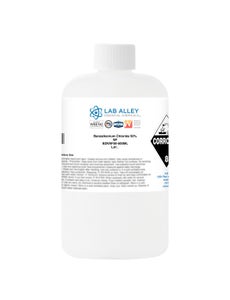
The NF-grade product referenced in this guide is sold at 50% w/v concentration, and the disposal guidance provided here applies specifically to this concentrated form. Dilute finished-product formulations, such as wipes or sprays containing benzalkonium chloride at much lower concentrations, may fall under different disposal considerations and should be evaluated separately.
Conclusion
Safe disposal of benzalkonium chloride centers on recognizing that it is never appropriate for drain or sewer disposal, regardless of concentration, and that its aquatic toxicity demands careful handling even in small quantities. Generators should confirm hazardous waste status through proper testing, route waste through licensed facilities or institutional hazardous waste programs, and maintain appropriate PPE and spill controls throughout the process.
Facilities that build these steps into standard procedure reduce both regulatory risk and environmental impact, while ensuring personnel handling the waste are protected from its corrosive properties at every stage.
For more detailed guidance, explore our Resource Library
Our Customer Care team is also available for more information and documentation, including chemical Safety Data Sheets.
Need Benzalkonium Chloride You Can Trust?
If you are looking for high-quality benzalkonium chloride for your lab, product line, or research facility, be sure to visit our store to explore our trusted selection and request a quote.
As your trusted partner in chemical supply, Lab Alley is always striving to meet the growing demands of our customers. We want you to be able to access all of your chemical needs in one place, along with streamlined online ordering and fast shipping.
Due to popular demand from our valued clientele, Lab Alley's benzalkonium chloride is available in a range of purities and packaging options to suit various commercial, laboratory, and personal needs.