





Shelf Life & Expiration of Ethyl Ether
Ethyl ether, also known as diethyl ether, is a highly volatile solvent whose usable life is dictated less by simple chemical breakdown than by its well-documented tendency to form organic peroxides on exposure to air and light. This peroxide-forming behavior means that shelf life tracking for ethyl ether is a safety requirement as much as a quality one, since accumulated peroxides can become shock-sensitive and hazardous to handle.
Several factors influence how long a given container remains safe and effective: whether the product is stabilized, how tightly it has been sealed, and the conditions under which it has been stored. Unopened containers behave differently from opened ones, and the interval between the manufacture date and the date a container is first opened matters as much as total elapsed time.


This article covers:
-
How Long Does Ethyl Ether Last?
-
Signs That Ethyl Ether Has Expired
-
What to Do If Ethyl Ether Has Expired
-
Proper Storage Extends Shelf Life
How Long Does Ethyl Ether Last?
Chemical Stability
Ethyl ether is classified as a peroxide-forming solvent, meaning prolonged exposure to atmospheric oxygen drives a slow autoxidation reaction that generates peroxide compounds within the liquid. Unopened containers are typically rated for approximately 12 to 18 months from the date of manufacture. In comparison, opened containers should be tested for peroxide content or discarded within roughly 12 months of first use. The degradation mechanism is not a loss of ether itself but an accumulation of peroxide byproducts that concentrate over time, particularly if the container is opened and resealed repeatedly.
Purity & Packaging
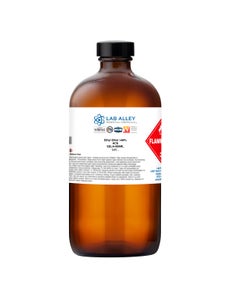
Most commercial ethyl ether is sold in a stabilized form, commonly inhibited with butylated hydroxytoluene (BHT), which scavenges the free radicals responsible for initiating peroxide formation and meaningfully extends usable shelf life compared to uninhibited product. Amber glass or metal containers are preferred over clear glass because they limit the light exposure that accelerates peroxide generation. Caps and liners should be non-metallic where possible, since iron and other metals can catalyze peroxide formation within the container.
Storage Conditions
Ethyl ether should be stored in a cool area, ideally below 30°C, and kept away from direct sunlight and other heat sources. Both light and elevated temperature accelerate the autoxidation process, so consistent, moderate storage conditions do more to preserve usable shelf life than any single packaging choice. Containers should remain tightly sealed between uses to limit the air exchange that drives peroxide buildup.


Signs That Ethyl Ether Has Expired or Degraded
-
Color Change: Fresh ethyl ether is colorless, so any yellowing or visible discoloration is a sign of oxidation or contamination and should prompt further testing before use.
-
Precipitation or Crystallization: Crystalline deposits around the cap, neck, or within the liquid itself indicate peroxide formation. A container showing visible crystals should not be moved, opened, or disturbed until it has been assessed by trained personnel.
-
Gas Formation or Pressure Build-up: Peroxide decomposition can generate internal pressure in a sealed container over time, so noticeable bulging or unusual resistance when opening a container are warning signs that should not be ignored.
-
Reduced Effectiveness: Peroxide contamination and evaporative loss both degrade performance in extraction, anesthesia-grade, and reaction-solvent applications, where trace impurities can interfere with results or introduce unwanted reactivity.
What to Do If Ethyl Ether Is Expired
Check Manufacturer Guidelines
Review the certificate of analysis for the manufacture date and any peroxide testing or retest interval the supplier recommends. Some suppliers distinguish between an expiration date and a retest date, and confirming which applies to a given lot determines whether the product can still be qualified for use or should be treated as expired outright.
Follow Proper Disposal Procedures
Before handling a container approaching or past its recommended interval, test for peroxide content using potassium iodide-based test strips rather than assuming visual inspection alone is sufficient. Containers showing visible crystallization should not be opened or moved under any circumstances. Expired ethyl ether is classified as both a flammable and hazardous waste stream, and disposal should go through a licensed hazardous waste handler rather than standard chemical disposal channels.
Replace with Fresh Stock
Applications that depend on solvent purity, including extractions, anesthesia use, and radical-sensitive reactions, are particularly vulnerable to peroxide contamination and evaporative concentration changes. Replacing expired stock with fresh, verified low-peroxide material protects both experimental results and personnel safety.
Proper Storage Extends Shelf Life
-
Container Requirements: Keep ethyl ether in its original manufacturer's container whenever possible, tightly sealed with a non-metallic cap liner to reduce metal-catalyzed peroxide formation.
-
Temperature Control: Store in a cool area, ideally below 30°C, and avoid storage conditions that risk condensation or seal compromise.
-
Light & Heat Protection: Keep containers away from direct sunlight and heat sources, since both UV exposure and elevated temperature accelerate peroxide formation.
-
Evaporation Prevention: Reseal containers tightly after every use. Ethyl ether's low boiling point of 34.6°C makes both evaporative loss and vapor accumulation significant risks if containers are left open or improperly sealed.
-
Fire Safety: With a flash point of -45°C, ethyl ether is extremely flammable even at room temperature. Store it in a flammable-rated cabinet, away from ignition sources and any equipment capable of generating static discharge.
Conclusion
Ethyl ether's shelf life is defined primarily by its peroxide-forming behavior rather than straightforward chemical decay, which makes disciplined date tracking and storage practice essential to both product quality and personal safety. Stabilized grades, tightly sealed containers, and cool, dark storage conditions all meaningfully extend the window during which ethyl ether remains safe to use.
Once a container shows signs of crystallization, discoloration, or has passed its recommended testing interval, it should be treated as expired and handled according to proper peroxide testing and hazardous waste disposal procedures rather than used as is.
For more detailed guidance, explore our Resource Library for comprehensive storage and handling information.
Our Customer Care team is also available for more information and documentation, including chemical Safety Data Sheets.
Need Ethyl Ether You Can Trust?
If you are looking for high-quality ethyl ether for your lab, product line, or research facility, be sure to visit our store to explore our trusted selection and request a quote.
As your trusted partner in chemical supply, Lab Alley is always striving to meet the growing demands of our customers. We want you to be able to access all of your chemical needs in one place, along with streamlined online ordering and fast shipping.
Due to popular demand from our valued clientele, Lab Alley's ethyl ether is available in a range of purities and packaging options to suit various commercial, laboratory, and personal needs.