





Methanol Safety & Hazards
Methanol carries a dual hazard profile that sets it apart from many industrial solvents: it is both highly flammable and acutely toxic. Classified under GHS as a Category 2 flammable liquid with Category 3 acute toxicity across oral, dermal, and inhalation routes, methanol demands handling protocols that address fire risk and chemical exposure simultaneously rather than treating either in isolation.
Exposure through any route, inhalation, skin contact, eye contact, or ingestion, carries meaningful toxicity risk, and acute overexposure can result in permanent eye damage, central nervous system effects, or death. This profile makes methanol relevant to a wide range of personnel: laboratory staff handling it in small volumes, production operators working with bulk quantities, and safety officers responsible for storage and emergency planning.
Methanol is subject to OSHA exposure limits, DOT flammable liquid shipping requirements, and EPA reporting obligations under CERCLA and RCRA, placing it firmly within regulated-chemical territory for any facility that stores, transports, or disposes of it.
In this article, we'll explore:
-
Chemical Hazards Overview
-
Exposure Risks & Health Effects
-
First Aid Measures
-
Handling & Storage Precautions
-
Spill & Leak Procedures
-
Fire & Explosion Hazards
-
Regulatory & Compliance Information
-
Technical Documents & References
Chemical Hazards Overview
Methanol's hazard profile combines flammability with systemic toxicity, a combination that shapes nearly every handling decision made around the chemical. It is classified as a Category 2 flammable liquid, meaning it ignites readily at or near room temperature, while its acute toxicity classification of Category 3 for oral, dermal, and inhalation exposure reflects the real risk of harm from contact or absorption, not just combustion.
Specific target organ toxicity (single exposure) at Category 1 further signals that a single significant exposure can cause lasting damage, particularly to the eyes and nervous system. Eye irritation is classified at Category 2A, underscoring that direct or vapor contact with the eyes requires immediate attention.
-
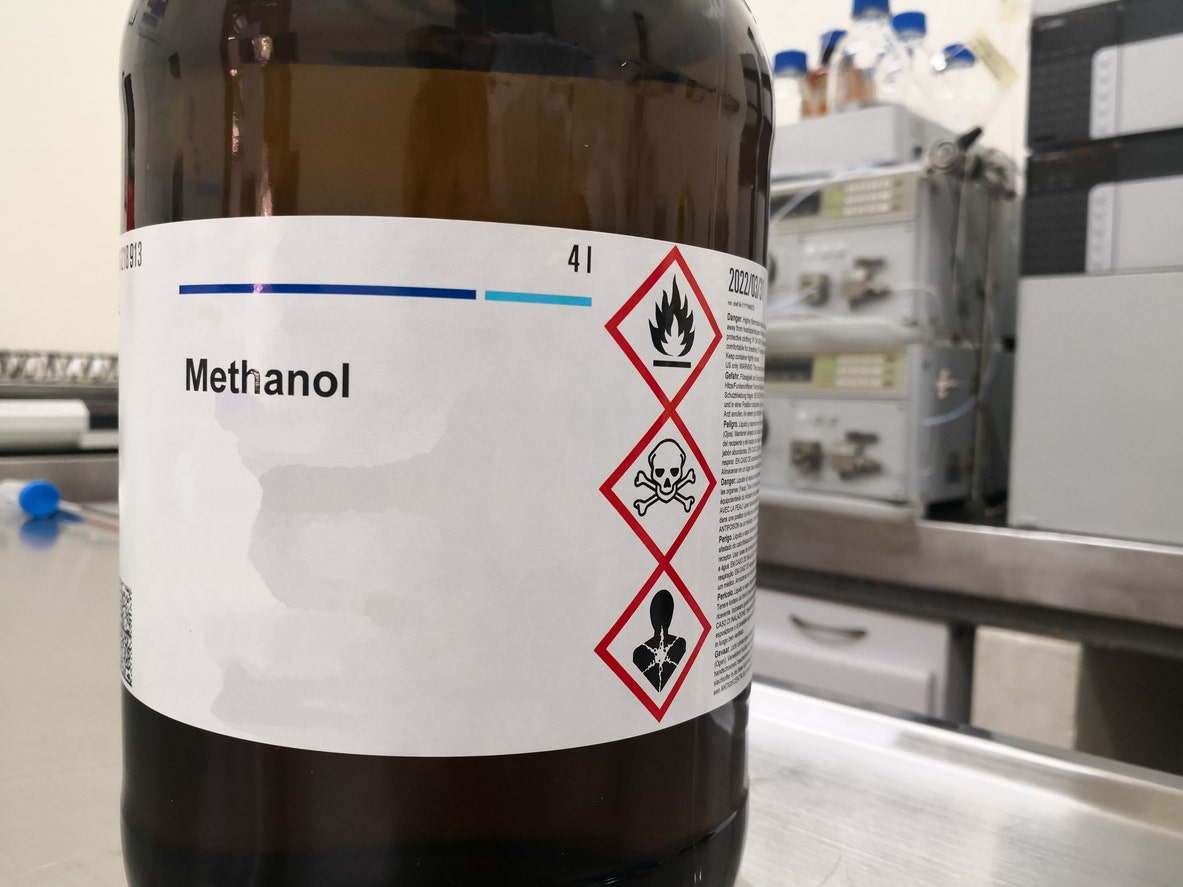
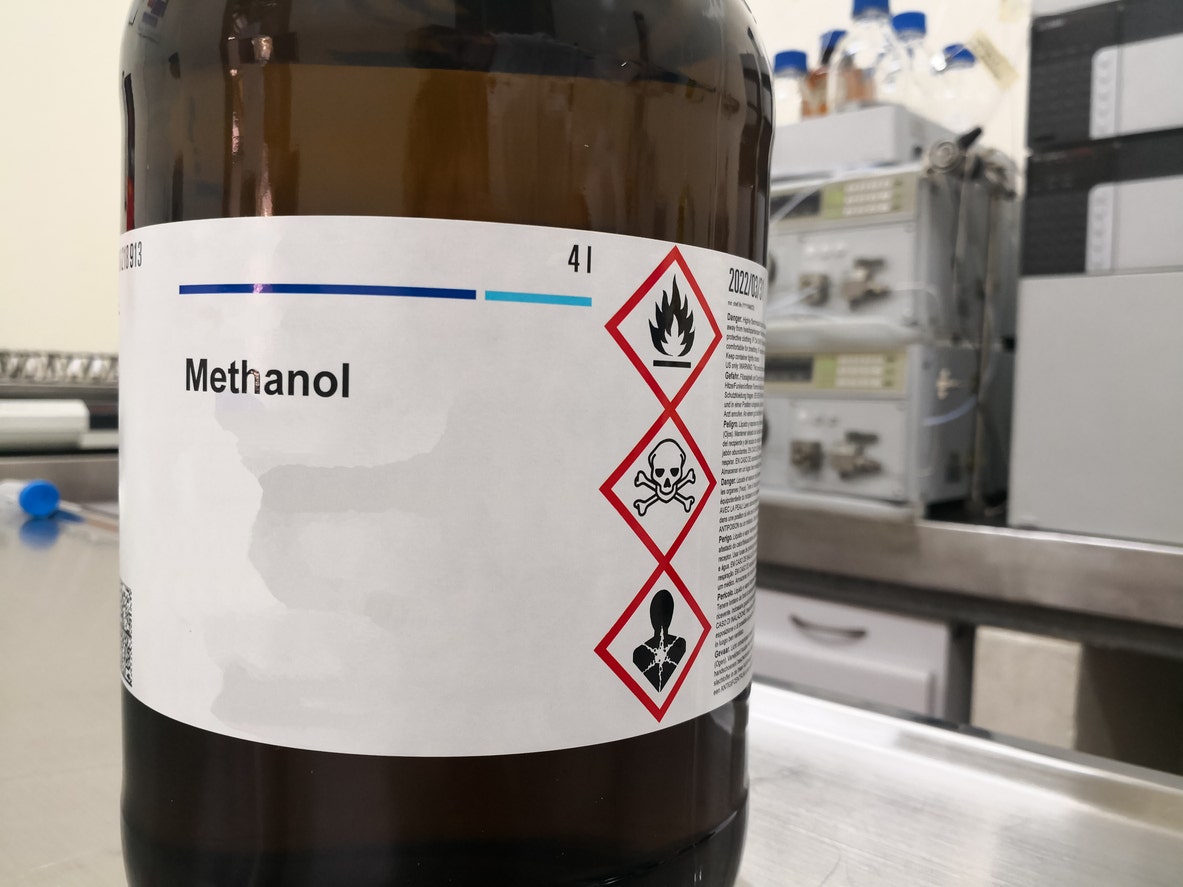
GHS Pictograms: GHS02 (Flame), GHS06 (Skull and crossbones), GHS08 (Health hazard)
-
NFPA Rating: Health 1, Flammability 3, Reactivity 0
-
Primary Risks: Inhalation, skin absorption, eye contact, and ingestion all carry toxicity risk in addition to the fire hazard
Exposure Risks & Health Effects
Inhalation Risks
Methanol's vapor pressure is high enough that airborne concentrations can build quickly in enclosed or poorly ventilated spaces. Acute inhalation exposure typically produces headache, dizziness, and nausea, symptoms that can appear well before a worker recognizes they have been overexposed.
At higher concentrations or with prolonged exposure, inhalation poses a risk of optic nerve damage, one of methanol's most distinctive and serious health effects. Because these symptoms overlap with general fatigue or mild illness, facilities should treat any unexplained headache or dizziness in a methanol work area as a potential exposure signal rather than dismissing it.
Skin Contact Risks
Direct skin contact causes irritation, but the more significant concern is absorption. Methanol penetrates intact skin readily enough that regulatory exposure limits carry a skin notation, meaning dermal contact can contribute meaningfully to total body burden even without inhalation.
This matters in settings where splash contact is common but respiratory protection is assumed to be the primary safeguard. Gloves and protective clothing are not optional add-ons in methanol handling; they address a genuine absorption pathway, not just surface irritation.
Eye Contact Risks
Methanol causes serious eye irritation on contact, whether from liquid splash or concentrated vapor exposure. Because the eyes are a primary target organ for methanol toxicity, contact carries a real risk of permanent damage, including optic nerve injury, beyond simple irritation.
This risk profile is why eye protection is treated as mandatory rather than situational in any area where methanol is dispensed, transferred, or used in open processes.
Ingestion Risks
Ingestion is the most acutely dangerous exposure route for methanol. The oral LD50 in rats is 5,628 mg/kg, and ingestion can cause metabolic acidosis, blindness, and death. This is why ingestion is always treated as a medical emergency rather than something to monitor at home or on site.
Chronic Effects
Repeated or prolonged exposure to methanol is associated with cumulative organ damage, particularly affecting the central nervous system, liver, and kidneys. Methanol is not currently classified as a carcinogen by IARC, NTP, or ACGIH, so the chronic concern centers on organ toxicity from repeated low-level exposure rather than cancer risk. Facilities with regular methanol handling should factor this into exposure monitoring and rotation practices, not just acute incident response.
First Aid Procedures


Across all exposure routes, speed matters more than precision. Err toward seeking medical evaluation even when symptoms seem mild, and have poison control contact information readily available in any area where methanol is stored or used.
Handling & Storage Precautions
Safe methanol handling starts with controlling two separate hazards at once: vapor accumulation and ignition sources. Work should take place in a well-ventilated area or under local exhaust ventilation to limit airborne concentration, paired with chemical-resistant gloves and goggles for any task involving direct contact.
-
Eliminate ignition sources in and around the work area
-
Bond and ground containers during transfer to prevent static discharge
-
Use local exhaust ventilation wherever methanol is dispensed or transferred in volume
Storage requires the same dual awareness. Methanol should be kept in tightly closed, approved flammable-liquid containers, in a cool, dry, well-ventilated area away from heat, ignition sources, and direct sunlight.
-
Store away from strong oxidizers, strong acids, and alkali metals
-
Keep separate from acid anhydrides and acid chlorides, which react with methanol
Spill & Leak Procedures
A methanol spill response has to move quickly on two fronts: eliminating fire risk and preventing further exposure. The first priority is evacuating non-essential personnel, removing ignition sources, and ventilating the area before any cleanup begins.
-
Wear chemical-resistant gloves and goggles for small spills; add respiratory protection for larger releases
-
Absorb spilled material with inert, non-combustible materials such as sand or vermiculite
-
Prevent runoff from entering drains or waterways
Disposal follows its regulatory classification as a hazardous waste under RCRA code U154. Methanol waste should be routed through a licensed waste disposal contractor in accordance with applicable federal, state, and local regulations, and should never be discharged to a sewer system without appropriate treatment.
Fire & Explosion Hazards
Flammability
Methanol has a flash point of 11 to 12°C (52 to 54°F) in closed-cup testing, meaning it can ignite at temperatures close to typical indoor room temperature. Its autoignition temperature is 385°C (725°F), and its flammable range spans 6.0 percent to 36 percent by volume, a notably wide window that increases the likelihood of forming an ignitable mixture in enclosed spaces.
This combination of a low flash point and wide flammable range is central to why ignition control is treated as a baseline requirement, not a situational precaution, anywhere methanol is handled.
Extinguishing Media
-
Alcohol-resistant foam
-
Carbon dioxide
-
Dry chemical
-
Water spray or fog, used to cool surrounding containers rather than to extinguish the flame directly
A straight stream of water should be avoided, since it can spread burning methanol rather than suppress it.
Firefighting Precautions
Firefighters and emergency responders should wear full PPE and self-contained breathing apparatus when approaching a methanol fire. Vapors are heavier than air and can travel along the ground to a distant ignition source before flashing back toward the original spill or container. Combustion produces carbon monoxide and formaldehyde, both of which add toxic inhalation risk on top of the thermal hazard.
Regulatory & Compliance Information
OSHA Regulations
OSHA sets a permissible exposure limit (PEL) for methanol of 200 ppm as an 8-hour time-weighted average (260 mg/m³), with a short-term exposure limit (STEL) of 250 ppm, under 29 CFR 1910.1000, Table Z-1. These limits reflect methanol's acute toxicity profile and are a baseline reference point for workplace air monitoring programs.
EPA & Environmental Impact
Under CERCLA, methanol carries a reportable quantity of 5,000 pounds, and it is listed under RCRA waste code U154 when discarded as a hazardous waste. It is also reportable under EPCRA Section 313 (Toxics Release Inventory), and facilities should check applicable state Right-to-Know lists, since requirements can vary by jurisdiction.
DOT Transportation Regulations
For transportation, methanol is classified as a Hazard Class 3 flammable liquid under UN1230, with a Packing Group II designation. This classification governs labeling, packaging, and documentation requirements for shipments by road, rail, or other transport modes.
FDA/USP/ACS Compliance
Methanol is available in ACS reagent grade specification, which governs purity standards for laboratory and analytical applications.
Technical Documents & Resources
-
SDSs are available for all grades and concentrations, covering detailed safety, handling, and first aid information.
-
COAs are available upon request and verify purity and compliance with applicable grade standards.
Final Note
Methanol's combination of high flammability and acute toxicity means that safety protocols have to address both hazards together, not one at the expense of the other. Ventilation, ignition control, and appropriate PPE form the foundation of safe handling, while awareness of methanol's distinctive toxicity, particularly its risk to eyes and the nervous system, shapes how exposure incidents should be treated.
Facilities that store, transport, or use methanol should keep current SDS and COA documentation on hand, train personnel on the specific first aid steps required for each exposure route, and build emergency response plans that account for methanol's wide flammable range and its reactivity with common oxidizers. Proper handling is not a matter of general solvent precautions; it requires protocols built specifically around what makes methanol distinct.
Explore our Resource Library for more information.
Our Customer Care team is also available for more information and documentation, including chemical Safety Data Sheets.
Need Methanol You Can Trust?
If you are looking for high-quality methanol for your lab, product line, or research facility, be sure to visit our store to explore our trusted selection and request a quote.
As your trusted partner in chemical supply, Lab Alley is always striving to meet the growing demands of our customers. We want you to be able to access all of your chemical needs in one place, along with streamlined online ordering and fast shipping.
Due to popular demand from our valued clientele, Lab Alley's methanol is available in a range of purities and packaging options to suit various commercial, laboratory, and personal needs.