




Water Uses & Applications
Water is the only chemical compound that every industry, laboratory, and household depends on without exception. Its molecular structure, two hydrogen atoms bonded to one oxygen atom, gives rise to a polarity that makes it an exceptional solvent, along with a high specific heat capacity, low viscosity, and chemical stability that hold up across an enormous range of temperatures and processing conditions. These properties are why water functions simultaneously as a reagent, a reaction medium, a cleaning agent, and a raw material across sectors that otherwise share little in common.
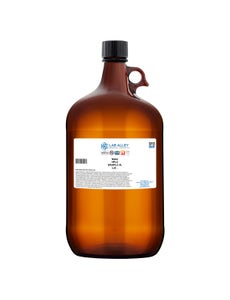
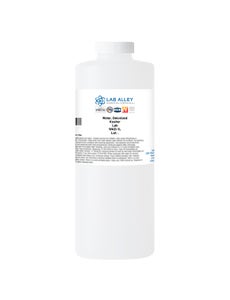
Lab Alley supplies purified water in Deionized (lab-grade), USP, HPLC, and LC/MS grades, each formulated to meet the purity requirements of a specific use case. Laboratories rely on it for reagent and buffer preparation, pharmaceutical manufacturers use it as an excipient and active ingredient, and industrial operations use it for cooling, processing, and cleaning at scale. Because water carries no inherent hazard classification, it moves through supply chains and regulatory frameworks differently than most laboratory chemicals, which simplifies procurement and storage for the customers who order it in volume.
In this article, we'll explore:
-
Industrial Applications
-
Scientific & Laboratory Uses
-
Medical & Pharmaceutical Uses
-
Food & Beverage Industry
-
Agriculture & Pesticides
-
Consumer & Household Uses
-
Environmental & Water Treatment
-
Molecular Biology & Biotechnology Applications
-
Water Grades and Pack Sizes
Industrial Applications
Manufacturing & Processing
Water serves as the workhorse fluid of manufacturing operations, used for rinsing components between production steps, diluting process chemicals to working concentrations, and carrying heat away from equipment that would otherwise overheat. Facilities that run continuous production lines depend on a steady supply of process water to keep operations moving without interruption.
It also functions as boiler feedwater, where its purity directly affects the lifespan of the equipment it passes through, since dissolved minerals left behind by lower-quality water accelerate scale buildup and corrosion.
Chemical Synthesis
In chemical synthesis, water often acts as the reaction medium itself, particularly in hydrolysis reactions where it directly participates as a reactant rather than a passive solvent. It is also used to dilute reagents to precise concentrations, quench reactions that need to be stopped at a specific point, and wash reaction products free of unwanted byproducts. Because water is chemically unreactive under most standard conditions outside of these targeted uses, it can be introduced into a synthesis pathway with predictable, well-characterized effects.
Metallurgy & Mining
Metallurgical operations use water throughout ore processing, from initial separation and flotation steps to the quenching of hot metal during heat treatment. In electroplating, deionized water rinses parts between plating baths to prevent contamination from carrying over from one solution to the next, which protects the integrity of the finished coating. Mining operations similarly depend on water for slurry transport and dust suppression, where its availability and consistency matter as much as its purity.
Petroleum & Energy
Power generation facilities convert water into steam to drive turbines, making it central to how most electricity is produced regardless of the underlying fuel source. Cooling towers at power plants and refineries use large volumes of makeup water to replace what is lost to evaporation during the cooling cycle. In oil recovery, water injection into depleted reservoirs pushes additional crude toward extraction wells, extending the productive life of a field well beyond what primary recovery alone would achieve.
Scientific & Laboratory Uses
Analytical Reagent
Laboratories use reagent-grade water as the base for preparing calibration standards, blanks, and other reference solutions where any contamination would compromise the accuracy of results. Because impurities in the water itself can introduce error into an analysis, the grade of water selected for reagent preparation is chosen to match the sensitivity of the method being used. This makes water one of the most consequential, if easily overlooked, inputs in any analytical workflow.
Solvent in Laboratory Processes
Water's polarity allows it to dissolve a wide range of ionic and polar compounds, which is why it is often referred to as the universal solvent in laboratory settings. Beyond dissolving samples for analysis, it is the standard final rinse for glassware, removing residual reagents and preventing cross-contamination between experiments.
Its availability in multiple purity grades means labs can match the water to the sensitivity of the task, using a lower grade for general rinsing and a higher grade wherever trace contamination would affect results.
pH Adjustment & Buffering Agent
Buffer solutions and pH standards are built on a water base, since the water itself must be free of ions and contaminants that would otherwise shift the intended pH. Reagent and standard preparation protocols typically specify a minimum water grade for this reason, particularly in regulated testing environments where reproducibility is a requirement rather than a preference. Using an inconsistent water source across batches is one of the more common sources of drift in buffer performance over time.
Specialized Research Applications
High-performance liquid chromatography and LC/MS workflows require ASTM Type I ultrapure water, since even trace organic or ionic contamination can appear as background noise or interfere with mass spectrometric detection. This ultrapure water is used both in preparing the mobile phase and in sample preparation before injection, where any inconsistency would directly affect chromatographic resolution.
Beyond chromatography, water of appropriate purity is also used in cell culture and molecular biology media preparation, where impurities can affect cell viability or introduce unwanted variables into an experiment.
Medical & Pharmaceutical Uses
Active Pharmaceutical Ingredient (API)
Water is recognized in the United States Pharmacopeia as an active pharmaceutical ingredient in its own right, with monographs covering forms such as Water for Injection and Sterile Purified Water. These monographed grades are manufactured and tested to meet strict limits on endotoxins, microbial content, and dissolved substances, since they are used directly in products administered to patients. The distinction between water as a simple utility and water as a regulated API is one that pharmaceutical manufacturers must account for at every stage of production.
Excipient in Drug Formulations
Beyond its role as an API, water functions as an excipient, serving as the vehicle or diluent in oral, topical, and parenteral drug formulations. It carries active ingredients into a usable form without altering their chemical activity, which is precisely why formulators rely on it so heavily across nearly every route of administration. The purity grade selected depends on the formulation's intended use, with parenteral products requiring the highest standards given their direct entry into the bloodstream.
Medical Device Cleaning & Sterilization
Water is used as the final rinse step in medical device reprocessing, removing detergent residues and biological material before a device moves on to sterilization. Autoclave systems also depend on a consistent water supply to generate the steam used in the sterilization cycle itself. Because residual contaminants in the rinse water can remain on a device surface after processing, facilities typically specify a minimum purity standard for this application.
Food & Beverage Industry
Food Additive / Preservative
Water is the most common ingredient by volume in packaged foods, appearing in everything from sauces and baked goods to processed meats and canned products. It functions as a carrier for other ingredients, a medium for cooking and processing, and in some formulations, a direct component of the finished product's texture and consistency. Its purity affects the taste, shelf stability, and safety of the food it is incorporated into, which is why food manufacturers pay close attention to their water source and treatment.
Beverage Processing
Beverage manufacturers use water as a base ingredient in everything from soft drinks and juices to brewed and distilled products, where its mineral content and purity directly shape the final flavor profile. It is also used extensively for equipment rinsing and dilution between production runs, ensuring one batch does not carry residual flavor or contaminants into the next. Because taste is so sensitive to water chemistry, beverage producers often test and adjust their water supply more rigorously than any other single input.
Nutritional Supplements
Liquid nutritional supplements use water as the vehicle that carries active ingredients into a consumable form, similar to its role in pharmaceutical formulations. The purity of the water affects both the stability of the active ingredients over the product's shelf life and the consistency of dosing from batch to batch. Manufacturers formulating liquid supplements typically specify a water grade suited to the sensitivity of the ingredients involved.
Agriculture & Pesticides
Fertilizer Component
Liquid fertilizers rely on water as both a carrier and a diluent, allowing nutrients to be distributed evenly across a field through irrigation systems. The consistency of the water supply affects how uniformly nutrients reach crops, which in turn affects yield outcomes across a growing season. Irrigation-applied fertilizer programs in particular depend on predictable water quality to avoid nutrient imbalances at the point of application.
Pesticide / Herbicide Formulation
Water is the standard diluent for spray-applied pesticides and herbicides, carrying the active ingredient from the tank to the target crop or field. Application rates are calculated based on a known water volume, so variability in the water itself, such as unexpected mineral content, can affect how evenly a product is distributed.
This makes water quality a practical consideration for growers managing large-scale spray operations, not just a formulation detail handled upstream by manufacturers.
Animal Feed Additive
Water is the standard diluent for spray-applied pesticides and herbicides, carrying the active ingredient from the tank to the target crop or field. Application rates are calculated based on a known water volume, so variability in the water itself, such as unexpected mineral content, can affect how evenly a product is distributed.
This makes water quality a practical consideration for growers managing large-scale spray operations, not just a formulation detail handled upstream by manufacturers.
Consumer & Household Uses
Cleaning & Disinfecting
Nearly every household cleaning product, from surface sprays to laundry detergents, uses water as its base and primary diluent. It carries surfactants and active cleaning agents to the surface being treated and rinses away residues once cleaning is complete. This makes water the foundation of the household cleaning category even though it rarely appears as a marketed ingredient on its own.
Personal Care & Cosmetics
Water is typically the first ingredient listed on cosmetic and personal care product labels, often making up the majority of a formulation's total volume. It serves as the base into which oils, emulsifiers, and active ingredients are blended, directly affecting the texture, spreadability, and stability of the finished product. Formulators pay close attention to water purity in this category since trace contaminants can affect shelf life and product performance over time.
Textiles & Leather Treatment
Textile dyeing and finishing processes use water as the medium through which dyes and treatment chemicals penetrate fabric fibers, with water quality directly influencing color consistency and uptake. Leather tanning follows a similar pattern, relying on water throughout soaking, washing, and treatment stages to prepare hides for finishing. Both industries depend on a reliable water supply not just for volume but for consistency, since variation between batches can show up as visible defects in the finished material.
Environmental & Water Treatment
Water & Wastewater Treatment
Facilities that treat water for reuse or discharge rely on ultrapure or deionized water as boiler feed to prevent the scale buildup that would otherwise reduce equipment efficiency over time. Purified water also serves as a testing standard within treatment plants, providing a known baseline against which incoming or processed water can be measured. This dual role, as both an input to protect equipment and a benchmark for quality control, makes water purity a recurring theme throughout the treatment process itself.
Air Pollution Control
Wet scrubber systems use water to remove pollutants from industrial exhaust gas streams before they are released into the atmosphere, capturing particulates and soluble gases as the exhaust passes through a water spray or bath. This approach is widely used in industries with significant airborne emissions, where scrubbing provides a straightforward way to meet air quality requirements. The effectiveness of a scrubber system depends in part on the volume and consistency of the water supplied to it.
Molecular Biology & Biotechnology Applications
Nuclease-Free / PCR-Grade Applications
Molecular biology workflows such as PCR and DNA sequencing require water free of nucleases and other contaminants that could degrade sensitive genetic material or interfere with amplification. Even minor contamination in the water used for these applications can produce false results or reduce the sensitivity of a given assay, making water purity a direct factor in experimental reliability. Researchers working with nucleic acids typically treat their water source as a controlled variable, no different in importance than any reagent used in the protocol itself.
Water Grades and Pack Sizes
Lab Alley supplies water in the grades and pack sizes production and research teams need, backed by Certificates of Analysis (COAs) and Safety Data Sheets (SDSs) available for every order.
Available Grades & Formulations
-
Deionized Water, Lab Grade (Kosher): general laboratory use, solvent and buffer preparation, cleaning
-
Water, USP Grade: for pharmaceutical and industrial use
-
Water, HPLC Grade: HPLC and UHPLC mobile phases and sample preparation
-
Water, LC/MS Grade: ultra-pure water for LC/MS chromatographic applications
Pack Sizes & Industrial Availability
-
Laboratory bottles: 1 L
-
Commercial containers: 1 gallon, 4 L, 5 gallon
-
Industrial drums and totes: 55 gallon, 275 gallon
-
Case and pallet quantities available for bulk purchasing
-
Water is not a DOT-regulated hazardous material, so no special hazard class labeling applies to shipments
Contact us to discuss volume pricing or to request COAs and SDSs for any grade listed above.
Final Note
Water's combination of chemical simplicity and functional versatility is what allows it to serve manufacturing plants, research laboratories, pharmaceutical formulators, and household products with equal reliability. Few materials cross as many industries, purity requirements, and regulatory frameworks while remaining, at their core, the same compound.
Choosing the right grade for a given application, whether that means industrial process water or ultrapure LC/MS grade, is often the difference between consistent results and unexplained variability. Lab Alley's range of water grades and pack sizes is built to meet that need across the full spectrum of use cases described here.
For more detailed guidance, explore our Resource Library.
Our Customer Care team is also available for more information and documentation, including chemical Safety Data Sheets.
Need Water You Can Trust?
If you are looking for high-quality water for your lab, product line, or research facility, be sure to visit our store to explore our trusted selection and request a quote.
As your trusted partner in chemical supply, Lab Alley is always striving to meet the growing demands of our customers. We want you to be able to access all of your chemical needs in one place, along with streamlined online ordering and fast shipping.
Due to popular demand from our valued clientele, Lab Alley's water is available in a range of purities and packaging options to suit various commercial, laboratory, and personal needs.