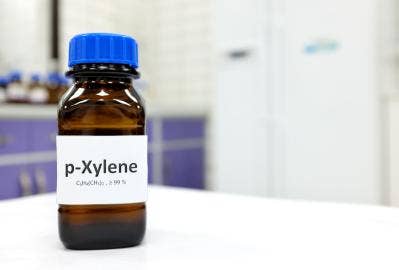






Xylenes Safety & Hazards
Xylenes are flammable aromatic hydrocarbons widely used as industrial solvents, and they carry a Flammable Liquid Category 3 classification alongside acute toxicity, skin, and eye irritation hazards. Handling xylenes safely requires attention to ignition sources, proper personal protective equipment, and adequate ventilation, since both the liquid and its vapors present real risks in confined or poorly ventilated spaces.
The primary concerns for anyone working with xylenes are inhalation of vapors, skin and eye contact, and the aspiration hazard that comes with accidental ingestion. Production staff, laboratory personnel, and safety officers all need a working knowledge of these risks, along with the correct first aid response for each exposure route. Xylenes are also subject to OSHA exposure limits and DOT transportation rules, which shape how the chemical is stored, labeled, and shipped.


In this article, we'll explore:
-
Chemical Hazards Overview
-
Exposure Risks & Health Effects
-
First Aid Measures
-
Handling & Storage Precautions
-
Spill & Leak Procedures
-
Fire & Explosion Hazards
-
Regulatory & Compliance Information
Chemical Hazards Overview
Xylenes present a combination of flammability and toxicity hazards that place them in several GHS hazard categories at once. The GHS classification includes Flammable Liquid Category 3, Acute Toxicity Category 4 for both dermal and inhalation exposure, Skin Irritation Category 2, Serious Eye Damage/Irritation Category 2A, and Aspiration Toxicity Category 1. These classifications reflect a chemical that is dangerous to inhale, absorb through the skin, or swallow, and one that ignites readily under the right conditions.
-
GHS pictograms: GHS02 (Flame), GHS07 (Exclamation Mark), GHS08 (Health Hazard)
-
NFPA rating: Health 2, Flammability 3, Reactivity 0
-
Primary risks: inhalation of vapors, skin contact, eye contact, and ingestion, with aspiration hazard if swallowed
Exposure Risks & Health Effects
Inhalation Risks
Xylenes have a vapor pressure of roughly 22 mmHg at 20°C, meaning they evaporate readily at room temperature and can build up in enclosed or poorly ventilated areas. Breathing in xylene vapor causes respiratory tract irritation, headache, and dizziness, and at higher concentrations, it can produce central nervous system depression. Symptoms typically appear during or shortly after exposure and improve once the person moves to fresh air, though prolonged high-level exposure can lead to more serious effects.
Skin Contact Risks
Direct skin contact with xylenes irritates, along with defatting, cracking, and dryness of the skin with repeated exposure. The liquid and vapor can be absorbed through the skin, but this absorption is slow, and dermal exposure is not considered the primary route of concern compared to inhalation. Even so, repeated or prolonged contact without proper gloves can lead to a cycle of irritation and skin barrier damage
Eye Contact Risks
Xylenes cause serious eye irritation on contact, and animal studies have documented transient superficial injury to the eye following exposure. Symptoms include redness, tearing, and discomfort, and while permanent damage is not typically expected from brief contact, prompt flushing is still necessary to limit the severity of the reaction.
Ingestion Risks
The oral LD50 for xylenes in rats is 4,300 mg/kg, placing the chemical in a moderate range of acute oral toxicity. The greater concern with ingestion is aspiration: if xylene enters the lungs during swallowing or vomiting, it can cause chemical pneumonitis and lung damage. Ingestion can also produce central nervous system depression and irritation of the digestive tract.
Chronic Effects
Xylenes are classified by IARC as Group 3, meaning they are not classifiable as to their carcinogenicity to humans, and ACGIH assigns them an A4 rating for the same reason. Chronic or repeated exposure has been associated with dermatitis from skin defatting, along with reported liver and kidney effects in cases of significant occupational overexposure. These chronic risks reinforce the importance of consistent PPE use and exposure monitoring in settings where xylenes are handled regularly.
First Aid Procedures
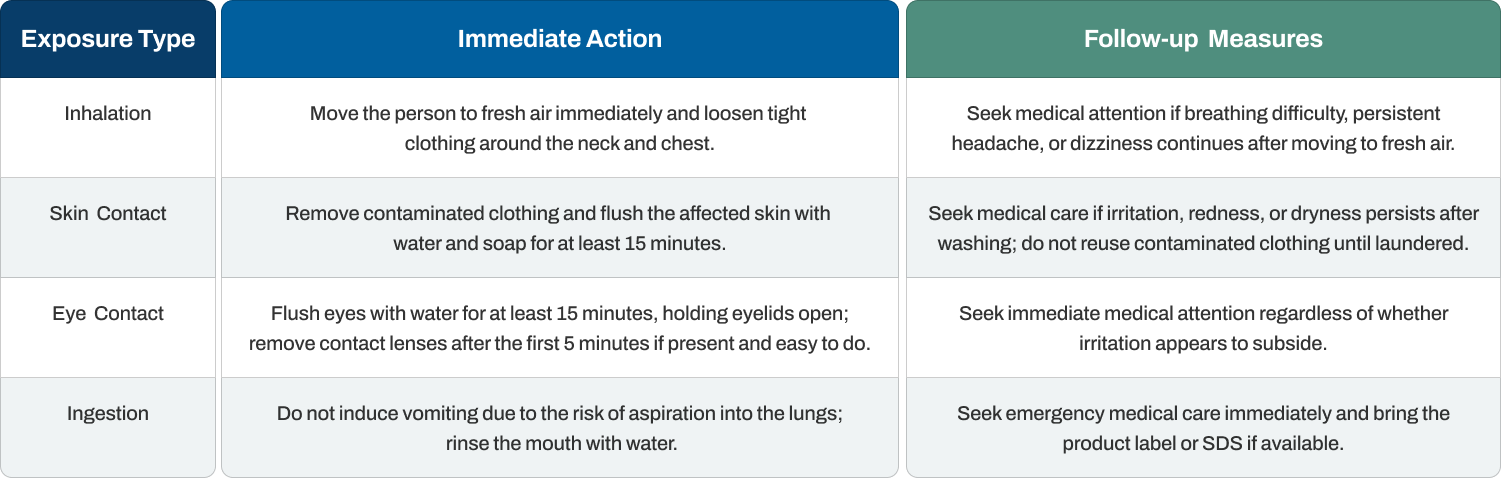
Across all exposure routes, anyone providing first aid should have quick access to the safety data sheet so responding medical personnel know exactly what they're treating. Time matters most with eye and inhalation exposure, so flushing and moving to fresh air should happen without delay rather than waiting to assess severity first.
Handling & Storage Precautions
Safe handling of xylenes starts with the right protective equipment and a workspace designed to keep vapors from accumulating. Chemical-resistant gloves and eye protection are required whenever the liquid is transferred or used, and adequate ventilation is necessary to keep airborne concentrations low. Because xylenes are flammable, all ignition sources need to be kept well away, and explosion-proof equipment should be used in any area where vapors could concentrate.
Storage conditions matter just as much as handling practices. Xylenes should be kept in tightly closed containers in a cool, well-ventilated area, away from heat sources and direct sunlight that could raise container temperatures closer to the flash point.
Xylenes are incompatible with strong oxidizers, and the two should never be stored or handled together.
Spill & Leak Procedures
Responding to a xylene spill or leak starts with eliminating any nearby ignition sources, since vapors from even a modest spill can travel and reach a spark or flame. Non-essential personnel should be evacuated from the area, and anyone responding to the spill needs appropriate PPE along with respiratory protection if ventilation is limited.
-
Remove all ignition sources from the area
-
Evacuate non-essential personnel
-
Wear PPE and respiratory protection appropriate to the spill size
Once the area is secured, absorb the spilled material with an inert absorbent such as sand or vermiculite, and ventilate the space to clear residual vapors. Care should be taken to prevent the spill from entering floor drains or nearby waterways.
Disposal of spilled xylenes and contaminated absorbent material must follow hazardous waste protocols, since xylenes are listed as RCRA hazardous waste under code U239. Waste should go to a licensed disposal facility rather than standard trash or wastewater systems.
Fire & Explosion Hazards
Xylenes have a flash point of approximately 25 to 29°C (77 to 84°F) in closed cup testing, which means they can form an ignitable vapor-air mixture at or near typical room temperature. The autoignition temperature ranges from about 463 to 528°C (867 to 982°F) depending on isomer, and the flammable range runs from a lower explosive limit of 0.9 to 1.1 percent to an upper explosive limit of 7.0 percent. Vapors are heavier than air and can travel along the ground to a distant ignition source before flashing back to the original spill.
-
Dry chemical, foam, or carbon dioxide extinguishers are appropriate for xylene fires
-
Water spray can be used to cool fire-exposed containers, but a straight water stream may spread the fire rather than control it
Firefighters responding to a xylene fire need full protective clothing and self-contained breathing apparatus, since combustion can produce hazardous byproducts and the flammable vapor cloud can flash back toward its source. The combination of low flash point and heavier-than-air vapors makes flashback one of the more serious risks in any fire scenario involving this chemical.
Regulatory Information & Compliance
OSHA Regulations
OSHA sets a permissible exposure limit (PEL) of 100 ppm (435 mg/m³) as an 8-hour time-weighted average for xylenes, established under 29 CFR 1910.1000. Employers handling xylenes regularly should monitor workplace air concentrations to confirm exposures stay within this limit.
EPA & Environmental Impact
Xylenes are listed as RCRA hazardous waste under code U239, and disposal of unused product or contaminated materials must follow hazardous waste handling requirements. The CERCLA reportable quantity for xylenes is 100 pounds (45.4 kg), and the chemical is considered toxic to aquatic organisms, which is a relevant consideration for spill containment near waterways.
DOT Transportation Regulations
For transport, xylenes are classified under DOT Hazard Class 3 with the UN number UN1307 and the proper shipping name "Xylenes." Packing Group III applies to most commercial xylene shipments, though Packing Group II can apply depending on the specific flash point of a given grade or blend, so shippers should confirm the packing group against the product's actual SDS before shipment.
Technical Documents & Resources
-
Safety Data Sheets are available for all grades and concentrations of xylenes, covering hazard identification, safe handling procedures, and first aid guidance.
-
Certificates of Analysis are available upon request and verify product purity and compliance with applicable grade standards.
Final Note
Xylenes combine flammability with meaningful health hazards, which makes disciplined handling practices, the right PPE, and proper storage conditions essential wherever this solvent is used. Understanding the correct first aid response for each exposure route, along with the regulatory requirements that govern storage and shipment, helps keep both people and facilities safe. Lab Alley provides SDS documentation and Certificates of Analysis for every grade of xylenes we carry, so customers have the information they need to handle this chemical safely from the moment it arrives.
Explore our Resource Library for more information.
Our Customer Care team is also available for more information and documentation, including chemical Safety Data Sheets.
Need Xylenes You Can Trust?
If you are looking for high-quality xylenes for your lab, product line, or research facility, be sure to visit our store to explore our trusted selection and request a quote.
As your trusted partner in chemical supply, Lab Alley is always striving to meet the growing demands of our customers. We want you to be able to access all of your chemical needs in one place, along with streamlined online ordering and fast shipping.
Due to popular demand from our valued clientele, Lab Alley's xylenes is available in a range of purities and packaging options to suit various commercial, laboratory, and personal needs.