





Shelf Life & Expiration of Xylenes
Xylenes are highly stable aromatic hydrocarbons that do not have a true expiration date when stored properly in sealed containers. Unlike chemicals prone to self-decomposition, xylenes remain chemically unchanged under normal storage conditions, meaning their usability is governed almost entirely by handling practices rather than an internal degradation clock.
Because xylenes are volatile and flammable, the factors that most affect long-term usability are evaporation, container integrity, and exposure to heat, light, or ignition sources. Loss of tightly sealed packaging allows solvent to evaporate and concentration to drift, while elevated temperatures increase vapor pressure and fire risk.
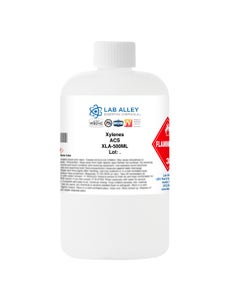
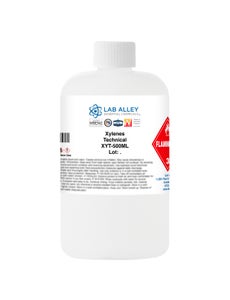
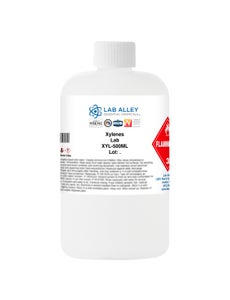
Purity level and packaging quality also influence how long xylenes remain suitable for sensitive applications. Reagent-grade material used in histology or analytical work is more affected by trace moisture or air exposure than technical-grade xylenes used for general solvent purposes.


This article covers:
- How Long Does Xylenes Last?
- Signs That Xylenes Has Expired
- What to Do If Xylenes Has Expired
- Proper Storage Extends Shelf Life
How Long Does Xylenes Last?
Chemical Stability
Xylenes have an effectively indefinite shelf life when kept in sealed containers under normal conditions. The compound does not undergo significant self-degradation, and no meaningful breakdown products form over time in the absence of contamination or container failure. This stability holds for all three isomers (ortho-, meta-, and para-xylene) that make up commercial xylene blends.
Purity & Packaging
Higher-purity and reagent-grade xylenes are more sensitive to trace moisture or air exposure than technical grades, since even small amounts of contamination can affect results in analytical or histological applications. Xylenes should be stored in tightly sealed metal containers, such as mild steel or stainless steel, or in compatible glass or HDPE packaging. Container material compatibility matters more for maintaining purity than any inherent instability in the chemical itself.
Storage Conditions
Xylenes should be kept in a cool, dry, well-ventilated area away from heat sources and ignition points. Direct sunlight and elevated ambient temperatures accelerate evaporation and raise flammability risk by increasing vapor concentration in the headspace. A dedicated flammables storage area with stable temperatures offers the best conditions for maintaining product quality over extended periods.


Signs That Glycerin Has Expired or Degraded
-
Color Change: Yellowing or darkening from the normal colorless appearance may signal oxidation or contamination and warrants inspection before use.
-
Reduced Effectiveness: A noticeable drop in solvency strength during cleaning, thinning, or laboratory applications typically results from evaporation-driven concentration loss or contamination rather than true chemical expiration.
What to Do If Xylenes Is Expired
Check Manufacturer Guidelines
Review the supplier's Certificate of Analysis or Safety Data Sheet for any retest or quality recommendations, since xylenes generally do not carry a strict expiration date. If the material has been stored correctly and shows no visible signs of contamination, it can typically continue to be used based on a visual and performance check rather than a fixed cutoff date.
Follow Proper Disposal Procedures
Xylenes that show discoloration, contamination, or unreliable performance should be disposed of as flammable liquid waste in accordance with applicable hazardous waste regulations. Never pour xylenes down drains, as the material poses both fire hazards and toxicity risks to aquatic life. Work with a licensed hazardous waste handler to ensure proper classification and disposal documentation.
Replace with Fresh Stock
Fresh, unopened xylenes ensures consistent solvency strength and purity for sensitive applications such as histology, resin formulation, or analytical testing. Where performance consistency is critical, replacing questionable stock is more cost-effective than risking failed results or contaminated samples.
Proper Storage Extends Shelf Life
-
Container Requirements: Use tightly sealed containers made of compatible materials, including mild steel, stainless steel, or approved glass or HDPE, and keep containers closed whenever not in active use.
-
Temperature Control: Store xylenes in a cool environment away from heat sources, since elevated temperatures increase vapor pressure and raise fire risk.
-
Light & Heat Protection: Avoid prolonged exposure to direct sunlight and nearby heat sources to reduce flammability hazards and protect product quality.
-
Evaporation Prevention: Keep containers sealed at all times to prevent solvent loss and the concentration drift that follows repeated evaporation.
-
Fire Safety: Store away from ignition sources, sparks, and open flames, and use grounding and bonding equipment during transfer to prevent static discharge in flammable liquid storage areas.
Conclusion
Xylenes present a strong stability profile, with no meaningful chemical breakdown under normal storage conditions. The primary risks to usability come from evaporation, container failure, and improper handling near heat or ignition sources rather than any inherent instability in the chemical itself.
Maintaining sealed, temperature-controlled storage in compatible containers preserves both the safety and performance of xylenes over time. When discoloration or reduced effectiveness appears, prompt inspection and, if necessary, replacement with fresh stock helps ensure consistent results in sensitive applications.
For more detailed guidance, explore our Resource Library for comprehensive storage and handling information.
Our Customer Care team is also available for more information and documentation, including chemical Safety Data Sheets.
Need Glycerin You Can Trust?
If you are looking for high-quality glycerin for your lab, product line, or research facility, be sure to visit our store to explore our trusted selection and request a quote.
As your trusted partner in chemical supply, Lab Alley is always striving to meet the growing demands of our customers. We want you to be able to access all of your chemical needs in one place, along with streamlined online ordering and fast shipping.
Due to popular demand from our valued clientele, Lab Alley's glycerin is available in a range of purities and packaging options to suit various commercial, laboratory, and personal needs.