

• On Budget, On Time, Every Time : Essential Chemicals for a Better World• WOMAN-OWNED SMALL BUSINESS (WOSB)• OVER 256K+ HAPPY CUSTOMERS• TRUSTED BY NASA, TESLA, SPACEX, BOEING & MORE• HIGH PURITY, NATURAL AND ESSENTIAL CHEMICALS• SERVING 16 INDUSTRIES• PROUDLY PARTNERED WITH ECODRIVE• COA & SDS AVAILABLE ONLINE• QUALITY LAB SUPPLIES & EQUIPMENT• CERTIFIED QUALITY: ISO 9001, KOSHER, ORGANIC & MORE• GSA CONTRACT HOLDER | GOVERNMENT APPROVED• FAST NATIONWIDE DELIVERY• On Budget, On Time, Every Time : Essential Chemicals for a Better World• WOMAN-OWNED SMALL BUSINESS (WOSB)• TRUSTED BY NASA, TESLA, SPACEX, BOEING & MORE• OVER 256K+ HAPPY CUSTOMERS• HIGH PURITY, NATURAL AND ESSENTIAL CHEMICALS• SERVING 16 INDUSTRIES• PROUDLY PARTNERED WITH ECODRIVE• COA & SDS AVAILABLE• QUALITY LAB SUPPLIES & EQUIPMENT• CERTIFIED QUALITY: ISO 9001, KOSHER, ORGANIC & MORE• GSA CONTRACT HOLDER | GOVERNMENT APPROVED• FAST NATIONWIDE DELIVERY

We are now ISO 9001 Certified

Get 5% OFF on your first order |  Use Code: WELCOME5

Specialty Chemicals: USP, FCC & Lab Grade | Lab Alley

Specialty Chemicals

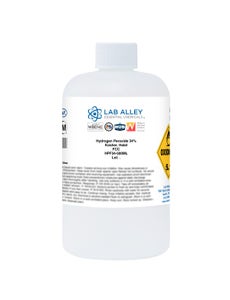
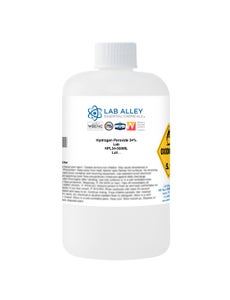
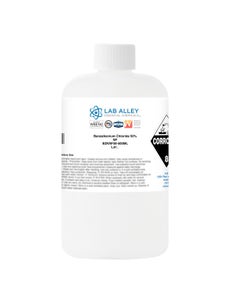
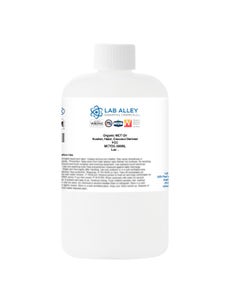
Buy hydrogen peroxide, caffeine, benzalkonium chloride, polysorbates and more online, in Lab, USP, FCC and ACS grades, from small bottles to 270 gallon totes.

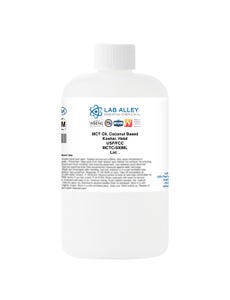
You know what you need, the grade it has to be, and the date it has to arrive. Specialty Chemicals at Lab Alley puts 168 products from more than 30 chemical types on one page, so you can compare grades and sizes, see the price, and order online without waiting on a quote. Hydrogen peroxide runs from 3% to 34%, in Lab, Food, ACS and Semiconductor/Electronic Grade. Caffeine, mannitol and urea come as USP powders. You'll also find benzalkonium chloride, polysorbates, MCT oil, castor oil, activated carbon, dextrose, methylene blue, formaldehyde and water in USP, HPLC and LC/MS grades. Some products are Food Grade, many are Lab Grade, and a few carry Kosher or Halal certification. The product name always tells you which. Whether you're formulating a food product, compounding a pharmaceutical, staining slides or running a plant, the filters on this page get you to the right size and grade in a few clicks. Prices show on the page, so you can compare sizes before you add anything to your cart. No salesperson stands between you and checkout.

Plenty of suppliers make you chase a rep for pricing, then chase paperwork once the order lands. We'd rather you didn't have to. Every product page shows its sizes and price, and the Safety Data Sheet and Certificate of Analysis are online when your quality team asks for them. Sizes run from small bottles to 55 gallon drums and 270 gallon totes, so the same page works for a teaching lab and a production line. If you reorder on a schedule, 74 of these products are available on Autoship. Liquid mercury has address rules, and the FAQ below explains them so checkout holds no surprises. If you need a size or volume you don't see, request a quote and we'll build it around your order.

256,000+ customers served
99.5% of orders ship in 1–2 business days
98.9% inventory accuracy
SDS + COA available online, every product
Set Descending Direction
Page
per page

About Specialty Chemicals

Specialty Chemicals isn't one chemical, so there isn't one set of properties. The products fall into a few families, and each family behaves its own way. Knowing which one you're buying makes storage, handling and ordering a lot easier.

Liquids and solutions. Hydrogen peroxide, benzalkonium chloride 50%, methylene blue and formaldehyde are sold as ready to use liquids. Hydrogen peroxide slowly breaks down into water and oxygen, and contamination speeds that up, so keep it in a clean, closed container in a cool spot. Higher strengths like 30% and 34% need more care than a 3% solution.

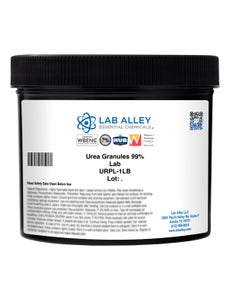
Powders and crystals. Caffeine, mannitol, urea, dextrose, sucrose, camphor and thymol are solids. Keep them dry and tightly closed, since many powders pull moisture from the air. Activated carbon works by adsorbing, so an open container will take in odors and vapors from the room around it.

Oils, waxes and surfactants. MCT oil, castor oil, coconut oil, polysorbates and Triton X surfactants help blend, carry or emulsify other ingredients.

Liquid mercury. It's a very dense metal that stays liquid at room temperature. It needs a sealed container, careful handling and the address rules covered in the FAQ.

Every product page links its Safety Data Sheet. Read it before you open anything new.


COMMON APPLICATIONS

Food and beverage. Food grade hydrogen peroxide, polysorbate 80, MCT oil, dextrose and caffeine, many with Kosher and Halal certification, for processing, formulating and sanitizing.

Pharmaceutical and nutraceutical. USP and NF grade mannitol, urea, caffeine, benzalkonium chloride and purified water for compounding and formulation.

Personal care and cosmetics. Castor oil, witch hazel, talcum powder and polysorbates for creams, toners and powders.

Laboratories and schools. Methylene blue and crystal violet for staining, silica gel for drying and chromatography, Ferroxyl test solution for detecting free iron on stainless steel, and HPLC and LC/MS grade water for analysis.

Industrial and manufacturing. Activated carbon for filtration, precipitated sulfur and rosin as process ingredients, and sodium peroxide and 30% hydrogen peroxide for oxidizing and bleaching. Semiconductor/Electronic Grade hydrogen peroxide serves electronics work.


GRADES EXPLAINED

Lab Grade. Fine for routine lab work and education. It isn't meant for food, drug or medicinal use.

USP Grade. Meets standards set by the United States Pharmacopeia, the pharmaceutical benchmark.

NF Grade. Follows the National Formulary and is typically comparable to USP, though requirements can vary by compound, so check the current compendium.

FCC Food Grade. Meets the Food Chemicals Codex, the reference for ingredients added to food and for chemicals that touch food surfaces.

ACS Reagent Grade. Meets or exceeds American Chemical Society specifications, backed by a certificate of analysis.

Water grades. Water, HPLC Grade and Water, LC/MS Grade are made for chromatography and mass spectrometry, where trace impurities show up in your results.

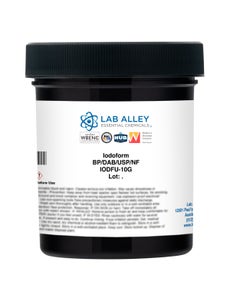
A few products are graded for a specific industry, like Hydrogen Peroxide 30% Solution, Semiconductor/Electronic Grade and Iodoform, BP/DAB/USP/NF Grade. When two grades of the same chemical are listed, compare the COA and not just the price.


TYPES & GRADES AT A GLANCE

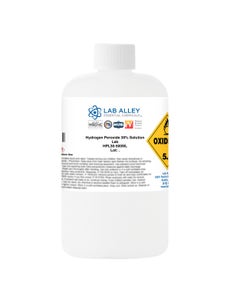
3% to 34% in Lab, Food, ACS and Semiconductor/Electronic Grade.
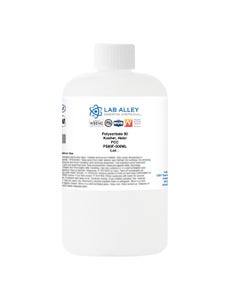
Polysorbate 20 and 80 emulsifiers, including Food Grade and RSPO MB versions.
a 50% solution in NF Grade for disinfectant and preservative formulas.
USP/FCC powder for food, beverage and supplement formulating.
coconut based, palm derived and organic versions.
powder and granular, including Food Grade.
0.1% and 1% reagent solutions for staining.
USP, HPLC and LC/MS grade water, plus Deionized Water Lab Grade.
surfactants for lab and formulation work.
USP, ACS and Lab Grade powder and granules.
Lab Grade and ACS Grade. Address rules apply.
pharmaceutical standards, for compounding and formulation.
reagent specifications backed by a certificate of analysis.
routine lab work and education.
FCC standards for food and beverage use.

WHY BUY FROM LAB ALLEY

  • Trusted by 256,000+ customers. Labs, schools and production teams keep coming back for Chemicals & Reagents, so you're ordering from a supplier that knows how to get this done.

  • 99.5% of orders ship in 1 to 2 business days. Your production schedule shouldn't wait on a truck.

  • 98.9% inventory accuracy. The size you see is the size you get, with no backorder surprise after checkout.

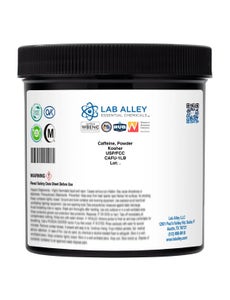
Certified quality. Lab Alley is ISO 9001 certified for quality management. In this category, Kosher and Halal certification applies only to select products, including Caffeine Powder, USP/FCC/Food Grade, Kosher, Halal, Hydrogen Peroxide 34% Food Grade, Kosher, Halal, Polysorbate 80, Food Grade, Kosher, Halal and Dextrose, Anhydrous, USP Grade, Kosher, Halal (all Kosher and Halal), and Deionized Water Lab Grade, Kosher (Kosher). Polysorbate 20, Derived from Palm, RSPO MB, Kosher, Halal also carries RSPO certification. Check the product name before you order.

Frequently Asked Questions

What's the difference between Lab Grade, USP and FCC Food Grade specialty chemicals?
The grade tells you what the chemical is cleared to do. Lab Grade suits routine lab work and education, but it isn't meant for food, drug or medicinal use. USP Grade meets United States Pharmacopeia standards, the pharmaceutical benchmark. FCC Food Grade meets the Food Chemicals Codex and fits food and beverage work. Pick the grade your end use or auditor requires, then check the COA on the product page.
What do the percentages on hydrogen peroxide mean?
The percentage is the strength of the solution. Our hydrogen peroxide runs from 3% and 5% up to 34%, and the rest of the liquid is mostly water. A higher number means a stronger oxidizer, so it needs more careful handling and storage. Match the strength to your method, then pick the grade, such as Lab, Food, ACS or Semiconductor/Electronic. Read the SDS before you open a new strength.
Do I need a permit or special paperwork to buy specialty chemicals?
Lab Alley doesn't ask you for a permit to buy the products on this page. Liquid mercury has address rules, covered below, and some items may show a notice at checkout. If your own quality or compliance team wants records, the Safety Data Sheet and Certificate of Analysis are available online. Need a certificate for an audit? Contact Customer Care before you order.
Which specialty chemicals are Kosher, Halal or RSPO certified?
Only select products. Kosher and Halal apply to items such as the Hydrogen Peroxide Food Grade solutions, Caffeine Powder USP/FCC, Polysorbate 80 Food Grade and the Dextrose listings. Polysorbate 20 Derived from Palm carries RSPO MB certification. Lab Grade hydrogen peroxide and the mercury listings don't show these. Check the product name, since certifications appear in it, and ask for the certificate if your auditor needs one.
Can specialty chemicals ship to a home address?
Liquid mercury can't. It ships only to businesses, schools and laboratories, and if you use a residential address, the item is removed from your order before shipping. Orders over 1 lb must go to a commercial address, lab or school. Apartments and parcel stores are off limits, and no mercury ships to Canada. For other products, check the product page and checkout notes.
Which grade should I choose for food, pharmaceutical or lab work?
For food and beverage, start with FCC Food Grade, and look for Kosher or Halal in the name if you need it. For pharmaceutical or compounding work, choose USP or NF Grade. For staining, teaching and routine lab tests, Lab or Reagent Grade usually does the job, while HPLC and LC/MS water suits chromatography and mass spectrometry. When your method names a grade, follow it.
How is hydrogen peroxide different from sodium hypochlorite for disinfecting?
Both are oxidizers, but they behave differently. Hydrogen peroxide breaks down into water and oxygen and leaves no chlorine behind. Sodium hypochlorite is liquid bleach, and it should never be mixed with acids or ammonia, because that releases toxic gas. If your process can't tolerate chlorine, peroxide is the usual choice. Check your sanitation protocol for the strength and contact time it requires.
Can I buy specialty chemicals in drums or totes?
Yes. Many products on this page come in 55 gallon drums, and a few come in 270 and 275 gallon totes. 5 gallon and 20 liter sizes are common too. Use the size filter to see what's available for your chemical. If you need a larger volume, a custom fill or repeat shipments, request a quote or visit Bulk & Custom Chemicals.
What's the difference between anhydrous and monohydrate dextrose?
Anhydrous dextrose has no water in its crystal structure. Monohydrate carries one water molecule per unit of dextrose, so a gram of monohydrate delivers a little less dextrose than a gram of anhydrous. If you swap one for the other, adjust the weight so you end up with the same amount of active dextrose. Both forms are sold here in Kosher and Halal versions, in USP and FCC grades.

Guides & Resources

Impress Your Students with Elephant Toothpaste
Discover how the elephant toothpaste experiment engages students with a fun, foamy reaction while teaching key science concepts in the classroom.
Read article →
Benzalkonium Chloride Overview
Discover the key properties and uses of benzalkonium chloride. Understand how this organic solvent supports food, cosmetic, and pharmaceutical production with safe handling practices.
Read article →
Chemical Grades
Explore the various chemical grades and their applications in different industries. Understand the significance of purity standards, including ACS, USP, Lab Grade and more.
Read article →

Industries That Use Specialty Chemicals

Food & Beverage
Explore FCC and USP grade chemicals for food and beverage including citric acid, sodium benzoate, peracetic acid, emulsifiers and food safe sanitizers.
Learn more →
Life Sciences & Biotech
Explore high-purity chemicals for life sciences and biotech research including solvents, reagents, acids, bases, enzymes, buffers and molecular biology grade solutions.
Learn more →
Pharmaceuticals & Nutraceuticals
Explore USP and NF grade chemicals for pharma and nutraceuticals including solvents, excipients, propylene glycol, glycerin and HPLC reagents.
Learn more →
Personal Care & Cosmetics
Explore high-purity chemicals for personal care and cosmetics including USP glycerin, SDA alcohols, witch hazel, emulsifiers and NF grade humectants.
Learn more →
R&D/Laboratory
Explore ACS, HPLC and LC/MS grade chemicals for R&D and laboratory use including solvents, acids, bases, buffers and standardized solutions for research and QC.
Learn more →