

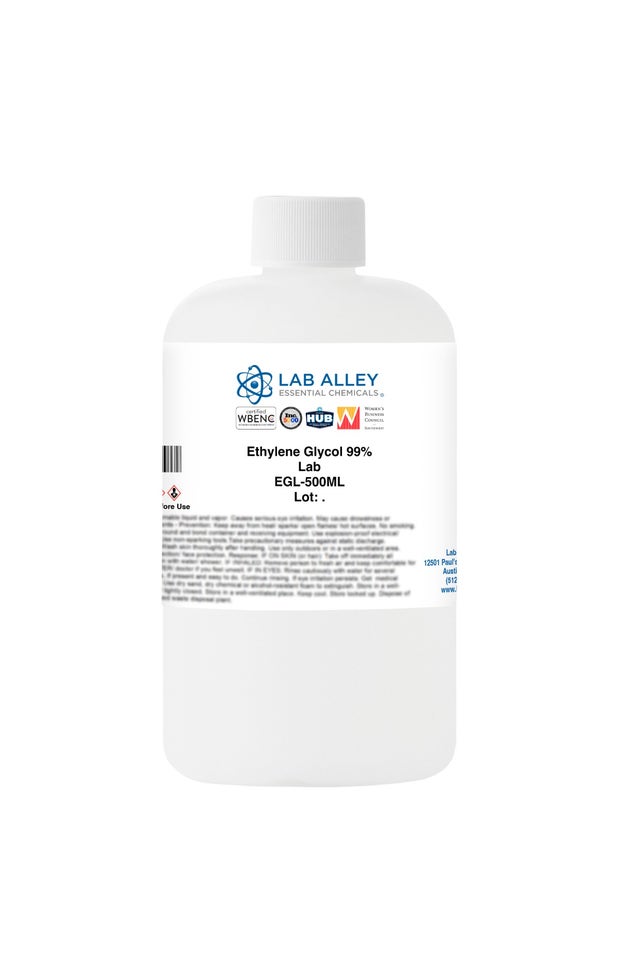

The simplest member of the glycol family of organic molecules is ethylene glycol, commonly known as ethane-1,2-diol. An alcohol having two hydroxyl groups on adjacent carbon atoms is known as a glycol (1,2-diol). It appears as a clear, odorless, and slightly viscous liquid with sweet taste. Ethylene Glycol, Lab Grade used in laboratories is not acceptable for use in food, pharmaceuticals, or medication. Lab grade is also known as the Laboratory Reagent (LR) and the Chemically Pure (CP). In educational contexts, our Lab Grade Ethylene Glycol is frequently employed and an excellent for regular laboratory uses, but it is not suitable for food and medicines.
Ethylene Glycol 99% Lab Grade is a clear, odorless, slightly viscous liquid. It’s the simplest member of the glycol family, also known as ethane-1,2-diol, and it’s an alcohol with two hydroxyl groups on neighboring carbon atoms. This listing shows CAS 107-21-1, an assay of 99.00%, Lab Grade and liquid form. Lab Grade is also called Laboratory Reagent (LR) or Chemically Pure (CP), and it fits routine lab work and teaching. It isn’t meant for food, pharmaceutical or medicine use. The paperwork is on this page. The Product Manuals section lists the Safety Data Sheet, Technical Data Sheet, and statements for allergens, BPA, irradiation, parabens, PFAS/PFOS, phthalates and TSE/BSE. Certificates of Analysis are listed by lot number.
People use ethylene glycol in antifreeze, printing inks, hydraulic fluids and as a lab reagent. Whatever you’re running, the same problems tend to show up. You need to know what’s in the bottle, you need the paperwork before it arrives, and you need the right size without overbuying. That’s where we come in. Lab Alley posts the SDS, technical data sheet and Certificates of Analysis right on this page, and sizes run from 500ml bottles up to 310 gallon and pallet quantities. Here’s the simple plan. Pick your size, set up Autoship if you reorder, or request a quote for bigger volumes. We’ll keep it on budget, on time, every time. Ready to order or need a custom size? Request a quote here.
-
Antifreeze
-
Printing inks
-
Laboratory reagent
-
Hydraulic fluids
-
Polyester manufacturing
-
Synthetic wax production
-
Routine lab and teaching use
-
Q: What is Ethylene Glycol 99% Lab Grade used for?
A: It’s used in antifreeze, printing inks, hydraulic fluids and as a lab reagent. It also shows up in polyester manufacturing and synthetic wax production.Q: What does Lab Grade mean, and is it suitable for lab work?
A: Lab Grade is also called Laboratory Reagent (LR) or Chemically Pure (CP). It suits regular laboratory and teaching use, but it isn’t meant for food, pharmaceutical or medicine use.Q: What sizes are available, and does it ship as hazmat?
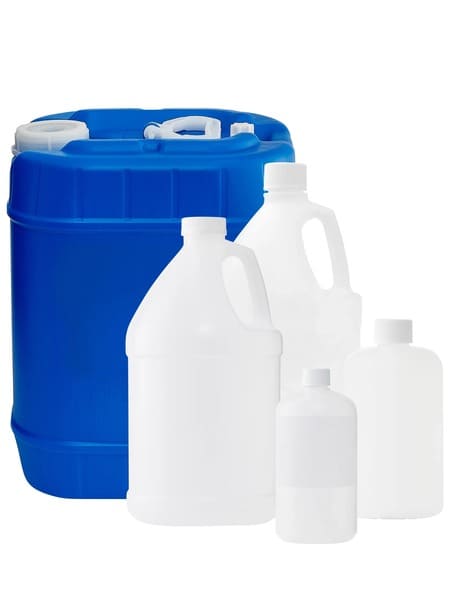
A: Sizes include 500ml, 1L, 1Gal, 4L, 5Gal, 20L, 55Gal and 310Gal, plus cases and pallets. The Safety and Shipping tab doesn’t list a DOT shipping line, so check the SDS or contact us for handling details before you order.Q: How do I get the SDS and Certificate of Analysis?
A: Open the Product Manuals section on this page. The Safety Data Sheet and Technical Data Sheet are listed there, and Certificates of Analysis are listed by lot number. If you can’t find what you need, contact us.Q: How should it be stored?
A: Follow the storage guidance in the Safety Data Sheet for the container size you order. If you have questions, contact us before it arrives.Q: What are the CAS number and assay?
A: The CAS number is 107-21-1 and the assay is 99.00%. It’s supplied as a liquid.Q: Does ethylene glycol have another name?
A: Yes. It’s commonly known as ethane-1,2-diol, and it’s the simplest member of the glycol family.Q: Can I set up Autoship for this product?
A: Yes, Autoship is available. It’s a handy option if you reorder the same size on a regular basis.
Product Information
| CAS | 107-21-1 |
|---|---|
| Synonyms | Ethane-1,2-diol, 1,2-ethanediol, Monoethylene glycol, 1,2-Dihydroxyethane, 2-hydroxyethanol, Glycol alcohol, Ethylene alcohol, Ethylene dihydrate |
| Assay | 99.00% |
| PubChem ID | 174 |
| Grade | Lab Grade |
| Color | 10 Max (APHA) |
| Physical form | Liquid |
| Appearance | Clear, Viscous Liquid |
| Odor | Odorless |
| pH | 5.5-7.5 50% aq. sol |
| Melting point | -13 °C / 8.6 °F |
| Boiling Point | >196 - 198 °C / 384.8 - 388.4 °F at 760 mmHg |
| Vapor pressure | 0.12 mmHg at 20 °C |
| Density | 1.113 |
| Solubility | Soluble in Water |
| Auto-ignition temperature | 413 °C / 775.4 °F |
| Molecular formula | C2H6O2 |
| Molecular weight | 62.07 |
| Acidity as Acetic Acid | 0.005% max |
| Ash Content | 0.005 max |
| Autoship Available | Yes |
| Diethylene Glycol | 0.05% max |
| Flammability or explosive lower limit | 3.2 vol% |
| Flammability or explosive upper limit | 15.3 vol% |
| Flash Point | 116 °C / 240.8 °F |
| Iron (Fe) | 0.02 ppm |
| Pillar | Essential |
| Vapor density | 2.14 (Air = 1.0) |
| Viscosity | 21 cP (20°C) |
| Water | 0.200 Max |