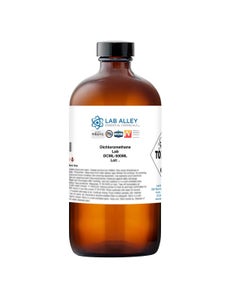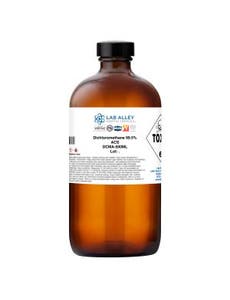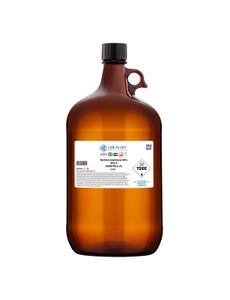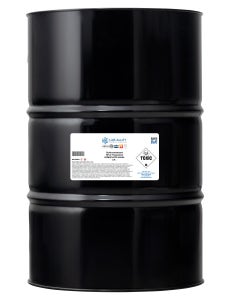






Dichloromethane (Methylene Chloride) Safety & Hazards
Dichloromethane (DCM), also known as methylene chloride, is a volatile chlorinated solvent with a boiling point of just 39.6 °C (103.3 °F). It is widely used in pharmaceutical manufacturing, laboratory extractions, adhesives, and industrial cleaning operations. DCM is classified under GHS as a suspected carcinogen, a skin and eye irritant, and a central nervous system depressant.
The chemical's primary hazards stem from its high vapor pressure, its metabolic conversion to carbon monoxide in the body, and its carcinogenicity classification. Inhalation is the dominant route of occupational exposure, but skin absorption and eye contact are also recognized risks. Laboratory personnel, production and R&D users, safety officers, and anyone working with DCM in enclosed or poorly ventilated spaces should be thoroughly familiar with its hazard profile.
Regulatory controls are extensive. OSHA has issued a substance-specific standard (29 CFR 1910.1052) with a PEL well below general industry airborne contaminant limits. DCM is also listed as an EPA Hazardous Air Pollutant, a CERCLA hazardous substance, and an RCRA hazardous waste, underscoring the need for compliant handling, storage, and disposal practices.
In this article, we'll explore:
-
Chemical Hazards Overview
-
Exposure Risks & Health Effects
-
First Aid Measures
-
Handling & Storage Precautions
-
Spill & Leak Procedures
-
Fire & Explosion Hazards
-
Regulatory & Compliance Information
-
Technical Documents & References
Chemical Hazards Overview
Dichloromethane carries a concentrated set of health hazards for a solvent that is otherwise considered only mildly flammable. Its GHS classification reflects skin and eye irritation, narcotic CNS effects, suspected carcinogenicity, and aquatic toxicity.
Hazard Classification
-
Skin irritation, Category 2 (H315)
-
Serious eye irritation, Category 2A (H319)
-
Specific target organ toxicity, single exposure, narcotic effects, Category 3 (H336)
-
Carcinogenicity, Category 2 (H351)
-
Hazardous to the aquatic environment, acute hazard, Category 3 (H402)
GHS Hazard Pictograms
-
GHS07: Exclamation mark (skin/eye irritant, narcotic effects)
-
GHS08: Health hazard (suspected carcinogen)
-
GHS09: Environmental hazard (aquatic toxicity)
NFPA Hazard Rating
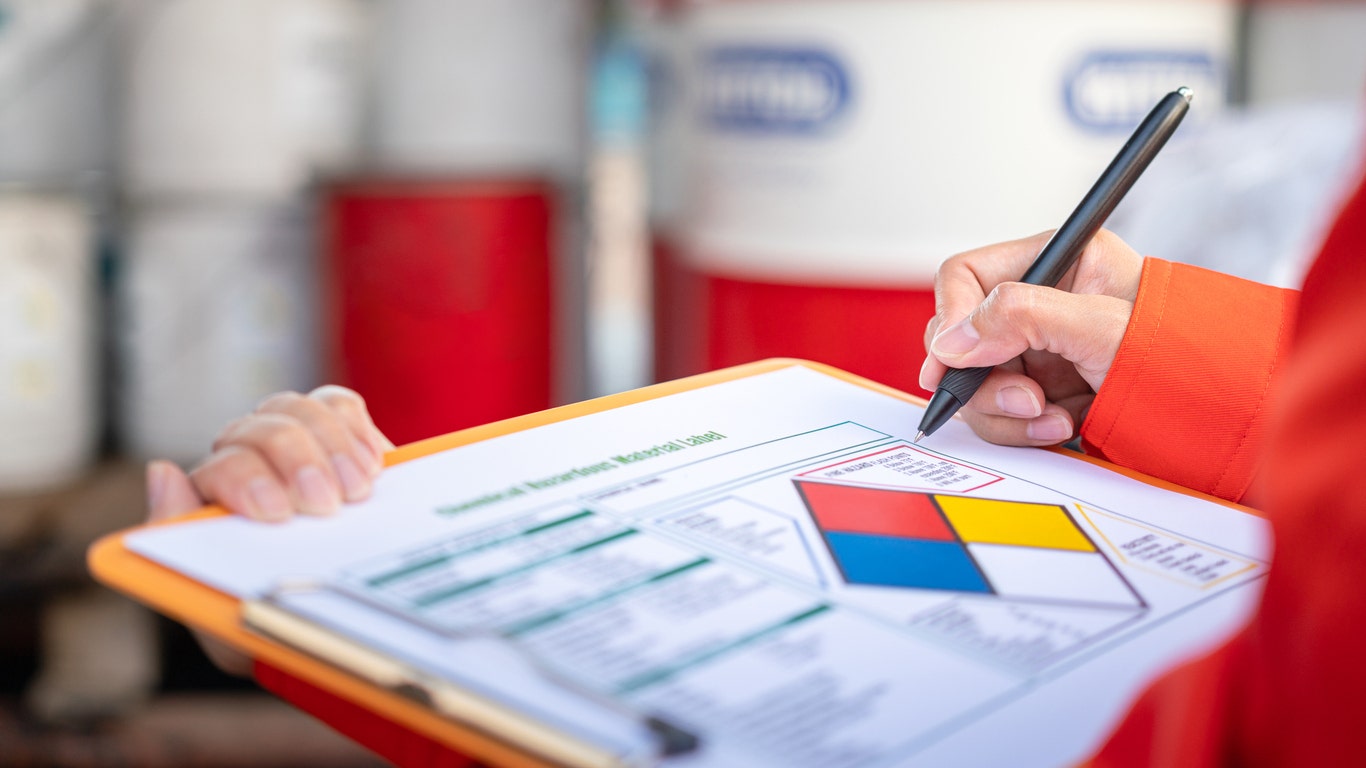
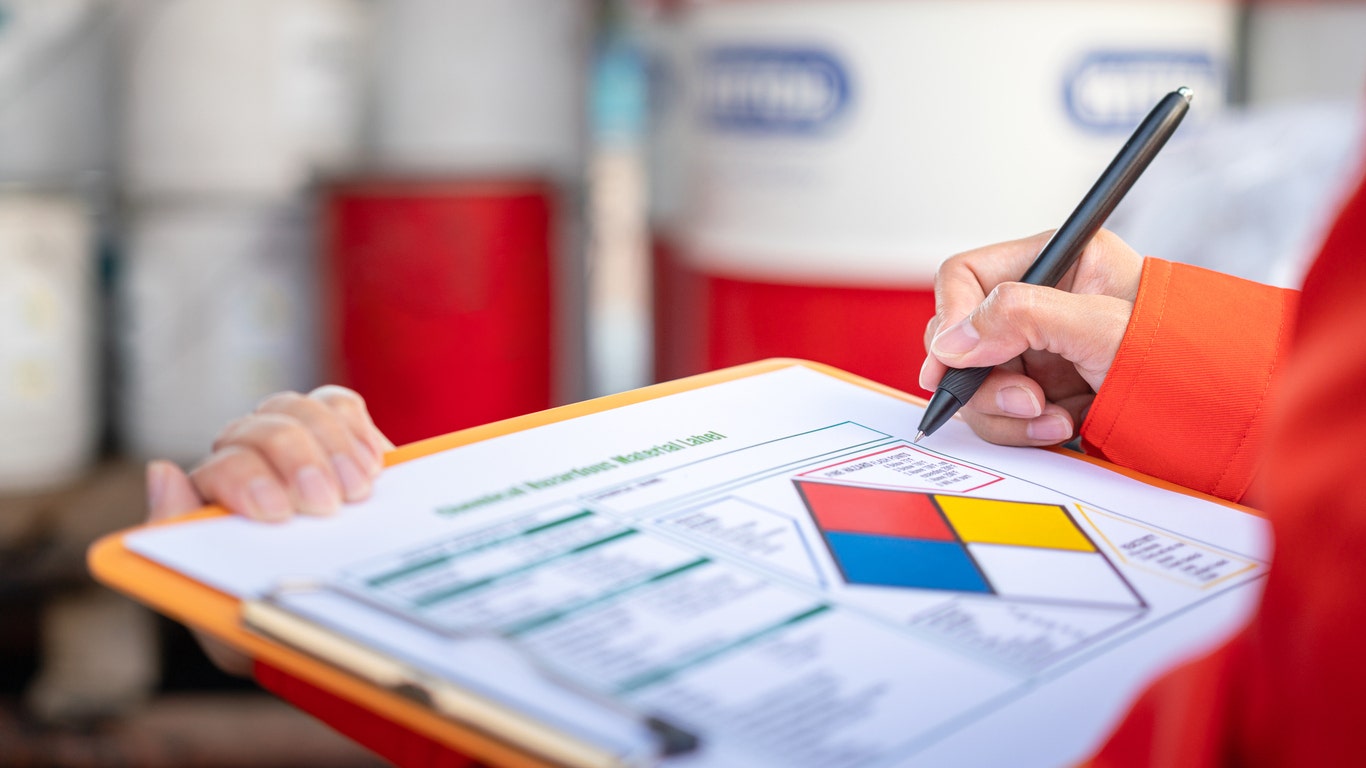
- Health: 2 / Flammability: 1 / Reactivity: 0
Primary Risks
-
Principal exposure routes: inhalation, skin contact, and eye contact; ingestion is less common but hazardous.
-
High vapor pressure (57.3 kPa at 25 °C) generates rapid vapor buildup in enclosed or poorly ventilated spaces, making inhalation the most significant occupational risk.
Exposure Risks & Health Effects
Inhalation Risks
DCM's odor threshold of 160–230 ppm substantially exceeds its OSHA PEL of 25 ppm, which means the odor does not serve as a reliable warning of unsafe exposure levels. Acute symptoms at moderate concentrations include headache, dizziness, nausea, confusion, and impaired coordination. At higher concentrations, DCM causes rapid CNS depression that can progress to loss of consciousness. Deaths have occurred in workers using the solvent in poorly ventilated confined spaces.
Skin Contact Risks
Direct contact with liquid DCM causes irritation, redness, and a burning or numbing sensation. Prolonged or repeated contact can result in skin burns and defatting of the skin surface. OSHA recognizes skin absorption as a contributing route of systemic exposure; dermal contact should therefore be prevented even when inhalation controls are in place.
Eye Contact Risks
Vapor exposure causes eye irritation; contact with liquid DCM can produce severe irritation and chemical burns. Given the chemical's volatility and low boiling point, splash risk is present whenever liquid DCM is handled in open containers. Immediate, thorough irrigation is required following any contact, and professional medical evaluation is warranted.
Ingestion Risks
The oral LD50 for DCM in rats is 1.25 g/kg. Ingestion causes gastrointestinal irritation, nausea, vomiting, and diarrhea, and may cause kidney damage. Because DCM is rapidly absorbed from the gastrointestinal tract and metabolized to carbon monoxide, even relatively small ingested quantities can elevate carboxyhemoglobin levels. Aspiration into the lungs during vomiting is an additional risk; induction of vomiting is contraindicated.
Chronic Effects
DCM is classified by IARC as Group 2B (possibly carcinogenic to humans) and by NTP as Reasonably Anticipated to Be a Human Carcinogen. OSHA also lists it as a carcinogen under its substance-specific standard. Beyond carcinogenicity, DCM is a recognized neurotoxin; repeated or prolonged exposure can damage the central nervous system and the brain.
Its metabolic conversion to carbon monoxide elevates carboxyhemoglobin in the blood and poses heightened cardiovascular risk to individuals with pre-existing heart or lung conditions. Carbon monoxide levels can continue to rise even after active exposure has ended, which has practical implications for medical monitoring following overexposure incidents.
First Aid Procedures
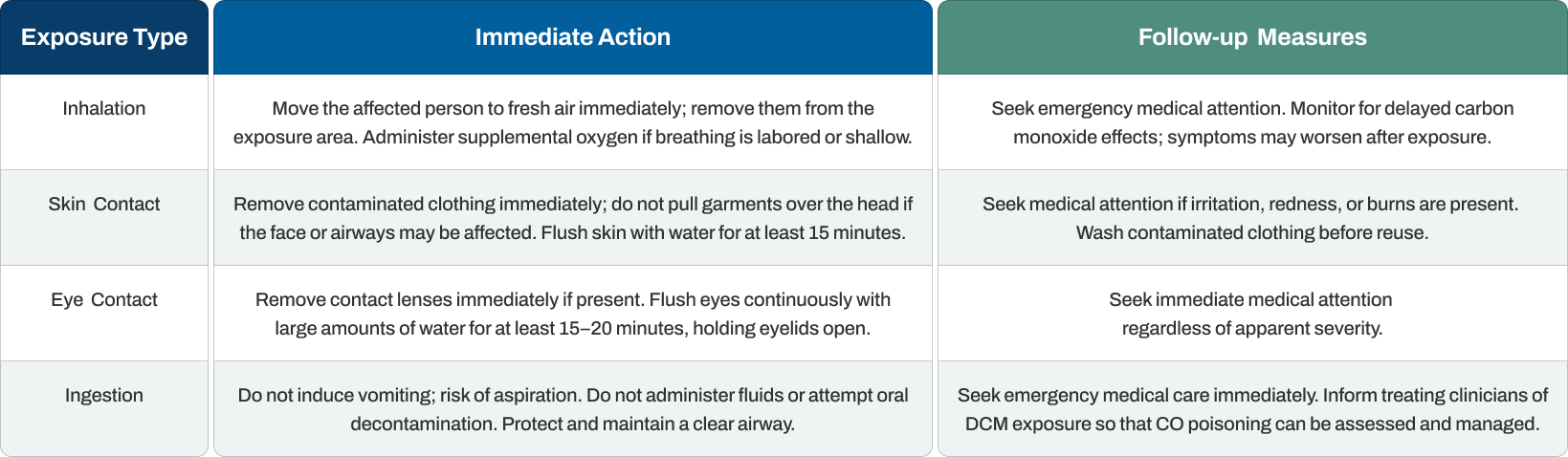
First aid providers should take precautions to avoid self-contamination when assisting an affected individual in an area where DCM vapor may still be present. Poison control services can provide additional guidance in the event of significant or uncertain exposures.
Handling & Storage Precautions
Proper handling of DCM requires engineering controls as the first line of defense, with PPE serving as a supplementary measure rather than a primary one.
Safe Handling Procedures
Work with DCM only in areas equipped with local exhaust ventilation or a certified fume hood; general room ventilation is not sufficient given the chemical's vapor pressure and the low OSHA PEL. Required PPE includes chemical-splash goggles, nitrile or neoprene gloves, a lab coat or chemical-resistant clothing, and footwear that covers the entire foot.
If exposure is expected to exceed the PEL, use a NIOSH-approved supplied-air or full-facepiece respirator. Avoid contact with skin and eyes during all transfer, mixing, and disposal operations.
Storage Conditions
Store DCM in a cool, well-ventilated area away from heat sources and direct sunlight. Protect from light exposure, as DCM decomposes on prolonged exposure to ultraviolet light. Keep containers tightly sealed; use original manufacturer containers where possible. Do not store near incompatible materials.
Incompatible Substances
DCM reacts with or is incompatible with the following:
-
Strong oxidizers
-
Alkali metals (sodium, potassium)
-
Liquid oxygen
-
Titanium
-
Strong amines
-
Strong bases
Contact with strong bases can generate toxic decomposition products. Store and handle DCM away from all of the above.
Spill & Leak Procedures
Emergency Response Steps
-
Eliminate all ignition sources in the vicinity.
-
Ensure adequate ventilation; open windows and doors if safe to do so, or activate local exhaust systems.
-
Don appropriate PPE: chemical-splash goggles, nitrile gloves, and respiratory protection if the spill is large or ventilation is limited.
-
Evacuate non-essential personnel. Note that DCM vapor is denser than air (vapor density 2.93) and will accumulate in low-lying areas, drains, and enclosed spaces.
Containment Methods
-
Absorb the spill using inert material such as vermiculite, dry sand, or earth.
-
Collect the absorbed material in a sealed, clearly labeled waste container.
-
Prevent any runoff from entering floor drains, storm sewers, or waterways.
-
After absorbent removal, flush the residual spill area with water and collect the washings for disposal.
Proper Disposal
DCM is an RCRA-listed hazardous waste under codes U080, F001, and F002 and must be disposed of in accordance with 40 CFR Part 261. Do not discharge DCM or DCM-contaminated materials to sewer systems or wastewater treatment facilities. Arrange disposal through a licensed hazardous waste contractor.
Fire & Explosion Hazards
Flammability
DCM does not produce a measurable flash point in conventional closed-cup test methods, and under typical ambient conditions it is not considered a flammable liquid. However, it forms flammable vapor-air mixtures at temperatures above approximately 100 °C (212 °F). The autoignition temperature is 556 °C (1,033 °F), with flammable limits in air of approximately 12–13% (LEL) to 22–23% (UEL). Concentrated DCM vapor in a confined space can ignite under high-intensity ignition conditions.
Extinguishing Media
Appropriate extinguishing agents include:
-
Dry chemical
-
Carbon dioxide (CO2)
-
Appropriate foam
Water spray can be used to cool fire-exposed containers and to flush spills away from ignition sources. Flooding a DCM fire with a solid water stream is not recommended as a primary extinguishing approach.
Firefighting Precautions
DCM combustion produces highly toxic gases, including phosgene, hydrogen chloride, and carbon monoxide. Firefighters must wear self-contained breathing apparatus (SCBA) and full chemical protective gear before approaching a DCM fire. Sealed containers exposed to heat or fire may develop internal pressure; keep containers cool with water spray and be alert to the risk of rupture. The toxic combustion products make respiratory protection non-negotiable even for peripheral response activities.
Regulatory Information & Compliance
OSHA Regulations
DCM is regulated under a substance-specific OSHA standard rather than the general air contaminants table. The PEL under 29 CFR 1910.1052 is 25 ppm as an 8-hour TWA, with a STEL of 125 ppm over any 15-minute sampling period. An action level of 12.5 ppm (8-hour TWA) triggers additional employer obligations, including regulated area demarcation, exposure monitoring, and medical surveillance. The standard applies across general industry, shipyards, and construction (29 CFR 1910.1052, 1915.1052, and 1926.1152).
EPA & Environmental Impact
DCM is designated a Hazardous Air Pollutant (HAP) under the Clean Air Act Section 112 and is subject to National Emission Standards for Hazardous Air Pollutants (NESHAPs) for several source categories. It is a CERCLA hazardous substance with a reportable quantity of 1,000 lbs under 40 CFR 302.4; releases at or above that threshold must be reported to the National Response Center.
DCM is also listed under SARA Section 313 (EPCRA Toxic Release Inventory), requiring annual TRI reporting by qualifying facilities. Its RCRA waste codes are U080, F001, and F002. DCM is classified as acutely harmful to aquatic organisms (GHS09, Category 3) and must not be discharged to waterways or sewer systems.
DOT Transportation Regulations
DCM is regulated as a hazardous material under DOT. Proper shipping name: DICHLOROMETHANE; Hazard Class: 6.1; UN Number: UN1593; Packing Group: III. These designations apply across domestic road transport, air (IATA), and sea (IMDG) shipments.
FDA/USP/ACS Compliance
ACS Reagent and HPLC grades are available, each with grade-specific purity requirements. DCM has been used historically as an FDA-permitted extraction solvent in certain food processing applications; applicable use restrictions and tolerances have changed over time and should be confirmed against current FDA regulations before any food-contact application.
Technical Documents & Resources
-
Safety Data Sheets (SDS) are available for all grades and concentrations of dichloromethane and cover safe handling procedures, first aid measures, PPE requirements, and regulatory information.
-
Certificates of Analysis (COA) are available upon request and verify purity levels and compliance with applicable grade standards, including ACS Reagent and HPLC specifications where relevant.
Final Note
Dichloromethane is a high-utility solvent that carries a serious and well-documented hazard profile. Its primary risks are inhalation-driven CNS effects, carbon monoxide toxicity from metabolic conversion, and suspected carcinogenicity with chronic exposure. These hazards are compounded by the fact that its odor provides no reliable warning at or near the regulatory exposure limit.
Safe work with DCM requires local exhaust ventilation as a baseline control, appropriate PPE for all handling operations, and strict compliance with OSHA's substance-specific standard at 29 CFR 1910.1052. Lab Alley provides Safety Data Sheets and Certificates of Analysis for all available grades; contact our team for documentation or to confirm the appropriate grade for your application.
Explore our Resource Library for more information.
Our Customer Care team is also available for more information and documentation, including chemical Safety Data Sheets.
Need Dichloromethane Acid You Can Trust?
If you are looking for high-quality dichloromethane for your lab, product line, or research facility, be sure to visit our store to explore our trusted selection and request a quote.
As your trusted partner in chemical supply, Lab Alley is always striving to meet the growing demands of our customers. We want you to be able to access all of your chemical needs in one place, along with streamlined online ordering and fast shipping.
Due to popular demand from our valued clientele, Lab Alley's dichloromethane is available in a range of purities and packaging options to suit various commercial, laboratory, and personal needs.