





How to Safely Dispose of Iodoform
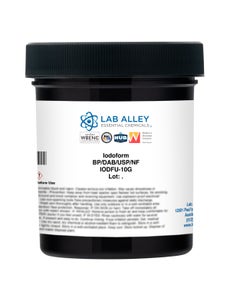
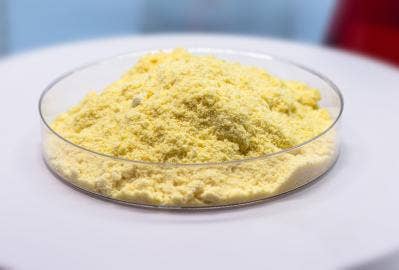
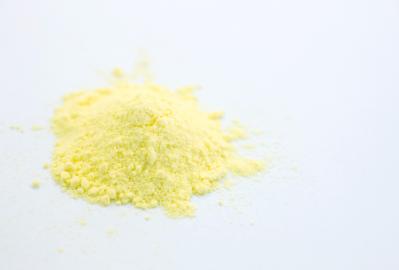
Iodoform (CHI3) is a pale yellow, crystalline compound once widely used as a topical antiseptic and wound dressing agent, and it remains in use today in veterinary care and specialty medical applications. Because it decomposes under light and heat, releasing free iodine and, at higher temperatures, toxic hydrogen iodide gas, disposal requires more than simply discarding it as ordinary chemical waste.
The compound's reactivity adds a second layer of complexity to disposal planning. Iodoform reacts with strong oxidizing agents, strong bases, and certain metals, and it can form violent reactions with materials like acetone under specific storage conditions. Facilities generating iodoform waste need clear protocols for storage, segregation, and final disposal to avoid unintended chemical reactions, regulatory exposure, and environmental release.


In this article, we'll explore:
-
Why Proper Disposal Matters
-
How to Dispose of Iodoform
-
Light Sensitivity and Decomposition Hazard
-
Special Considerations
Why Proper Disposal Matters
Environmental Protection
Iodoform must never be released into the environment. Pouring it down drains, into sewer systems, or into surface water is prohibited regardless of concentration or quantity, and this restriction applies to rinse water and wash-down from equipment that has contacted the material as well. Waste containing iodoform residue should be contained at the point of generation and routed to appropriate disposal channels rather than treated as a substance that can be diluted and released.
Health & Safety
Exposure to iodoform carries real risk throughout the disposal process, not only during initial handling. It is harmful if swallowed, inhaled, or absorbed through the skin, and contact causes skin and eye irritation along with respiratory irritation. These hazards apply from the moment waste is collected through container staging, transport preparation, and final transfer to a licensed handler, which makes consistent protective equipment and careful technique essential at every stage rather than only at the point of generation.
Legal Compliance
Disposal of iodoform falls under federal, state, and local hazardous waste regulations. Facilities are required to work with a licensed hazardous waste handler rather than managing disposal independently, and documentation supporting that transfer should be retained according to the facility's recordkeeping requirements. Compliance protects both the facility and the environment while avoiding regulatory penalties tied to improper hazardous waste management.
How to Dispose of Iodoform
Check Regulations
Iodoform is not currently listed on the EPA's RCRA P-list or U-list of hazardous wastes. This does not mean it is automatically exempt from hazardous waste rules. Generators should determine hazardous waste status through characteristic testing and by consulting current federal and state regulations, since classification can vary by jurisdiction and by the condition of the waste stream, including whether it has been mixed with solvents or other reactive materials. Facilities should also confirm their generator status under applicable hazardous waste rules, since waste volume can affect recordkeeping and storage time limits.
Use Designated Waste Disposal Methods
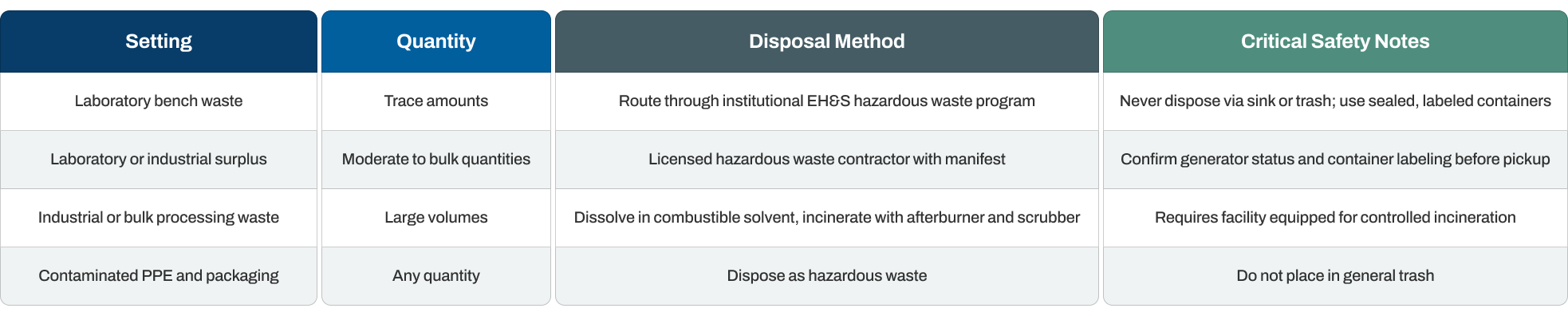
Iodoform waste must move through defined, regulated channels rather than general disposal routes. The appropriate method depends on the setting, the volume involved, and whether the waste is generated as pure material or as a contaminated byproduct.
Non-Hazardous Disposal
Drain or sewer disposal is not permitted under any circumstances. Iodoform does not qualify for dilution-based disposal methods used for some less hazardous substances, and treating it as such creates both an environmental violation and a safety risk for anyone downstream of the discharge.
Hazardous Waste Disposal
Collect iodoform waste in tightly sealed, clearly labeled containers suitable for hazardous materials, with labels that identify the contents and associated hazards for anyone handling the container later in the process. Once collected, transfer the material to a licensed hazardous waste contractor, with proper manifest documentation accompanying the transfer to establish a compliant chain of custody.
Industrial Quantities
Larger volumes of surplus or waste iodoform are typically managed by dissolving the material in a combustible solvent and incinerating it in a chemical incinerator equipped with both an afterburner and a scrubber. This combination helps ensure complete combustion and controls the release of iodine-containing byproducts into the air.
Laboratory & Institutional Waste
Laboratory and institutional generators should route iodoform waste through their facility's Environmental Health and Safety hazardous waste program. Sink disposal and regular trash are not acceptable outlets, even for small residual quantities left in glassware or packaging.
Never Mix Chemicals
Iodoform should never come into contact with strong oxidizing agents, strong bases, acetone, lithium, magnesium, silver nitrate, mercuric oxide, or tannin-containing materials. These combinations can trigger vigorous or violent reactions, so waste streams containing any of these substances need to be kept entirely separate from iodoform waste at every stage of handling.
Follow PPE Guidelines
Personal protective equipment for iodoform disposal includes chemical-resistant gloves, eye and face protection, and measures to avoid generating dust during handling. Work should take place under a chemical fume hood or in an area with adequate ventilation, since inhalation of dust or decomposition vapors is a primary route of exposure.
Light Sensitivity and Decomposition Hazard
Light-Induced Decomposition
Iodoform decomposes slowly when exposed to light, releasing free iodine in the process. Waste containers should be stored away from light before disposal to limit this gradual breakdown, since prolonged exposure changes the composition of the waste over time and can increase handling risk as free iodine accumulates.
Thermal Decomposition
Above approximately 400°F (204°C), iodoform decomposes more rapidly, releasing carbon monoxide, carbon dioxide, and hydrogen iodide gas. Heat sources should be kept away from iodoform waste during handling, storage, and transport, since even localized heating can initiate this decomposition pathway before the material reaches its intended disposal destination.
Special Considerations
Reactive Storage Segregation
Waste containers holding iodoform should be physically isolated from metals, oxidizers, and reducing agents while awaiting pickup. This segregation is not a one-time step but an ongoing storage practice, since accidental contact during routine facility activity, such as shared storage cabinets, is one of the more common ways incompatible materials end up sharing space.
Contaminated Materials
Gloves, wipes, and packaging that have come into contact with iodoform residue carry the same disposal requirements as the compound itself. These items should be treated as hazardous waste rather than discarded with general trash, even when the visible residue appears minimal, since decomposition products can still be present on contaminated surfaces.
Conclusion
Safe disposal of iodoform depends on recognizing its light and heat sensitivity, its reactivity with common laboratory materials, and the regulatory obligations tied to hazardous waste handling. Sealed containers, licensed contractors, proper manifest documentation, and strict segregation from incompatible substances form the foundation of a compliant disposal process. Facilities that build these steps into routine practice reduce both regulatory risk and the chance of an accidental chemical reaction during storage or transport.
For more detailed guidance, explore our Resource Library
Our Customer Care team is also available for more information and documentation, including chemical Safety Data Sheets.
Need Iodoform You Can Trust?
If you are looking for high-quality iodoform for your lab, product line, or research facility, be sure to visit our store to explore our trusted selection and request a quote.
As your trusted partner in chemical supply, Lab Alley is always striving to meet the growing demands of our customers. We want you to be able to access all of your chemical needs in one place, along with streamlined online ordering and fast shipping.
Due to popular demand from our valued clientele, Lab Alley's iodoform available in a range of purities and packaging options to suit various commercial, laboratory, and personal needs.