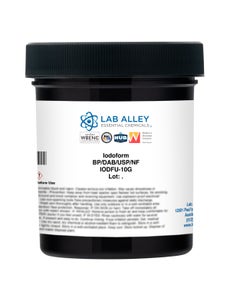






Shelf Life & Expiration of Iodoform
Iodoform is a stable, bright yellow crystalline solid that does not follow a strict, universal expiration timeline the way some liquid reagents do. Its stability profile is instead governed by exposure conditions: the compound decomposes slowly under ambient light and more rapidly at elevated temperatures, releasing free iodine as it breaks down. This decomposition pathway is well documented and is the primary driver of quality loss during storage.
The two factors that most affect iodoform's usable life are light exposure and heat. Because the compound is photosensitive, prolonged exposure to light gradually triggers decomposition even at room temperature, while higher storage temperatures accelerate the same process. Iodoform is also volatile and prone to sublimation, meaning inadequate container sealing can lead to material loss independent of any chemical breakdown.
Packaging plays a supporting role in preserving quality. Reagent-grade material is typically supplied in light-resistant containers specifically to slow the photodecomposition process, and maintaining that protection after opening is as important as the original packaging itself.


This article covers:
- How Long Does Iodoform Last?
- Signs That Iodoform Has Expired
- What to Do If Iodoform Has Expired
- Proper Storage Extends Shelf Life
How Long Does Iodoform Last?
Chemical Stability
Iodoform decomposes slowly when exposed to light at room temperature, a process that accelerates significantly at high temperatures. This decomposition releases free iodine, which is the underlying mechanism behind the discoloration and potency loss observed in aged material.
Unlike chemicals with a fixed shelf clock, iodoform's degradation rate is largely a function of cumulative light and heat exposure rather than time alone. Material stored under consistently cool, dark conditions will retain its integrity far longer than material left exposed to ambient light or warm environments.
Purity & Packaging
Reagent-grade iodoform requires light-resistant containers to protect purity from the moment of manufacture through end use. A container that starts as light-resistant but is left open or exposed after each use loses much of that protective benefit over time. Consistency matters more than the container material alone; the seal and opacity need to be maintained throughout the product's working life, not just during initial storage.
Storage Conditions
Cool, dark, and dry storage away from direct heat sources represents the ideal environment for maximizing iodoform's usable life. Sealed amber glass or opaque containers are preferred because they block the light exposure that drives photodecomposition. Facilities storing iodoform should treat light and heat avoidance as the two non-negotiable storage conditions, since both directly accelerate the same underlying breakdown process.


Signs That Iodoform Has Expired or Degraded
-
Color Change: Darkening from the characteristic pale or bright yellow toward brown or greenish-yellow indicates free iodine release and is the clearest visible sign of decomposition. This shift can occur gradually, so comparing current material against a reference sample or the original product description is useful.
-
Reduced Effectiveness: Diminished antiseptic activity accompanies the loss of free iodine content as the compound degrades. A noticeable fading of the characteristic pungent, penetrating odor can accompany this decline and serves as a secondary indicator alongside color change.
What to Do If Iodoform Is Expired
Check Manufacturer Guidelines
Compare the printed expiration or retest date against the certificate of analysis provided by the supplier before assuming the material is unusable. If the timeline is ambiguous or the material is nearing its listed date, request a supplier retest to confirm remaining potency rather than discarding usable stock prematurely. This is particularly relevant for facilities holding larger inventories where replacement carries meaningful cost.
Follow Proper Disposal Procedures
Iodoform is incompatible with strong bases, strong oxidizing agents, and magnesium, and it reacts violently with lithium, so disposal must account for these incompatibilities during handling and storage before pickup. As a halogenated organic compound, it should be classified and disposed of as halogenated organic waste through a licensed hazardous waste handler rather than through general chemical disposal channels. Facilities should confirm current local and federal classification requirements, since halogenated organic waste handling can carry specific documentation obligations.
Replace with Fresh Stock
Degraded iodoform carries reduced free iodine content, which directly compromises its performance in both antiseptic applications and its use as an analytical reagent in the iodoform reaction. Using degraded material in analytical testing risks inaccurate or inconsistent results, since the reaction depends on iodine availability. Replacing aged stock with fresh material ensures reliable antimicrobial performance and dependable test outcomes, particularly in quality control settings where consistency is critical.
Proper Storage Extends Shelf Life
-
Container Requirements: Use tightly sealed, light-resistant containers such as amber glass or opaque packaging. Keep iodoform separated from mercuric oxide, calomel, silver nitrate, tannin, and balsam Peru, all of which are chemically incompatible with it.
-
Temperature Control: Store at cool room temperature and away from direct heat sources, since elevated temperatures accelerate decomposition. Avoid storage locations near equipment or piping that generate ambient heat.
-
Light & Heat Protection: Because iodoform decomposes slowly even under ambient light at room temperature, storing it in a dark area or fully opaque container measurably slows the photodecomposition process. Maintain this protection continuously, not just during long-term storage.
-
Evaporation Prevention: Iodoform is volatile and prone to sublimation at room temperature, so containers must remain tightly sealed to prevent gradual material loss. Repeated opening without prompt resealing increases both vapor loss and the risk of light exposure.
Conclusion
Iodoform's shelf life is defined less by a fixed calendar date and more by how consistently it is protected from light and heat during storage and handling. Its tendency to decompose slowly under light, decompose faster under heat, and sublime if left unsealed makes container integrity and environmental control the deciding factors in how long a batch remains effective.
Facilities relying on iodoform for antiseptic or analytical use should monitor for color darkening and effectiveness loss that signal degradation, verify status against supplier documentation when in doubt, and replace compromised stock promptly to maintain reliable results.
For more detailed guidance, explore our Resource Library for comprehensive storage and handling information.
Our Customer Care team is also available for more information and documentation, including chemical Safety Data Sheets.
Need Iodoform You Can Trust?
If you are looking for high-quality iodoform for your lab, product line, or research facility, be sure to visit our store to explore our trusted selection and request a quote.
As your trusted partner in chemical supply, Lab Alley is always striving to meet the growing demands of our customers. We want you to be able to access all of your chemical needs in one place, along with streamlined online ordering and fast shipping.
Due to popular demand from our valued clientele, Lab Alley's iodoform is available in a range of purities and packaging options to suit various commercial, laboratory, and personal needs.