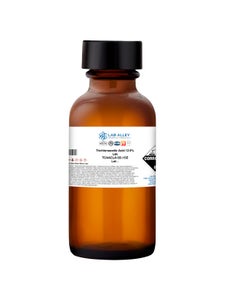






How to Store Trichloroacetic Acid
Trichloroacetic acid (TCA) is a corrosive, hygroscopic solid that absorbs moisture readily and can degrade or generate internal pressure in sealed containers if stored improperly. Both the crystalline form, available in ACS and Lab Grade, and the aqueous solutions Lab Alley carries require corrosion-resistant containers, controlled humidity, and careful segregation from incompatible chemicals to remain stable over time.
Storage conditions differ somewhat between the crystal and solution forms, particularly around temperature and moisture exposure, but both share the same core risks: container failure, skin and eye contact from spills or leaks, and hazardous decomposition when conditions are not controlled. Facilities that handle both forms should apply the tightest applicable standard across their TCA inventory to avoid gaps in protection.


In this article, we'll review:
-
Recommended Storage Conditions
-
Container & Packaging Requirements
-
Segregation & Compatibility
-
Safe Handling in Storage Areas
-
Regulatory Compliance & Labeling
- Environmental & Safety Considerations
- Special Considerations
Recommended Storage Conditions
Temperature
TCA crystal should be kept at room temperature, ideally between 15 and 25°C (59 to 77°F), and remains stable up to 30°C (86°F). Aqueous solutions need a different precaution: they must be protected from freezing, since freezing can damage containers or cause the solution to separate.
Humidity Control
The crystalline form is hygroscopic and deliquescent, meaning it pulls moisture from the surrounding air and can liquefy if left exposed. Containers should be kept tightly sealed at all times and resealed immediately after each use to limit this exposure.
Light Exposure
Manufacturer safety data sheets recommend protecting TCA from direct sunlight and extended light exposure during storage. Storing containers in a closed cabinet or opaque packaging helps maintain product stability.
Ventilation
Storage areas should be well-ventilated to prevent vapor or dust accumulation around containers. Dilute aqueous solutions can also undergo slow decomposition in sealed containers, allowing internal pressure to build gradually over time.
Storage Duration
When kept sealed, dry, and at room temperature, TCA remains stable for extended periods. Personnel should watch for signs of degradation, including discoloration, container bulging, caking of the crystal form, or visible moisture pooling inside the container.
Container & Packaging Requirements
Compatible Materials
Glass or corrosion-resistant plastic such as HDPE is a suitable storage material, and the original manufacturer's container is preferred whenever possible. Reactive metals, including iron, zinc, and aluminum, should be avoided entirely, since TCA is corrosive to most metals.
Sealing Requirements
Containers should be corrosion-resistant with a resistant inner liner and kept tightly closed between uses. A compromised seal increases both moisture ingress and the risk of a leak during handling or transport within the facility.
Labeling Requirements
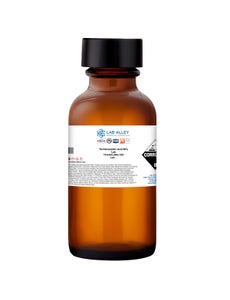
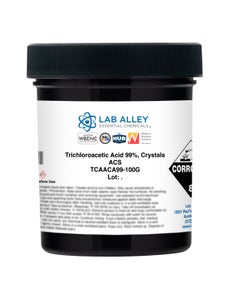
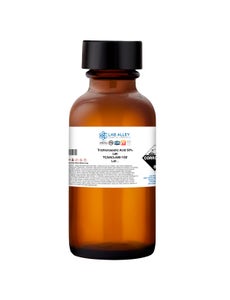
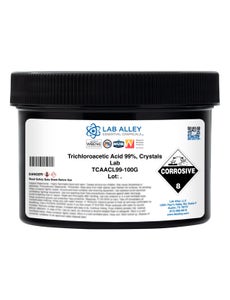
Labels must display the GHS Danger signal word along with the corrosive (GHS05) and aquatic hazard (GHS09) pictograms. Each container should also list the CAS number 76-03-9, the specific concentration or grade, the applicable UN number (UN1839 for solid, UN2564 for solution), and any expiration tracking information.
Segregation & Compatibility
Incompatible Substances
TCA reacts with a range of materials and must be stored away from them to avoid dangerous reactions. Key incompatibilities include:
-
Strong bases and alkalis, which react exothermically and release heat and toxic fumes
-
Strong oxidizers, including chlorates, nitrates, peroxides, permanganates, perchlorates, and halogens
-
Reactive metals such as iron, zinc, aluminum, and powdered metals
-
Reducing agents, cyanides, silver salts, strong acids, and moisture
Storage Grouping
TCA should be kept in a dedicated corrosives storage cabinet, physically separated from bases, oxidizers, and metals. Grouping it with other corrosive acids, rather than with incompatible chemical classes, reduces the chance of an accidental reaction during routine storage or retrieval.
Safe Handling in Storage Areas
PPE Requirements
Personnel handling stored TCA should wear chemical-resistant gloves made of nitrile or neoprene, along with splash goggles or a face shield and an acid-resistant apron. Respiratory protection becomes necessary when dust or vapor levels exceed exposure limits, with NIOSH setting a recommended exposure limit of 1 ppm TWA, or 7 mg/m³.
Transfer & Dispensing
Any transfer of TCA should take place in a fume hood or another well-ventilated area to limit exposure. With the crystal form, extra care should be taken to minimize dust generation during pouring or measuring.
Spill Containment
Spills should be absorbed with an inert material such as sand or vermiculite, and residue can be neutralized with soda ash or sodium bicarbonate. All cleanup waste must be collected in corrosion-resistant containers and routed for proper disposal rather than standard trash.
Emergency Equipment
An eyewash station and safety shower are required in or near any area where TCA is stored or handled. Given the severity of TCA's skin and eye contact hazards, this equipment should remain unobstructed and regularly inspected.
Regulatory Compliance & Labeling
OSHA Regulations
Storage and handling of TCA fall under OSHA's Hazard Communication Standard, 29 CFR 1910.1200. It is worth noting that OSHA's permissible exposure limit of 7 mg/m³ TWA for this substance was vacated and is not currently enforceable, though it remains a useful reference point.
GHS Requirements
TCA carries the GHS Danger signal word along with hazard statements H314, causing severe skin burns and eye damage, and H410, very toxic to aquatic life with long-lasting effects. These statements should appear on every container label alongside the corresponding pictograms.
NFPA & DOT
TCA carries an NFPA 704 rating of 3-0-0 for health, fire, and reactivity, and it is classified as non-combustible. For transport, it falls under DOT Hazard Class 8, Packing Group II.
SDS Requirements
A current safety data sheet must be maintained and readily accessible at the storage and handling location, consistent with OSHA's Hazard Communication Standard. Outdated SDS versions should be replaced promptly whenever the manufacturer issues a revision.
Environmental & Safety Considerations
Secondary Containment
Secondary containment is recommended for larger pack sizes of TCA to prevent any leak or spill from migrating beyond the immediate storage area. This is particularly important given the substance's environmental hazard classification.
Wastewater & Environmental Impact
TCA is classified as very toxic to aquatic life under hazard statement H410, so it should never be discharged to drains or waterways. It also carries RCRA waste code D002 as a corrosive, which governs how waste and contaminated materials must be handled and disposed of.
Special Considerations
Decomposition Gas Buildup
Dilute aqueous TCA solutions, those below roughly 30% by weight, can hydrolyze slowly over time, releasing carbon monoxide and carbon dioxide gas. In a tightly sealed container, this slow gas release can cause internal pressure to build gradually, which is a distinct risk from the general ventilation needs covered earlier.
Conclusion
Proper storage of trichloroacetic acid comes down to controlling moisture, temperature, and container integrity, while keeping it well separated from bases, oxidizers, and reactive metals. Both the crystal and solution forms demand the same baseline of corrosion-resistant packaging, tight sealing, and clear GHS labeling, with a few form-specific precautions layered on top, such as freeze protection for solutions and dust control for crystals.
Facilities that build these practices into routine storage procedures reduce the risk of container failure, chemical exposure, and regulatory noncompliance. Reviewing storage areas periodically for signs of degradation or seal failure helps catch problems before they become safety incidents.
For more detailed guidance, explore our Resource Library.
Our Customer Care team is also available for more information and documentation, including chemical Safety Data Sheets.
Need Trichloroacetic Acid You Can Trust?
If you are looking for high-quality trichloroacetic acid for your lab, product line, or research facility, be sure to visit our store to explore our trusted selection and request a quote.
As your trusted partner in chemical supply, Lab Alley is always striving to meet the growing demands of our customers. We want you to have all your chemical needs in one place, with streamlined online ordering and fast shipping.
Due to popular demand from our valued clientele, Lab Alley's trichloroacetic acid is available in a range of purities and packaging options to suit various commercial, laboratory, and personal needs.