




How and Why to Neutralize Trichloroacetic Acid
Trichloroacetic acid (TCA) is one of the strongest organic acids used in laboratory and industrial settings, with a pKa of about 0.7, making it more corrosive than typical carboxylic acids and closer to mineral acids. Even dilute solutions carry a pH near 1.2, and contact with skin or eyes at any concentration can cause severe chemical burns. Because of this, neutralize TCA before disposal, before it contacts processing equipment for extended periods, or before any residue reaches a drain or wastewater system.
Neutralization converts TCA into sodium trichloroacetate, a stable salt formed by reacting the acid with a mild or strong base. This single step resolves the three main risks the chemical presents: injury to personnel during handling, corrosion damage to equipment and piping, and environmental harm from acidic, aquatic-toxic discharge. Labs and production facilities that work with TCA, including those running protein precipitation or formulating dermatological peels, treat neutralization as a standard part of their waste and process workflows rather than an occasional precaution.
Regulatory exposure compounds the safety case. TCA's low pH places spent solutions at risk of meeting RCRA's corrosivity characteristic for hazardous waste, and its aquatic toxicity classification means it cannot be assumed safe for standard drain disposal. Understanding how to neutralize it correctly protects personnel, equipment, and compliance standing at once.


In this article, we'll explore:
-
Why Neutralize Trichloroacetic Acid?
-
How to Neutralize Trichloroacetic Acid
-
Safety Precautions During Neutralization
-
Special Considerations
Why Neutralize Trichloroacetic Acid?
Safety & Spill Response
TCA presents an immediate burn hazard even in relatively dilute form. A 16% solution carries a pH of roughly 1.2, well within the range that causes severe skin burns and eye damage on contact, a hazard reflected in its GHS classification under H314. This means standard handling, spill response, and cleanup procedures cannot treat TCA as a mild acid. Any spill or transfer scenario calls for immediate neutralization before personnel attempt direct contact or cleanup, since the acid's strength makes incidental exposure far more dangerous than with weaker organic acids of similar appearance.
Industrial & Laboratory Use
TCA plays a defined role in protein precipitation work and in formulating dermatological peel products, both of which require careful pH control during processing. Left unneutralized, acidic process residues and rinse waters corrode metal equipment, fittings, and piping over time, shortening equipment life and increasing maintenance costs.
Spent aqueous waste at a pH of 2 or below also risks meeting the RCRA D002 characteristic for corrosive hazardous waste, which changes how that waste must be handled, labeled, and disposed of. Neutralizing process waste as it is generated keeps equipment protected and waste streams within manageable regulatory categories.
Environmental Protection
TCA carries an H410 classification, indicating it is very toxic to aquatic life with long-lasting effects, so discharge of unneutralized solution into drains, sewers, or waterways can cause lasting ecological harm. Most wastewater discharge permits require effluent to fall within a neutral pH range before release to municipal treatment systems or the environment. Treating TCA solutions before disposal is therefore not optional in most jurisdictions; it is the mechanism by which facilities stay within their discharge permit limits and avoid contributing acidic, toxic effluent to local water systems.
How to Neutralize Trichloroacetic Acid
Step 1: Identify the Chemical Properties
TCA is typically supplied as a solid in flake form, with a melting point of approximately 57 to 58°C, and it is highly water-soluble and hygroscopic. A 16% aqueous solution has a pH of roughly 1.2, giving a sense of how strongly acidic even moderately diluted TCA remains. Before beginning any neutralization, confirm the concentration and volume of the solution on hand, since both factors determine how much neutralizing agent is required and how much heat the reaction will generate.
Step 2: Select Appropriate Treatment Agents
The right agent depends on the scale of the job and the degree of reaction control needed:
-
Sodium bicarbonate: Reacts mildly with TCA, releasing carbon dioxide and forming sodium trichloroacetate and water. Preferred for small spills and lab-scale neutralization because the reaction is easy to control.
-
Sodium carbonate (soda ash): Used industrially to convert TCA into sodium trichloroacetate at larger process volumes, where a stronger base than bicarbonate is practical.
-
Sodium hydroxide: Also used industrially for TCA neutralization, but it generates significant heat on contact with a strong acid and requires controlled, incremental addition to manage the exotherm safely.
Step 3: Follow the Neutralization Procedure
Treatment should proceed methodically rather than all at once:
-
Add the chosen neutralizing agent slowly, in small increments, while stirring continuously.
-
Never add the full quantity of neutralizer at once; doing so can trigger a vigorous reaction and splattering, particularly with concentrated TCA.
-
Wear complete PPE throughout the procedure, as outlined in the Safety Precautions section below.
Step 4: Monitor and Validate the Reaction
Track pH continuously rather than estimating based on the amount of neutralizer added. The target endpoint is a pH of approximately 6 to 9, confirmed with a calibrated pH meter or pH indicator strips rather than visual judgment alone. Continue adding the neutralizing agent in small increments until the pH stabilizes within this range, and record the batch volume, the agent and quantity used, and the final pH reading for compliance documentation.
Step 5: Manage Waste Disposal
Once neutralized, confirm both the final pH and any residual organic content before deciding how the solution should be disposed of. Neutralized TCA solutions can still require hazardous waste disposal depending on site-specific discharge permits and the presence of residual contaminants, so pH alone should not be treated as the only disposal criterion. For concentrated or non-compliant residues, route disposal through a licensed hazardous waste contractor rather than direct discharge.
Safety Precautions During Neutralization
-
Personal Protective Equipment: Wear chemical-resistant gloves rated for corrosive acids, along with chemical splash goggles or a full face shield and a corrosive-resistant apron or suit.
-
Ventilation: Perform neutralization in a fume hood or another well-ventilated area, since the occupational exposure limit for TCA is 1 ppm (7 mg/m3) as an 8-hour time-weighted average, and dust or mist should not be inhaled.
-
Heat Management: The neutralization reaction is exothermic, particularly when using sodium hydroxide, so add neutralizer in small increments with stirring and use external cooling for larger volumes to keep temperature rise under control.
-
Spill Response: Evacuate non-essential personnel from the area, contain the spill with inert absorbent, then neutralize with sodium bicarbonate before any cleanup begins. Confirm the material has reached a neutral pH with indicator paper before disposing of the absorbed residue.
-
Emergency Preparedness: Keep an eyewash station and safety shower immediately accessible, along with first aid supplies and a spill kit, and remove any contaminated clothing immediately on contact.
Special Considerations
Carcinogenicity Classification
TCA is classified as a suspected Category 2 carcinogen, which warrants additional caution beyond its acute corrosive hazards. Personnel should minimize exposure duration and avoid direct skin contact throughout the neutralization process, treating it as a chemical that carries both immediate and longer-term health considerations.
Concentration-Dependent Treatment
Higher-concentration TCA, such as flake product above 90% purity, requires proportionally more neutralizing agent than dilute solutions and generates substantially more heat during the reaction. Addition should be slower and more incremental at higher concentrations, with closer attention to temperature control, to avoid a reaction that outpaces the operator's ability to manage it safely.
Conclusion
Trichloroacetic acid's strength as an organic acid means it cannot be handled, stored residue, or discharged without proper neutralization. Converting it to sodium trichloroacetate through a controlled, incremental reaction with an appropriate base protects personnel from severe burns, prevents equipment corrosion, and keeps waste streams within regulatory and environmental limits.
Facilities that build neutralization into their standard TCA workflow, rather than treating it as an afterthought, reduce both safety incidents and compliance risk. Careful agent selection, incremental addition, and pH verification at every stage are what make the difference between a controlled process and a hazardous one.
For more detailed guidance, explore our Resource Library.
Our Customer Care team is also available for more information and documentation, including chemical Safety Data Sheets.
Need Trichloroacetic Acid You Can Trust?
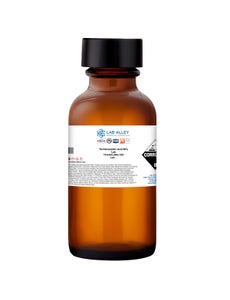
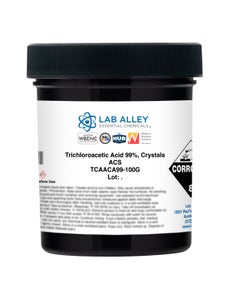
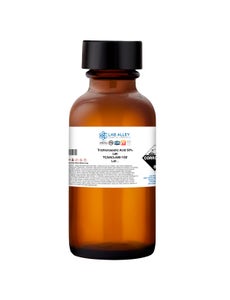
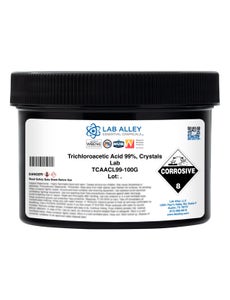
If you are looking for high-quality trichloroacetic acid for your lab, product line, or research facility, be sure to visit our store to explore our trusted selection and request a quote.
As your trusted partner in chemical supply, Lab Alley is always striving to meet the growing demands of our customers. We want you to be able to access all of your chemical needs in one place, along with streamlined online ordering and fast shipping.
Due to popular demand from our valued clientele, Lab Alley's trichloroacetic acid is available in a range of purities and packaging options to suit various commercial, laboratory, and personal needs.