





Iodoform Safety & Hazards
Iodoform (triiodomethane, CHI₃, CAS 75-47-8) is a yellow crystalline solid with a persistent, pungent odor, most commonly encountered as an antiseptic and organic synthesis reagent. It carries a hazard classification of Acute Toxicity Category 4 for oral, dermal, and inhalation exposure, along with skin and eye irritation and single-exposure respiratory irritation potential.
Anyone handling iodoform in a production, laboratory, or procurement setting should understand its primary exposure routes: skin and eye contact during transfer or weighing, dust inhalation, and accidental ingestion. The compound is not classified as flammable and is not DOT-regulated for transport, but its incompatibility with strong bases, oxidizers, and specific metal salts requires deliberate storage planning.


In this article, we'll explore:
-
Chemical Hazards Overview
-
Exposure Risks & Health Effects
-
First Aid Measures
-
Handling & Storage Precautions
-
Spill & Leak Procedures
-
Regulatory & Compliance Information
-
Technical Documents & References
Chemical Hazards Overview
Iodoform's hazard profile centers on acute toxicity and irritation rather than flammability or reactivity in the traditional sense. It is classified as Acute Tox. 4 across all three primary exposure routes, with additional classifications for skin irritation (Category 2), eye irritation (Category 2), and specific target organ toxicity from a single exposure affecting the respiratory tract (Category 3).
-
GHS Hazard Pictograms: GHS07 (Exclamation Mark) only
-
NFPA Hazard Rating: Secondary compilations list Health 2, Flammability 1, Reactivity 1, though NIOSH and CAMEO Chemicals classify iodoform as a noncombustible solid
-
Primary Risks: Dust inhalation, skin and eye contact during handling, and accidental ingestion; low volatility limits vapor-phase exposure
Exposure Risks & Health Effects
Inhalation Risks
Iodoform's low vapor pressure means inhalation exposure is driven almost entirely by dust rather than off-gassing. Airborne particulate can cause respiratory tract irritation and dyspnea on inhalation. In rat studies, the inhalation LC50 was reported at 165 ppm over a 7-hour exposure period. Workers handling powdered or crystalline iodoform without dust controls face the highest risk from this route.
Skin Contact Risks
Direct skin contact causes irritation classified under Category 2, meaning visible redness or inflammation can occur without protective equipment. The dermal LD50 in rat studies was approximately 1,184 mg/kg, indicating moderate systemic toxicity through this route. Absorbed iodoform has been linked to central nervous system effects, which is part of why prolonged or repeated skin contact should be avoided even when acute irritation appears minor.
Eye Contact Risks
Iodoform causes serious eye irritation and is classified under Category 2 for this endpoint. Available data do not indicate a risk of permanent eye damage from typical exposure, but irritation can be significant enough to require immediate rinsing and follow-up care.
Ingestion Risks
Ingestion is classified as harmful under Acute Tox. 4, with an oral LD50 of 355 mg/kg in rat studies. Reported symptoms following ingestion include nausea, vomiting, and central nervous system depression.
Chronic Effects
Repeated or prolonged exposure to iodoform has been associated with liver, kidney, and heart effects in available toxicological data. Genotoxicity has been noted in hamster embryo cell assays, though this finding has not translated into a formal carcinogenicity classification. IARC does not currently list iodoform as a carcinogen. These findings support treating iodoform as a material warranting consistent PPE use rather than casual handling, even though its acute hazard profile is moderate rather than severe.
First Aid Procedures
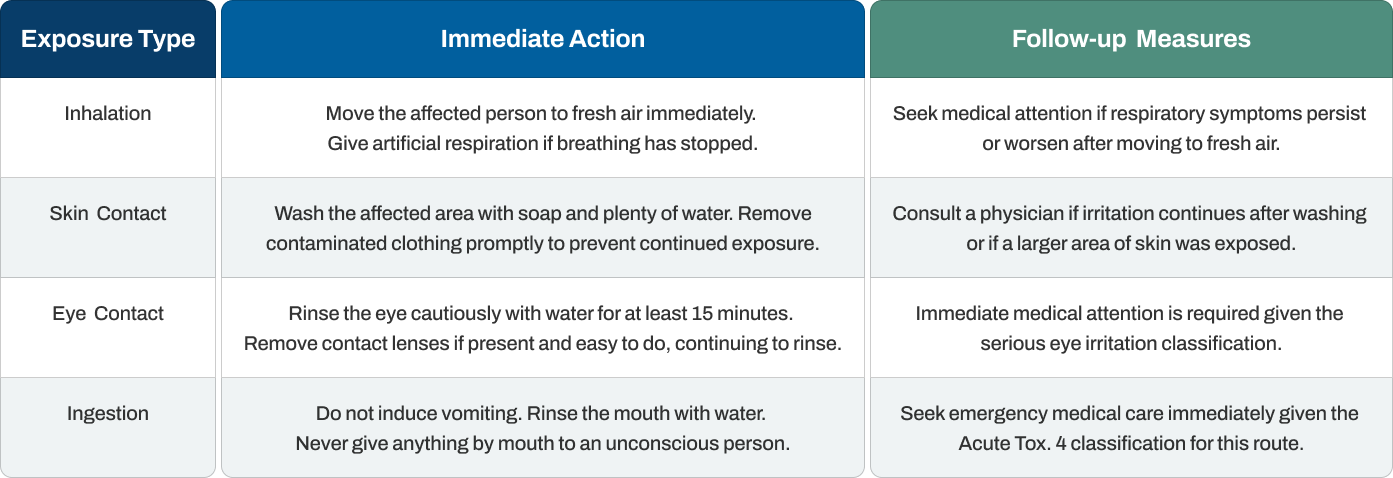
Across all exposure routes, first aid providers should have the safety data sheet on hand to share with attending medical personnel. Contact a poison control center for guidance whenever ingestion is confirmed or suspected.
Handling & Storage Precautions
Safe handling of iodoform depends on consistent dust control and appropriate personal protective equipment, since most exposure incidents trace back to particulate generation during transfer or weighing.
Safe Handling Procedures
Safe handling of iodoform depends on consistent dust control and appropriate personal protective equipment, since most exposure incidents trace back to particulate generation during transfer or weighing.
Storage Conditions
Store iodoform in a cool, refrigerated, dry, well-ventilated area. Protect containers from light exposure, and keep containers tightly closed when not in active use.
Incompatible Substances
-
Strong bases
-
Strong oxidizing agents
-
Magnesium
-
Lithium (violent reaction)
-
Mercuric oxide
-
Calomel
-
Silver nitrate
-
Tannin
-
Balsam Peru
Spill & Leak Procedures
Responding to an iodoform spill starts with basic containment discipline rather than specialized equipment, though PPE and evacuation planning still apply.
Emergency Response Steps
-
Remove ignition sources as a precaution
-
Don appropriate PPE
-
Evacuate non-essential personnel from the area
-
Avoid actions that generate dust from the spilled material
Containment Methods
-
Dampen the spilled solid with 60 to 70 percent ethanol before handling
-
Sweep or shovel the dampened material into closed containers
-
Use ethanol-dampened absorbent paper to collect any remaining residue
Proper disposal requires sealing contaminated materials before they leave the immediate work area. Any absorbent paper, clothing, or cleanup materials that contacted the spill should be placed in vapor-tight bags for disposal. Surplus or non-recyclable iodoform should be offered to a licensed disposal company, and incineration with an afterburner and scrubber system is the appropriate treatment method for the product itself.
Regulatory Information & Compliance
OSHA Regulations
No established OSHA permissible exposure limit has been identified for iodoform. In the absence of an OSHA PEL, the NIOSH-recommended exposure limit of 0.6 ppm (10 mg/m³) as a time-weighted average serves as the relevant occupational exposure benchmark for workplace air monitoring.
EPA & Environmental Impact
Iodoform is toxic to aquatic life, with a reported LC50 of 2.92 mg/L over 96 hours in fathead minnow testing. No confirmed CERCLA or SARA listing has been identified for this compound. Given its aquatic toxicity, spilled or waste material should be kept out of drains and waterways regardless of the absence of a federal reportable quantity designation.
Technical Documents & Resources
-
Safety Data Sheets are available for all grades and concentrations of iodoform, covering hazard identification, safe handling procedures, and first aid measures.
-
Certificates of Analysis are available upon request and verify purity and compliance with applicable grade standards.
Final Note
Iodoform presents a moderate but well-defined hazard profile built around acute toxicity, skin and eye irritation, and respiratory irritation from dust exposure rather than flammability or explosive risk. Consistent PPE use, dust control, and light-protected refrigerated storage address the majority of handling risks associated with this compound.
Facilities working with iodoform should treat its incompatibility list and NIOSH exposure limit as the operational baseline for safe handling, and should keep safety data sheets accessible wherever the material is stored or used. Lab Alley provides current SDS and COA documentation for all iodoform grades carried, supporting safe handling from receipt through disposal.
Explore our Resource Library for more information.
Our Customer Care team is also available for more information and documentation, including chemical Safety Data Sheets.
Need Iodoform You Can Trust?
If you are looking for high-quality iodoform for your lab, product line, or research facility, be sure to visit our store to explore our trusted selection and request a quote.
As your trusted partner in chemical supply, Lab Alley is always striving to meet the growing demands of our customers. We want you to be able to access all of your chemical needs in one place, along with streamlined online ordering and fast shipping.
Due to popular demand from our valued clientele, Lab Alley's iodoform is available in a range of purities and packaging options to suit various commercial, laboratory, and personal needs.