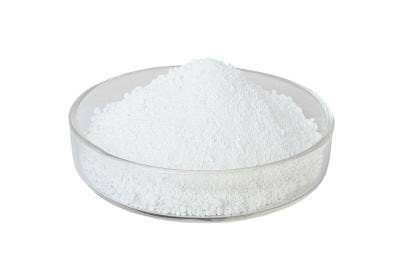






Shelf Life & Expiration of Mannitol
Mannitol shelf life refers to the period during which the compound retains its chemical purity, physical form, and performance characteristics under proper storage. As a stable, non-hygroscopic crystalline compound, Mannitol has an unusually long usable life compared to many organic chemicals, a profile that sets it apart from compounds more prone to oxidation, hydrolysis, or light-driven breakdown.
Moisture exposure and packaging integrity are the primary variables that determine how long a given lot remains within specification. Because Mannitol is chemically inert and resists oxidation without a catalyst present, degradation in practice tends to come from external handling conditions rather than from the molecule breaking down on its own.
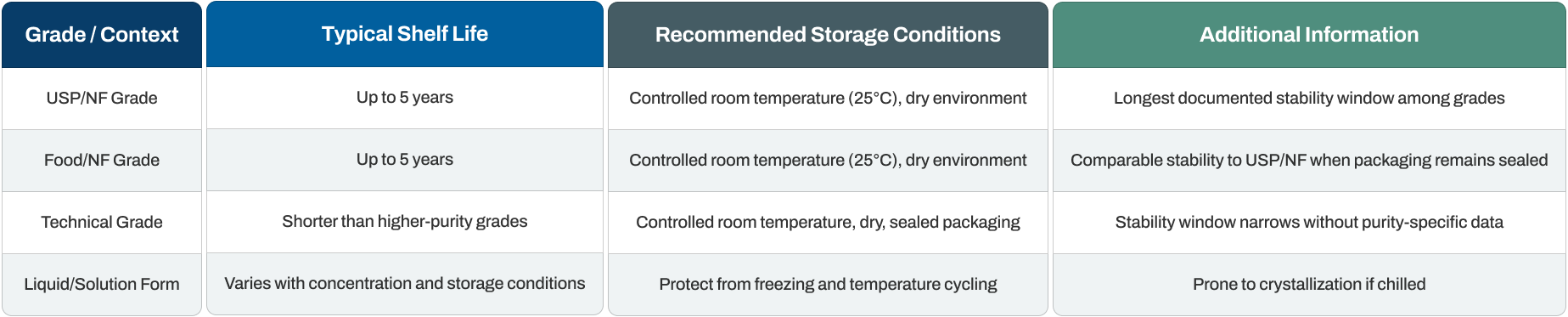
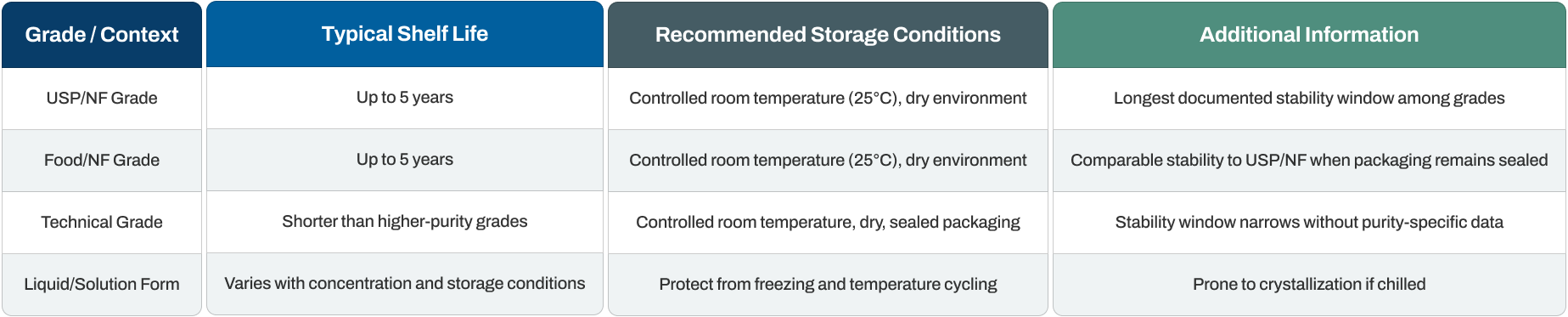
Grade also plays a role in how long a stability window can be documented. Higher-purity USP/NF and food grades typically carry longer documented stability windows than technical grade, and solution or liquid forms introduce additional sensitivity to temperature cycling that solid crystalline material does not share.


This article covers:
- How Long Does Mannitol Last?
- Signs That Mannitol Has Expired
- What to Do If Mannitol Has Expired
- Proper Storage Extends Shelf Life
How Long Does Mannitol Last?
Chemical Stability
Mannitol is a chemically inert crystalline solid that resists oxidation in the absence of a catalyst. Documented stability extends up to 5 years at 25°C under dry conditions, making it one of the longer-lived compounds in routine laboratory and production use. It also carries no risk of Maillard browning, since the molecule lacks the free carbonyl group that drives that reaction in reducing sugars.
Purity & Packaging
Sealed, moisture-resistant containers such as lined fiber drums or poly-lined bags preserve purity for the longest period. Grade affects the documented stability window as well: higher-purity USP/NF and food grades typically carry longer documented stability than technical grade, which makes container selection and seal integrity especially important for maintaining a product's rated shelf life.
Storage Conditions
Mannitol is best stored at controlled room temperature in a dry environment, with no special light protection required. Liquid or solution forms carry an added requirement: they should be protected from freezing and from temperature cycling, which can otherwise compromise product quality before the solid form would show any comparable change.
Signs That Mannitol Has Expired or Degraded
-
Color Change: Pure Mannitol is white in solid form and colorless in solution, so any yellowing or discoloration signals contamination rather than normal aging, since the compound does not brown on its own.
-
Precipitation or Crystallization: In solution form, crystals forming at the bottom of a container indicate exposure to low temperatures, while solid crystalline powder that clumps or cakes points to moisture uptake.
-
Reduced Effectiveness: A loss of purity can reduce performance in pharmaceutical applications relying on its osmotic and diuretic properties, as well as in food and nutraceutical applications relying on its sweetness and bulking function.
What to Do If Mannitol Is Expired
Check Manufacturer Guidelines
Review the Certificate of Analysis and any listed retest date before assuming a lot is unusable. Mannitol's inherent stability often supports a retest-and-extend approach rather than automatic disposal, so confirming current purity against specification is a reasonable first step before writing off a batch.
Follow Proper Disposal Procedures
Mannitol is classified as non-hazardous and does not require special neutralization. Material confirmed to be out of specification should be disposed of according to local solid waste regulations and facility protocol rather than treated as a hazardous waste stream.
Replace with Fresh Stock
Replacing out-of-specification material ensures continued compliance with the purity specifications required across pharmaceutical, food, and laboratory applications. Using compromised stock risks inconsistent performance in formulations or processes that depend on a defined purity threshold.
Proper Storage Extends Shelf Life
-
Container Requirements: Use airtight, moisture-resistant packaging such as sealed drums or poly-lined bags, and reseal containers promptly after each use.
-
Temperature Control: Store at a stable, controlled room temperature and avoid locations prone to temperature cycling or extreme heat.
-
Humidity Control: Despite its low hygroscopicity, prolonged exposure to high humidity can cause caking in fine powder grades, so storage in a dry area away from moisture sources is recommended.
Conclusion
Mannitol's chemical inertness and resistance to oxidation give it a stability profile that outlasts many other organic compounds, with documented shelf life reaching up to 5 years under proper dry storage at room temperature. Degradation signs such as discoloration, clumping, or crystallization point to handling and storage conditions rather than inherent instability in the compound itself.
Maintaining that stability in practice comes down to sealed, moisture-resistant packaging and consistent storage conditions, particularly humidity control for fine powder grades and temperature stability for liquid or solution forms. Checking the Certificate of Analysis and retest date before disposal, rather than assuming expiration, can extend the usable life of material that remains within specification.
For more detailed guidance, explore our Resource Library for comprehensive storage and handling information.
Our Customer Care team is also available for more information and documentation, including chemical Safety Data Sheets.
Need Mannitol You Can Trust?
If you are looking for high-quality mannitol for your lab, product line, or research facility, be sure to visit our store to explore our trusted selection and request a quote.
As your trusted partner in chemical supply, Lab Alley is always striving to meet the growing demands of our customers. We want you to be able to access all of your chemical needs in one place, along with streamlined online ordering and fast shipping.
Due to popular demand from our valued clientele, Lab Alley's mannitol is available in a range of purities and packaging options to suit various commercial, laboratory, and personal needs.