




Polyethylene Glycol Uses & Applications: Comprehensive Industry Guide
Polyethylene Glycol (PEG), also known as polyethylene oxide (PEO) or polyoxyethylene (POE), stands as one of the most versatile synthetic polymers in modern commerce. This water-soluble compound consists of repeating ethylene oxide units with the general formula H-(O-CH₂-CH₂)n-OH, creating a polymer chain that exhibits remarkable properties across an impressive range of molecular weights.
The versatility of polyethylene glycol stems from its availability in various molecular weights, ranging from low-molecular-weight liquids like PEG 200-600 to high-molecular-weight solids such as PEG 1000-20000 and beyond. This molecular weight diversity allows manufacturers and formulators to select precisely the right form for their specific application, whether they need a free-flowing liquid or a solid waxy material.
What makes polyethylene glycol particularly valuable is its unique combination of properties. The compound demonstrates excellent solubility in both water and many organic solvents, providing formulation flexibility that few other materials can match. Low toxicity and proven biocompatibility support its use in pharmaceutical and medical applications where patient safety is paramount. Moisture retention capabilities make it effective in cosmetics and personal care products, while its chemical stability serves industrial manufacturing needs.
These characteristics position polyethylene glycol as indispensable across pharmaceuticals, cosmetics, industrial manufacturing, food processing, and medical applications.
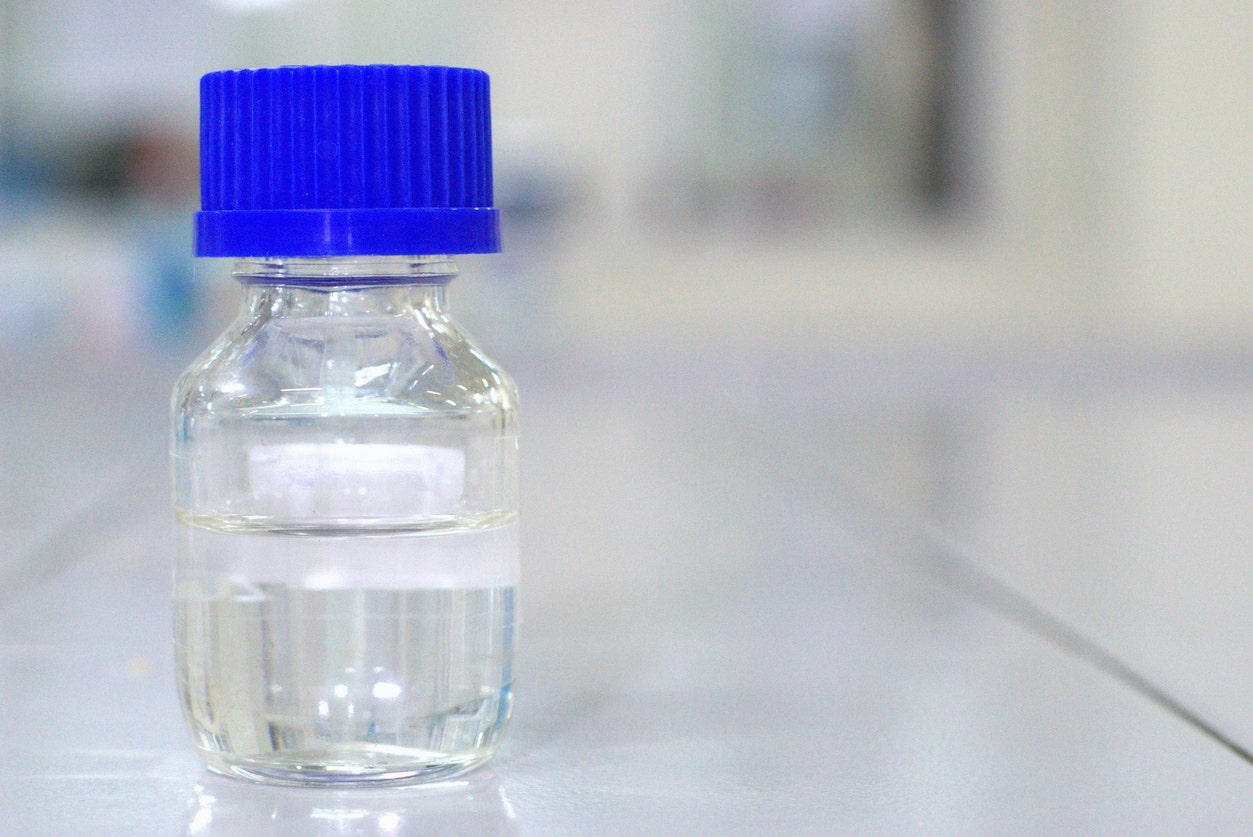
This guide explores how polyethylene glycol serves diverse applications across:
-
Industrial Applications
-
Scientific & Laboratory Uses
-
Medical & Pharmaceutical Uses
-
Food & Beverage Industry
-
Agriculture & Pesticides
-
Personal Care & Cosmetics
-
Household & Consumer Uses
-
Environmental & Water Treatment
Industrial Applications
Manufacturing operations worldwide rely on polyethylene glycol for processing, formulation, and production activities. The polymer's controllable properties through molecular weight selection make it attractive for companies across numerous industrial sectors.
Polymer & Plastics Production
Polyethylene glycol serves as a plasticizer and processing aid in polyurethane foams, polymer composites, and thermoplastic manufacturing. The compound improves flexibility and workability during processing, allowing manufacturers to achieve desired material properties. Different molecular weights provide varying degrees of plasticization, giving formulators control over final product characteristics.
Lubricants & Hydraulic Fluids
Industrial lubricant formulations use polyethylene glycol as a base fluid due to its superior viscosity index and thermal stability. Metalworking fluids incorporate PEG to provide lubrication during cutting, grinding, and forming operations. Hydraulic systems benefit from PEG-based fluids that resist thermal breakdown and maintain viscosity under pressure.
Surfactant & Detergent Manufacturing
Nonionic surfactants and emulsifiers frequently incorporate polyethylene glycol as a key ingredient. The polymer's structure provides the hydrophilic portion that enables surfactant function, allowing formulation of effective cleaning products for textile processing, metal treatment, and general industrial cleaning.
Chemical Processing
Chemical manufacturers use polyethylene glycol as both a solvent and a reaction medium in organic synthesis, polymerization reactions, and chemical intermediate production. Production of chemical intermediates benefits from PEG's ability to dissolve a wide range of organic compounds while maintaining stability under processing conditions.
Scientific & Laboratory Uses
Research facilities across academic, commercial, and government sectors consume polyethylene glycol for experimental work and analytical procedures. Established protocols and reliable performance make it fundamental to numerous laboratory operations.
Biochemical Research
Protein precipitation represents one of the most common uses of polyethylene glycol in biochemistry laboratories. Cell fusion protocols in hybridoma technology rely on PEG to promote membrane fusion when creating antibody-producing cell lines. Cryoprotection of biological samples benefits from PEG's ability to reduce ice crystal formation during freezing.
Molecular Biology Applications
DNA precipitation protocols use polyethylene glycol to selectively remove nucleic acids from solution during purification procedures. PCR enhancement techniques sometimes incorporate low concentrations of PEG to improve amplification efficiency and specificity. Gel electrophoresis applications employ the polymer for nucleic acid purification and concentration.
Chromatography & Separation
Liquid chromatography methods sometimes employ polyethylene glycol as a stationary phase modifier to improve resolution and peak shape. Capillary electrophoresis techniques use PEG to modify separation characteristics and reduce unwanted interactions between analytes and capillary walls.
Laboratory Solvent
General laboratory work benefits from polyethylene glycol's non-toxic nature and effective solvent properties. Dissolution of compounds for testing, extraction procedures, and formulation development often proceeds more safely with PEG compared to traditional organic solvents.
Medical & Pharmaceutical Uses
Healthcare applications represent some of the most demanding uses for polyethylene glycol, requiring pharmaceutical-grade materials meeting strict purity and quality standards. The polymer's established safety record supports its widespread use in medical products.
Pharmaceutical Excipient
Tablet formulations incorporate polyethylene glycol as a binder, coating agent, and solubilizer. Controlled-release matrix systems use higher molecular weight PEG grades to regulate drug release rates over extended periods. Oral, topical, and injectable formulations all employ appropriate PEG grades selected for their specific application requirements.
Laxative & Bowel Preparation
Polyethylene glycol 3350 serves as the active ingredient in osmotic laxatives like MiraLAX for treating occasional constipation. Higher doses in formulations like GoLYTELY provide complete bowel cleansing before colonoscopy procedures. The polymer works by retaining water in the intestinal tract without entering the bloodstream.
Drug Delivery Systems
PEGylation technology attaches polyethylene glycol chains to proteins and peptides, improving drug stability, reducing immunogenicity, and extending circulation time in the bloodstream. Advanced drug delivery systems use PEG in nanoparticle formulations, liposomes, and other carriers that target specific tissues or provide controlled release.
Ophthalmic Solutions
Artificial tears and eye drops incorporate polyethylene glycol as a lubricant for dry eye treatment. Contact lens solutions also use PEG to improve lens comfort and maintain hydration. The polymer's moisture-retention properties provide relief without irritation.
Ointment & Cream Base
Topical medication formulations use polyethylene glycol as a vehicle that carries active ingredients while providing beneficial properties to the skin. Wound care products incorporate PEG bases that won't adhere to healing tissue. The ability to blend different molecular weight PEG grades allows formulators to adjust consistency and release characteristics.
Food & Beverage Industry
Food sector applications of polyethylene glycol require food-grade specifications meeting regulatory standards. The polymer designated as E1521 serves various functional roles in food processing and packaging.
Food Additive (E1521)
Anti-foaming applications in food processing use polyethylene glycol to control unwanted foam during mixing and cooking operations. Coating applications for fruits, vegetables, and confectionery products use PEG to provide moisture barriers and improve appearance.
Beverage Processing
Beer production employs polyethylene glycol as a clarifying agent that helps remove haze-forming proteins and improve product clarity. Foam stabilizer functions in beverage manufacturing support consistent foam characteristics in finished products.
Flavor & Fragrance Carrier
Flavor compounds and food colors dissolve effectively in polyethylene glycol, creating concentrated solutions that distribute evenly when added to processed foods and beverages. The polymer's bland taste and odor ensure it doesn't interfere with intended flavor profiles.
Supplement Formulations
Vitamin tablets and nutritional supplements use polyethylene glycol as a binder and coating to protect ingredients from moisture. The polymer's regulatory acceptance for food and pharmaceutical use makes it a preferred excipient in supplement manufacturing.
Agriculture & Pesticides
Agricultural applications leverage polyethylene glycol's chemical properties to improve crop protection products and support plant science research.
Agrochemical Formulations
Pesticides, herbicides, and fungicides incorporate polyethylene glycol as an adjuvant and dispersing agent that enhances product efficacy. The polymer improves spreading and adhesion on plant surfaces while increasing penetration of active ingredients.
Plant Growth Applications
Plant tissue culture research uses polyethylene glycol as an osmotic stress agent to study plant responses to water-deficient conditions. Seed priming protocols incorporate PEG to control water uptake during germination enhancement treatments.
Soil Conditioning
Specialized agricultural applications use polyethylene glycol as a soil penetrant to improve water infiltration and as a moisture retention agent in situations requiring enhanced water-holding capacity.
Veterinary Medicine
Animal pharmaceutical formulations incorporate polyethylene glycol as an excipient serving similar functions as in human medications. Osmotic laxatives for livestock health management use PEG to treat digestive issues in cattle, horses, and other farm animals.
Personal Care & Cosmetics
Beauty and personal care products leverage polyethylene glycol's humectant properties and texture enhancement capabilities. Various molecular weight grades serve different functions based on product requirements.
Skincare Formulations
Lotions, creams, serums, and moisturizers incorporate polyethylene glycol as a humectant that attracts and retains moisture in the skin. Cosmetic chemists blend different PEG molecular weights to achieve specific viscosities and skin feel.
Hair Care Products
Shampoos and conditioners use polyethylene glycol as a conditioning agent and viscosity modifier. Styling gels and hair treatments incorporate PEG to improve product performance and provide desired hold characteristics.
Toothpaste & Oral Care
Toothpaste formulations employ polyethylene glycol as a binder to maintain product consistency and a humectant to prevent drying. Mouthwash and oral hygiene products use PEG to solubilize flavoring agents and therapeutic compounds.
Makeup & Color Cosmetics
Foundations, lipsticks, mascaras, and decorative cosmetics incorporate polyethylene glycol as a solvent and texture improver. The polymer helps achieve smooth application and proper color dispersion.
Household & Consumer Uses
Consumer products throughout the home contain polyethylene glycol serving various functional roles. The polymer's safety profile and effectiveness make it suitable for products used in daily life.
Cleaning Products
Household cleaners, laundry detergents, and dishwashing liquids incorporate polyethylene glycol as a surfactant and solubilizer. The polymer helps dissolve greases and soils while supporting the formulation of stable, effective cleaning products.
Fabric Care
Fabric softeners use polyethylene glycol as a softening agent that reduces static and improves fabric feel. Wrinkle-release sprays incorporate PEG to help relax fabric fibers and reduce the need for ironing.
Air Fresheners
Aerosol and plug-in air freshener formulations use polyethylene glycol as a carrier for fragrances and essential oils. The polymer helps deliver scent consistently while supporting stable formulations.
Automotive Products
Antifreeze and coolant formulations sometimes incorporate polyethylene glycol as a component, providing freeze protection and corrosion inhibition. Brake fluids and windshield washer solutions may use PEG for specific performance characteristics.
Environmental & Water Treatment
Environmental applications leverage polyethylene glycol's ability to interact with pollutants and facilitate separation processes. The polymer's biodegradability supports its use in applications where environmental release may occur.
Wastewater Treatment
Municipal and industrial wastewater processing uses polyethylene glycol as a flocculant and dewatering agent. The polymer helps aggregate suspended particles for easier removal and improves solid-liquid separation.
Soil Remediation
Soil washing and contaminant extraction for environmental cleanup operations employ polyethylene glycol as a surfactant. The polymer helps mobilize and remove pollutants from contaminated soil.
Aqueous Phase Processing
Green chemistry applications use polyethylene glycol as a biodegradable solvent alternative in aqueous two-phase systems. These systems provide environmentally friendly separation methods for extracting valuable compounds.
Bioremediation Enhancement
Microbial degradation of pollutants benefits from polyethylene glycol serving as a bioavailability enhancer. The polymer helps make hydrophobic contaminants more accessible to degrading microorganisms.
Polyethylene Glycol Molecular Weight Grades
Understanding PEG molecular weight variations helps users select the optimal grade for their application. The number following "PEG" indicates average molecular weight, directly influencing physical properties and performance characteristics.
PEG 200-600 (Low Molecular Weight)
Clear, viscous liquids at room temperature characterize these low molecular weight grades. Excellent solvency and humectant properties make them commonly used in cosmetics, pharmaceuticals, and personal care products. These grades are highly hygroscopic and water-miscible.
PEG 1000-2000 (Medium Molecular Weight)
Semi-solid to waxy solids at room temperature represent medium molecular weight grades. This versatile range offers a balance between solubility and solid form, making these grades widely employed in pharmaceutical tablets, ointment bases, and industrial applications.
PEG 3000-8000 (High Molecular Weight)
White, waxy solids with higher melting points characterize these high molecular weight grades. Applications include controlled-release drug formulations, tablet coatings, and suppository bases requiring a solid form with good water solubility.
PEG 10000+ (Very High Molecular Weight/PEO)
High-molecular-weight polymers are often referred to as polyethylene oxide. These materials find use in specialized applications, including flocculation, rheology modification, and advanced pharmaceutical delivery systems.
USP/NF and Food Grade PEG
Pharmaceutical-grade polyethylene glycol meeting United States Pharmacopeia standards serves use in drug products, medical devices, and food-grade applications requiring the highest purity specifications.
Polyethylene Glycol Grades and Pack Sizes
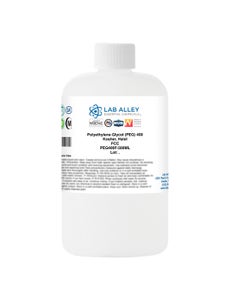
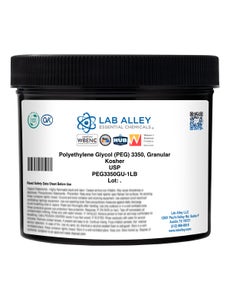
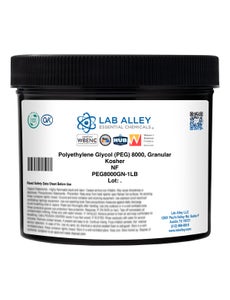
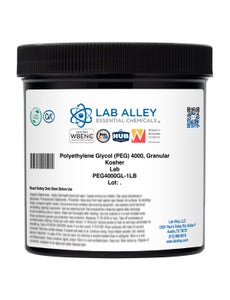
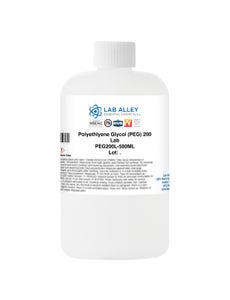
Searching for a reliable source of premium-quality polyethylene glycol? Lab Alley supplies superior PEG solutions across pharmaceutical, cosmetic, industrial, and research applications. Every batch receives thorough testing to confirm purity and satisfy strict quality standards.
Available Grades & Purities
Lab Alley provides polyethylene glycol in multiple molecular weights and specifications:
Molecular Weight Range: PEG 200, 300, 400, 600, 1000, 1500, 3350, 4000, 6000, 8000, and 20000
Grade Specifications:
-
USP/NF Pharmaceutical Grade: Meets United States Pharmacopeia monograph specifications for drug products, medical devices, and healthcare applications with full compliance documentation
-
Food Grade: Certified for food additive use (E1521) with appropriate documentation for food processing applications
-
Technical Grade: High-quality material for industrial manufacturing, research, and applications not requiring pharmaceutical specifications
Available in liquid forms (PEG 200-600) and solid forms (PEG 1000+). All pharmaceutical grades meet USP/NF specifications with full documentation. Select grades carry Kosher and Halal certifications.
Pack Sizes & Bulk Availability
Lab Alley offers polyethylene glycol in various container sizes:
-
Laboratory containers (500g, 1kg, 5kg) for research and development applications
-
Commercial packaging (25kg pails, 50kg drums) for moderate-use situations and pilot-scale production
-
Bulk industrial quantities (200kg drums, 1000kg totes, pallet loads) for large-scale manufacturing
All products are packaged in food-grade and pharmaceutical-grade containers with proper moisture protection. Quality assurance documentation accompanies every shipment.
Quality & Compliance
Lab Alley's polyethylene glycol products feature:
-
USP/NF grade certificates available for pharmaceutical applications
-
Food-grade certifications for food additive use (E1521)
-
Certificate of Analysis (COA) and technical data sheets with every shipment
-
Kosher and Halal certifications available on select grades
Important Note: Polyethylene glycol for pharmaceutical and food applications must meet appropriate USP/NF or food-grade specifications. Always verify the molecular weight and grade specifications match your intended application requirements.
Final Note
Polyethylene glycol's exceptional versatility across pharmaceutical formulations, cosmetic products, industrial manufacturing, and food processing establishes it as an indispensable polymer in modern commerce. From enabling drug delivery innovations to providing essential functions in everyday consumer products, this synthetic polymer delivers reliable solutions across an impressive range of applications. For businesses evaluating polyethylene glycol integration, Lab Alley's expertise in both technical requirements and regulatory landscapes ensures smooth adoption while upholding quality standards and compliance requirements.
For more detailed guidance, explore our Resource Library.
Our Customer Care team is also available for more information and documentation, including chemical Safety Data Sheets.
Need Polyethylene Glycol You Can Trust?
If you are looking for high-quality polyethylene glycol for your lab, product line, or research facility, be sure to visit our store to explore our trusted selection and request a quote.
As your trusted partner in chemical supply, Lab Alley is always striving to meet the growing demands of our customers. We want you to be able to access all of your chemical needs in one place, along with streamlined online ordering and fast shipping.
Due to popular demand from our valued clientele, Lab Alley's polyethylene glycol is available in a range of purities and packaging options to suit various commercial, laboratory, and personal needs.