








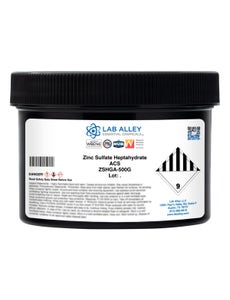

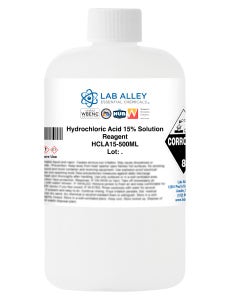



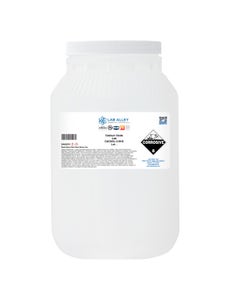
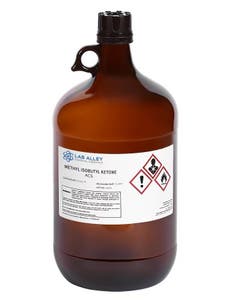
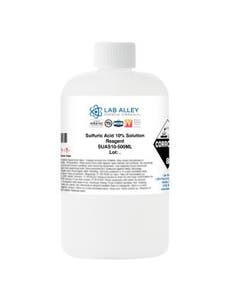
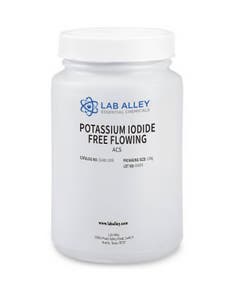
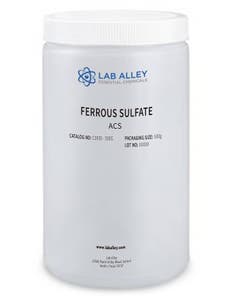
A chemical is any substance you buy for what it's made of. A reagent is a substance that causes a chemical reaction, which is why labs use the word for the chemical reagents they react, titrate, or test with. Most buyers shop both together, so Lab Alley keeps them in one place. Whether you need a liter of a laboratory reagent or a drum of industrial solvent, the questions are the same: what is it, how pure is it, and how do you handle it?
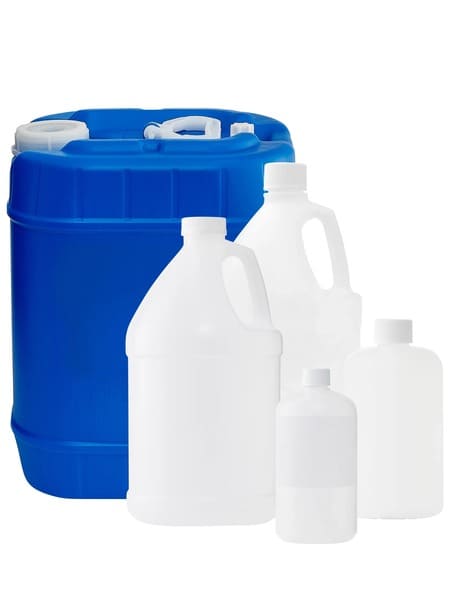
What you're buying decides how you'll handle it, and a few properties do most of the deciding. Concentration tells you how much of the named chemical is in the bottle, shown as a percent, a proof, or a normality. Purity tells you what else is in there, and that's where grade comes in. Physical form matters too, because liquids, powders, granules, shot, foil, and wire all store and measure differently. Then there's reactivity. Acids, bases, oxidizers like hydrogen peroxide, and flammable solvents each need their own storage area. Container material counts as well. HDPE suits many acids and bases, while many HPLC grade solvents belong in amber glass or metal. The Chemical Storage Compatibility Chart lists the right container for each chemical.