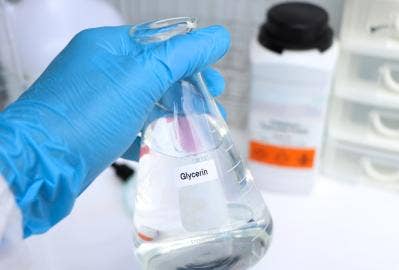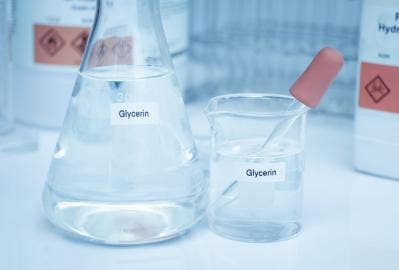






Glycerin Safety & Hazards
Glycerin ranks among the more forgiving chemicals found in a typical lab or production facility, and most high-purity grades are not classified as hazardous under the Globally Harmonized System. That said, the compound still carries real considerations worth understanding before it goes into regular use, from its behavior at elevated temperatures to the specific storage conditions that keep it stable.
Production teams, R&D staff, and safety officers working with glycerin need to know where the actual risks lie: combustibility under sustained heat, mild irritation potential on skin and eyes, and the handling precautions that prevent contamination or degradation. None of these risks are severe on their own, but they warrant the same procedural discipline applied to any chemical in active use.
In this article, we'll explore:
-
Chemical Hazards Overview
-
Exposure Risks & Health Effects
-
First Aid Measures
-
Handling & Storage Precautions
-
Spill & Leak Procedures
-
Fire & Explosion Hazards
-
Regulatory & Compliance Information
-
Technical Documents & References
Chemical Hazards Overview
Glycerin's hazard profile varies by grade. High-purity USP, food-grade, and technical grades are generally not classified as hazardous under GHS, while some technical-grade formulations carry Skin Irritation Category 2 and Eye Irritation Category 2B classifications due to trace impurities or concentration differences.
-
GHS Pictograms: None required for most USP or high-purity grades; GHS07 (exclamation mark) may apply to lower-purity or technical grades because of mild irritation potential
-
NFPA Hazard Rating: Health: 1, Flammability: 1, Instability: 0
-
Primary Risks: Low overall toxicity, combustibility at elevated temperatures, and mild eye or skin irritation with prolonged or concentrated exposure
These ratings place glycerin well below the hazard profile of most industrial solvents, but the flammability rating of 1 means it should still be kept away from open flame and high-heat sources during storage and handling.
Exposure Risks & Health Effects
Inhalation Risks
Glycerin's low vapor pressure limits inhalation exposure under normal handling conditions, since the compound does not readily evaporate at room temperature. Exposure becomes more relevant when the product is heated, misted, or aerosolized, conditions under which airborne droplets can irritate the nose, throat, and upper respiratory tract. Workers handling glycerin in processes that generate mist or vapor should use adequate ventilation to keep airborne concentrations low.
Skin Contact Risks
Direct skin contact with glycerin carries a generally low irritation potential. Prolonged or repeated contact with concentrated product can produce mild irritation or dryness as the compound draws moisture from the skin, a property tied to its hygroscopic nature. This effect is usually reversible and resolves once contact ends and the skin is washed.
Eye Contact Risks
Eye contact is the exposure route most likely to produce a noticeable reaction. Glycerin can cause mild to moderate irritation, redness, and stinging on contact, though it is not expected to cause permanent eye damage. Symptoms typically subside once the eye is flushed and the irritant is cleared.
Ingestion Risks
Glycerin has very low acute oral toxicity, with an LD50 in rats exceeding 12,000 mg/kg, a figure that places it firmly in the low-toxicity range compared to most industrial chemicals. Large doses can still produce symptoms such as headache, nausea, or diarrhea, generally tied to the osmotic effect of concentrated glycerin in the digestive tract rather than any inherent toxicity.
Glycerin is not listed as a carcinogen by ACGIH, IARC, or NTP, which supports its long history of safe use across industrial, pharmaceutical, and food applications. Some animal studies involving repeated high-dose exposure have noted effects on the kidneys, a consideration relevant primarily to occupational settings with sustained, elevated exposure rather than routine handling.
First Aid Procedures
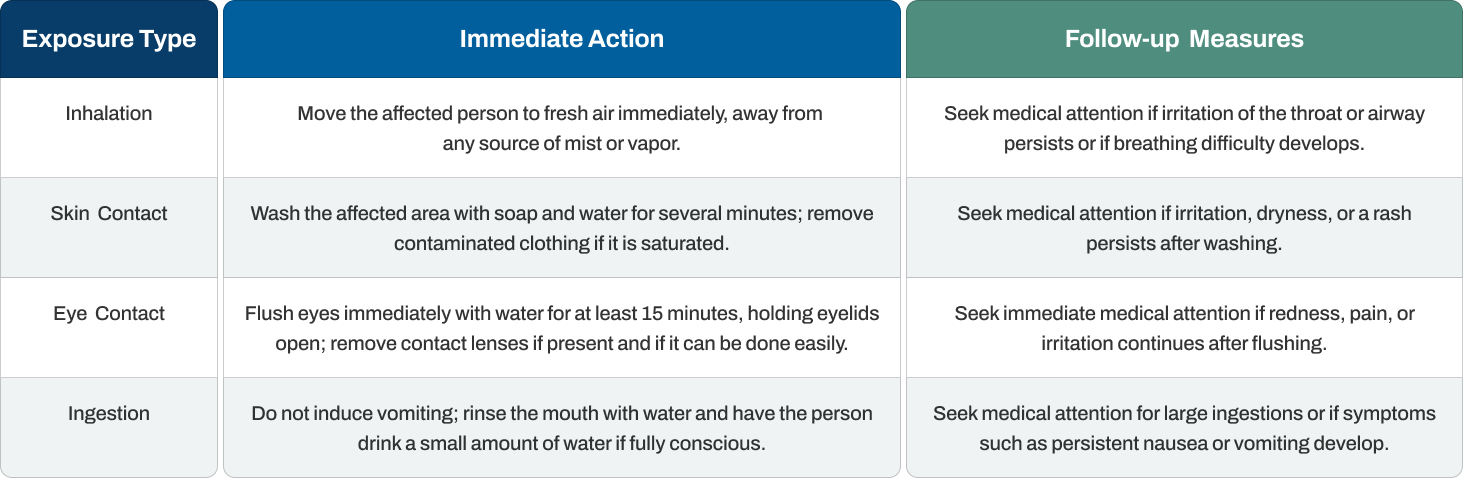
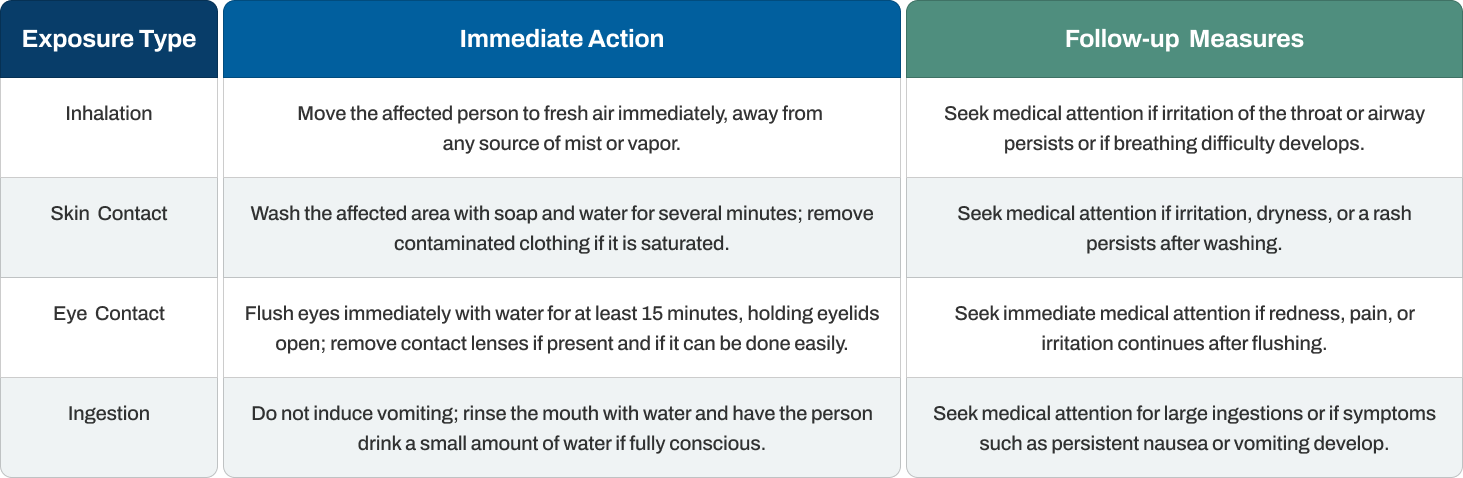
Across all exposure routes, anyone assisting should have quick access to water for flushing and should treat symptomatically rather than assume no response is needed. Contact a poison control center for guidance on large or uncertain ingestion amounts, particularly involving children.
Handling & Storage Precautions
Standard laboratory PPE, including gloves and safety glasses, is sufficient for routine handling of glycerin under normal conditions.
-
Safe Handling Procedures: Wear standard PPE during transfer and use; ensure adequate ventilation in any process that heats or mists the product, since airborne exposure carries more irritation potential than liquid contact
-
Storage Conditions: Store in tightly sealed containers in a cool, dry location; glycerin is hygroscopic and will absorb ambient moisture if containers are left open, which can affect purity and concentration; avoid allowing the product to freeze
Incompatible substances should be kept well away from glycerin storage and handling areas:
-
Strong oxidizers, including potassium permanganate and chromic oxide
-
Strong acids
-
Acetic anhydride and nitrating agents
These combinations carry a risk of violent reaction and should be addressed in any facility's chemical segregation plan.
Spill & Leak Procedures
A glycerin spill presents more of a housekeeping and slip hazard than an acute chemical danger, given the compound's viscosity and water solubility.
Emergency response for a spill follows a straightforward sequence:
-
Ventilate the affected area
-
Wear standard PPE before approaching the spill
-
Contain the spill promptly to prevent it from spreading into a slip hazard, since glycerin's viscous nature can make surfaces slick over a wide area
Containment relies on inert absorbent material such as sand, diatomaceous earth, or a universal absorbent, which can be applied directly to the spill and collected for disposal once saturated.
Proper disposal follows standard practice for a non-hazardous liquid in most cases, since pure glycerin typically falls outside hazardous waste classification. Facilities should still prevent any release into waterways or drains, consistent with general environmental handling practice, and no neutralization step is required before disposal.
Fire & Explosion Hazards
Glycerin is combustible rather than flammable in the conventional sense, a distinction reflected in its NFPA flammability rating of 1. The flash point is about 160°C (320°F) by the closed-cup method, well above typical ambient and process temperatures, and the autoignition temperature ranges from 370 to 400°C (700 to 750°F). These figures mean glycerin requires sustained, significant heat before it poses an ignition risk, unlike many common laboratory solvents.
Appropriate extinguishing media for a glycerin fire include:
-
Water spray
-
Dry chemical
-
Carbon dioxide
-
Alcohol-resistant foam
Firefighting personnel should use self-contained breathing apparatus when responding to a glycerin fire, since thermal decomposition of the compound can release irritating and toxic gases, including acrolein. Avoid direct water streams and use water spray, which cools the material without scattering it.
Regulatory Information & Compliance
OSHA Regulations
OSHA's vacated permissible exposure limit for glycerin is 15 mg/m³ as an 8-hour time-weighted average for total dust, with a separate limit of 5 mg/m³ TWA for the respirable fraction. Glycerin is not classified as a hazardous chemical under 29 CFR 1910.1200 for most commercial grades, which reflects its low overall toxicity profile.
EPA & Environmental Impact
Glycerin does not appear on CERCLA or SARA lists and is readily biodegradable, with low aquatic toxicity reported across environmental studies. These characteristics support its use across food, pharmaceutical, and industrial applications without triggering the reporting requirements attached to more persistent or toxic substances.
FDA/USP/ACS Compliance
Depending on the grade purchased, glycerin may meet USP, Food Chemicals Codex (FCC), or ACS reagent grade standards. Each standard carries its own purity specifications, and customers should confirm the grade required for their specific application, whether pharmaceutical, food, or laboratory use.
Technical Documents & Resources
- SDSs are available for all grades and concentrations of glycerin, covering safety data, handling precautions, and first aid guidance.
- COAs are available upon request and verify purity and compliance with the applicable grade standard, such as USP or ACS specifications.
Final Note
Glycerin's safety profile makes it one of the more manageable chemicals in regular industrial and laboratory rotation, with low acute toxicity, no carcinogen classification, and a combustibility risk that only becomes relevant at sustained high temperatures. The main considerations for anyone handling it come down to basic PPE use, proper sealed storage away from moisture and incompatible oxidizers, and awareness of its mild irritation potential on skin and eyes.
Following standard handling and storage practices keeps glycerin's already low risk profile well under control. Facilities working with multiple grades should confirm the specific classification and compliance standard tied to each shipment, since purity and regulatory status can shift depending on whether the product is USP, FCC, or ACS grade.
Explore our Resource Library for more information.
Our Customer Care team is also available for more information and documentation, including chemical Safety Data Sheets.
Need Glycerin You Can Trust?
If you are looking for high-quality glycerin for your lab, product line, or research facility, be sure to visit our store to explore our trusted selection and request a quote.
As your trusted partner in chemical supply, Lab Alley is always striving to meet the growing demands of our customers. We want you to be able to access all of your chemical needs in one place, along with streamlined online ordering and fast shipping.
Due to popular demand from our valued clientele, Lab Alley's glycerin is available in a range of purities and packaging options to suit various commercial, laboratory, and personal needs.