





How to Safely Dispose of Glycerin
Glycerin is a widely used compound valued for its low toxicity and biodegradability, but proper disposal still requires attention to detail. Because it is not federally regulated as a DOT hazardous material and typically falls outside RCRA hazardous waste classification in its pure form, many facilities assume glycerin disposal carries no real compliance burden. That assumption can lead to costly mistakes, particularly around wastewater discharge.
What makes glycerin different from many other chemicals on a disposal checklist is its very high biochemical oxygen demand. Even small volumes released into a sanitary sewer or waterway can place significant strain on biological treatment processes, consuming dissolved oxygen that aquatic life depends on. Combined with the fact that crude or contaminated glycerin (such as biodiesel byproduct) can carry residual methanol or catalyst that changes its hazard profile entirely, disposal decisions need to be based on the specific grade and condition of the material at hand rather than assumptions about glycerin as a class.


In this article, we'll explore:
-
Why Proper Disposal Matters
-
How to Dispose of Glycerin
-
Reactivity: Oxidizer Incompatibility Hazard
-
Special Considerations
Why Proper Disposal Matters
Environmental Protection
Glycerin's very high biochemical oxygen demand means that even dilute releases can deplete dissolved oxygen in waterways, stressing or killing aquatic organisms. This impact is often underestimated because glycerin itself is not classified as toxic or environmentally hazardous in the way solvents or heavy metals are. The oxygen demand it places on receiving water, rather than direct toxicity, is the primary environmental concern during disposal.
Health & Safety
Glycerin carries a favorable toxicity profile, with an oral LD50 of approximately 12,600 mg/kg in rat studies, placing it well outside categories requiring significant acute health precautions. The more practical hazards during disposal are physical rather than toxicological: spilled glycerin creates a slip hazard due to its viscosity, and direct contact can cause mild eye or skin irritation. Standard handling precautions are sufficient to manage these risks.
Legal Compliance
Because pure glycerin is generally not listed as RCRA hazardous waste, many generators assume no waste determination is necessary. This is a mistake. Facilities must still confirm state and local wastewater discharge limits before releasing glycerin to a sanitary sewer, and any batch that may be contaminated with methanol, catalyst residue, or other process chemicals requires a proper waste determination rather than a default assumption of non-hazardous status.
How to Dispose of Glycerin
Check Regulations
Before selecting a disposal pathway, confirm the discharge limits set by the local wastewater treatment authority, since BOD thresholds vary significantly by jurisdiction. Facilities generating glycerin waste should also verify their generator status, whether conditionally exempt small quantity, small quantity, or large quantity, particularly when glycerin waste is contaminated or blended with other process chemicals. This determination affects the level of documentation and management required.
Use Designated Waste Disposal Methods
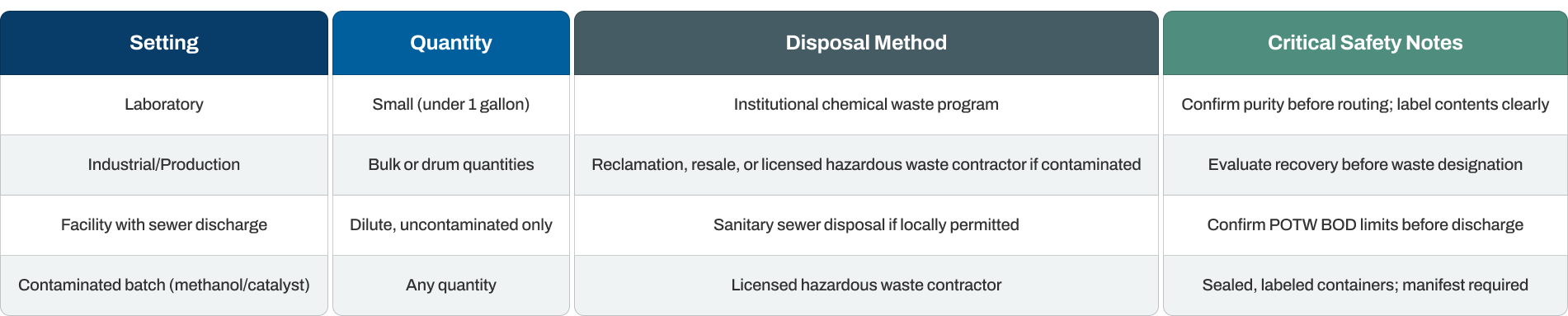
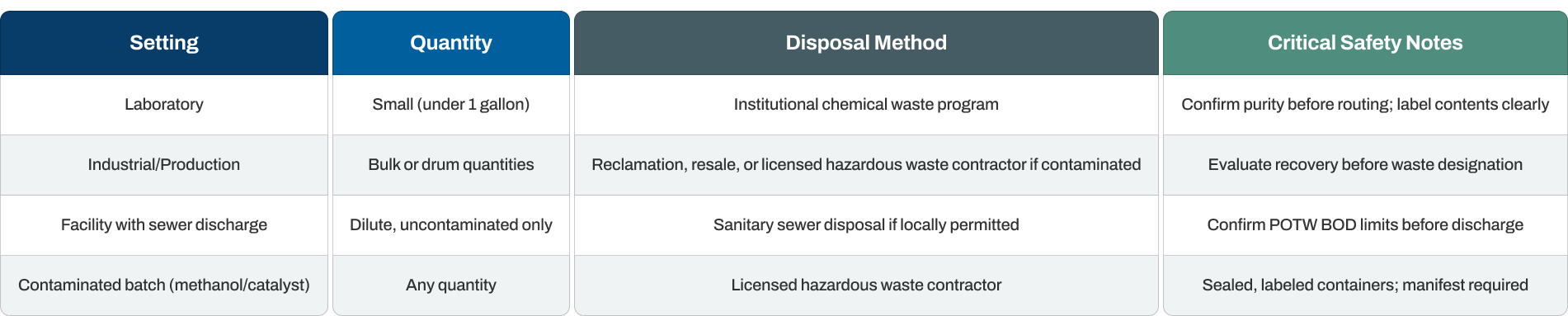
The appropriate disposal method for glycerin depends heavily on its purity, volume, and the setting in which it is generated. The following pathways cover the most common scenarios.
Non-Hazardous Disposal
Uncontaminated, dilute glycerin may be permitted for disposal through the sanitary sewer in jurisdictions where local publicly owned treatment works allow it within their BOD limits. This should never be assumed; confirm directly with the local wastewater authority before releasing glycerin to a drain, and dilute according to their specified requirements.
Hazardous Waste Disposal
When glycerin is contaminated with methanol, catalyst residues, or other reactive substances that trigger ignitability or corrosivity characteristics, it must be managed as hazardous waste. This means using sealed, properly labeled containers and engaging a licensed hazardous waste contractor who can provide manifest documentation for the shipment. Skipping this step for contaminated batches creates both regulatory and safety exposure.
Industrial Quantities
Bulk or crude glycerin, such as the byproduct generated during biodiesel production, is frequently a better candidate for refining, reclamation, or resale than for disposal. Facilities generating industrial quantities should evaluate recovery options before defaulting to a waste designation, since this can reduce both disposal costs and environmental impact.
Laboratory & Institutional Waste
Laboratory and institutional generators should route glycerin waste through their existing chemical waste management program rather than handling it as an independent stream. Containers should be labeled with contents and relevant hazard information according to the institution's internal protocol, ensuring consistency with how other chemical wastes are tracked.
Never Mix Chemicals
Glycerin waste should never be combined with strong oxidizers such as chromium trioxide, potassium chlorate, potassium permanganate, or nitric acid. Mixing these substances with glycerin creates a genuine risk of fire or explosive reaction, so waste streams containing any of these materials must be kept entirely separate throughout collection, storage, and disposal.
Follow PPE Guidelines
Personal protective equipment for glycerin disposal is straightforward but should not be skipped:
-
Chemical-resistant gloves
-
Safety glasses or goggles
-
Standard lab coat or protective clothing
-
Adequate ventilation, particularly when handling heated or large volumes
Reactivity: Oxidizer Incompatibility Hazard
Explosive Reaction Risk
Contact between glycerin and strong oxidizers, including potassium permanganate and chromium trioxide, can result in fire or explosive reaction. This risk applies not only to concentrated product but to waste streams as well, meaning facilities must never combine glycerin waste with oxidizer-containing waste during collection or storage.
Segregated Storage
Glycerin waste should be stored apart from oxidizer waste streams, strong acids, and strong bases at all times, including during temporary accumulation before pickup or disposal. Segregation should be built into container labeling and storage area layout rather than relying on staff to remember the incompatibility at the point of disposal.
Special Considerations
Wastewater Treatment Impact
High BOD load from glycerin disposal can disrupt the biological treatment processes that wastewater facilities depend on to function properly. Facilities generating large volumes may need to pretreat the waste or dilute it beyond standard limits before discharge is permitted, and this should be confirmed with the receiving treatment facility in advance rather than after the fact.
Contaminated vs. Pure Glycerin
Crude or used glycerin, such as material recovered from biodiesel production, may carry residual methanol or catalyst that changes its hazard classification entirely compared to pure, product-grade glycerin. Waste streams of unknown purity should always be tested or characterized before a disposal pathway is selected, since treating contaminated glycerin as though it were pure product-grade material can result in improper handling of what is actually a hazardous waste.
Conclusion
Safe and compliant glycerin disposal comes down to understanding the specific condition of the material being discarded rather than treating all glycerin the same way. Pure, uncontaminated glycerin generally presents low toxicity and flammability risk, but its high biochemical oxygen demand and potential for violent reaction with strong oxidizers still require deliberate handling.
Confirming local wastewater discharge limits, keeping waste streams properly segregated, and correctly identifying contaminated batches before selecting a disposal method are the practices that keep glycerin disposal both safe and compliant.
For more detailed guidance, explore our Resource Library
Our Customer Care team is also available for more information and documentation, including chemical Safety Data Sheets.
Need Glycerin You Can Trust?
If you are looking for high-quality glycerin for your lab, product line, or research facility, be sure to visit our store to explore our trusted selection and request a quote.
As your trusted partner in chemical supply, Lab Alley is always striving to meet the growing demands of our customers. We want you to be able to access all of your chemical needs in one place, along with streamlined online ordering and fast shipping.
Due to popular demand from our valued clientele, Lab Alley's glycerin is available in a range of purities and packaging options to suit various commercial, laboratory, and personal needs.