





Acetone Uses & Applications
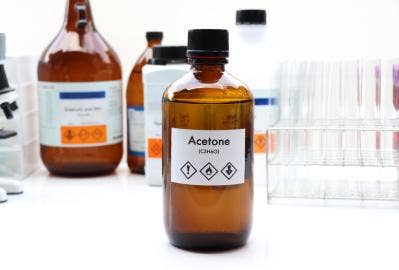
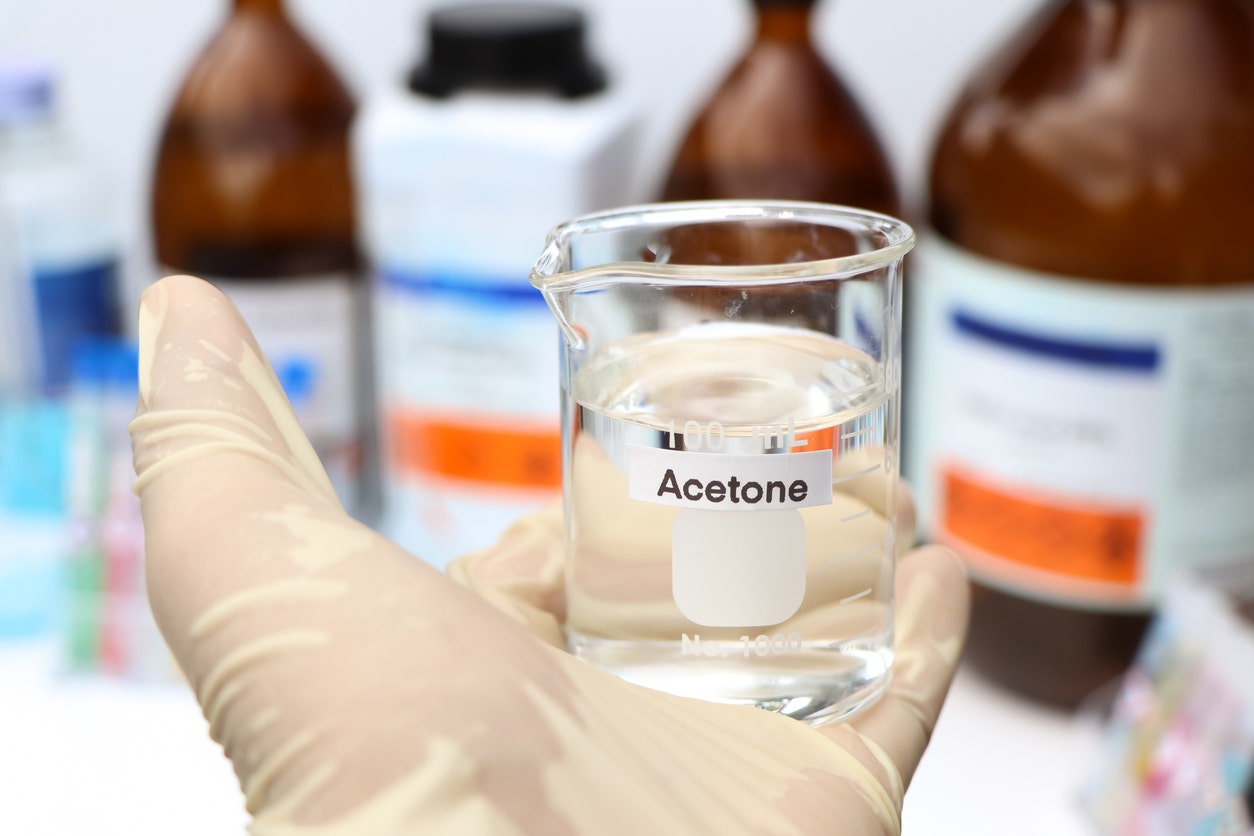
Acetone (propanone, C₃H₆O) is a colorless, highly volatile organic solvent and one of the most widely used polar aprotic solvents in both industrial and laboratory settings. It is fully miscible with water and most organic solvents, evaporates rapidly at room temperature, and dissolves resins, polymers, oils, and a broad range of organic compounds with exceptional efficiency. These properties, combined with relatively low toxicity compared to other industrial solvents, make acetone a practical and cost-effective choice across diverse processing environments.
Acetone is available in multiple grades to match varying purity requirements: lab grade (99.5%) for general research and training use, ACS reagent grade (99.5%) for analytical and standards-driven applications, HPLC grade for chromatographic work, and semiconductor/electronic grade (99.5%) for high-precision manufacturing processes. An acetone-IPA 50/50 blend is also available for specialized cleaning applications. These options make acetone relevant across pharmaceutical manufacturing, electronics fabrication, paint and coatings production, plastics processing, printing, automotive refinishing, and laboratory analysis.
This article covers:
-
Industrial Applications
-
Scientific & Laboratory Uses
-
Medical & Pharmaceutical Uses
-
Consumer & Household Uses
-
Paint, Coatings & Adhesives Industry
-
Electronics & Precision Manufacturing
-
Plastics & Polymer Processing
-
Printing & Graphics Industry
-
Textile & Fiber Industries
-
Automotive & Transportation Industries
-
Wood Processing & Furniture Manufacturing
-
Acetone Grades and Pack Sizes
Industrial Applications
Manufacturing & Processing
Acetone serves as a general-purpose reaction medium in chemical manufacturing, providing a stable, miscible solvent that is easily removed after reactions are complete. It is used throughout product isolation and purification steps, including washing, filtration, and recrystallization, making it a routine process solvent across a wide range of industrial operations.
Chemical Synthesis
Acetone is the starting material for several high-volume industrial chemicals, including methyl methacrylate (MMA), bisphenol A, and methyl isobutyl ketone (MIBK). These downstream derivatives are foundational inputs in global supply chains for acrylic plastics, polycarbonate resins, epoxy systems, and solvent-based coatings, making acetone a critical chemical intermediate beyond its role as a solvent.
Polymer & Resin Production
In polymer manufacturing, acetone functions as a solvent in polymerization reactions and in the production of acrylic resins, polycarbonate plastics, and specialty polymer systems. Its ability to dissolve and stabilize a wide range of resin types at process-compatible viscosities makes it a reliable solvent throughout polymer synthesis and compounding.
Extraction Solvent
Acetone is widely used to isolate oils, fats, waxes, and active compounds from natural and industrial source materials. Its solvency for nonpolar and moderately polar compounds, combined with clean evaporation, makes it effective for extracting target substances without leaving behind solvent residue that would require additional removal steps.
Purification Processes
Crystallization and recrystallization from acetone are standard purification techniques for chemicals, pharmaceuticals, and organic intermediates. Acetone's solubility characteristics allow target compounds to dissolve at elevated temperatures and crystallize cleanly upon cooling, producing high-purity solids with minimal co-precipitation of impurities.
Scientific & Laboratory Uses
Analytical Reagent
Acetone is a standard reagent in qualitative and quantitative chemical analysis and serves as a solvent for UV-Vis spectroscopy, IR spectroscopy, and other instrumental techniques requiring a transparent, high-purity medium. HPLC-grade acetone meets the stringent specifications needed for low baseline interference and optical clarity in spectroscopic applications.
Solvent in Laboratory Processes
Acetone is a routine mobile phase and carrier solvent in chromatographic separations, including HPLC, GC, TLC, and column chromatography. For sample preparation, it extracts, dissolves, and dilutes analytes before instrumental analysis, offering fast solvation and clean evaporation that minimize residue in sample matrices.
Laboratory Cleaning
Acetone removes organic residues, polymer films, grease, and contaminants from glassware and laboratory equipment quickly and completely. Its rapid evaporation rate means surfaces are dry and ready for reuse without prolonged drying time, making it a practical first-choice cleaning solvent in most laboratory environments.
Medical & Pharmaceutical Uses
API Manufacturing
In active pharmaceutical ingredient manufacturing, acetone serves as a reaction solvent during the synthesis of drug molecules and intermediates. Its ability to dissolve a wide range of organic substrates while remaining chemically inert under most synthesis conditions makes it well suited for controlled pharmaceutical synthesis environments.
Drug Formulation
During formulation development, acetone functions as a processing aid and extraction solvent. It is used to extract active compounds from botanical materials and natural products and as a carrier in formulation work where precise solubility and controlled evaporation are required to achieve consistent product characteristics.
Tablet Coating
Acetone is a key solvent in film coating solutions applied to pharmaceutical tablets and capsules. It enables uniform deposition of protective or functional polymer coatings over tablet cores, supporting consistent coating thickness, adhesion, and drying behavior across production batches.
Extraction Processes
Botanical and natural product extraction for pharmaceutical use relies on acetone to selectively isolate active compounds from raw materials. Its solubility profile allows efficient extraction of target molecules while minimizing co-extraction of unwanted matrix components.
Pharmaceutical Cleaning
Manufacturing equipment is cleaned with acetone between production runs to prevent cross-contamination and support GMP compliance. In quality control and analytical development, acetone serves as a solvent for stability testing, dissolution studies, and method development, where reproducible solvent behavior across batches is essential.
Consumer & Household Uses
Personal Care & Cosmetics
Acetone is the primary active ingredient in acetone-based nail polish removers, where it dissolves nitrocellulose-based nail enamels quickly and thoroughly. It is also used as a solvent in nail polish formulations themselves, contributing to product consistency, flow characteristics, and drying behavior.
Cosmetic Manufacturing
In cosmetic production, acetone appears in specialty formulations that require a fast-evaporating carrier solvent to achieve target viscosity and drying profiles. It is also used to clean production equipment in cosmetic manufacturing facilities between product runs, where fast evaporation and low residue are practical advantages.
Paint, Coatings & Adhesives Industry
Paint & Lacquer Formulation
Acetone is a primary solvent in nitrocellulose lacquers, automotive refinishing paints, and specialty coating formulations. It dissolves resin systems effectively and evaporates cleanly, producing hard, fast-drying film surfaces with good flow and leveling characteristics.
Paint Thinner & Reducer
As a thinner and reducer, acetone adjusts the viscosity of oil-based paints, varnishes, and industrial coatings for spray application and brush work. Its fast evaporation rate makes it effective where quick flash-off is needed between coats or in high-throughput finishing operations.
Adhesive Manufacturing
Acetone serves as the carrier solvent in contact adhesives, rubber cements, and pressure-sensitive adhesive formulations. It supports high solids content at manageable application viscosity and evaporates without leaving residue that could compromise bond integrity or cause substrate contamination.
Surface Preparation
Before painting, coating, or bonding, surfaces are cleaned and degreased with acetone to remove oils, release agents, waxes, and other contaminants. Spray guns, brushes, and other application equipment are also cleaned with acetone after use, making it a maintenance solvent and a formulation component.
Epoxy & Polyester Resins
In two-part epoxy systems and polyester resin applications, acetone functions as a viscosity reducer and clean-up solvent. It is used to thin resin systems for specific application requirements and to clean mixing equipment, tools, and surfaces before the resin fully cures.
Electronics & Precision Manufacturing
Electronics Cleaning
Acetone is used for precision cleaning of printed circuit boards, semiconductor components, and electronic assemblies, where control of particulate and chemical residues is critical to product reliability and electrical performance. Its fast evaporation and low residue profile make it a dependable cleaning solvent in electronics production environments.
Flux Removal
After soldering operations, flux residues must be removed from circuit boards before final assembly or testing. Acetone dissolves most flux types effectively and is used in both manual cleaning and batch defluxing processes to produce clean, residue-free board surfaces.
Component Degreasing
Machining oils, fingerprints, and processing contaminants are removed from precision components, optical elements, and sensitive electronic parts with acetone. It cleans without leaving residue that could affect subsequent bonding, coating, or assembly operations.
Semiconductor Processing
In semiconductor fabrication, acetone is part of standard wafer cleaning and component preparation sequences. It also appears in screen printing inks used in electronics manufacturing and in the routine cleaning of screens and stencils used in those processes.
Plastics & Polymer Processing
Acrylic Fabrication
Acetone is used for solvent welding and bonding of acrylic (PMMA) sheets and components, temporarily softening mating surfaces so they fuse as the solvent evaporates.
Plastic Cement Manufacturing
Plastic cements and bonding agents for thermoplastics use acetone as a primary ingredient, enabling effective adhesion between compatible substrates, including ABS, polycarbonate, and polystyrene. The solvent activates the substrate surface and evaporates cleanly, leaving a strong, residue-free bond.
Polymer Dissolution
Acetone provides a practical means of dissolving thermoplastic polymers for coating, casting, and film formation applications. ABS, polycarbonate, polystyrene, and related materials can be processed into acetone solutions for thin-film deposition, repair compounds, or specialty coatings.
Surface Preparation & Cleaning
Acetone removes mold release agents, machining oils, and processing residues from plastic surfaces before bonding, printing, or secondary coating. Injection molds, compression molds, and other forming equipment are cleaned with acetone between production cycles to prevent contamination carry-over.
Printing & Graphics Industry
Ink Manufacturing
Acetone is used as a solvent in gravure, flexographic, and specialty printing ink formulations, contributing to viscosity control, substrate wetting, and drying speed. Its fast evaporation characteristics support high-speed printing processes where rapid ink setting is required.
Ink Thinning
For active printing operations, acetone is used to adjust the viscosity of screen printing inks and rotogravure inks to maintain consistent transfer characteristics and print quality. Controlled dilution with acetone allows operators to compensate for viscosity changes caused by temperature variation or ink age.
Press & Screen Cleaning
Acetone removes dried inks, adhesive residues, and contamination from printing presses, rollers, silk screens, and stencils efficiently. It is also used to clean and condition printing plates before and after press runs, maintaining surface quality and print fidelity.
Graphics Production
In graphics production, acetone serves as a solvent in the manufacturing of vinyl graphics, decals, and specialty printed materials. It supports controlled adhesion behavior and clean edge definition in products where dimensional precision and surface quality are required.
Textile & Fiber Industries
Fiber Production
Acetone is used as a process solvent in the manufacturing of acetate rayon and other specialty synthetic fibers. It functions as a direct production material in fiber formation rather than an ancillary processing aid.
Textile Processing
Acetone removes natural oils and waxes from textile fibers before dyeing or finishing, improving dye uptake and surface uniformity. It also serves as a carrier solvent in certain dyeing processes and in textile printing ink and paste formulations where fast evaporation and clean solvation are needed.
Fabric Cleaning
In garment manufacturing and processing facilities, acetone is used for spot cleaning and stain removal on textile substrates. It is also used to clean textile processing machinery and equipment between production runs, where residual oils, dyes, or finishing agents must be removed before the next production cycle.
Wood Processing & Furniture Manufacturing
Wood Finishing
Acetone is a standard solvent in lacquers, wood stains, and specialty topcoat formulations used in wood finishing. In lacquer systems, it dissolves nitrocellulose and acrylic resins and evaporates quickly, supporting fast production cycles in furniture manufacturing environments.
Furniture Manufacturing
Furniture manufacturers use acetone in adhesive and finish systems throughout production. It functions as a solvent component in furniture adhesives, finish coatings, and bonding systems, contributing to proper viscosity, open time, and adhesion performance across wood substrates.
Surface Preparation & Restoration
Acetone prepares wood surfaces for staining, finishing, or bonding by removing mill oils, wax residues, and other contaminants that would compromise adhesion or finish quality. In restoration work, it removes old finishes and coatings from antique and reclaimed furniture, allowing clean refinishing without residue contamination. Spray equipment, brushes, and finishing tools are routinely cleaned with acetone after use.
Automotive & Transportation Industries
Automotive Refinishing
Acetone is used as a solvent in automotive paint systems, clear coats, and refinishing products, contributing to proper flow, fast flash-off, and consistent film formation. Its performance in high-solids and waterborne refinishing systems makes it a standard solvent component in professional bodyshop and OEM finishing operations.
Surface Preparation
Before any coating is applied, acetone is used to clean and degrease automotive panels and components, removing oils, waxes, silicones, and other surface contaminants that would interfere with paint adhesion. Thorough surface preparation with acetone is a standard step in both factory and refinishing paint processes.
Parts Cleaning & Detailing
Acetone degreasers engine components, transmission parts, and mechanical assemblies where oil and grease contamination must be eliminated before inspection, bonding, or reassembly. In detailing operations, it removes adhesive residues, road tar, and stubborn surface contaminants that standard cleaning products cannot address.
Adhesive Application
Acetone serves as a solvent in automotive adhesive and sealant formulations used in assembly and repair operations. It is also used to strip old paint and coatings from surfaces being prepared for refinishing, where complete removal of existing film is required before new coatings are applied.
Acetone Grades and Pack Sizes
Lab Alley offers acetone in multiple grades and pack sizes to serve laboratory, industrial, and high-purity manufacturing needs. Each product is available with a Certificate of Analysis (COA) and Safety Data Sheet (SDS).
Available Grades & Formulations
-
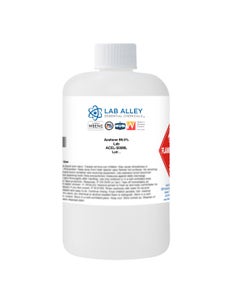
Acetone 99.5% Lab Grade for general laboratory use, research, and training purposes
-
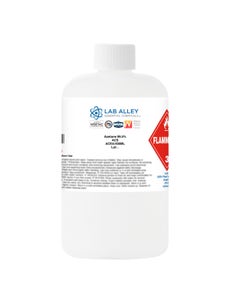
Acetone 99.5% ACS Grade meeting American Chemical Society specifications with certified purity
-
Acetone HPLC Grade for high-performance liquid chromatography and analytical applications
-
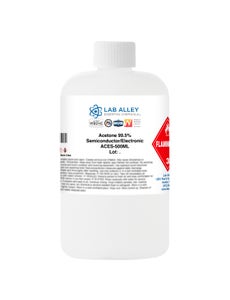
Acetone 99.5% Semiconductor/Electronic Grade for semiconductor and electronics industry applications
-
Acetone-IPA 50%/50% Solution, Lab Grade for specialized cleaning and processing applications
Pack Sizes & Industrial Availability
-
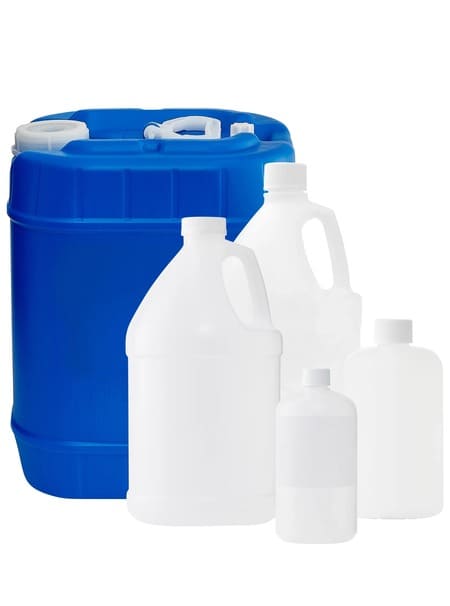
Laboratory bottles: 500mL, 1L, 4L for lab-scale use
-
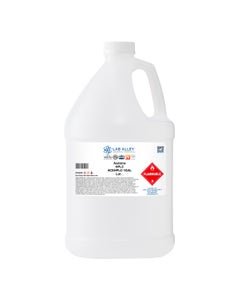
Commercial containers: 1 gallon, 4L, 5 gallons for standard operations
-
Industrial drums: 55 gallons for high-volume applications
-
Case and pallet quantities available for bulk purchasing
-
All containers are UN-approved and DOT-compliant with proper flammable liquid labeling
Final Note
Acetone's combination of high solvency power, complete water miscibility, rapid evaporation, and low toxicity relative to comparable solvents makes it one of the most broadly applicable organic solvents in use today.
It serves critical functions across pharmaceutical manufacturing, electronics fabrication, paint and coatings production, plastics processing, printing, textiles, automotive refinishing, and laboratory analysis. Few solvents match its range of effective applications across both industrial-scale operations and precision laboratory environments.
Available in lab, ACS, HPLC, semiconductor, and blended formulations, acetone can be matched to the purity and performance specifications of virtually any application, from bench-scale research to high-volume production.
For more detailed guidance, explore our Resource Library.
Our Customer Care team is also available for more information and documentation, including chemical Safety Data Sheets.
Need Acetone You Can Trust?
If you are looking for high-quality acetone for your lab, product line, or research facility, be sure to visit our store to explore our trusted selection and request a quote.
As your trusted partner in chemical supply, Lab Alley is always striving to meet the growing demands of our customers. We want you to be able to access all of your chemical needs in one place, along with streamlined online ordering and fast shipping.
Due to popular demand from our valued clientele, Lab Alley's acetone is available in a range of purities and packaging options to suit various commercial, laboratory, and personal needs.