





Shelf Life & Expiration of Phosphoric Acid
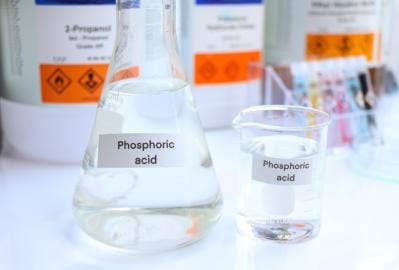
Phosphoric acid (H₃PO₄) is one of the more chemically stable acids used across industrial, laboratory, and food production settings. It does not oxidize, polymerize, or break down into hazardous byproducts under normal conditions, which gives properly stored material an effectively indefinite working life. This stability sets it apart from acids that degrade through self-reaction or light sensitivity over time.
The factors that actually limit usable shelf life are physical rather than chemical. Concentration drift from moisture absorption or evaporation, along with container compatibility, accounts for nearly all quality issues seen in stored phosphoric acid. Because the acid itself remains intact, most "expiration" concerns are really concentration and purity concerns.
Grade also plays a role in how strictly shelf life needs to be tracked. Food-grade and pharmaceutical-grade materials used in precision applications warrant closer monitoring than industrial-grade acid used for bulk processing, where minor concentration shifts have less practical impact.


This article covers:
-
How Long Does Phosphoric Acid Last?
-
Signs That Phosphoric Acid Has Expired or Degraded
-
What to Do If Phosphoric Acid Is Expired
-
Proper Storage Extends Shelf Life
How Long Does Phosphoric Acid Last?
Chemical Stability
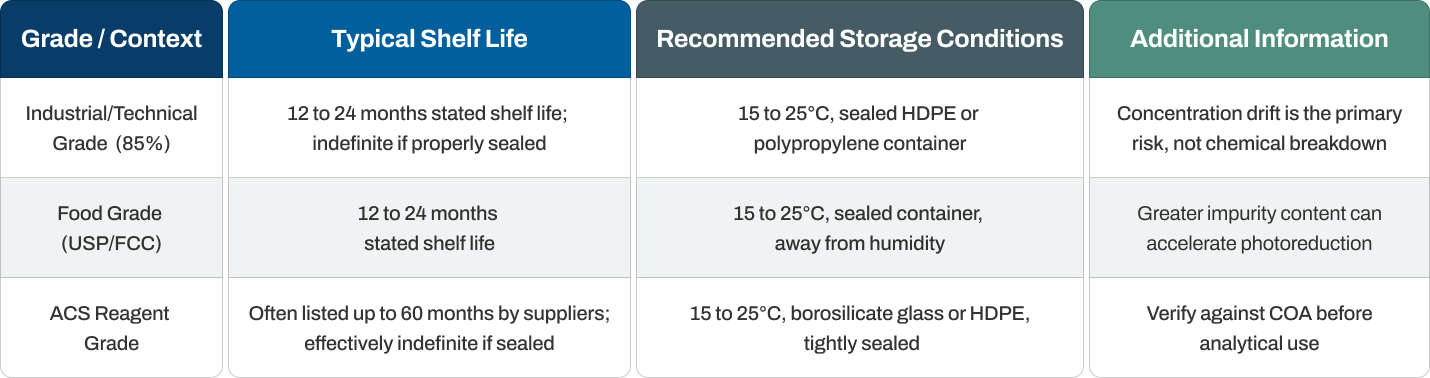
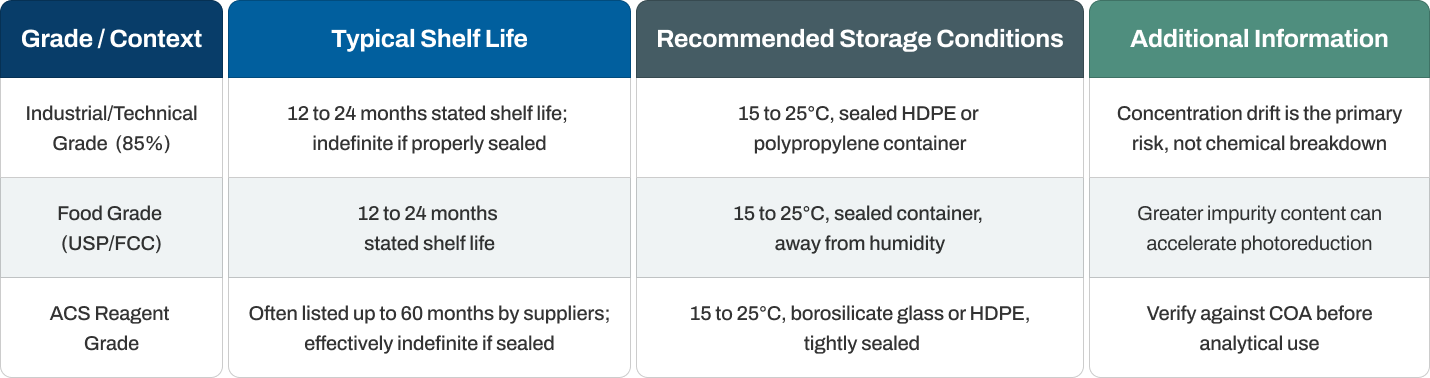
Phosphoric acid does not undergo spontaneous decomposition, hydrolysis, or oxidative breakdown under normal storage conditions. The phosphate structure is chemically robust, and the acid does not generate hazardous decomposition products over time. This is why suppliers can confirm an indefinite shelf life for properly sealed, properly stored material, even though individual product listings often carry a stated shelf life window of 12 to 24 months for industrial and food grades, or longer for high-purity reagent grades, as a conservative quality guarantee rather than a true degradation timeline.
Purity & Packaging
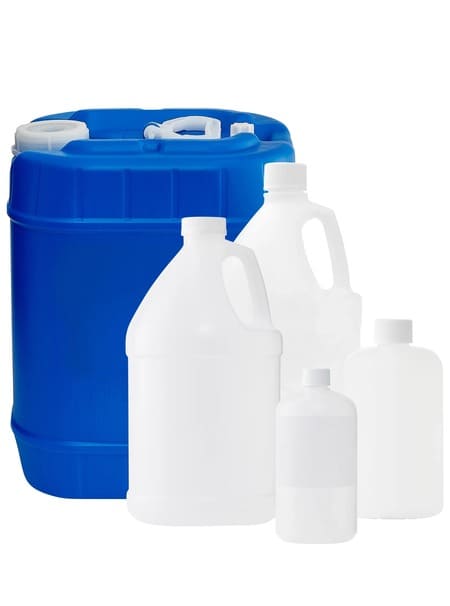
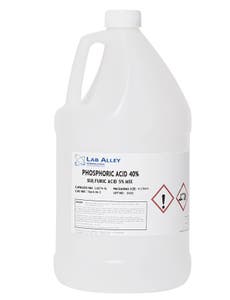
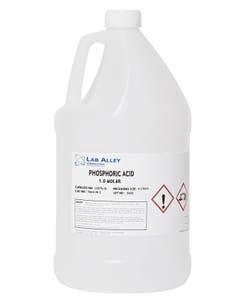
Higher-purity grades, including ACS reagent and food grade, are more sensitive to contamination introduced by incompatible containers than to age itself. Polyethylene (HDPE), polypropylene, and borosilicate glass are the preferred container materials because they resist corrosion and do not leach into the acid. Metal containers, including iron, steel, and zinc, should never be used, since phosphoric acid reacts with these metals and introduces metallic contaminants that compromise purity.
Storage Conditions
Room temperature storage between 15°C and 25°C is appropriate for maintaining stability. Phosphoric acid is not light-sensitive, so UV exposure is not a primary concern the way it is for photoreactive chemicals. Humidity is the more relevant variable: poorly sealed containers in humid environments allow atmospheric moisture to dilute the solution, while hot, dry conditions accelerate water loss and concentration increase.
Signs That Phosphoric Acid Has Expired or Degraded
-
Color Change: Pure phosphoric acid is colorless to faintly yellow. Noticeable yellowing or browning beyond the original appearance usually points to contamination from a container or environmental exposure rather than acid breakdown itself.
-
Precipitation or Crystallization: Concentrated 85% solutions can solidify or form crystals at temperatures near or below 21°C. This is a physical, reversible change; gently warming the container restores the liquid state without any loss of quality, provided no contaminants are present.
-
Concentration Changes: Phosphoric acid is hygroscopic at working concentrations and will absorb atmospheric moisture if containers are left open or poorly sealed, gradually diluting the solution. Conversely, evaporation in warm, dry conditions can concentrate the acid beyond its labeled percentage.
-
Reduced Effectiveness: Concentration drift undermines accuracy in applications where exact percentage matters, including food and beverage acidulation, laboratory titration, metal surface treatment, and fertilizer formulation. A solution that has drifted outside its specified range can throw off pH targets, etching rates, or reaction stoichiometry.
What to Do If Phosphoric Acid Is Expired
Check Manufacturer Guidelines
Confirm the current concentration against the original Certificate of Analysis using titration or specific gravity measurement rather than relying on visual inspection alone. Many suppliers issue retest dates rather than hard expiration dates for phosphoric acid, reflecting the fact that the acid itself remains chemically sound well past typical shelf life windows. If a retest confirms the material is still within specification, it can generally continue to be used despite an elapsed shelf life date.
Follow Proper Disposal Procedures
Phosphoric acid is classified as a corrosive hazardous waste under EPA waste code D002 due to its low pH. Before drain disposal in permitted quantities, the acid must be neutralized to a pH range of 6 to 9 using an appropriate base, with the neutralization verified rather than assumed. Larger volumes, or material that cannot be neutralized on site, require handling through a licensed hazardous waste disposal service in accordance with local and federal regulations.
Replace with Fresh Stock
Applications that depend on precise concentration, including food and beverage pH adjustment, metal phosphating treatments, and fertilizer production, are particularly sensitive to drifted or degraded material. Using fresh, verified stock rather than working around an uncertain concentration protects both product quality and process consistency, especially where regulatory specifications govern the acceptable concentration range.
Proper Storage Extends Shelf Life
-
Container Requirements: Use HDPE, polypropylene, or borosilicate glass containers exclusively. Avoid metal containers entirely, since phosphoric acid corrodes iron, steel, and zinc and introduces contamination into the solution.
-
Temperature Control: Maintain storage temperatures between 15°C and 25°C. The 85% concentrated solution can solidify near 21°C, which is reversible but disruptive to handling, so storage areas should avoid temperatures that approach this threshold.
-
Light & Heat Protection: Phosphoric acid is not UV-sensitive, so light exposure is not a significant concern. Direct heat sources should still be avoided, since elevated temperatures drive off water and shift the acid's concentration upward over time.
-
Humidity Control: Because phosphoric acid is hygroscopic at typical working concentrations, containers left open or improperly sealed in humid environments will absorb moisture and become diluted. Storage areas should maintain reasonably low ambient humidity where practical.
-
Evaporation Prevention: Tightly sealed containers are essential, since concentration drift from evaporation or moisture absorption is the primary degradation risk for this acid rather than any chemical breakdown. Labeling containers with the date opened and current concentration helps track drift over time.
Conclusion
Phosphoric acid stands out among industrial acids for its chemical durability, with no inherent expiration when stored in compatible containers under stable temperature and humidity conditions. The real threat to usable shelf life is concentration drift, whether from moisture absorption in humid environments or evaporation under heat, both of which can quietly shift the acid outside its specified range. Routine verification against the Certificate of Analysis, combined with sealed, corrosion-resistant containers, keeps stored material reliable for precision-dependent uses. When concentration falls outside specification, retesting before use and proper neutralization before disposal remain the appropriate next steps.
For more detailed guidance, explore our Resource Library for comprehensive storage and handling information.
Our Customer Care team is also available for more information and documentation, including chemical Safety Data Sheets.
Need Phosphoric Acid You Can Trust?
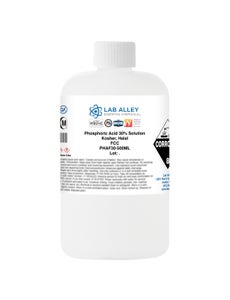
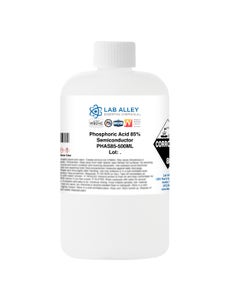
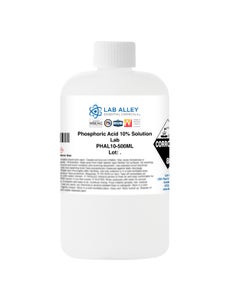
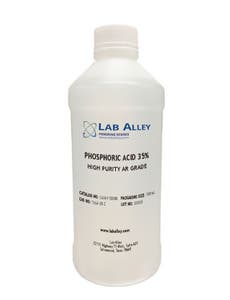
If you are looking for high-quality phosphoric acid for your lab, product line, or research facility, be sure to visit our store to explore our trusted selection and request a quote.
As your trusted partner in chemical supply, Lab Alley is always striving to meet the growing demands of our customers. We want you to be able to access all of your chemical needs in one place, along with streamlined online ordering and fast shipping.
Due to popular demand from our valued clientele, Lab Alley's phosphoric acid is available in a range of purities and packaging options to suit various commercial, laboratory, and personal needs.