


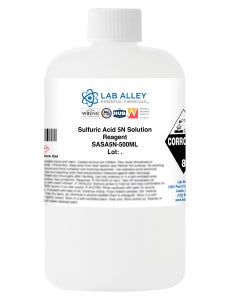
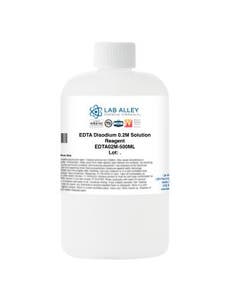
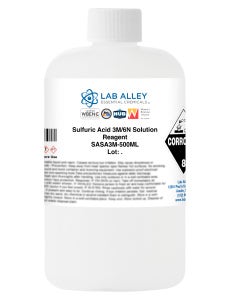
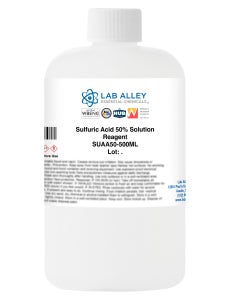
• On Budget, On Time, Every Time : Essential Chemicals for a Better World• WOMAN-OWNED SMALL BUSINESS (WOSB)• OVER 248K HAPPY CUSTOMERS• TRUSTED BY NASA, TESLA, SPACEX, BOEING & MORE• HIGH PURITY, NATURAL AND ESSENTIAL CHEMICALS• SERVING 16 INDUSTRIES• PROUDLY PARTNERED WITH ECODRIVE• COA & SDS AVAILABLE ONLINE• QUALITY LAB SUPPLIES & EQUIPMENT• CERTIFIED QUALITY: ISO 9001, KOSHER, ORGANIC & MORE• GSA CONTRACT HOLDER | GOVERNMENT APPROVED• FAST NATIONWIDE DELIVERY• On Budget, On Time, Every Time : Essential Chemicals for a Better World• WOMAN-OWNED SMALL BUSINESS (WOSB)• TRUSTED BY NASA, TESLA, SPACEX, BOEING & MORE• OVER 248K HAPPY CUSTOMERS• HIGH PURITY, NATURAL AND ESSENTIAL CHEMICALS• SERVING 16 INDUSTRIES• PROUDLY PARTNERED WITH ECODRIVE• COA & SDS AVAILABLE• QUALITY LAB SUPPLIES & EQUIPMENT• CERTIFIED QUALITY: ISO 9001, KOSHER, ORGANIC & MORE• GSA CONTRACT HOLDER | GOVERNMENT APPROVED• FAST NATIONWIDE DELIVERY

We are now ISO 9001 Certified

Get 5% OFF on your first order |  Use Code: WELCOME5

10% off All Acetone Products! Code ACETONE26

Buy Acids Online | Sulfuric, Hydrochloric, Nitric & More | Lab Alley

Acids

Sulfuric, Hydrochloric, Nitric, Phosphoric, Citric and 20+ More Acids in ACS, Lab, Food and Electronic Grades.

Buy acids online in the exact grade and concentration your work calls for, and get your order moving today instead of next week. No calling a sales rep to find out what a gallon of nitric acid costs, and no chasing anyone for a COA after the order is placed. Every price is on the page. Lab Alley stocks more than 200 acid products across 27 acid families, starting with the mineral acids labs and plants use most: sulfuric acid, hydrochloric acid (also sold as muriatic acid), nitric acid and phosphoric acid. Alongside them you'll find organic and specialty acids such as citric, acetic, glycolic, lactic and trichloroacetic acid, plus EDTA and hydrofluoric acid for the jobs that need them. Research labs, metal finishing shops, water treatment plants, beverage makers and skin care brands all order from this page.

Picking a grade is simple. Lab Grade handles cleaning, pickling and routine bench work, ACS Reagent Grade covers analytical methods that name it, Semiconductor/Electronic Grade goes to wafer processing, and FCC Food Grade is for anything people eat or drink. Our food grade citric, phosphoric, malic and ascorbic acids are also Kosher and Halal certified. Sizes run from small lab bottles to 55 gallon drums and 275 gallon totes on select acids, and ready made dilutions and normality standards save you from mixing concentrated acid by hand. The SDS and COA for each product are posted online, so EHS and QA can sign off before you order. Most concentrated acids ship as DOT regulated corrosives, and each product page lists its shipping details up front. Buying in bulk or on a schedule? Request a quote, or set up Autoship to take 10% off repeat orders on eligible products. Not sure which acid fits? The FAQ below covers the questions we hear most.

256,000+ customers served
99.5% of orders ship in 1–2 business days
98.9% inventory accuracy
SDS + COA available online, every product
A Variety Of High-Quality Acids From Nitric To Glycolic Acid
Set Descending Direction
Page
per page

About Acids

In water, an acid hands off hydrogen ions (protons), and pH goes down. How easily it lets go of those protons is really the dividing line between strong and weak acids, and it's worth knowing which side you're on before you open the bottle.

Hydrochloric, nitric and sulfuric acid are the strong ones we carry. They ionize almost completely, which is why they top every strong acids list. Acetic, citric, lactic and phosphoric acid are weak. They only partly ionize, and that makes them easier to dose and control in food, cosmetics and buffers.

Weak, by the way, is a chemistry term, not a safety rating. Hydrofluoric acid counts as weak, and it's still one of the most dangerous things you can have in a lab, because fluoride moves through skin and goes after tissue and bone. Nitric acid brings a different problem: it's also a strong oxidizer. Concentrated sulfuric acid is so hungry for water it will char paper or sugar on contact.

Concentration changes everything too. Concentrated 37% hydrochloric acid works out to roughly 12 molar, and 96% sulfuric acid is close to 18 molar. Hence the diluted and standardized solutions on this page. And the old rule still stands, every time: acid goes into water, never the other way round.


COMMON APPLICATIONS

Common Applications

In analytical labs, ACS grade nitric, hydrochloric and sulfuric acid handle sample digestion, trace metals work, titrations and pH adjustment. A 0.1N or 1.0N standard can go straight into a titration, no standardizing step first.

On the manufacturing side, it's pickling, etching, stainless steel passivation, descaling and surface prep, mostly with the mineral acids. Chip fabs clean and etch wafers with electronic grade nitric acid.

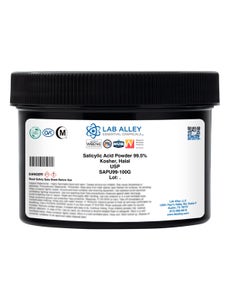
Food and beverage plants reach for FCC citric, phosphoric, lactic and malic acid to set acidity, hold flavor and manage pH in drinks, sauces and dairy. Skin care formulators work with glycolic, salicylic and lactic acid in peels and exfoliating cleansers.

Water treatment crews use acid to bring alkaline streams back into range. And in research and biotech, EDTA and trichloroacetic acid get used constantly, for chelation and for precipitating proteins.


GRADES EXPLAINED

Lab Grade (you'll also see Lab/Technical) is decent purity with no official spec behind it. For cleaning, pickling, teaching labs, or any process where a few ppm of impurity won't matter, it's the sensible buy. It's also the biggest grade in this category by product count.

ACS Reagent Grade meets American Chemical Society limits on things like chlorides, sulfates and heavy metals. If your method calls for ACS by name, or you're measuring at trace levels, this is the one.

Reagent Grade, on our site, mostly means prepared solutions: set percentages, molar and normal concentrations made for particular procedures.

Semiconductor/Electronic Grade drives metal contamination much lower again, for wafer cleaning, etching and electronics production.

FCC Food Grade, USP and NF are the food and pharmacopeial grades. Use them for anything that's eaten, drunk or applied to skin. The Kosher and Halal certified acids are all in this group. A couple of skin care acids also come in Cosmetic Grade.


TYPES & GRADES AT A GLANCE

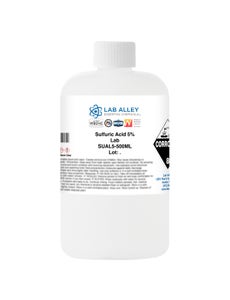
93% and 96% concentrated, plus diluted solutions. Digestion, batteries, pH control, synthesis.
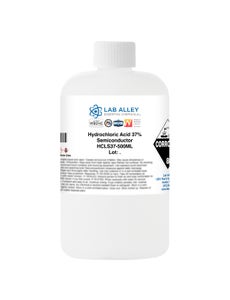
a.k.a. muriatic acid. From 37% ACS reagent down to lab grade dilutions, for pickling, etching and pH work.
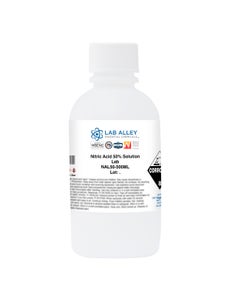
Up to 70% in ACS, lab/technical and semiconductor grade, with ready to use dilutions for digestion and metal finishing.
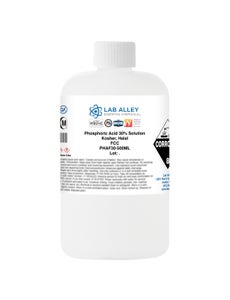
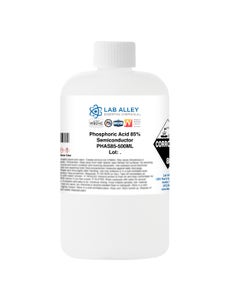
85% in both ACS and FCC food grade. Beverages, rust removal, etching, buffers.
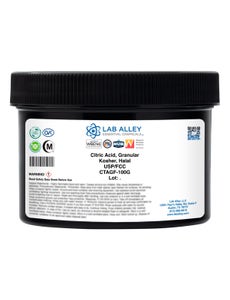
Food grade solutions and dry forms, some Kosher and Halal certified. Good for food, cleaning and descaling alike.
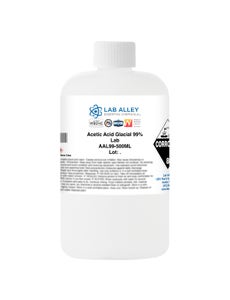
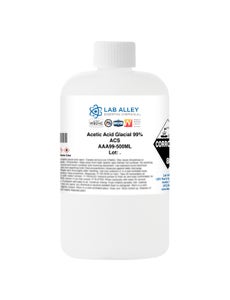
Glacial or diluted, used in food, synthesis and lab buffers.
Mostly 70% solutions, popular for cosmetic peels, plus some cleaning and textile uses.
48% ACS reagent for etching glass and silicon. Read the handling notes first.
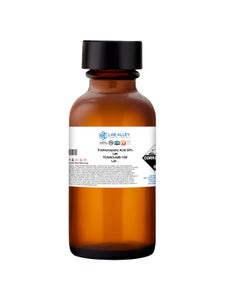
An 85% solution and 99% ACS crystals, for protein precipitation and peels.
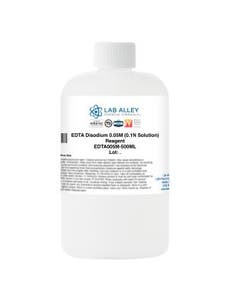
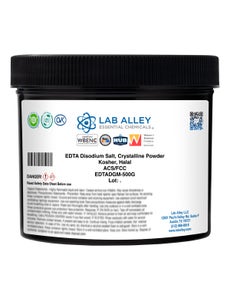
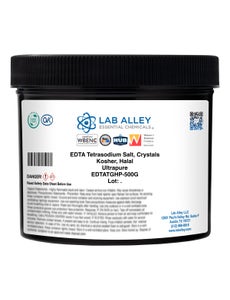
Disodium EDTA solutions for chelation, titration and molecular biology buffers.

WHY BUY FROM LAB ALLEY

256,000+ customers already order their chemicals and reagents from Lab Alley.

Most orders, 99.5 percent, ship within 1 to 2 business days. An acid order should not be what holds up your production or research.

Inventory accuracy sits at 98.9 percent, so the grade you see in stock is the grade that ships.

Every acid ships with SDS and COA available online, and select food grade acids such as citric, phosphoric, malic and ascorbic acid carry Kosher and Halal certification.

Frequently Asked Questions

What's the actual difference between strong and weak acids?
How much of the acid ionizes in water. Hydrochloric, nitric and sulfuric acid give up nearly all their hydrogen ions, so the pH crashes and they eat through a lot of materials. Citric, acetic, lactic and phosphoric acid only partly ionize. That's why food and cosmetic formulators like them: easier to control. One catch worth repeating. Hydrofluoric acid is weak on paper and brutal in practice.
What do 37%, 70% and 1.0N mean on the label?
The percentage tells you how much of the solution, by weight, is acid. Our concentrated hydrochloric is 37%, nitric 70%, sulfuric 96%. Normality (N) and molarity (M) are about reacting strength per liter, the number a titration cares about. Buy a 1.0N solution and it's ready as is. No measuring out concentrated acid on a Friday afternoon.
Is a permit needed to buy acids?
Usually not. We don't ask for a purchase permit on common lab and industrial acids. That said, most concentrated acids ship as DOT regulated corrosives, and a few high hazard products can only go to facilities set up to handle them. You'll see that on the product page if it applies. Some companies and universities also run their own approval process for corrosives, so it's worth a quick word with EHS.
Which of your acids are Kosher or Halal?
A handful of food grade ones. Citric Acid 50% FCC, Phosphoric Acid 85% FCC, Malic Acid FCC and Ascorbic Acid USP/FCC hold both certifications. Lactic Acid 88% FCC and Lauric Acid Lab Grade are Kosher only. None of the ACS sulfuric, hydrochloric or nitric acids are certified. Always go by the product title and the certificate on the page.
Will you ship acid to my house?
For concentrated or corrosive acids, plan on a business, lab or school address. Carriers handle them as hazmat, and that limits where they can go. A few gentler food grade acids have fewer restrictions, and every product page lists its own shipping rules. If you're not sure your address works, call Customer Care at 512-668-9918 first. Taking a drum or tote? A loading dock helps a lot.
How do I choose the right grade?
Think about what could go wrong if the acid carried a trace impurity. For cleaning, pickling or general lab use, nothing much, so Lab Grade is fine and cheaper. Trace metal testing, or a method that specifies ACS, needs ACS Reagent Grade. Wafer work needs Semiconductor/Electronic Grade. Anything edible needs FCC Food Grade. And for titrations, a ready made normality solution saves both time and risk.
Hydrochloric or sulfuric acid, which one do I need?
They're both strong, but they don't act alike. Hydrochloric acid is the go to for pickling steel, etching and adjusting pH, and it won't char or oxidize what it touches. Concentrated sulfuric acid pulls water out of things and boils far higher, so it's the choice for digestion, battery electrolyte, fertilizer and synthesis work. Need to neutralize afterward? Our <a href="https://www.laballey.com/chemicals/bases-and-hydroxides">Bases & Hydroxides</a> page has sodium hydroxide and more.
Do you sell acids in drums and totes?
Plenty of them, yes. Depending on the acid and grade, you'll see anything from small bottles and 4 L jugs to 5 gallon pails, 20 L containers, 55 gallon drums and 275 gallon totes. Cases of multiple bottles usually bring the per unit price down. For pallets, totes or deliveries on a schedule, go through <a href="https://www.laballey.com/bulk-and-custom-chemicals">Bulk & Custom Chemicals</a>. On eligible products, <a href="https://www.laballey.com/pages/autoship">Autoship</a> knocks 10% off repeat orders.
Where can I buy sulfuric, nitric or hydrochloric acid online?
You're on the right page. Choose the acid, the grade and the size, check the price, and check out. No quote needed for standard sizes. Each product page has the concentration, SDS and lot COAs. Most orders leave within 1 to 2 business days, with hazmat handling where it's required. For drums, totes or a standing order, our team will put a quote together.
How should I store acids once they arrive?
Original container, lid tight, inside a ventilated corrosives cabinet with secondary containment. Keep acids and bases apart. Oxidizing acids like nitric shouldn't sit anywhere near solvents, organics or flammables. Hydrofluoric acid goes in plastic, never glass. The nitric acid storage guide below has more on this.

Guides & Resources

Nitric Acid Overview
Discover the key properties and uses of nitric acid. Understand how this organic solvent supports food, cosmetic, and pharmaceutical production with safe handling practices.
Read article →
Types of Nitric Acid
What are the different types of nitric acid? Learn the differences between food, cosmetic, and pharmaceutical grades, plus their key applications.
Read article →
How and Why to Neutralize Nitric Acid
Discover how to treat nitric acid waste safely. This guide explains why this matters, how to do it step by step, and how to meet safety and compliance standards.
Read article →
How to Store Nitric Acid
Learn how to safely store nitric acid. Discover best practices for storage, handling, and labeling to maintain quality, prevent contamination, and ensure compliance.
Read article →
How to Safely Dispose of Sulfuric Acid
How to Safely Dispose of Sulfuric Acid Sulfuric acid is one of the most common acidifying reagents and sulfur sources, essential across multiple in...
Read article →

Industries That Use Acids

R&D & Laboratory
Explore high-purity chemicals for research, development, and testing, including nitric acid, acetone, dichloromethane, ethanol, and more.
Learn more →
Manufacturing & Industrial
Explore high-purity chemicals for manufacturing and industrial applications, including acetone, heptane, sulfuric acid, solvents, and more.
Learn more →
Food & Beverage
Explore food-grade chemicals for food and beverage production, including ethanol, citric acid, peracetic acid, hydrogen peroxide, and preservatives.
Learn more →
Personal Care & Cosmetics
Explore high-quality chemicals and ingredients for personal care and cosmetics, including glycolic acid, ethanol, and denatured alcohol for formulations.
Learn more →
Environmental & Waste Treatment
Explore high-purity chemicals for environmental and waste treatment applications, including hydrogen peroxide, activated carbon, and isopropyl alcohol.
Learn more →